I Moved My Shoulder Muscle Workouts Inside the Power Rack
I spent a decade chasing a bigger overhead press only to end up with shoulders that sounded like a bag of potato chips every time I reached for the top shelf. We have all been there—trying to grind out one more rep of shoulder muscle workouts while that familiar, sharp pinch in the AC joint screams for mercy. I realized the issue wasn't the weight; it was the momentum I was using to move it.
The fix wasn’t more physical therapy or expensive sleeves. It was moving my shoulder lift exercises inside the cage and killing the bounce that was wrecking my joints. By starting every rep from a dead stop, I forced my delts to do the actual work instead of relying on elastic energy.
Quick Takeaways
- Eliminates the stretch reflex, forcing 100% muscle recruitment.
- Reduces shearing force on the AC joint at the bottom of the movement.
- Builds massive 'starting strength' from the most difficult position.
- Requires a sturdy power rack with adjustable safety pins or straps.
The Problem With the 'Bounce' in Your Press
Standard weight shoulder workouts usually involve a rhythmic 'up and down' motion. While that is fine for hypertrophy, most lifters subconsciously use the stretch-shortening cycle at the bottom. You drop the bar, your tendons stretch like rubber bands, and you 'snap' the bar back up. This momentum steals the workload from your delts and puts a massive amount of stress on your connective tissue.
When you are doing weight lifting exercises shoulders, that transition point is where most injuries happen. If you have been struggling with nagging pain, you need to learn How to Fix Your weight lifting exercises upper body When Shoulders Ache. Stop treating your shoulders like a trampoline. The bounce might help you move more plates, but it is not making you stronger where it counts.
Why the Pin Press Forces Honest Strength
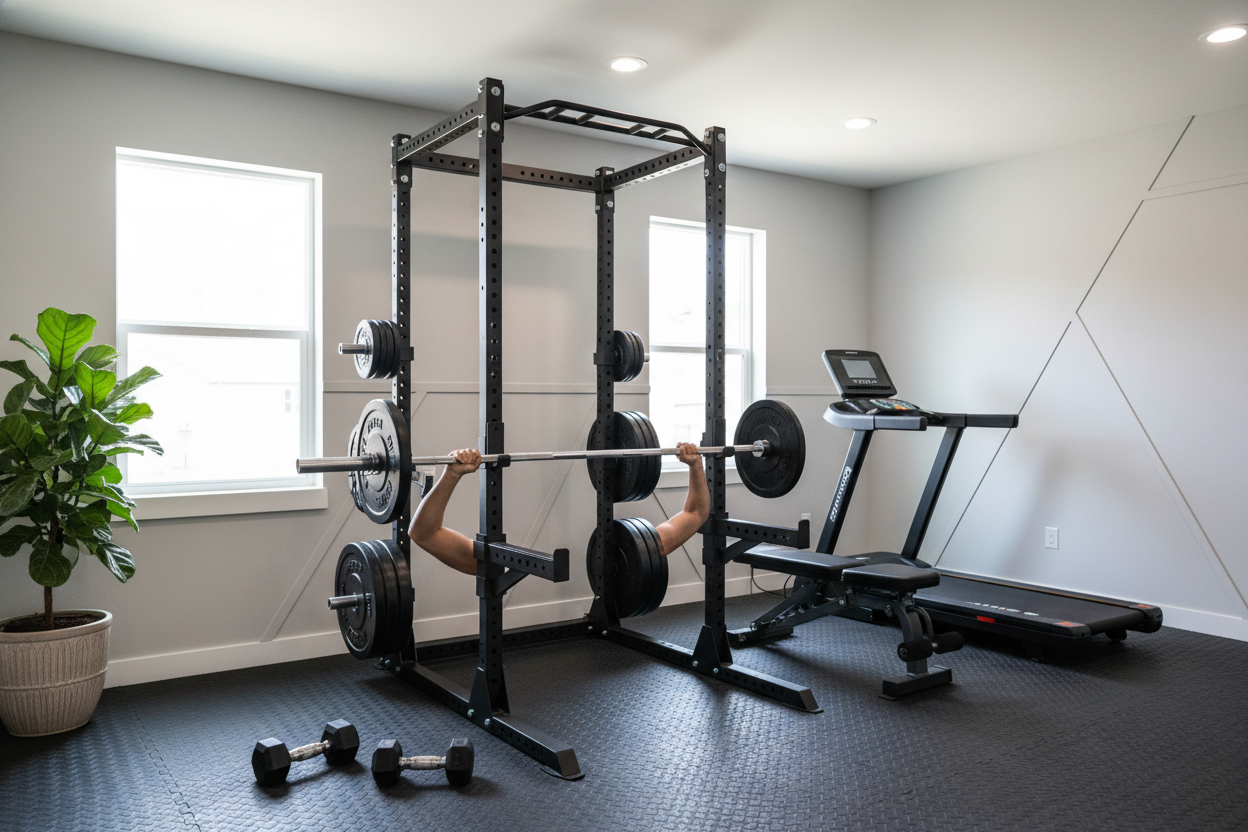
The pin press is the ultimate lie detector for your upper body. By resting the bar on the safeties at chin or nose level, you effectively kill all momentum. You have to get under the bar, set your air, and push from zero. This is weight training shoulder exercises in their most brutal, honest form. You will likely have to strip 20% of the weight off the bar the first time you try this.
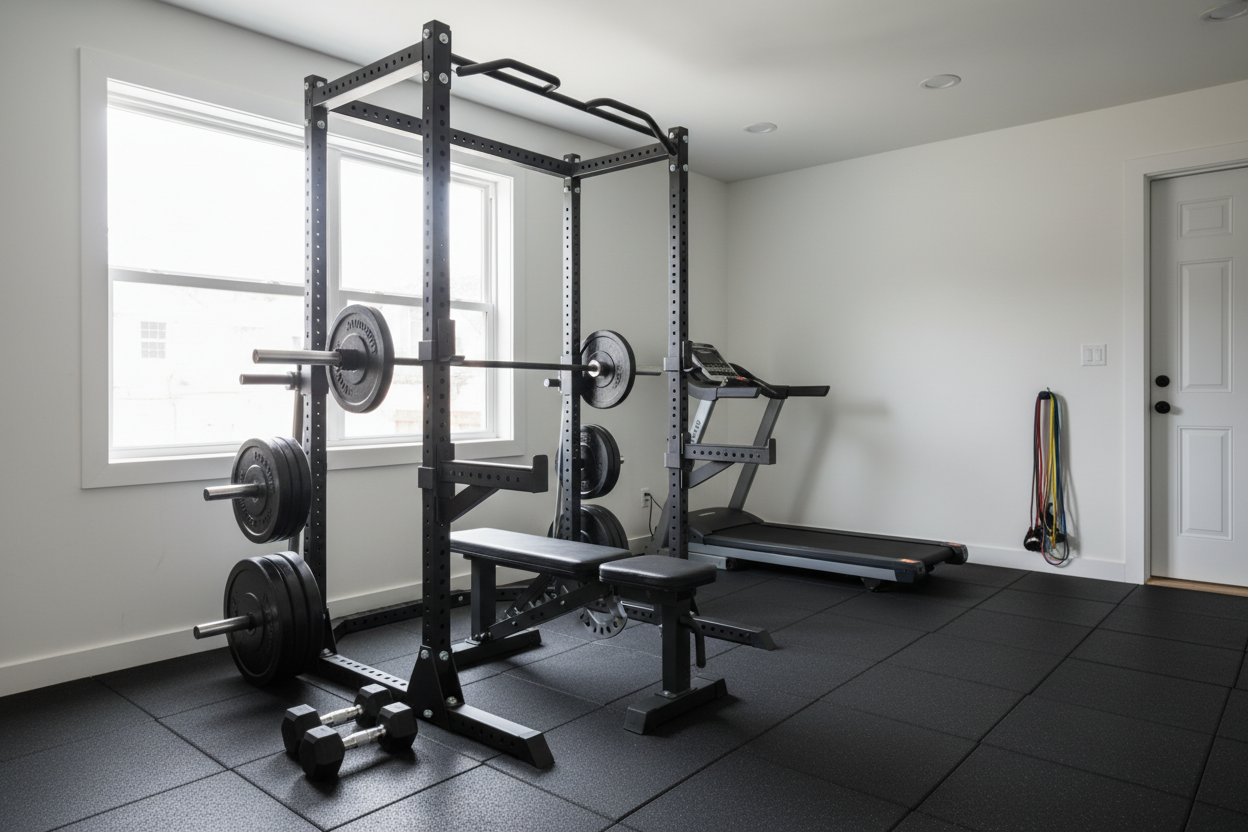
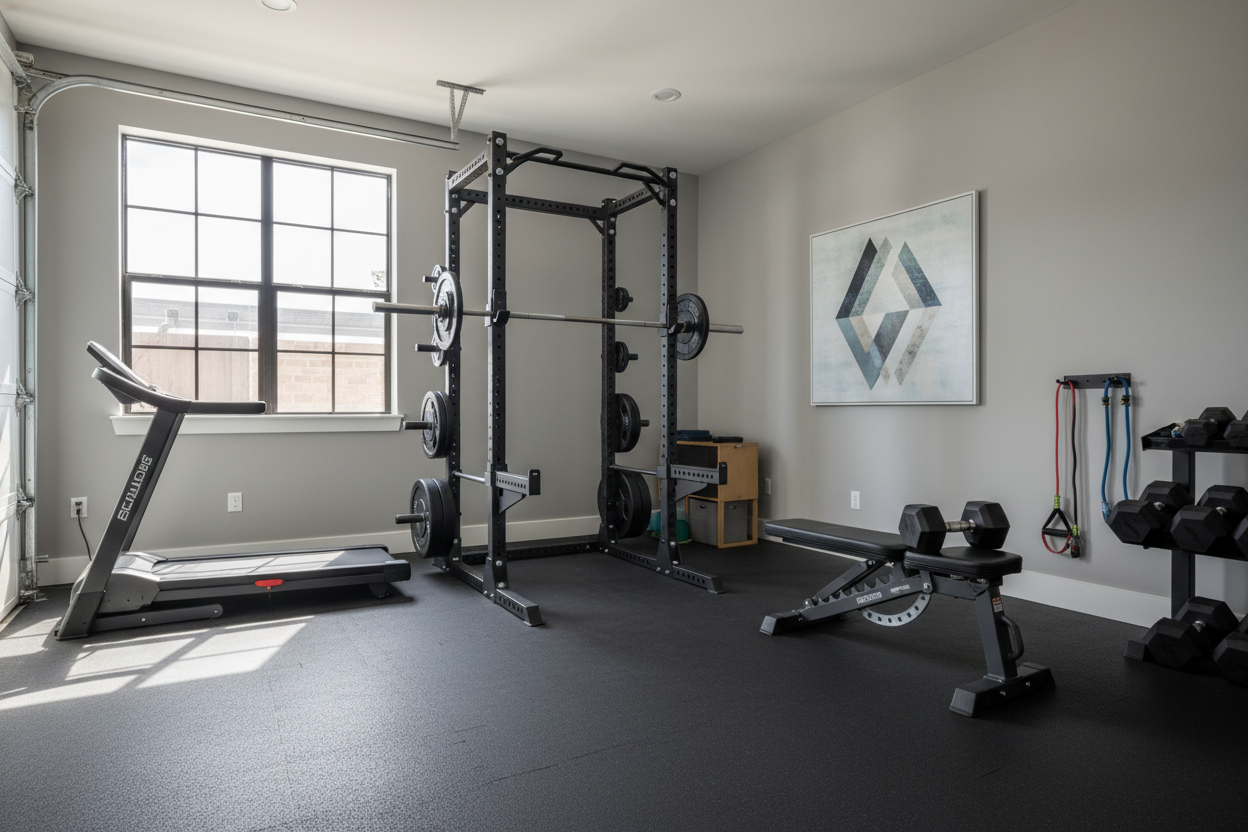
I personally use the Gxmmat X6 Power Rack Weight Bench Package for this because the pin adjustments are precise enough to hit my exact sticking point. Having a rack that can handle the violent 'thud' of a heavy barbell dropping back onto the pins is essential. When the bar is dead on the rack, your nervous system has to fire everything at once to get it moving. That is how you build real-world power.
How to Set Up Your Dead-Stop Lifts
Setting up for standing shoulder exercises inside a rack requires more focus than a standard press. Set your pins so the bar sits right at chin height. If the bar is too low, you are back to square one with joint strain. If it is too high, you are just doing a partial rep. You want to be in the 'hole' of the movement where you are weakest.
Step up to the bar and pull yourself into position. Your forearms should be vertical. Before you push, create 'neurological tension' by squeezing the bar as hard as possible and bracing your glutes. Weight lifting exercises for shoulders often fail because the lifter is 'soft' at the start. In a pin press, if you aren't tight, the bar won't budge. Drive the bar straight up, lock it out, and—this is the hard part—lower it under control back to a complete stop on the pins. No tapping and going.
Structuring the Rest of Your Session
Once you have finished your heavy pin presses, your central nervous system will be fried. This is the time to transition into higher-volume weight lifting shoulder workout accessories. Since the pins took care of the heavy lifting, I like to move toward movements that emphasize the lateral and rear heads of the deltoid to ensure a complete upper shoulders workout.
While I am a barbell purist for my main lifts, I often utilize Weight Lifting Machines for my finishing work. Machines allow you to push to failure on lateral raises or rear delt flies without worrying about your lower back giving out or your form breaking down. It is the perfect way to round out the session after the raw, unguided intensity of the pin press. Combine the heavy rack work with strict isolation, and your shoulders will actually start growing again.
My Personal Experience
I’ll be honest: the first time I tried pin presses, I felt weak. I had been ego-lifting 185 lbs on the overhead press for years, using a massive lean-back and a huge bounce at the bottom. When I moved into the rack and set the pins at chin height, I couldn't even budge 155 lbs. It was a wake-up call. My shoulders were 'fake strong.' After six months of dedicated pin pressing, my shoulders felt thicker, and more importantly, that chronic ache I had for years finally vanished. I had to swallow my pride to get the results.
FAQ
Is the pin press harder than a regular press?
Yes, significantly. Because you lose the 'rebound' effect from the bottom, the initial drive is much more difficult. Expect to lift less weight initially while building more actual muscle tension.
Can I do this with a Smith machine?
You can, but it isn't ideal. A Smith machine forces you into a fixed vertical path which can be unnatural for the shoulder joint. A power rack allows the bar to move in a slight natural arc, which is safer for long-term training.
How often should I do shoulder weight training from pins?
I recommend swapping your main overhead lift for pin presses for 4-6 weeks. It is a high-fatigue movement, so you don't want to do it year-round, but it is an incredible tool for breaking through plateaus.