I Micro-Dosed My 7 Day Workout Plan to Build Muscle
I used to think the only way to get big was to live in the garage for ninety minutes until my central nervous system felt like a fried circuit board. Then life happened—kids, a mortgage, and a rack that started gathering more dust than chalk. I needed a way to stay consistent without the inevitable burnout that comes from trying to be a hero every session. That is when I started experimenting with a 7 day workout plan to build muscle that actually fits into a lunch break.
Quick Takeaways
- Micro-dosing volume prevents the 'CNS fry' common in high-frequency programs.
- Workouts are capped at 20 minutes to keep intensity high and cortisol low.
- Focuses on one major compound lift per day for the first four days.
- Requires minimal setup time—if you can't start in two minutes, you won't do it.
Why Training Every Single Day Usually Ends in Disaster
Let's be real: most people who attempt a seven-day split quit by Wednesday of week two. They walk into the garage, look at their 3x3 power rack, and try to replicate a professional bodybuilder's high-volume leg day. By day four, their joints ache, their motivation is in the gutter, and they’re eyeing the couch instead of the barbell. The mistake isn't the frequency; it's the intensity management. You cannot treat every daily session like a 60-minute death march.
If you try to redline your engine every single morning, you're going to throw a rod. Most guys fail because they don't understand the difference between a structured, sustainable routine and just smashing weights until they're exhausted. To build real muscle with a body solid workout routine, you have to respect the recovery curve. This isn't about testing your max every day; it's about punch-the-clock consistency. I’ve seen too many guys buy a beautiful set of urethane plates only to let them sit because they over-programmed themselves into a hole they couldn't climb out of.
The goal of a daily plan shouldn't be total annihilation. It should be 'stimulation without devastation.' When you train every day, you’re essentially telling your body that it needs to stay in a state of repair and growth constantly. But that message gets lost if you're too sore to move. You want to leave the gym feeling like you could have done two more sets. That’s the secret to longevity.
The Micro-Dosing Method: Spreading Out the Pain
The concept is simple: take the total weekly volume of a standard program and flatten it out. If you usually do 12 sets of chest on a Monday, you're probably junk-voluming the last four sets anyway because you're gassed. In this 7 day workout plan to gain muscle, we take those 12 sets and move them around. We aren't doing more work; we are doing better work. By the time you hit your third set of a movement in a 20-minute window, your quality is significantly higher than it would be at the end of a two-hour marathon.
Think of it like a 3-day build muscle mass workout that has been stretched across the entire week. You're still hitting the same number of reps, but your heart rate stays manageable and your technique stays crisp. I’ve found that my 'first set' strength is much higher when I haven't already spent 45 minutes pre-fatiguing my secondary movers. When I walk up to the bar for a heavy set of rows, I'm fresh, not dragging from five sets of bench press.
This method also solves the 'life happens' problem. If you miss a 20-minute session, it’s easy to double up the next day. If you miss a two-hour session, you’ve basically tanked your entire week’s progress for that muscle group. It’s a psychological win as much as a physical one. You start to see the garage as a place for a quick, high-quality strike rather than a dungeon where you have to suffer for half the evening. I've used everything from a basic 160lb starter set to a fully loaded functional trainer, and the results are the same: consistency beats intensity every single time.
My Exact Daily Breakdown for Bite-Sized Lifting
Structuring a 7 day workout schedule to build muscle requires a bit of Tetris-style planning. You want to ensure that while you're lifting every day, you aren't hitting the same primary movers in a way that causes overuse injuries. I've gone through enough Vitamin I (Ibuprofen) in my life to know that 'pushing through' joint pain is a fool's errand. The split below is designed to keep you moving without grinding your rotator cuffs into dust. If you need specific movement cues, check out our workout hub for the technical deep dives.
The beauty of this is the clock. You set a timer for 20 minutes. When it dings, you're done. No 'one more set,' no scrolling Instagram between rounds. You get in, you move the heavy metal, and you get out. This keeps the density high. You'll find that your work capacity skyrockets within the first month. You aren't just building muscle; you're building a more efficient engine.
Days 1 to 4: The Heavy Core Lifts
The first four days are the meat and potatoes. I focus on one big compound movement per day. Day 1 is Squats, Day 2 is Bench, Day 3 is Rows, and Day 4 is Overhead Press. I don't mess around with fluff here. After a quick five-minute warm-up, I spend 15 minutes hitting 5 to 8 sets of the primary lift. I like to use a weight that’s about 75% of my max. It’s heavy enough to trigger growth but light enough that my form doesn't break down when I'm breathing hard.
I’ve found that focusing on just one lift allows for incredible mental focus. When you know you only have one job—crush the bench press—you do it better. I don't have to worry about saving energy for tricep extensions or flyes. I just move the bar. If you’re using a rack with 1-inch hole spacing, take the time to set your safeties perfectly. Since you’re training daily and often alone in a garage, safety isn't just a suggestion; it's a requirement. I've had to roll a bar off my chest exactly once to realize that safeties are worth every penny.
Days 5 to 7: Weak Point Targeting and Blood Flow
The back half of this 7 day workout routine for building muscle is where we handle the accessories and recovery. Day 5 is for 'Mirror Muscles'—biceps, triceps, and lateral raises. It’s lower impact but keeps the habit alive. Day 6 is strictly core and calves. Don't skip it. A strong core is the only thing keeping your spine intact during those Day 1 squats. Day 7 is 'Active Recovery.' I might do some light kettlebell swings or just some bodyweight lunges and stretching on the mat.
This phased approach prevents the dreaded 'overtraining' plateau. By the time Monday rolls around again, your big muscle groups have had 72 hours of relative rest, even though you’ve been active every single day. I used to think 'rest days' meant sitting on the couch eating chips. I was wrong. Active rest keeps the blood flowing, which actually speeds up the removal of metabolic waste. My soreness levels dropped significantly once I stopped taking total 'off' days and started using these low-intensity sessions instead.
Don't Overcomplicate the Gear (Keep It Accessible)
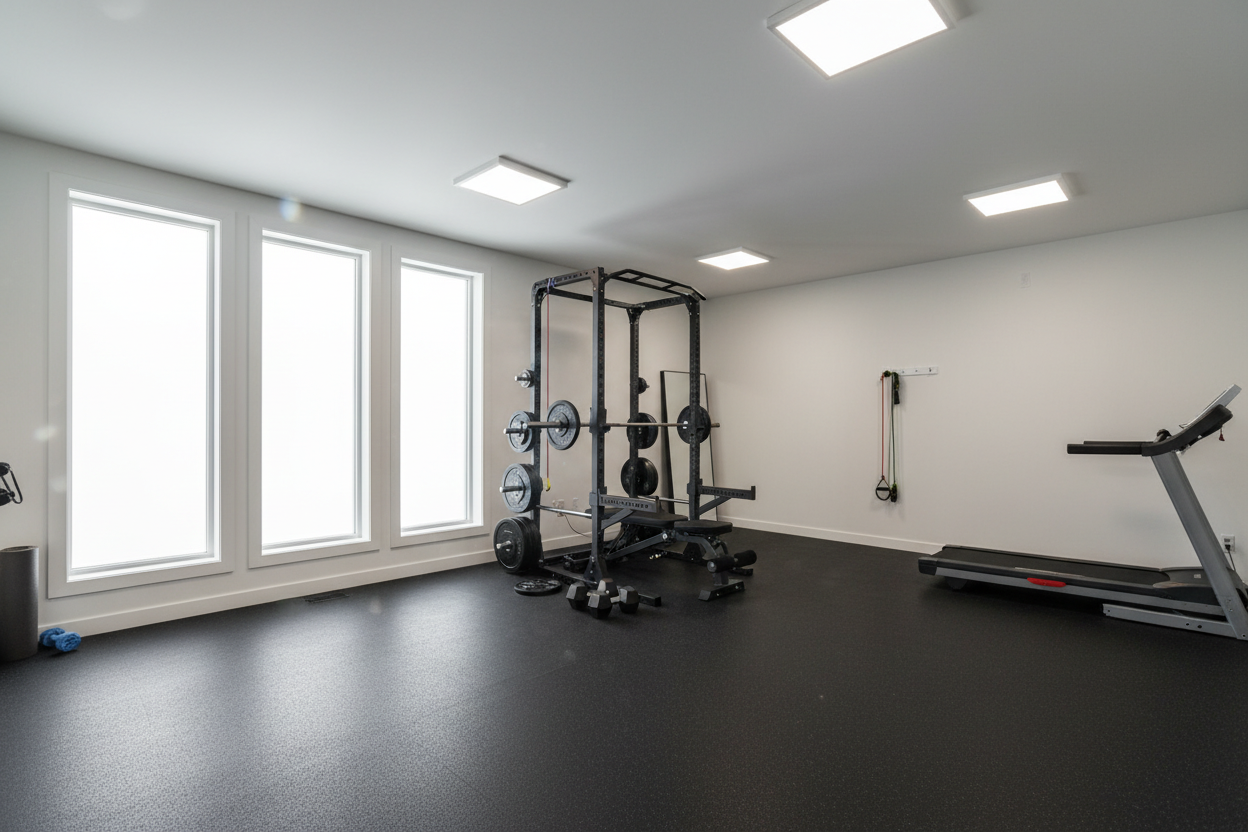
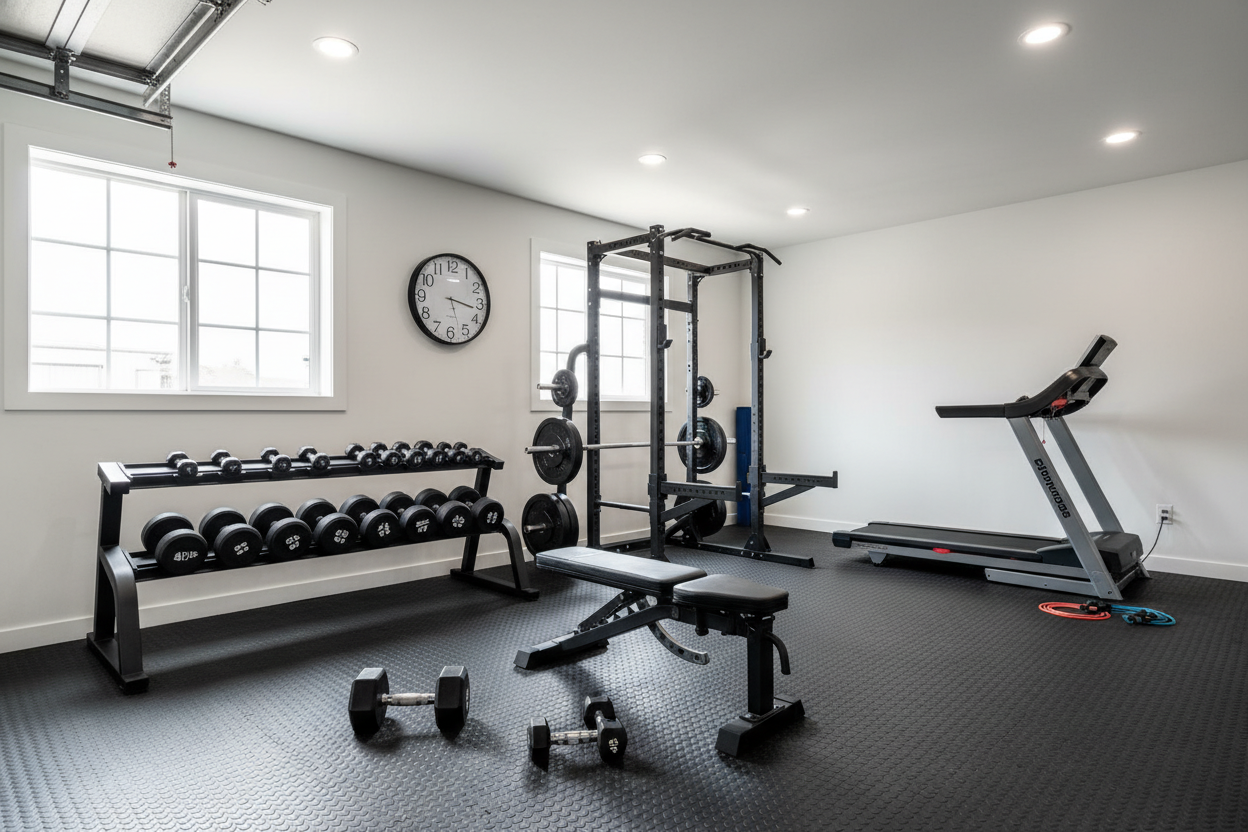
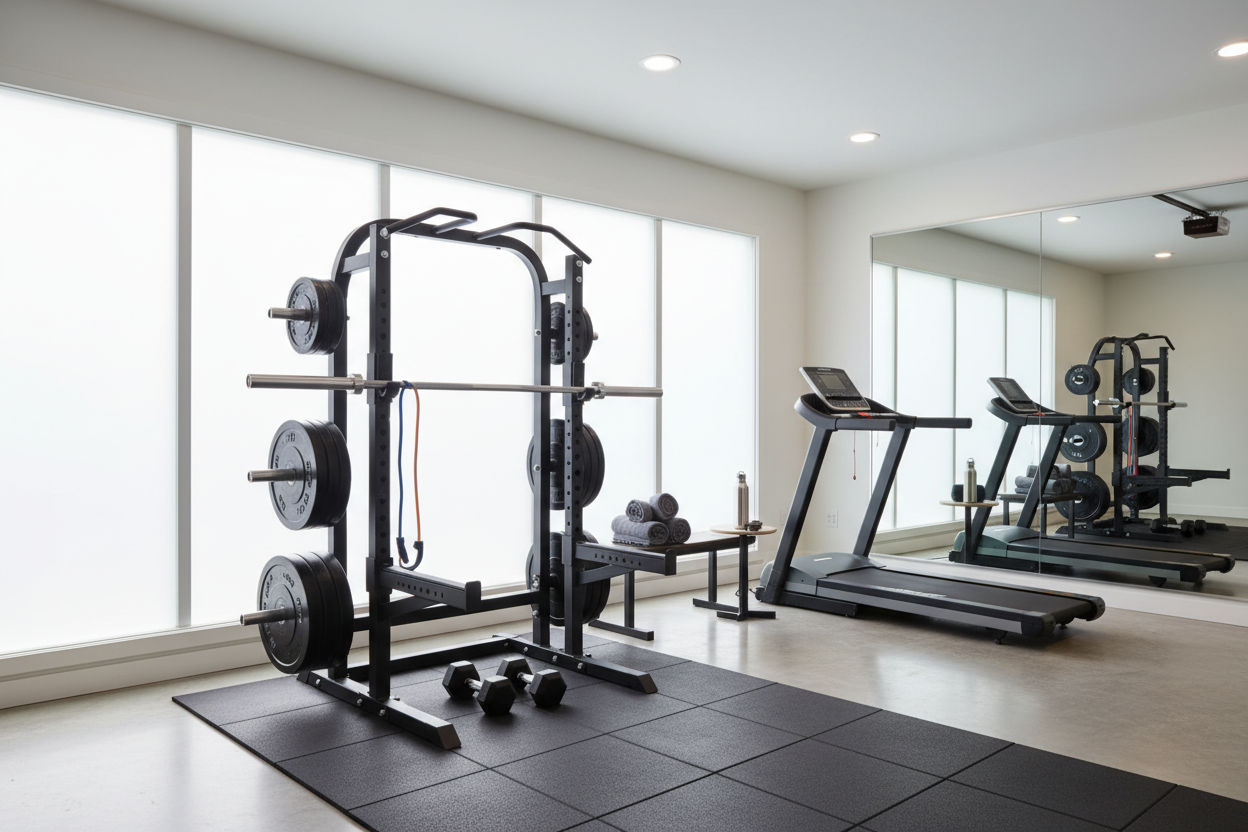
If you're training seven days a week, friction is your biggest enemy. If you have to move your lawnmower, clear off a pile of laundry, and hunt for your lifting belt, you're going to quit. You need a dedicated space that is ready when you are. The most underrated piece of equipment isn't the bar or the plates; it's the floor. Having high-quality gym flooring for home workout sessions makes a massive difference. It defines the space. When I step onto that mat, my brain switches into 'work mode.'
Keep your essentials within arm's reach. You don't need a 20-piece dumbbell rack. A solid pair of adjustable dumbbells and a versatile bench will get you through 90% of this program. I’m a big fan of equipment that has a small footprint but high durability. If it rattles or feels like it's going to snap when you load it, you won't trust it during those heavy Day 1-4 sessions. Invest in gear that feels like it belongs in a commercial gym, even if it's just a corner of your basement.
How Long Should You Actually Run This Split?
I don't recommend running a 7 day workout routine to build muscle for 52 weeks a year. It’s a tool, not a life sentence. I usually run this for a 6-week 'sprint' when I feel my consistency slipping or when I want to break through a strength plateau. It’s perfect for building a rock-solid habit. After six weeks, I’ll usually transition back to a 4-day split for a while to give my mind a break from the daily commitment.
Listen to your body. If you wake up on Day 12 and your grip strength is gone and you're cranky, take a day off. The 'micro-dose' philosophy is about being smart, not being a martyr. But for most guys who struggle to find time for the gym, chopping the work into 20-minute daily bites is the most effective way to actually see the scale move and the sleeves tighten. Give it six weeks. You might find that you actually prefer the daily rhythm over the long, grueling sessions you used to endure.
Personal Experience: My Biggest Mistake
When I first started this, I tried to keep my rest periods to 30 seconds to 'burn more fat.' Big mistake. By Day 5, my heart rate was elevated even at rest, and I was losing strength on my main lifts. I realized that micro-dosing volume doesn't mean you have to turn it into a CrossFit WOD. You still need to rest enough to move the weight with power. Now, I take a full 90 seconds between sets of squats, even in a 20-minute workout. I do fewer sets, but the sets I do actually count. Quality always beats quantity.
FAQ
Is training 7 days a week too much for natural lifters?
Not if you manage the volume. If you're doing 20 sets a day, yes, you'll crash. If you're doing 3-5 high-quality sets, your body can easily recover, especially if you're rotating the focus of the lifts.
What if I only have 15 minutes?
Perfect. Do your main lift and get out. The goal is the habit and the stimulus. Fifteen minutes of heavy rows is infinitely better than zero minutes of anything.
Do I need a full power rack for this?
It helps for safety on squats and bench, but you can run a version of this with just dumbbells or a heavy kettlebell if you're creative. The 'micro-dose' is a philosophy, not a specific equipment list.