I Laughed at the Superman Shoulder Exercise Until It Fixed My Posture
I spent years obsessing over my bench press numbers while completely ignoring the fact that I was starting to look like a gargoyle. My chest was thick, but my shoulders were rolled so far forward I could practically touch my elbows in front of my ribs. I thought heavy rows were enough to balance the scales, but I was wrong. It wasn't until I humbled myself and started doing the superman shoulder exercise that my posture actually shifted.
- Corrects the 'desk hunch' by strengthening the posterior chain.
- Isolates the lower traps and rhomboids without heavy equipment.
- Acts as a perfect primer for heavy overhead or bench pressing.
- Forces better mind-muscle connection in the upper back.
The Ego Check: Why I Started Doing Floor Work
There is nothing cool about lying face down on a gym floor moving your arms like a slow-motion bird. For a long time, I felt like floor-based stability work was for physical therapy patients, not for guys trying to move three plates. My ego was protecting a physique that was structurally falling apart. I realized heavy pressing was pulling everything forward, and my back was too weak to fight back.
If you aren't doing specific work to pull those shoulders back, your physique is just going to look slumped and injury-prone. I finally swallowed my pride when my rotator cuffs started screaming during every warm-up set. I realized I needed to stop focusing solely on the mirror muscles and start working on the ones I couldn't see. Low-intensity stability movements aren't a 'waste of time'—they are the foundation that keeps you from needing surgery at 40.
What the Superman Shoulder Exercise Actually Does
Most people treat the superman like a lower back exercise. They jerk their chest off the floor and crunch their lumbar spine. That is a mistake. When done correctly, this move targets the rear delts, rhomboids, and the often-ignored lower traps. It creates an invisible shelf of stability that supports your scapula during heavy lifts.
By keeping your chest relatively low and focusing on the arm drive, you isolate the posterior chain. Choosing the right shoulder workout exercise is about more than just moving weight; it is about choosing moves that fix your specific weaknesses. For most of us, that weakness is the inability to retract and depress the shoulder blades under control. This move forces that activation without letting your bigger muscles take over.
How to Do It Without Looking Like a Floundering Fish
The biggest mistake I see is people trying to look at the wall in front of them. This cranks your neck and ruins the tension. Keep your eyes glued to the floor. Your neck should be neutral, a straight extension of your spine. If you feel it in your neck, you are trying too hard to 'see' the exercise instead of feeling it in your back.
Squeeze your glutes hard. This stabilizes your pelvis and prevents your lower back from taking over the movement. From there, lift your arms and chest slightly off the ground by squeezing your shoulder blades together. Do not just swing your wrists up. Think about pulling your elbows toward your back pockets. It is a small, controlled movement, not a massive heave that leaves you gasping.
The 'W' and 'Y' Variations
To turn this into a complete superman shoulder workout, you need to change your arm angles. The 'Y' position—arms out at 45 degrees—hits the lower traps and mimics the overhead press path. The 'W' position—elbows tucked and bent—crushes the rhomboids and mid-back. Alternating between these ensures you aren't leaving any gaps in your upper back development. I usually cycle through 5 reps of each position per set.
Stop Doing Floor Exercises on Bare Concrete
I tried doing these on the bare stall mats in my garage for a week. It was miserable. The friction on your forehead and the pressure on your hip bones makes you want to rush through the set. If you are distracted by how much the floor sucks, you aren't focusing on the contraction in your traps. You need a surface that doesn't feel like sandpaper.
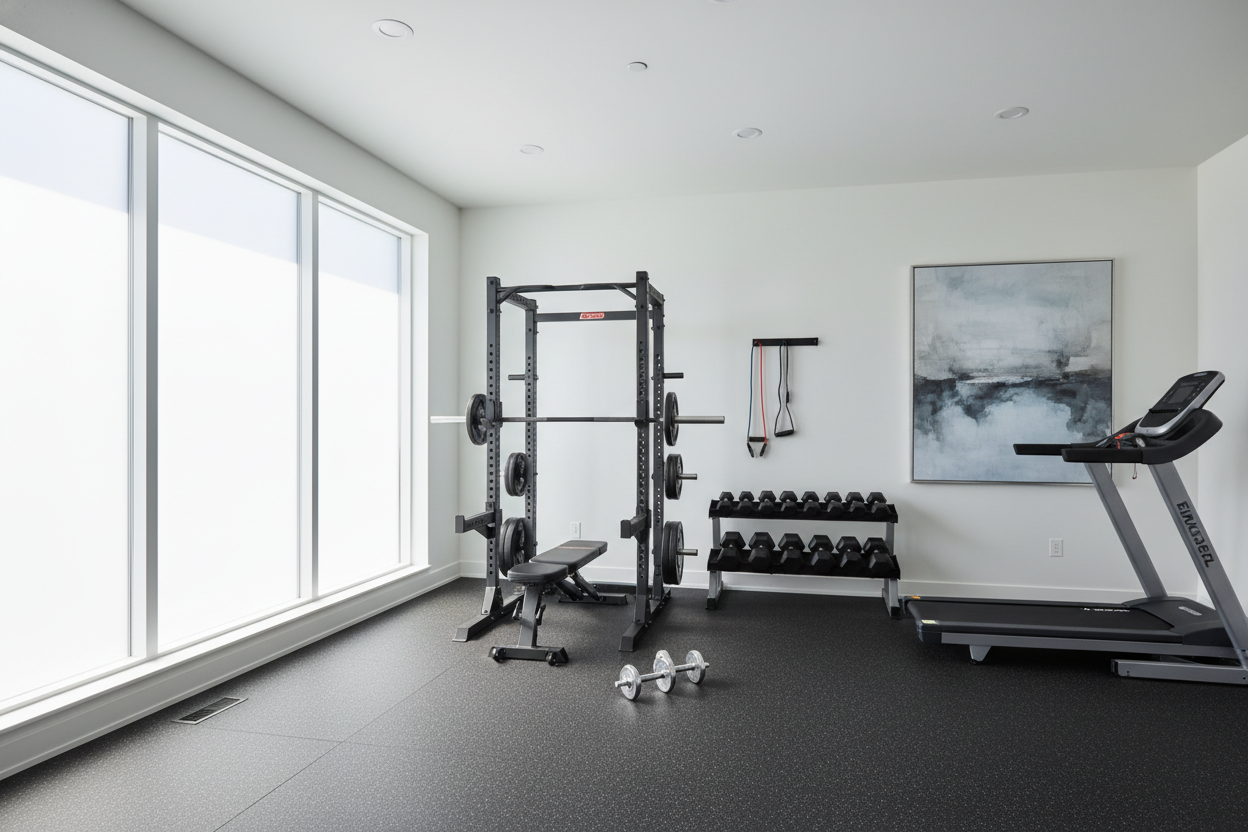
Invest in a large exercise mat so you can actually spend time on the floor without bruising your pelvic bone. If you have the space, getting dedicated gym flooring for home workout setups makes these 'prehab' moves much more inviting. When the floor is comfortable, you are more likely to actually do the work instead of skipping it for another set of curls because your knees hurt.
How to Program This Into Your Heavy Lifting Routine
I like using the superman as a primer. Two sets of 12-15 reps before you touch a barbell will wake up your upper back and make your bench press feel much more stable. You will notice the bar path feels 'tighter' because your shoulders are actually staying where they belong. It is about balancing this stability with a science based workout for shoulder mass.
Alternatively, use it as a finisher. After your heavy rows or pull-downs, hit 3 sets of max-effort holds. Hold the top position for 30 seconds, focusing on the squeeze. Your mid-back will be on fire, and you will walk out of the gym standing two inches taller. It is the best way to bulletproof your shoulders against the standard wear and tear of a heavy lifting career without adding extra fatigue to your central nervous system.
FAQ
Will this hurt my lower back?
Only if you do it wrong. If you squeeze your glutes and keep the lift small, your lower back stays safe. If you try to arch like a gymnast, you will feel it in your lumbar. Keep the range of motion focused on the shoulder blades.
Can I hold dumbbells during this?
Start with bodyweight. If you can do 20 perfect reps, try 1-lb or 2-lb plates. Anything heavier usually causes your form to break down and your traps to shrug toward your ears, which defeats the entire purpose of the movement.
How often should I do this?
If you have a desk job, do it every day. It only takes three minutes and it undoes hours of slouching over a keyboard. In a gym context, aim for 2-3 times a week during your warm-ups.