I Flipped My Bigger Shoulders Dumbbells Routine Upside Down
I remember staring at my 50-lb PowerBlocks three years ago, wondering why my triceps were bulging but my shoulders still looked like flat pancakes. I was doing exactly what every 'authority' told me: lead with the heavy overhead press while you’re fresh. It sounds logical, right? Use your maximum energy for the heaviest compound movement. But after months of grinding out heavy sets, my bench press went up, my triceps got thick, and my delts stayed stubbornly small. I realized I wasn't building bigger shoulders dumbbells style; I was just becoming a really efficient tricep-presser.
- Stop Leading with Presses: Heavy overhead work often recruits triceps and front delts, leaving the lateral and rear heads neglected.
- The Pre-Exhaust Secret: Hitting isolation moves first ensures the shoulders are the limiting factor during compound lifts.
- Save Your Joints: Pre-fatiguing allows you to get a massive growth stimulus using lighter, safer weights on the press.
- Focus on the Capped Look: Prioritizing the lateral head is the only way to get that '3D' shoulder aesthetic.
Why Your Heavy Overhead Press Is Lying to You
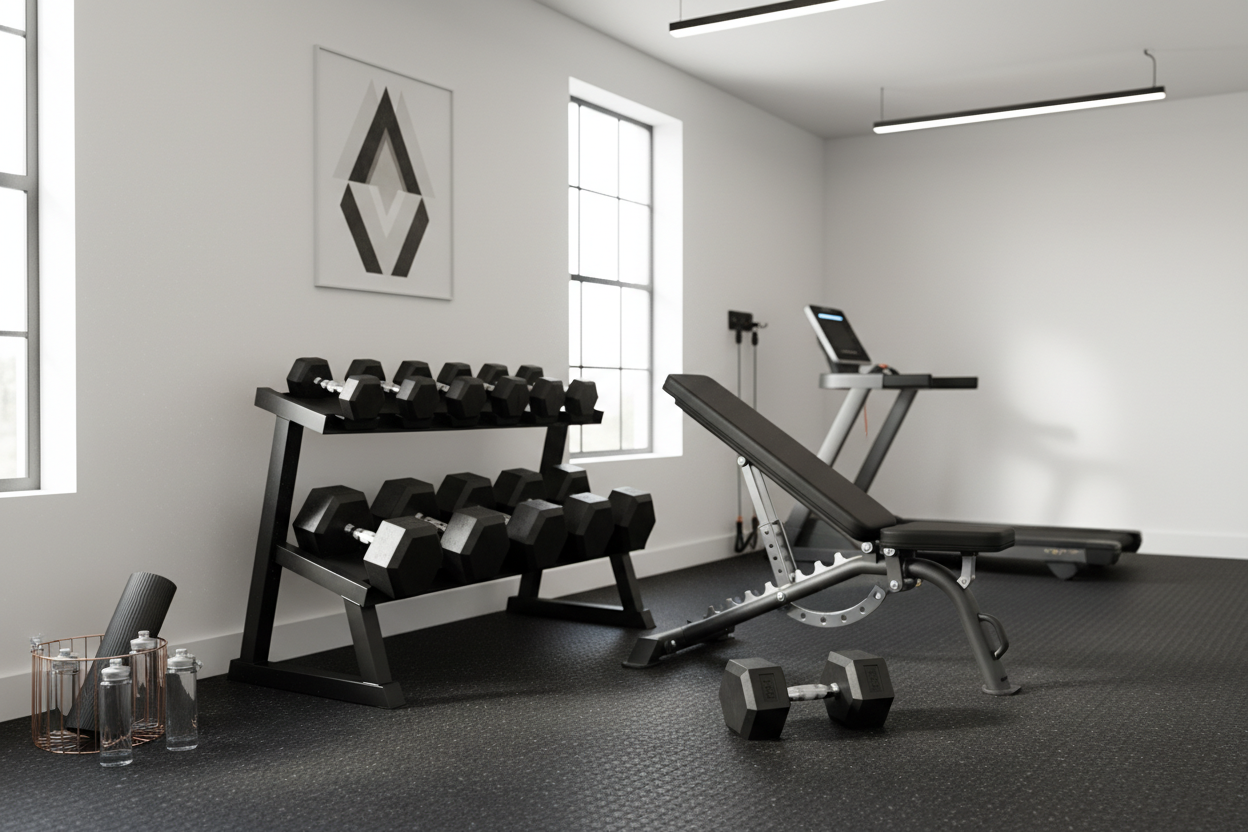
We’ve been sold a lie that the overhead press is the king of shoulder builders. Don't get me wrong, it's a legendary lift, but if you're training in a home gym with nothing but a set of adjustable dumbbells and an adjustable bench, the 'press first' mentality might be holding you back. When you start your workout with heavy seated or standing presses, your triceps and front deltoids are fresh. They are more than happy to take over the movement. Most of us already have overdeveloped front delts from years of benching and pushups, so adding more heavy volume there just creates an imbalance.
The real 'width' of your shoulders comes from the lateral head, and the 'thickness' comes from the rear head. By the time you finish five sets of heavy presses, you’re usually too gassed to give the side and rear delts the intensity they actually need. You end up swinging 15-lb dumbbells for lateral raises with terrible form just to get the reps in. I’ve seen guys with 400-lb benches who have narrow shoulders because they never learned to isolate. If you want big shoulders dumbbells alone can provide, you have to stop letting your triceps do the heavy lifting.
I’ve tested this on everything from cheap CAP hex weights to high-end urethane-coated bells. The result is always the same: if you press first, your lateral heads stay flat. The heavy weight creates an illusion of progress because the numbers on the bells are high, but the tension isn't where you want it. You’re moving the weight, but you aren't growing the muscle.
The Pre-Exhaust Fix for Stubborn Delts
The fix is simple but brutally painful: flip the script. You need to hit your lateral and rear delts before you even touch a pressing movement. This is called pre-exhaustion. By isolating the smaller, stubborn heads of the shoulder first, you flood them with blood and metabolic stress. When you finally move to the overhead press, those lateral and rear heads are already fatigued. This forces them to work harder during the press, and it prevents the triceps from simply carrying the load.
When you use the best exercise for shoulders with dumbbells—which, in my opinion, is a strictly controlled lateral raise—as your opener, everything changes. You aren't worried about how much weight you're moving yet. You're worried about the burn. I usually start with a weight that feels 'too light,' something like 15 or 20 lbs, and focus on a three-second eccentric. By the third set, my delts are screaming.
This method also solves the 'ego lifting' problem. Most home gym owners have limited weight sets. If you only have dumbbells up to 50 lbs, you'll outgrow a standard overhead press quickly. But if you pre-exhaust your delts, those 50-lb bells will feel like 90-lb monsters. You’re getting more growth out of less weight, which is also a massive win for your rotator cuffs and long-term joint health.
The Backwards Bigger Shoulders Dumbbells Routine
Ready to try it? This is the exact routine I use when I’m training in my 10x10 garage space. You don't need a massive rack or a cable machine. You just need enough floor space to move without hitting your shins on a squat stand. I recommend performing this on a surface that offers plenty of stable grip so you aren't sliding around when the fatigue kicks in and your form starts to get tested.
The goal here is high volume and short rest periods for the first two movements, followed by moderate weight and high intensity for the press. We want to achieve bigger shoulders with dumbbells by maximizing time under tension, not just moving heavy objects from point A to point B. If you're using adjustable dumbbells, keep the adjustment pin or dial ready—you'll be changing weights often.
Phase 1: Rear and Lateral Isolation
Start with Seated Rear Delt Flyes. Sit at the edge of your bench, lean forward until your chest is near your knees, and fly the weights out to the side. Do not swing. Think about pushing the weights 'away' from you rather than 'up.' I do 4 sets of 15-20 reps. Immediately follow this with Standing Lateral Raises. Keep your palms facing down and lead with your elbows. Again, 4 sets of 15-20 reps. By the end of this phase, your shoulders should feel like they’re about to pop out of your skin. This is the foundation for big shoulders dumbbells enthusiasts usually miss.
Phase 2: The Pre-Fatigued Press
Now, and only now, do you move to the Seated Dumbbell Overhead Press. You will be shocked at how heavy your 'warm-up' weight feels. If you normally press 60s, grab the 40s. Sit back with a slight incline on the bench (about 85 degrees) to protect your lower back. Focus on a deep stretch at the bottom—get those bells down to shoulder level—and press up to just short of lockout. Because your delts are already fried, your triceps can't just take over. Every inch of the movement will be felt in the deltoid. Aim for 3 sets of 8-12 reps to failure.
Balancing Your Upper Body After Trashing Your Shoulders
This routine is taxing. If you do this correctly, your shoulders will be useless for at least 48 hours. This means you need to be smart about your weekly split. I never run this routine the day before or the day after a heavy chest session. Your front delts are heavily involved in pressing, and if they’re trashed from this 'backwards' routine, your bench press will suffer—or worse, you’ll catch an impingement.
To build a big shoulders with dumbbells look while maintaining overall strength, I suggest a 72-hour gap between this workout and your primary chest day. This allows you to focus on building a bigger stronger chest with dumbbells without your shoulders becoming the 'weak link' that causes you to fail your sets early. I usually pair this shoulder day with a light tricep finisher or some forearm work since the heavy lifting is already done.
Personal Experience: The Ego Check
I’ll be honest: the first time I tried this, I hated it. My ego took a massive hit. I went from pressing 80-lb dumbbells for reps to struggling with 45s. I felt like a weakling in my own gym. But after six weeks, I noticed something in the mirror. My shoulders actually had a shape. They weren't just sloping down from my neck; they had that 'capped' look that makes your waist look smaller and your frame look wider. I stopped caring about the numbers on the dumbbells and started caring about the reflection in the mirror. If you’re stuck in a plateau, drop the ego and flip your workout. It works.
FAQ
Do I need heavy dumbbells for this?
Actually, no. Because of the pre-exhaustion, you can get an incredible workout with a pair of 25s or 35s. It’s perfect for home lifters who don't have a full commercial rack of weights.
How often should I do this?
Once or twice a week is plenty. If you do it twice, make sure there are at least three days of rest in between. Shoulder tissue is small and easy to overtrain.
Can I do this standing?
You can, but I prefer seated for the isolation work. It prevents you from using your legs to 'cheat' the weight up, which defeats the whole purpose of pre-exhausting the muscle.