I Dusted Off the Body for Life Upper Body Exercises (And Got Humbled)
I spent twenty minutes last Tuesday scrolling through a 'functional hypertrophy' app that wanted me to do banded-kettlebell-stability-presses while standing on one leg. I looked at my power rack, then at my dog-eared 1999 copy of Bill Phillips' book, and realized I'd drifted too far into the weeds. It was time to revisit the body for life upper body exercises and see if they still held water in a garage gym era.
The 90s weren't just about baggy windbreakers; they were about a specific kind of intensity that modern 'optimized' routines often miss. I decided to run the full circuit using my own gear, expecting a walk in the park. I ended up gasping for air on my rubber flooring, reminded that basic movements done with zero ego are still the gold standard for growth.
Quick Takeaways
- The 12-10-8-6-12 rep scheme is a metabolic trap that actually works for muscle thickness.
- You don't need a commercial gym; a solid set of adjustable dumbbells is your best friend here.
- Rest periods are non-negotiable—keep them under 60 seconds or you lose the effect.
- Floor protection is mandatory when you're training to absolute failure on the final burnout sets.
Why I Went Back to the 1999 Playbook
Modern fitness has become obsessed with novelty. We buy 'smart' mirrors and $3,000 cable systems but forget how to actually strain against a heavy piece of iron. The Body for Life protocol is a relic of an era where results mattered more than Instagram aesthetics. It’s simple, it’s fast, and it’s brutally effective because it forces you to work near failure for five straight sets without the fluff.
I’ve tested every fancy split out there, from German Volume Training to conjugate methods. What I missed about the classic body for life upper body workout was the sheer efficiency. You aren't standing around checking your phone for three minutes between sets. You're in, you're sweating, and you're out in 45 minutes. It’s a blue-collar approach to lifting that fits perfectly in a garage gym where time is usually the biggest constraint.
The 12-10-8-6-12 Gauntlet Explained
The mechanics of this routine are built on 'progressive fatigue.' You start with 12 reps at a moderate weight (Level 5 intensity), then 10 (Level 6), 8 (Level 7), and 6 (Level 8), increasing the weight each time. Then, without rest, you finish with a 12-rep burnout of two different exercises back-to-back at 'Level 10' intensity. This isn't just a workout; it's a lesson in pain tolerance.
By the time you hit that final set of 12, your muscle fibers are screaming. You’re hitting every fiber type—mechanical tension on the heavy set of 6, followed by extreme metabolic stress on the final 12. In my experience, this is where the magic happens. I used my 52.5-lb adjustable dumbbells, and by the time I reached the shoulder portion, those weights felt like 100-lb boulders. It forces adaptation because your body has no choice but to grow to keep up with the volume.
Adapting the Routine for a Garage Setup
Most people think they need upper body workout machines for home to do this right. You don't. I did the whole chest, back, shoulder, and arm circuit with nothing but an adjustable bench and dumbbells. For lats, I swapped the traditional cable pulldowns for heavy one-arm dumbbell rows. For triceps, I used overhead extensions instead of a cable press-down.
The stimulus is actually better with free weights. Machines guide the path for you, but when you're doing a dumbbell chest press on a 12-10-8-6-12 scheme, your stabilizers are working overtime. One tip from my own session: have your weights pre-staged. Because the rest intervals are so short, you don't want to be fumbling with pin-select weights or screw-on collars while your heart rate is at 150 bpm. Efficiency is the name of the game here.
Protecting Your Space When the Dumbbells Get Heavy
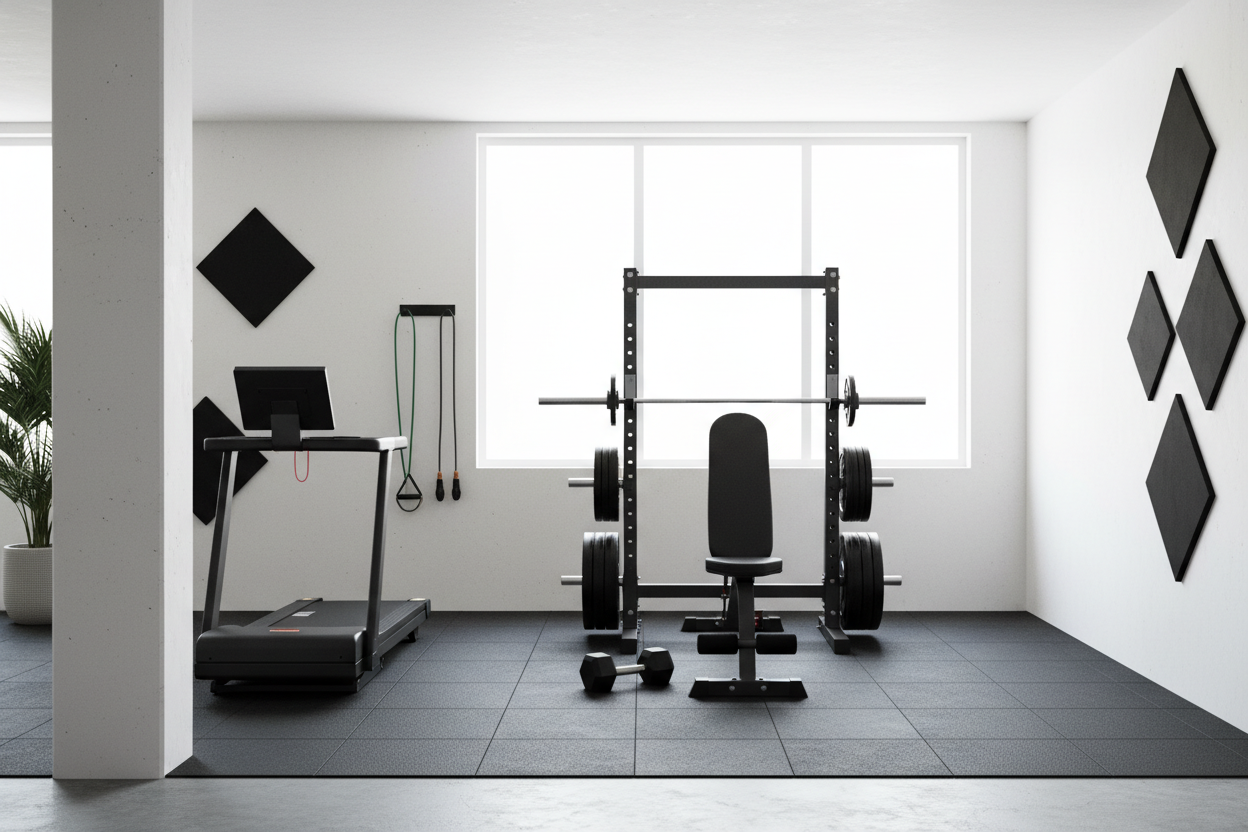
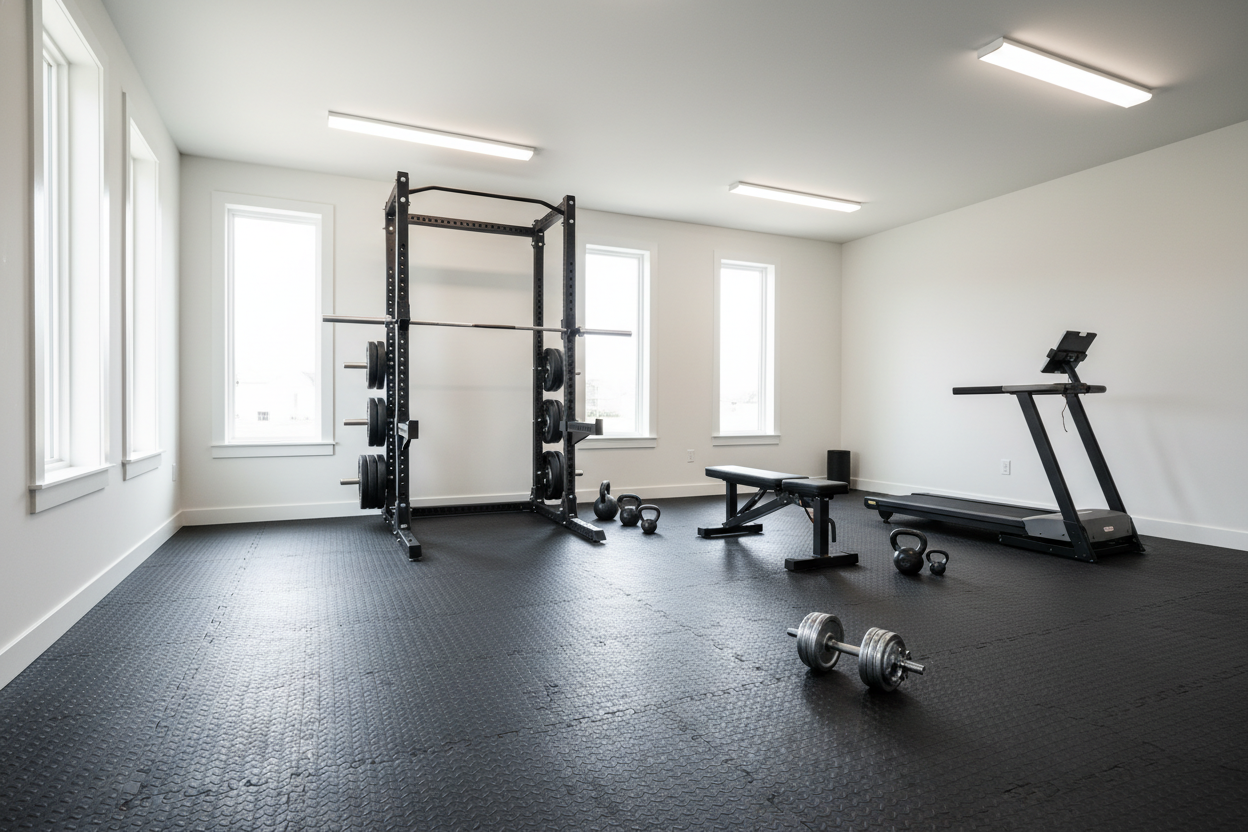
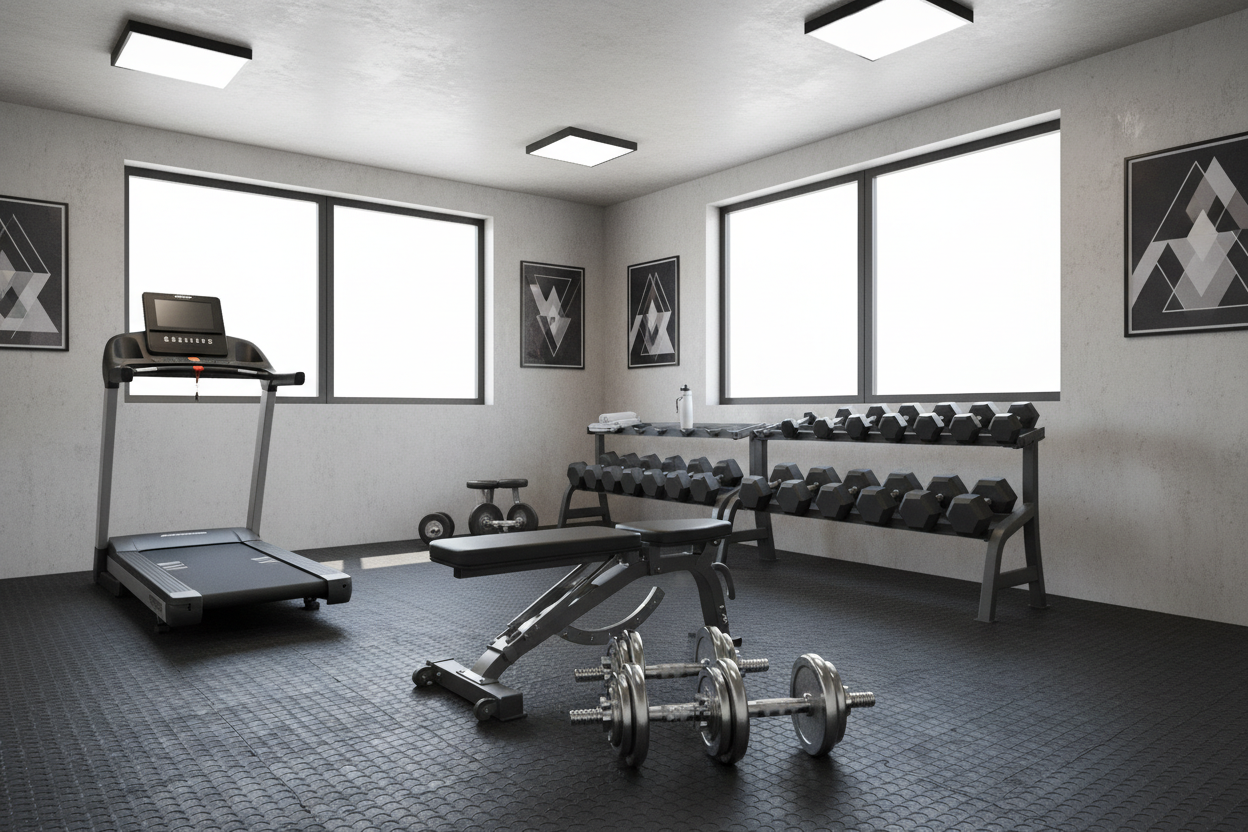
When you hit that final set of 12 to absolute failure, you aren't going to gently place your weights back on the rack. You're going to drop them. On my last set of lateral raises, my delts simply quit. If I had been training on bare concrete, I’d be looking at a cracked floor and chipped weights. This is why I swear by high-density rubber.
I use a 6X8Ft Exercise Mat Yoga Mat Gym Flooring For Home Workout because it’s thick enough to handle the impact of a 50-lb hex dumbbell without that annoying 'bounce' you get from cheap foam tiles. It covers enough area that I can move from the bench to the floor for pushups without stepping onto cold concrete. If you’re going to train with the intensity this program demands, don't skimp on the foundation. Your subfloor will thank you.
Can Anyone Actually Survive This Rep Scheme?
The intensity of the 12-10-8-6-12 protocol is high, but it’s scalable. I’m in my late 30s, and my joints aren't what they were at 19. I’ve found that the key is picking the right 'Level 10.' Failure shouldn't mean 'snapping your form,' it should mean 'I cannot complete another rep with perfect technique.' For lifters who find the high-volume rep scheme too taxing on their elbows or shoulders, you might want to look at The Only 4 Senior Upper Body Exercises You Need for Daily Life as a way to build a base before jumping into this gauntlet.
The beauty of this 90s throwback is that it’s a self-correcting system. If you go too heavy on the set of 10, you won't make the set of 6. It teaches you how to listen to your body and how to gauge true RPE (Rate of Perceived Exertion) without needing a spreadsheet. It’s honest work for honest results.
FAQ
How long does the upper body workout take?
If you stick to the 60-second rest intervals, you'll be done in about 40 to 45 minutes. It’s designed to be fast and intense.
Do I need a spotter for these exercises?
Not if you use dumbbells. Unlike a barbell bench press where you can get pinned, you can simply drop dumbbells to the side if you hit total failure.
Can I do this workout every day?
Absolutely not. The Body for Life schedule typically has you doing upper body on Monday, lower body on Wednesday, and upper body again on Friday. Your central nervous system needs the recovery time.
What if I don't have enough weight for the set of 6?
If you max out your dumbbells, slow down the tempo. A 4-second eccentric (lowering phase) will make a 50-lb weight feel like 80 lbs very quickly.