I Ditched My Huge Functional Trainer for a Wall Workout Machine
I remember the exact moment I had enough. I was trying to squeeze past my massive 400-pound functional trainer to grab a pair of 25s, and I caught my pinky toe on the heavy steel base. It wasn't the first time. My garage felt more like a warehouse for metal than a place to actually train. I realized that day that a wall workout machine was the only way I would ever get my floor space back without giving up my cable work.
Quick Takeaways
- Reclaims roughly 15-20 square feet of floor space compared to freestanding units.
- Standard 2:1 or 1:1 cable ratios remain identical to commercial gym feel.
- Proper installation into studs is rock-solid even for 200lb+ pulls.
- Allows for a dual-purpose room (gym and parking/living) without compromise.
The Day I Realized My Gym Was Eating My Garage
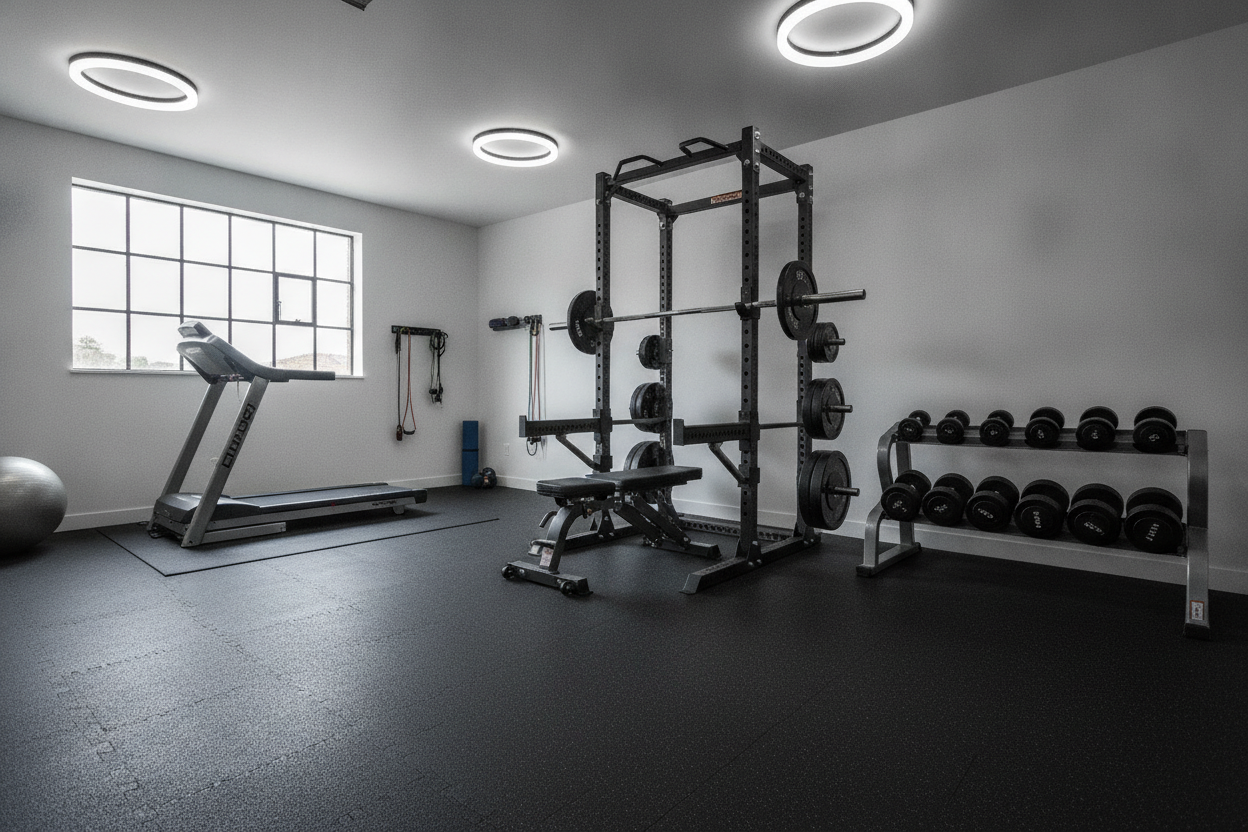
Most of us start our home gym journey by buying the biggest, beefiest thing we can find. We think 'commercial grade' means it has to have four legs and a footprint the size of a Smart car. For two years, I lived with a functional trainer that dominated the center of my garage. It was a beast, but it was also a hurdle. Every time I wanted to do a set of walking lunges or just move a bench around, I was playing a high-stakes game of Tetris.
The frustration peaked when I realized I was skipping accessory work just because I didn't want to navigate the obstacle course. A huge footprint doesn't equal a better workout if you're constantly tripping over the gear. I needed a wall mounted workout machine that stayed out of the way until I actually needed to pull some weight.
Why I Finally Looked at a Wall Workout Machine
When I started digging into wall mounted exercise equipment, I was skeptical. I figured a wall gym machine would feel flimsy or have a shorter cable travel. I was wrong. Modern designs use the same 11-gauge steel and aircraft-grade cables you find in the big rigs. The primary difference is the engineering; they use the wall's structural integrity to replace those massive, floor-hogging stabilizer legs.
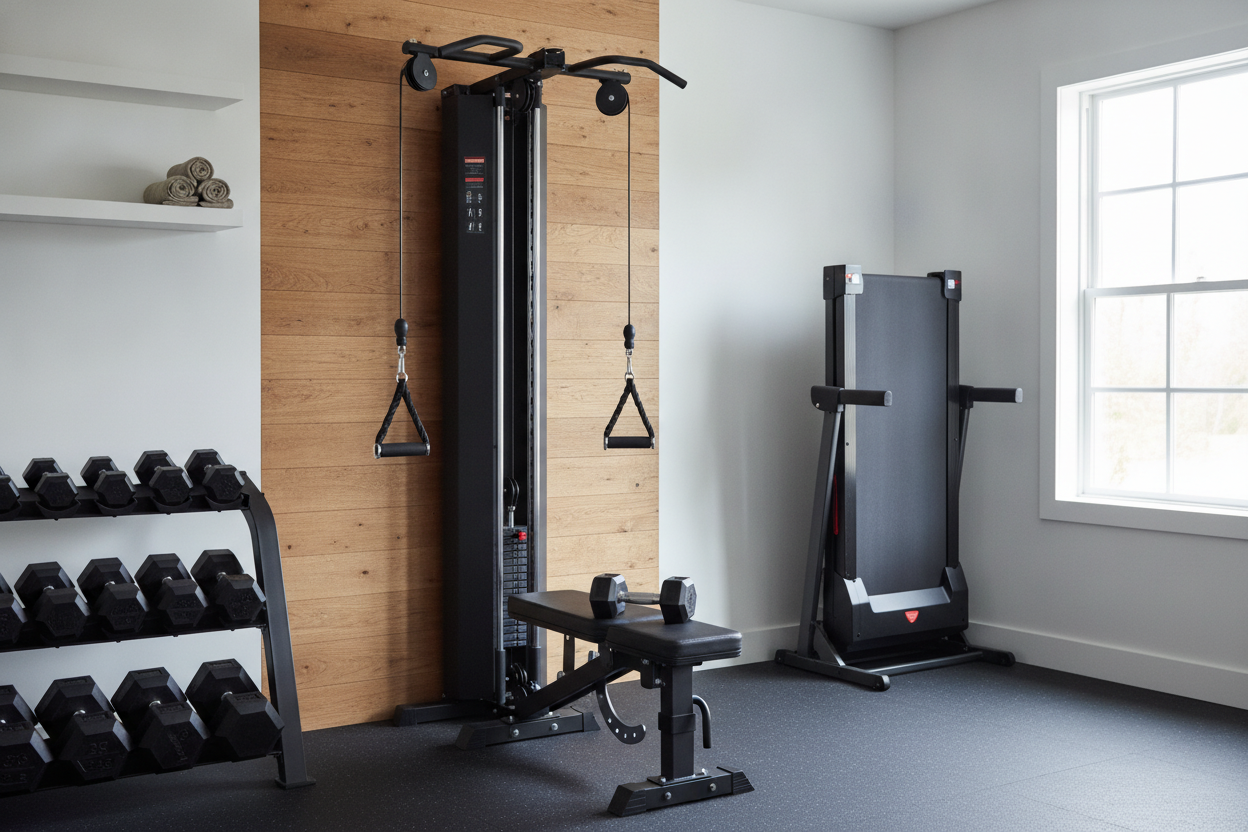
By switching to a wall mounted fitness system, I moved the entire resistance profile to a depth of only 4 to 10 inches from the wall. During my research into wall mounted exercise equipment, I found that you aren't losing the 'functional' part of the trainer. You still get adjustable pulleys, smooth tracking, and the ability to hit every angle for chest, back, and delts. It’s the same mechanical advantage, just tucked away like a Murphy bed.
The Big Fear: Will It Rip the Studs Out?
This is the first question everyone asks about wall mounted fitness equipment. I had the same vision of my drywall crumbling while I was mid-set on a heavy row. Here is the reality: your house is stronger than you think. When you secure a wall mount gym into two or three wooden studs using 3-inch lag bolts, the load is distributed vertically across the entire frame of the wall.
I’ve personally loaded my wall weight system to 200 pounds and performed explosive face pulls. There is zero flex. If you're really worried, you can mount a stringer (a horizontal piece of 2x4 or 2x6) across the studs first, then mount the machine to that. It’s an over-engineered solution that ensures that workout machine on wall stays exactly where you put it.
How My Training Changed After the Swap
The transition to a wall mounted exercise station was seamless. My bodybuilding routine usually involves a lot of high-volume cable work—triceps press-downs, cable crossovers, and lat raises. With a wall exercise machine, the pulleys are often more adjustable because they aren't boxed in by a cage. I found I could set the handles wider or narrower depending on the specific wall machine workout I was hitting that day.
The biggest change was the flow. I could move from a heavy barbell set on my rack directly to the cable stack without moving a single piece of furniture. If you stop wasting your home gym space, your rest periods actually stay rest periods instead of equipment moving sessions. My wall mounted fitness setup feels like a natural extension of the room rather than an intruder.
Reclaiming the Floor for Deadlifts and Stretching
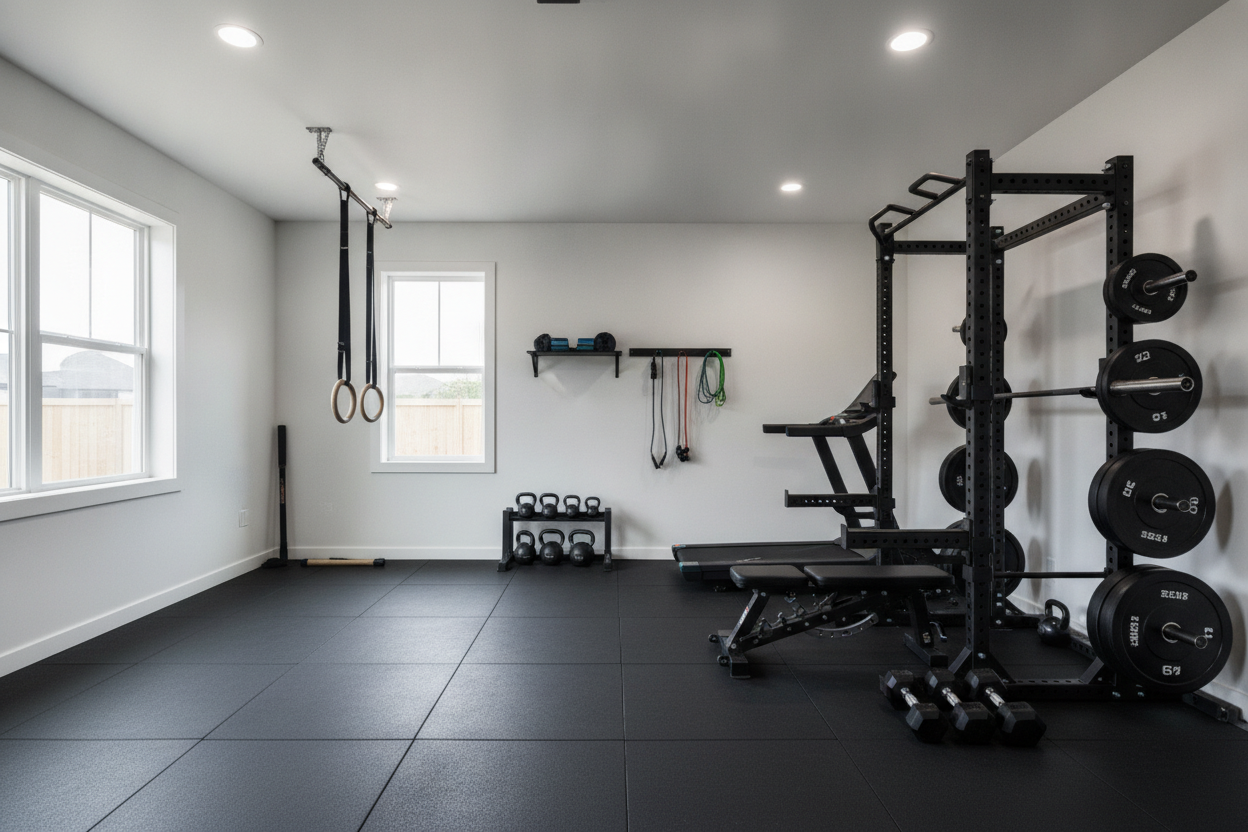
Once the old trainer was gone, I suddenly had a 6x6 foot clearing in the middle of my gym. This is where the home gym wall mount approach really pays off. I was finally able to lay down a large home workout mat permanently. Before, I was stretching on a sliver of concrete between the rack and the trainer. Now, I have a dedicated zone for mobility work and heavy deadlifts.
Having an on the wall workout machine means the 'dead zone' in front of the machine is now usable space. I can pull a flat bench right up to the wall mount fitness machine for chest presses, then slide it back and have a wide-open floor for kettlebell swings or jump rope. It turned a cramped one-car garage into a legitimate training facility.
Who Actually Needs to Make This Switch?
If you have a 4,000-square-foot commercial warehouse, keep your freestanding towers. But for the rest of us—the garage lifters, the basement grinders, and the spare-bedroom warriors—a wall mount workout equipment setup is the smarter play. You aren't sacrificing weight capacity; most of these units handle 250-300 lbs easily. You're just sacrificing the bulk.
If you're tired of walking sideways to get around your gear, look into a home wall gym. It’s a professional-grade solution that respects your square footage. I haven't missed my old functional trainer for a single second, and my pinky toe is much happier for it.
FAQ
Is a wall mounted home gym harder to install than a freestanding one?
Slightly. You need a stud finder, a level, and a drill. It takes about 45 minutes to an hour. A freestanding unit takes longer to assemble but doesn't require drilling into your house. The trade-off is worth the extra hour of work.
Can I use my existing cable attachments?
Yes. Almost every wall resistance machine uses standard carabiners. Your favorite stirrup handles, lat bars, and triceps ropes will clip right on without any issues.
Does it vibrate the whole house?
If you're slamming the weights at 5 AM, someone in the next room might hear the thud against the studs. However, most wall mounted home gym equipment uses rubber bumpers and smooth pulleys to keep the noise to a minimum. It’s generally quieter than a rack-mounted system.