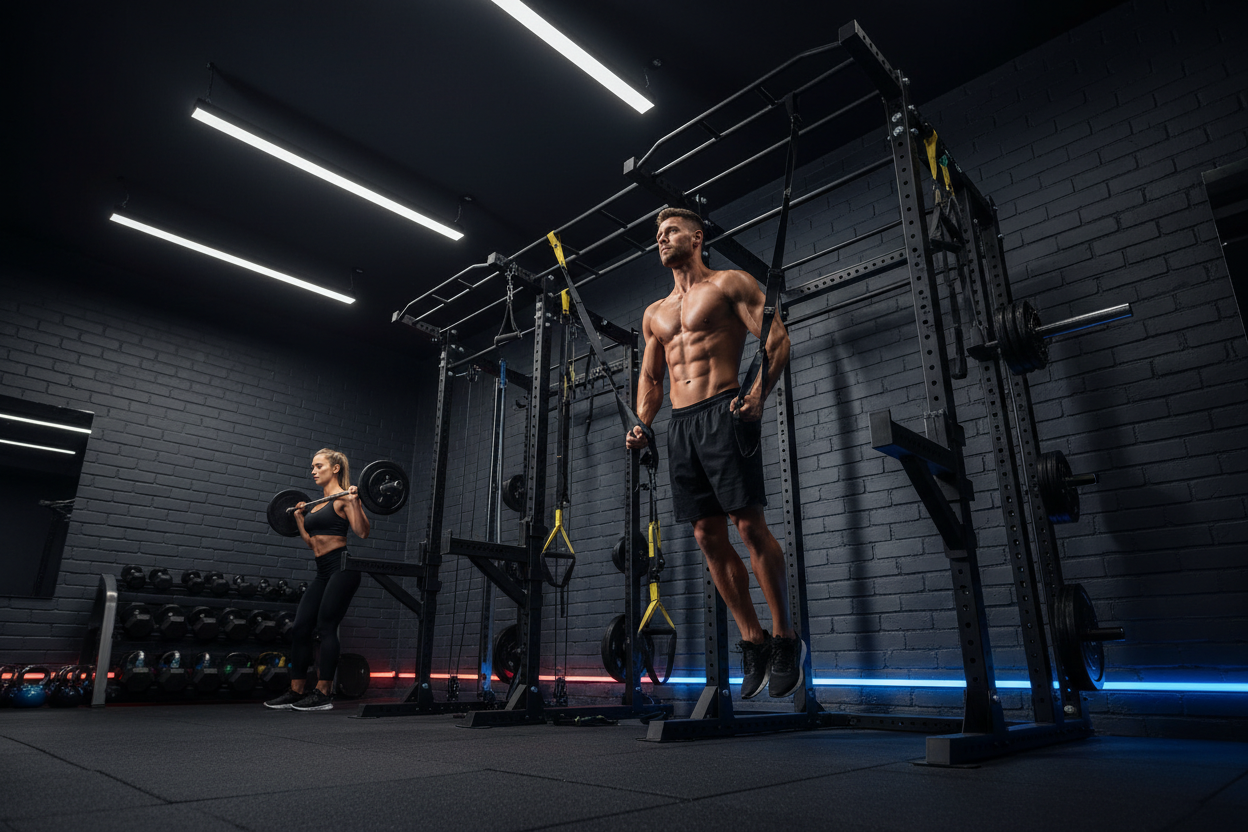
Wall Mounted Exercise Equipment: Maximize Your Home Gym Space
If you are trying to squeeze a functional training space into a crowded two-car garage, a basement corner, or a spare bedroom, floor space is your most valuable currency. Traditional power racks and bulky functional trainers eat up square footage fast, leaving you cramped, frustrated, and unable to park your car indoors. That is where wall mounted exercise equipment comes in.
By utilizing your home's vertical space, you can build a commercial-grade training environment that neatly folds away when you are done. But before you start drilling into your drywall, you need to understand the structural requirements, equipment variations, and space clearances necessary to make these systems work safely and effectively.
Key Takeaways
- Space Efficiency: Folding racks and cable setups can reduce equipment footprint by up to 90% when not in use.
- Structural Integrity: Safe installation requires locating wall studs and often utilizing a wooden stringer board to distribute weight.
- Versatility: From simple pull-up bars to a comprehensive wall mounted workout system, there are options for every training style.
- Ceiling Clearance: Always measure your ceiling height—including overhead reach for pull-ups—before purchasing a wall gym system.
Planning Your Wall Mounted Workout Layout
Transitioning to wall exercise equipment requires a shift in how you view your room's layout. Unlike freestanding units that can be nudged around, wall-mounted gear is a semi-permanent fixture. You need to account for both the deployed footprint and the folded footprint.
Measuring Clearances and Stud Spacing
Before buying any heavy-duty wall mount workout equipment, grab a stud finder. Most North American homes feature wall studs spaced 16 inches on center, though some garage walls are built with 24-inch spacing. If your studs do not perfectly align with the mounting brackets of your chosen rig, you will need to install a horizontal stringer board (usually a 2x8 or 2x10 piece of lumber) across multiple studs first. Additionally, ensure you have at least 36 to 48 inches of clearance in front of the rig for barbell work, and check that your ceiling is high enough to accommodate pull-ups without hitting your head.
Choosing Your Equipment Style
The term 'wall-mounted fitness' covers a broad spectrum of gear. Your choice should dictate your primary training goals, whether that is heavy powerlifting or dynamic functional training.
Folding Power Racks vs. Cable Pulley Systems
If your goal is heavy strength training, a folding squat rack is the ultimate wall mount exercise system. These feature heavy-gauge steel uprights that swing outward and lock into place, allowing you to squat, bench, and press with the same stability as a full cage. On the other hand, if you prefer hypertrophy and isolation work, a wall mounted fitness system featuring dual cable pulleys might be better. Cable systems sit incredibly close to the wall (often protruding less than 6 inches) and offer endless angles for a full-body wall mount workout.
From Our Gym: Honest Take
When we installed a premium folding rack in our primary testing garage, we ran into a classic home gym hurdle: our garage wall studs were spaced 24 inches apart, while the rack's brackets were designed for 16-inch spacing. We had to lag-bolt two heavy-duty wood stringers across the wall before attaching the steel brackets.
One detail that most product pages gloss over is the true folded footprint of a wall mount exercise system. Even when fully collapsed, the uprights, J-cups, and pull-up bar hardware still protrude about 5 to 6 inches from the wall. It is undeniably a massive space saver, but do not expect it to sit completely flush like a flat-screen TV. That said, the structural rigidity blew us away. Once the hitch pins were locked into the deployed position, the rig felt completely immovable. My chalked grip held solid through heavy 400lb rack pulls, and I never once felt the frame sway during kipping pull-ups. If you take the installation seriously, the performance is indistinguishable from a freestanding commercial rack.
Frequently Asked Questions
Is wall mounted exercise equipment safe for standard drywall?
No. You should never anchor heavy fitness equipment directly into drywall. Any wall mounted exercise must be secured directly into wooden or metal wall studs, or into concrete/masonry using the appropriate concrete anchors.
How much weight can a folding wall rack hold?
When properly installed into wall studs (preferably using stringer boards), a high-quality folding rack can easily support 800 to 1,000 pounds. The weight is actually dispersed downward through the steel uprights into the floor, while the wall brackets primarily provide lateral stability.
Can I install a wall gym system in an apartment?
It is generally not recommended unless you own the apartment or have explicit permission from your landlord. Installing a secure wall mount workout system requires drilling thick lag bolts deep into the structural studs, which goes beyond standard picture-hanging wear and tear.