I Ditched Bro Splits for These 3-Day Strength Training Workouts
I spent five years stuck at a 225-lb bench press. Every Monday was 'International Chest Day,' followed by five more days of grueling isolation work that left me more depleted than a cheap battery. I was exhausted, my elbows felt like they were filled with sand, and my PRs hadn't budged since the Obama administration. I was a victim of the 'more is better' fallacy that plagues every commercial gym floor.
The truth is, most of us aren't professional bodybuilders with world-class recovery genetics or 'enhanced' help. We're regular people with jobs, kids, and stress. Switching to a minimalist approach with strength training workouts three times a week didn't just save me time—it finally added 50 pounds to my squat in three months. Here is why doing less iron-shoveling might be the only way you will ever get truly strong.
Quick Takeaways
- Intensity beats frequency every single time for raw power.
- Your Central Nervous System (CNS) needs 48 hours to recover from true max-effort sets.
- A 3-day full-body split allows for higher frequency of the 'Big Three' lifts.
- Minimalist equipment, like a power rack and a quality bar, is all you need to break plateaus.
The Problem With Living in the Gym 6 Days a Week
I used to think that if I wasn't in the gym six days a week, I was a quitter. I ran high-volume bodybuilding splits: Chest/Tris, Back/Bis, Legs, repeat. By Wednesday, my nervous system was fried. I was hitting 'junk volume'—those sets at the end of a workout where you're just moving weight for the sake of the pump without actually stimulating new strength. When you work out for strength, you have to realize that 70% effort six days a week is vastly inferior to 100% effort three days a week.
The real killer was under-recovery. I’d hit a heavy bench session on Monday, then do heavy overhead presses on Tuesday. My front delts never had a chance. I was constantly in a state of 'functional overreaching,' which is a fancy way of saying I was tired and weak. My joints were inflamed, and my motivation was tanking because the numbers on the bar never changed. I was spinning my wheels in a 52.5-lb dumbbell puddle of my own sweat. If you are hitting the gym every day and your numbers are flat, you aren't a hard worker; you're just a tired one.
Why Less is Actually More When You Work Out For Strength
Strength is a skill, and like any skill, it requires a fresh brain and a fresh body. When you perform heavy strength workouts, you aren't just taxing your muscles; you're taxing your Central Nervous System (CNS). The CNS is the electrical grid that tells your muscles to fire. If that grid is browned out from too much volume, you can't recruit the high-threshold motor units needed to move 400 pounds. This is why you feel 'heavy' even on weights you should be able to handle.
By moving to a three-day schedule (typically Monday, Wednesday, Friday), you give your body a full 48 hours to rebuild. On your off days, you aren't just sitting around; you're allowing the supercompensation curve to actually happen. I noticed that by Friday, I was actually excited to get under the bar again. My 'snap' was back. I wasn't just grinding out reps; I was exploding through them. Forcing yourself to rest is often harder than forcing yourself to train, but it is the literal secret to moving heavier iron. You don't get strong in the gym; you get strong in your sleep.
The 3-Day Template That Changed Everything
My new routine was dead simple. I stopped looking at the cable machines and started looking at the rack. The core of this program is the Full-Body A/B Split. Monday is Workout A, Wednesday is Workout B, and Friday is Workout A again. The following week, you flip it. It’s a classic approach, but people ignore it because it doesn't feel 'fancy' enough. But trust me, when you are squatting and pressing in the same session, you won't feel like you're taking the easy way out.
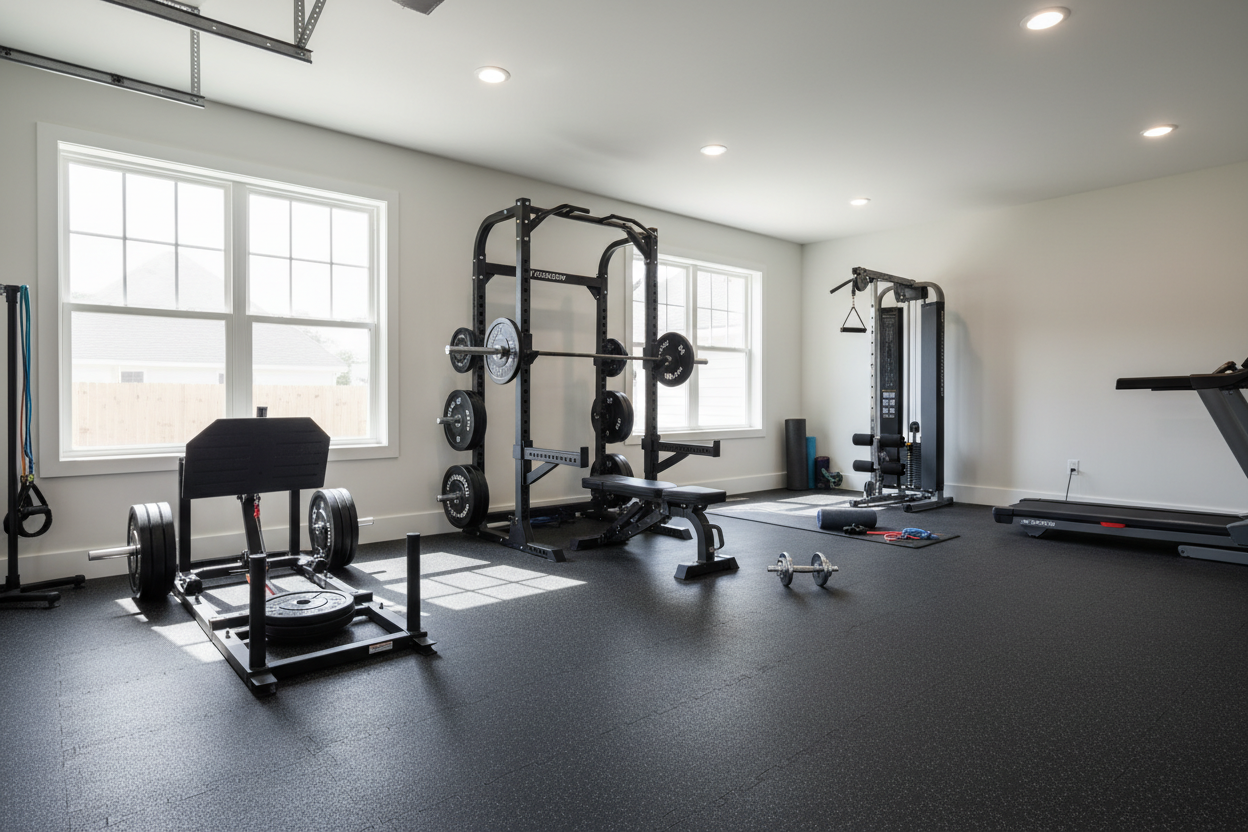
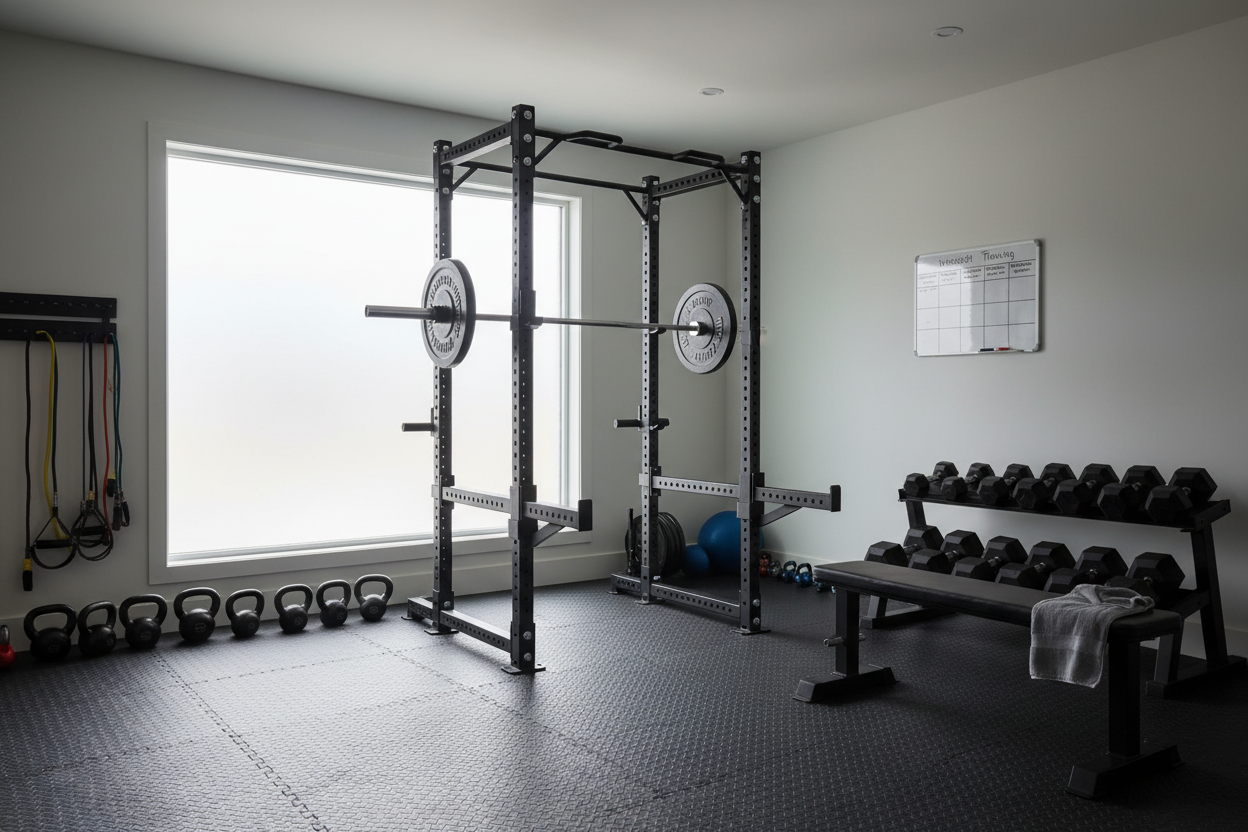
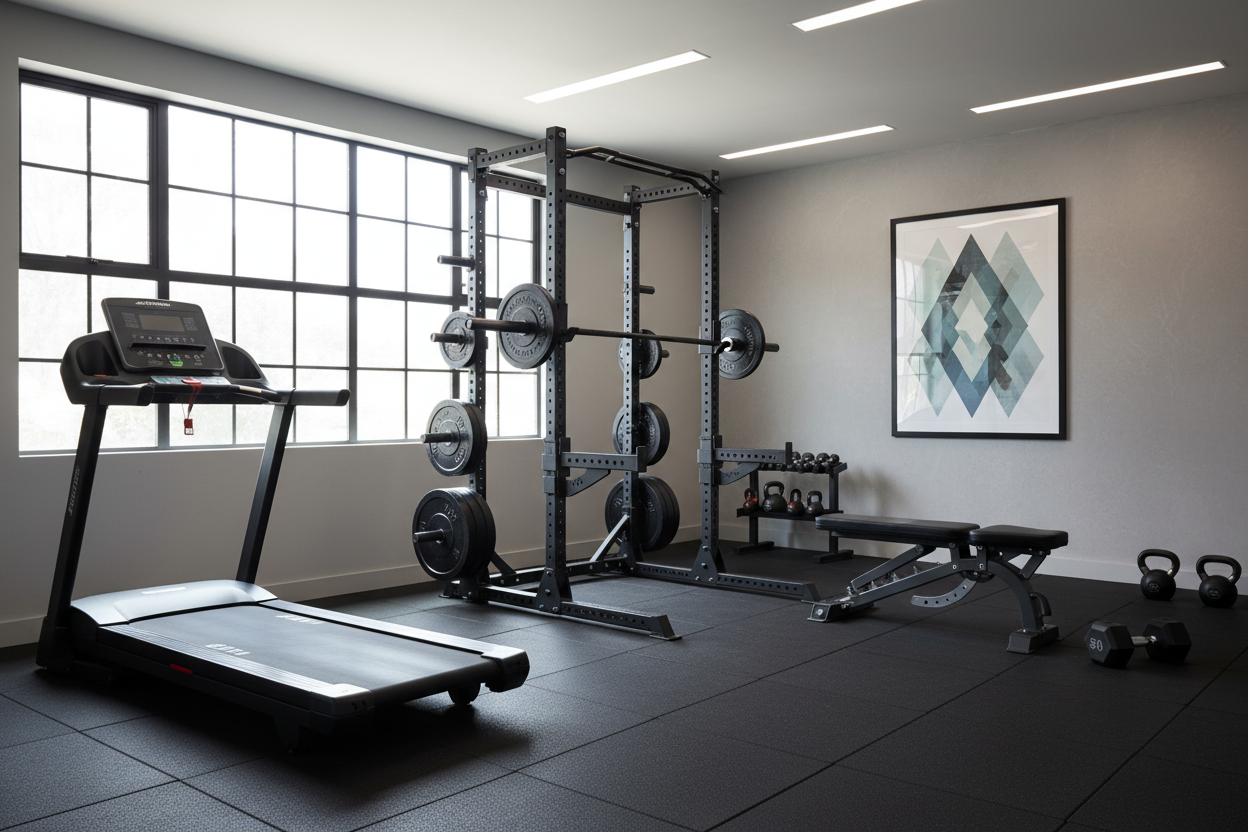
The beauty of this is that it requires very little. I realized I could do this entire routine with basic garage gym strength equipment. You need a solid power rack, an Olympic barbell with decent knurling, and a flat bench. That’s it. No Pec-Dec, no Leg Extension machine, no fluff. Each session focuses on three main movements performed for 3 to 5 sets of 5 reps. This 'low rep, high weight' philosophy ensures you are building dense muscle and actual force production rather than just sarcoplasmic hypertrophy (the 'inflated' look that disappears after three days off).
Squats and Deadlifts Are Non-Negotiable
If you want to get strong, you have to embrace the suck of the lower body. I used to be the guy who did 'Leg Day' once a week and spent most of it on the leg press. Now, I squat or deadlift every single session. There is no better way to trigger a systemic hormonal response than putting a heavy bar on your back. It forces your entire core to stabilize and your posterior chain to work as a unit.
However, you have to be smart. You are sabotaging your lower body strength training workouts if you try to max out every single time. I follow a heavy/light/medium rotation. Monday might be heavy back squats, while Wednesday is a lighter front squat or a deadlift variation. This keeps the movement pattern fresh without blowing out my spine before the weekend. If you aren't willing to stand in the rack and struggle, you aren't training for strength—you're just exercising.
You Don't Need Barbells for Every Single Lift
While the barbell is the king of the gym, it can be a harsh monarch. After years of heavy benching, my shoulders started to protest. This is where high-quality dumbbells come in. They allow for a more natural range of motion and force your stabilizer muscles to work independently. If one arm is weaker than the other, a barbell will hide it; a dumbbell will expose it immediately.
I started swapping my secondary pressing movements for dumbbells to save my joints. You can find effective dumbbell chest workouts for strength that actually compliment your heavy barbell work. I usually save the heavy dumbbells for my 'B' days or as accessory work after my main lifts. It’s about longevity. If you're too injured to lift, you're not getting stronger. Using dumbbells for rows and presses has kept me in the game longer than I ever thought possible.
Setting Up Your Space to Handle Heavy Strength Workouts
If you're going to be pulling heavy triples and grinding out 5x5 squats, your environment matters. You can't reach a true 1RM if you're worried about the floor cracking or the rack wobbling. When I moved my training to the garage, I realized that a bare concrete floor is the enemy of a heavy deadlift. It’s loud, it’s slippery, and it’s destructive to your plates.
Invest in durable gym flooring for home workouts before you buy your next fancy belt. You need a stable, high-density surface that won't compress under a 400-pound load. I’ve seen guys try to lift on cheap foam puzzle mats, and it’s a disaster—it’s like trying to squat on a mattress. Get the 3/4-inch rubber. It deadens the noise, protects your foundation, and gives your feet the grip they need to drive through the floor. A stable base is the first step to a massive total.
Personal Experience: The Lesson of the 'Ego Session'
The biggest mistake I made during this transition was the 'Ego Session.' About six weeks into my 3-day split, I felt so good that I decided to add a fourth day of 'extra' arm and shoulder work. Within two weeks, my Friday squat session felt like I was moving through molasses. I had violated the cardinal rule: trust the program. I had to learn the hard way that 'feeling good' is the result of the rest, not a signal to skip it. Now, if I have extra energy, I go for a walk or do some mobility work. I leave the intensity for the three days that actually count.
FAQ
Is three days really enough to build muscle?
Absolutely. Hypertrophy is a byproduct of tension and volume. By hitting full-body three times a week, you're actually stimulating each muscle group more frequently than a traditional once-a-week body part split. Your muscles will be under more total weekly tension with heavier loads.
Can I do cardio on my off days?
Yes, but keep it low-impact. Zone 2 walking or light cycling is great for blood flow and recovery. Avoid high-intensity interval training (HIIT) on your off days, as it taxes the same nervous system you're trying to let rest for your next heavy session.
What if I don't have a power rack?
You can still get strong with dumbbells and a bench, but your ceiling will be lower for movements like the squat. If you're serious about strength training workouts, a rack is the best investment you'll ever make. Until then, focus on Bulgarian split squats and heavy floor presses.