I Cut My Bulking Gym Routine in Half (And Finally Got Bigger)
I spent three years chasing a 'pump' in my garage gym, hitting six-day splits and wondering why my weight stayed at a stubborn 175 pounds. I was following every pro-bodybuilder bulking gym routine I could find on Instagram, doing 20 sets of chest and wondering why my bench press hadn't moved in six months. My joints ached, my motivation was shot, and I was basically just doing high-intensity cardio with heavy-ish weights.
The breakthrough didn't come from adding more exercises; it came from cutting my bulking lifting routine down to the bare essentials. I stopped trying to mimic guys with professional recovery teams and started lifting like a person who actually has a life outside the rack. If you're struggling to put on size, you likely don't need more volume—you need more recovery and heavier weight.
- Volume is the enemy: Too many sets burn the calories you need for growth.
- Recovery is king: Muscle grows while you sleep, not while you're grinding out 15th-set curls.
- Compound focus: Squats, deadlifts, and presses should make up 80% of your work.
- Progressive overload: If you aren't adding weight to the bar, you aren't bulking.
The High-Volume Trap Most Guys Fall Into
Most lifters think a bulking training plan needs to look like a grocery list of isolation exercises. They'll do flat bench, incline bench, decline bench, cable flyes, and pec deck all in one session. By the time they get to the third exercise, their central nervous system is fried, and they're just moving weight without any real intensity. I was that guy, spending two hours a day in the gym and eating 4,000 calories just to maintain my weight.
The truth is that a bloated workout routine for bulking is counterproductive for the natural trainee. Every extra set you do is a withdrawal from your recovery bank account. When I dropped from six days to three, my strength skyrocketed because I was finally giving my muscle fibers time to actually repair and thicken. Stop trying to 'annihilate' the muscle; aim to stimulate it and then get out of the way.
Why Less Volume Actually Equals More Mass
A successful workout program bulking phase is about mechanical tension, not metabolic stress. You want to move heavy loads that force your body to adapt by building new tissue. When you're constantly chasing a pump with 15-rep sets, you're mostly just stressing your cardiovascular system. Remember, your workout for strength training shouldn't leave you puking or gasping for air—it should leave your muscles feeling taxed and heavy.
By cutting the total number of sets in your training for bulking, you can put 100% effort into the few sets that actually matter. I went from doing 24 mediocre sets per workout to 9 or 10 high-intensity sets. The result? I started adding 5 pounds to the bar every week again. That's the signal your body needs to stay in an anabolic state.
The 4 Core Lifts Your Mass Phase Actually Needs
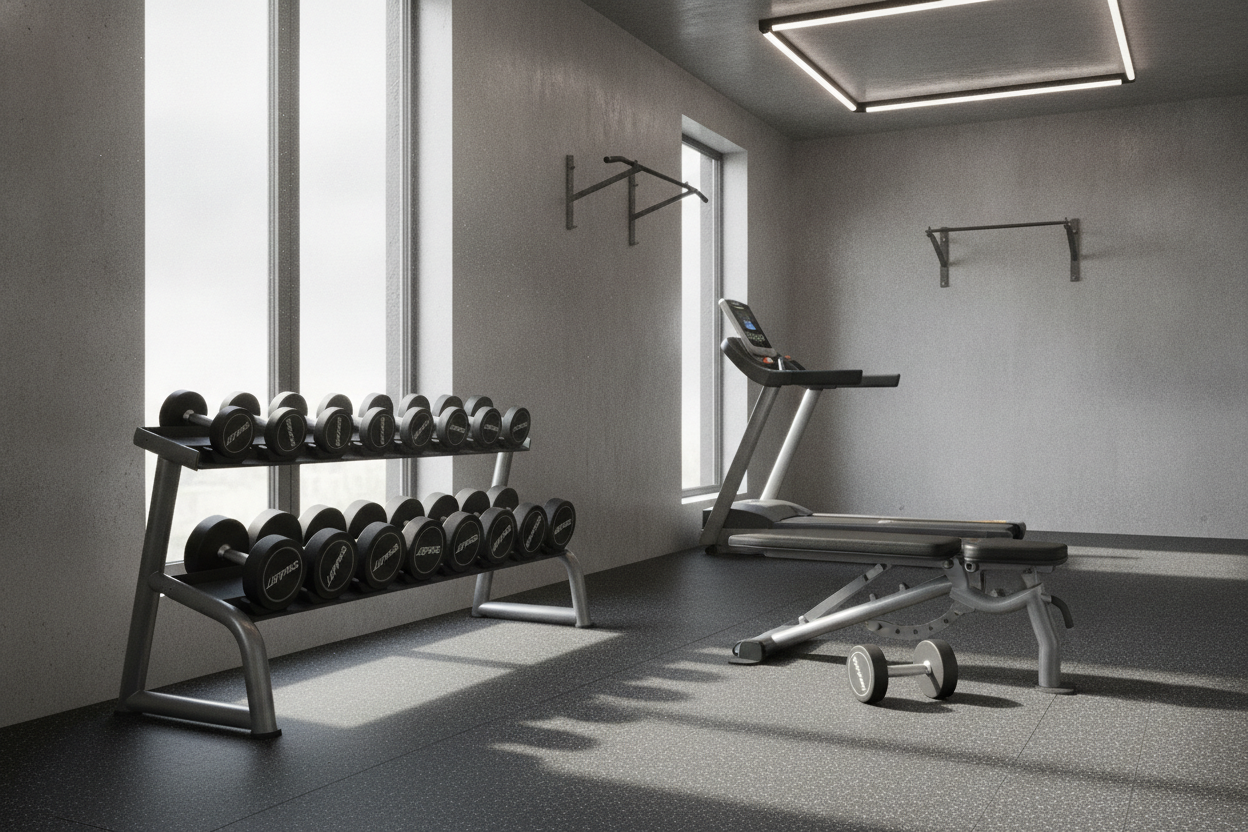
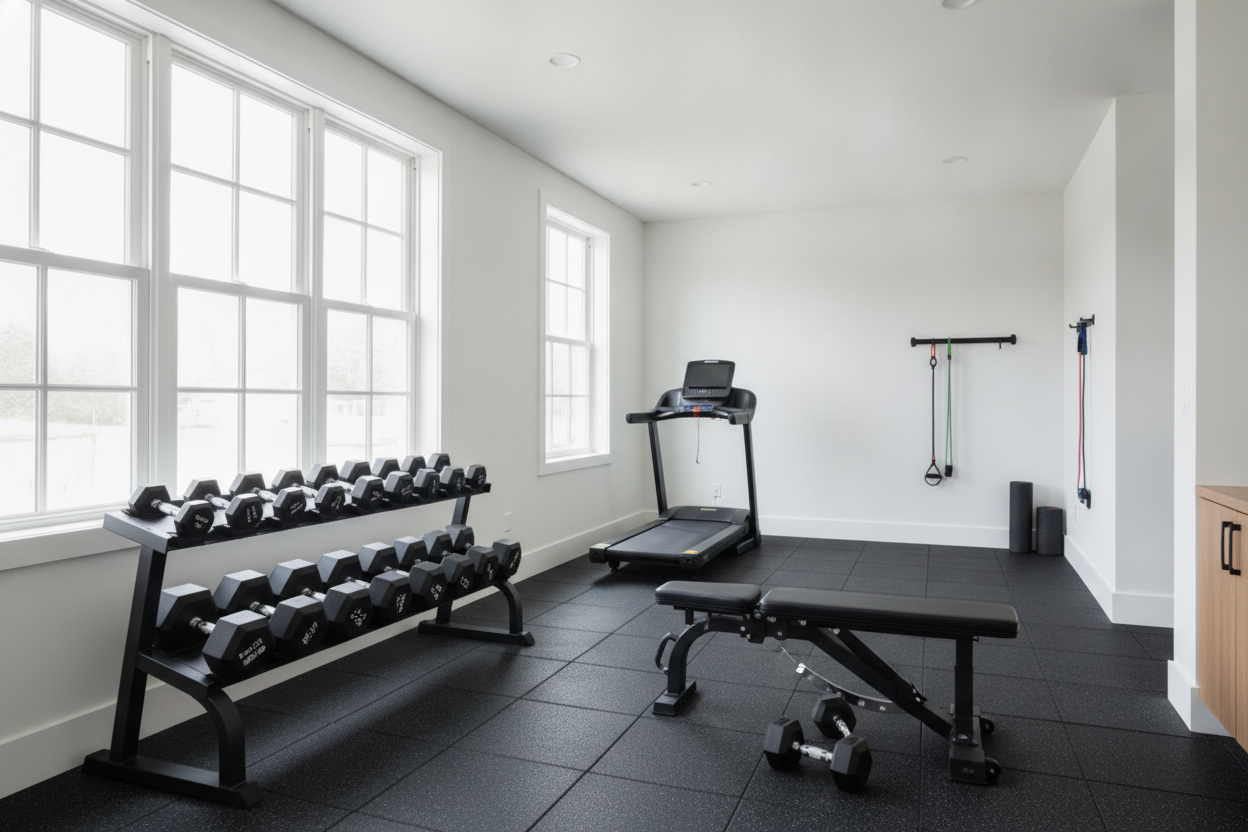
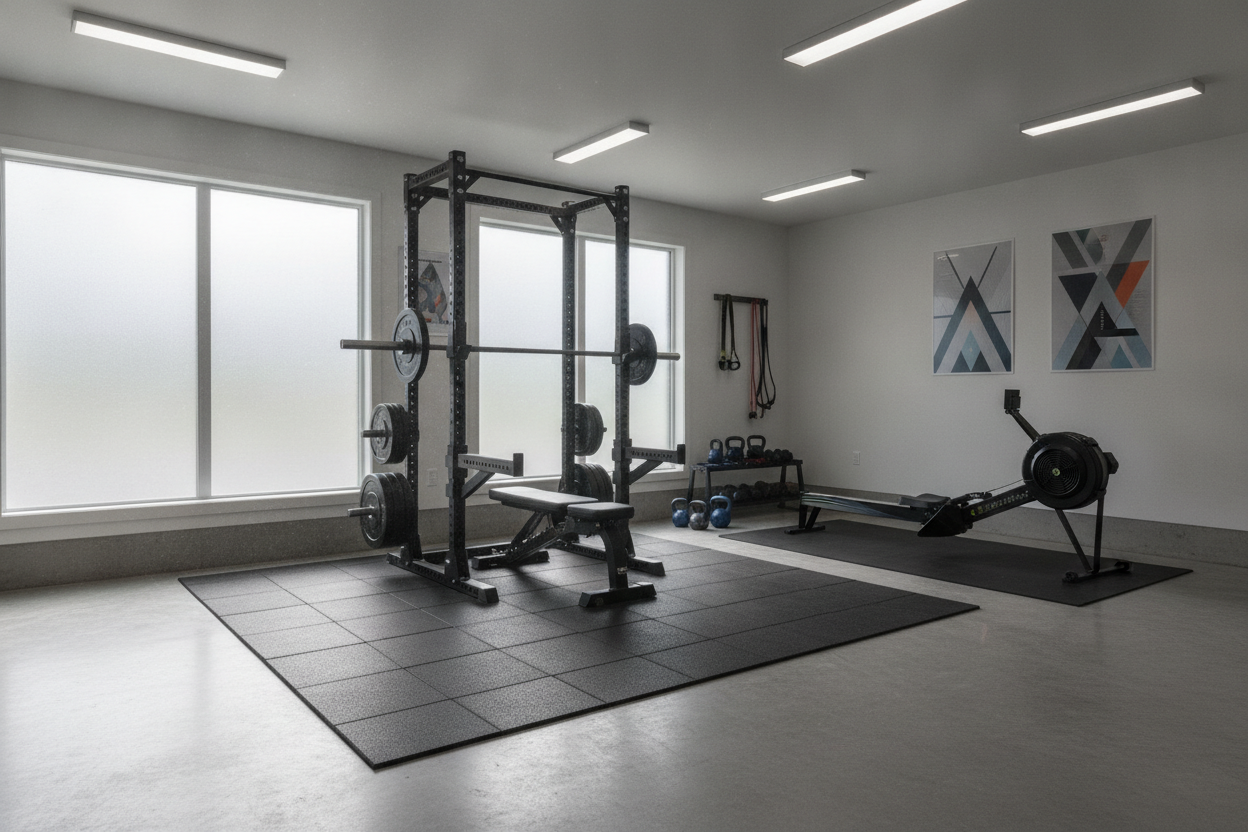
If you're training in a home gym, you don't need a row of selectorized machines to get big. You need a barbell and a rack. My current workout for bulking revolves around four movements: the Back Squat, the Deadlift, the Overhead Press, and the Weighted Pull-up. These movements recruit the most muscle mass and trigger the greatest hormonal response.
When you're pulling heavy off the floor, stability is everything. I learned the hard way that lifting on bare concrete is a recipe for a cracked foundation and a slipped disc. Investing in quality gym flooring for home workout was a non-negotiable for me; it gave me the grip and the confidence to actually pull 400+ pounds without worrying about my feet sliding or the floor shattering. A stable base allows you to transfer all your power into the bar.
You Don't Need 15 Machines to Get Huge
People think a bulk gym program requires fancy equipment, but some of the biggest guys in history built their frames with a rusty barbell and a squat stand. Free weights require more stabilization and hit those small 'connector' muscles that machines ignore. This leads to a denser, more rugged look rather than the 'inflated' look you sometimes see with machine-only training. If it doesn't involve a barbell or a heavy dumbbell, it's a secondary priority in my bulk routine.
My Minimalist 3-Day Bulking Gym Routine
This is the exact workout schedule for bulking I used to finally break through my plateau. It's a simple Full Body split performed three days a week (e.g., Monday, Wednesday, Friday). Rest at least 3 minutes between sets—don't rush it.
- Day 1: Back Squats (3x5), Overhead Press (3x5), Weighted Pull-ups (3x8).
- Day 2: Deadlifts (1x5—yes, only one heavy set), Bench Press (3x5), Barbell Rows (3x8).
- Day 3: Front Squats (3x5), Incline Press (3x8), Dips (3xMax).
The goal is simple: add 2.5 to 5 pounds to every lift, every week. This bulk training routine works because it's sustainable. You aren't dreading a two-hour marathon; you're going in for 45 minutes of violent, heavy effort and then going home to eat and grow.
Food Is Your Only Real 'Bulking Supplement'
You can have the most perfect bulking training program in the world, but if you're eating like a bird, you're just going to get leaner and weaker. You need a caloric surplus. I found that aimlessly 'eating big' just made me fat, so I focused on hitting 1 gram of protein per pound of body weight and filling the rest with clean carbs like rice and potatoes. I stopped buying expensive 'mass gainer' shakes that are just maltodextrin and started eating real steak and eggs. Your body knows the difference.
Where to Go When the Newbie Gains Stop
Eventually, you'll hit a wall where you can't add weight every single session. That’s when this basic bulking schedule needs to evolve. You might move to a 4-day Upper/Lower split or start periodizing your loads. When you reach that point, check out the Workout Hub for more advanced programming options. But for now? Stick to the basics, lift heavy, and stop doing so much damn cardio in the weight room.
FAQ
How long should a bulking workout last?
If you're doing it right, 45 to 60 minutes. If you're in there for two hours, you're likely talking too much or doing too much 'fluff' work that doesn't contribute to growth.
Can I do this bulking programme every day?
No. The growth happens during rest. If you lift every day, you'll burn too many calories and stall your strength gains. Stick to 3 or 4 days a week.
Should I do cardio while on a bulk workout schedule?
Keep it minimal. A 20-minute walk is fine for heart health, but don't go running five miles if you're trying to put on serious mass. You need those calories for muscle repair.