I Combined My Stretch and Workout (And My Joints Stopped Aching)
I used to be the guy who walked into my garage gym, loaded 225 on the bar, and did two lazy arm circles before diving into my first set. I thought I was being efficient. In reality, I was just speed-running my way to a chronic shoulder impingement. My knees felt like they were filled with gravel, and my lower back had the pliability of a dry Saltine cracker. I realized that if I didn't find a way to stretch and workout simultaneously, I was going to end up needing a physical therapist on speed dial before I hit forty.
The issue is the mental hurdle. We see a 'stretch session' as this boring, separate entity that happens on a yoga mat. But for those of us who live for the iron, that feels like wasted time. I had to change the math. I stopped treating stretching as a chore and started treating it as part of the lift. This isn't just about 'feeling loose'; it's about hitting your positions so you can actually move the weight you're capable of moving.
- Static stretching a cold muscle is a recipe for a pull.
- Active mobility between sets keeps your heart rate up and your joints lubricated.
- A full body stretch exercises more than just your muscles; it resets your nervous system.
- Consistency beats intensity—a 10-minute daily full body stretch is better than a 90-minute yoga class once a month.
The 'Warm-Up' Lie I Told Myself for Years
For a decade, my 'warm-up' was just the first few sets of whatever exercise was on the menu. I figured the movement itself was enough. But as the weights got heavier, my range of motion got shorter. I was doing 'ego depth' on squats and wondering why my hips felt like they were locked in a vice. The traditional 5-minute pre-workout static stretch—where you just hang out and touch your toes—is mostly a waste of time. It doesn't prep the motor patterns you're about to use.
When you skip a proper full body stretch, you're essentially trying to drive a car with the parking brake on. You might get down the road, but you're burning through your brake pads. For me, the physical toll was constant 'hot spots' in my elbows and a nagging tightness in my T-spine that made overhead pressing feel like a torture device. I needed a complete body stretching routine that didn't feel like a distraction from the real work.
Why Separating Your Stretch and Workout Actually Hurts You
The old-school advice was to lift on Monday/Wednesday/Friday and do 'stretching day' on Tuesday/Thursday. That sounds great on paper, but in the real world of garage gyms and busy schedules, those stretching days are the first thing to get cut. Plus, there is a physiological flaw here. Doing a stretching exercise for whole body health while your muscles are cold is inefficient. You aren't getting deep into the fascia; you're just tugging on cold rubber bands.
By integrating movement and loaded stretching directly into the workout, you're hitting the muscle while it's warm and engorged with blood. This is how you see actual, permanent flexibility gains. A work out stretching approach means your body learns to be strong in those new, deeper ranges of motion. If you only stretch on your off days, your brain never learns how to use that new range under load. You want to be 'supple leopard' strong, not just 'limber on a mat' flexible.
The Hybrid Approach: Sneaking Mobility Into Rest Periods
Here is the secret sauce: the rest period. Most people spend their 90 seconds between sets staring at their phone or checking their reflection. That is prime real estate for a total body stretch routine. Instead of sitting on the bench, I started pairing my big lifts with an opposing mobility movement. It keeps the session moving and ensures the work gets done.
For example, if I'm hitting heavy bench presses, I'm not just sitting there between sets. I’m doing back shoulder stretching exercises to open up my thoracic spine. This prevents that rounded-shoulder 'gorilla posture' and actually gives me a more stable platform to press from. It’s a complete body stretching strategy that actually improves your lifting performance in real-time. You’re not just getting flexible; you’re getting better at the exercise you’re currently doing.
Fixing Your Squat Depth With Active Hips
If your squat looks like a power-morning-bow, you need active hip openers. Between my warm-up sets of squats, I’ll drop into a deep goblet squat hold. I’m not just sitting there; I’m using my elbows to pry my knees apart and shifting my weight from side to side. This is a stretching exercise for whole body stability. I also love 90/90 sit transitions. They take 60 seconds, and by the time I step back under the bar, my hips feel like they’ve been greased. This is how you turn a standard leg day into a full body flexibility workout without adding twenty minutes to your clock.
Saving Your Shoulders Between Pressing Sets
Shoulder health is the first thing to go in a home gym. To combat this, I treat my overhead press days like a stretch workout routine. Between sets of presses, I’m doing dead hangs from the pull-up bar. It decompresses the spine and stretches the lats, which are usually the culprit behind poor overhead mobility. I’ll also throw in some doorway stretches or band pull-aparts. This isn't 'extra' work; it’s the maintenance required to keep the machine running. It’s the difference between a long stretching session that feels like a chore and a quick full body stretch that feels like a performance enhancer.
The 10-Minute Cooldown That Actually Works
Once the heavy iron is put away, that is when you hit the deep, static stretches. Your nervous system is fried, your muscles are hot, and your heart rate is starting to drop. This is the time for a full stretching routine that focuses on the long holds—30 to 60 seconds per position. This tells your brain it’s time to shift from 'fight or flight' into 'rest and digest.'
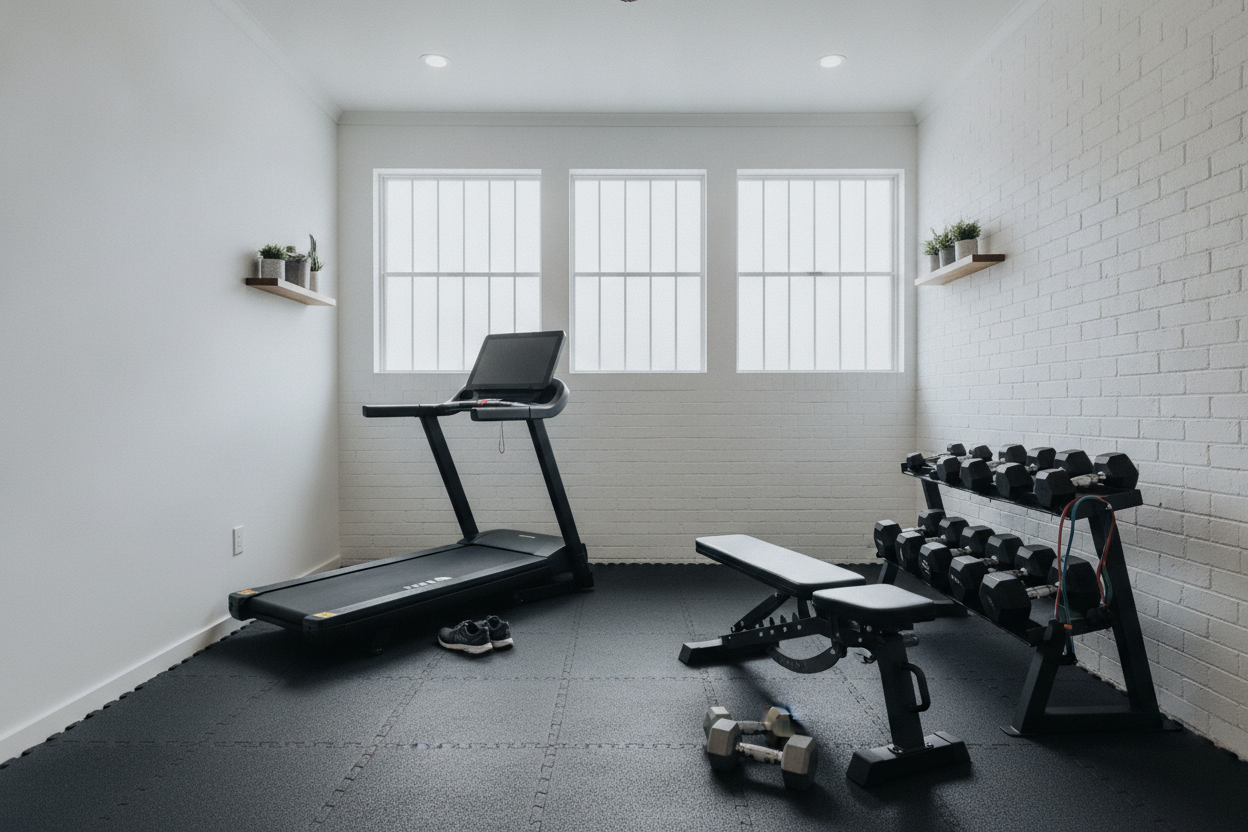
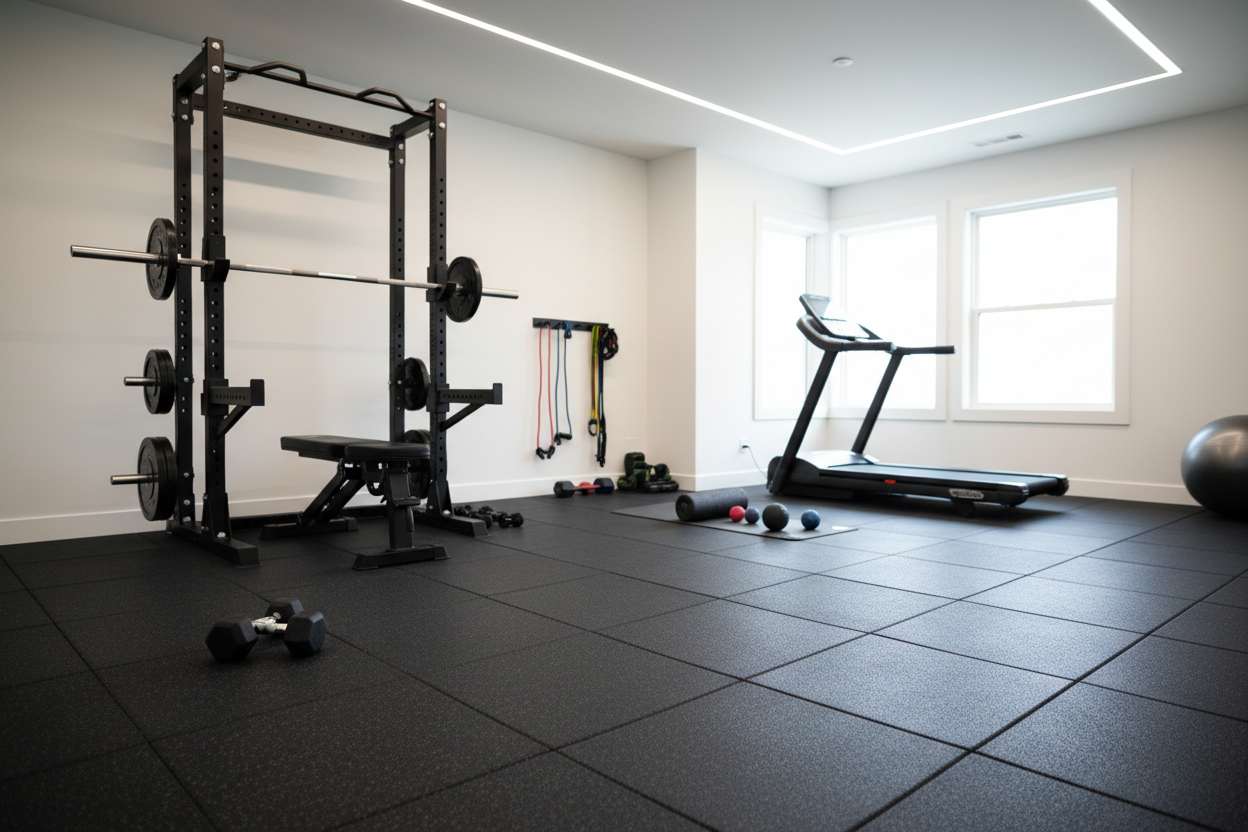
I’ve found that having a dedicated space makes this much more likely to happen. Don't just flop onto the cold, dusty concrete of your garage floor. Invest in some decent gym flooring for home workout so you actually want to spend time down there. When the floor is comfortable, a full body stretch for flexibility feels like a reward rather than a punishment. I hit my hamstrings, my hip flexors, and my glutes, then I’m out the door.
Stop Overthinking It (Just Move Better)
You don't need a PhD in kinesiology to start a stretch exercise routine. You just need to stop ignoring the 'snaps, crackles, and pops' your body is making. Start small. Pick one mobility move for your hips and one for your shoulders, and do them between your sets tomorrow. Consistency is the only thing that matters here. If you want a structured way to start, I highly recommend grabbing a full body stretching routine pdf to keep in your gym bag. It takes the guesswork out of it so you can focus on what actually matters: moving well and getting stronger.
FAQ
Is it better to stretch before or after a workout?
Both, but the type of stretch changes. Use active, dynamic stretches before and during your workout to prep the joints. Save the long, static, deep stretching exercises for the very end to help with recovery and down-regulate your nervous system.
How long should a full body stretch take?
If you're doing it right, you can get a great stretch routine done in 10 to 15 minutes. By integrating it into your rest periods, you essentially add zero time to your total gym session while doubling the benefit.
Can stretching help with muscle soreness?
Light stretching exercises won't magically erase a brutal leg day, but they do help increase blood flow to the tissue. More blood flow means faster nutrient delivery and waste removal, which can definitely take the edge off the 'I can't sit on the toilet' level of soreness.
Do I need equipment to stretch?
Not really, but a few tools help. A foam roller, some resistance bands for 'distraction' stretches, and a comfortable mat are the trifecta. Most of the best stretches for body health just require your own body weight and a bit of floor space.