I Built This Basic Exercises Routine to Replace My 60-Minute Gym Habit
I remember the exact moment I decided to quit my commercial gym. I was staring at a $75 monthly charge on my bank statement, realizing I hadn't stepped foot in that building for six weeks. Every time I thought about going, the mental hurdle of the 20-minute drive, the crowded locker room, and the fight for a squat rack felt like a second job. I finally ditched the membership and built a basic exercises routine that takes fifteen minutes in my living room. I’ve been more consistent in the last year than I was in the previous five.
Quick Takeaways
- Consistency beats intensity every single time for long-term health.
- Friction is the enemy; if your workout setup takes 20 minutes, you won't do it.
- Stop trying to mimic a bodybuilder's split in your living room.
- A dedicated, non-slip floor space is the only 'must-have' to start.
The 'All or Nothing' Trap of Home Workouts
Most novices fail at home because they try to replicate the 'grind' they see on Instagram. They think if they aren't sweating through their shirt for 60 minutes, it doesn't count. This is a trap. When you’re at home, the couch is ten feet away, the fridge is calling, and the TV is right there. A grueling hour-long session creates massive mental friction. You start negotiating with yourself, and eventually, you just don't do it.
By shifting to daily workout routines for beginners that focus on short, manageable windows, you bypass that 'all or nothing' mentality. It is much harder to talk yourself out of a 10-minute movement session than a 60-minute slog. You aren't training for the Olympics; you're training to not be sedentary. Lower the bar for entry, and you'll actually clear it every day.
Why You Need to Shrink Your Expectations (In a Good Way)
In the first 30 days of any new habit, the goal isn't muscle failure—it's the habit itself. I see people go 'beast mode' on Monday and then they can't walk until Friday. That’s a failure of programming. You want to leave a little gas in the tank every single time. If you finish feeling energized rather than destroyed, you’re significantly more likely to do it again tomorrow.
A workout routine at home for beginners should focus on movement quality and frequency. If you're so sore you're popping ibuprofen, you overdid it. The magic happens when you stack 30 days of 'okay' workouts in a row, rather than three 'perfect' ones followed by a month of quitting.
Structuring Your Basic Exercises Routine
A beginners daily workout doesn't need a 40-page PDF to explain it. You need three things: a push, a pull, and a squat. That’s it. For your push, start with pushups (on your knees is fine). For your squat, do air squats with your heels glued to the floor. The pull is the trickiest at home without gear, but you can use a sturdy table for inverted rows or even just perform 'Y-W' raises to keep your posterior chain engaged.
Do three rounds of ten reps for each. It’s not flashy. It won't get you a million likes on TikTok. But it hits every major muscle group and keeps your joints lubricated. If you do this every single morning, you are already ahead of 90% of the population. You don't need a $2,000 power rack to get your heart rate up and maintain your mobility.
The Floor is Your First Piece of Equipment
I learned the hard way that your living room carpet is a terrible gym floor. It’s abrasive, it holds onto sweat like a sponge, and it slides around when you try to hold a plank. My ankles used to ache after five minutes of movement because of the lack of stability. Before you buy a single dumbbell, get a dedicated surface.
Investing in a 6X8Ft exercise mat is the best move I ever made for my home setup. It defines a 'workout zone' in your house. When you step on that mat, your brain switches into training mode. Plus, the extra cushioning saves your knees during lunges and keeps your neighbors from complaining about the thumping.
How to Turn This Into a Daily Exercise Routine for Beginners
The secret to a daily exercise routine for beginners is 'habit stacking.' Tie your workout to something you already do. I do my squats while the coffee is brewing. I do my pushups right after I close my laptop for the day. Because these sessions are short, you don't get 'gym-sweaty'—the kind of sweat that requires a full 20-minute shower and a change of clothes. You can just wipe down and get back to your life.
Eventually, you might find that 15 minutes isn't enough. You’ll feel stronger and want more. That’s when you might graduate to a more structured 45 minute workout routine for beginners. But don't rush there. Stay in the 'short and frequent' phase until it feels weird NOT to move every day. That’s when you’ve actually won the mental game.
When Is It Time to Upgrade Your Gear?
You’ll know it’s time to buy iron when bodyweight movements feel like a warm-up. If you can knock out 25 perfect pushups and 50 air squats without breaking a sweat, you need resistance. Start with a single kettlebell or a pair of adjustable dumbbells. You don't need a full commercial setup to see massive gains.
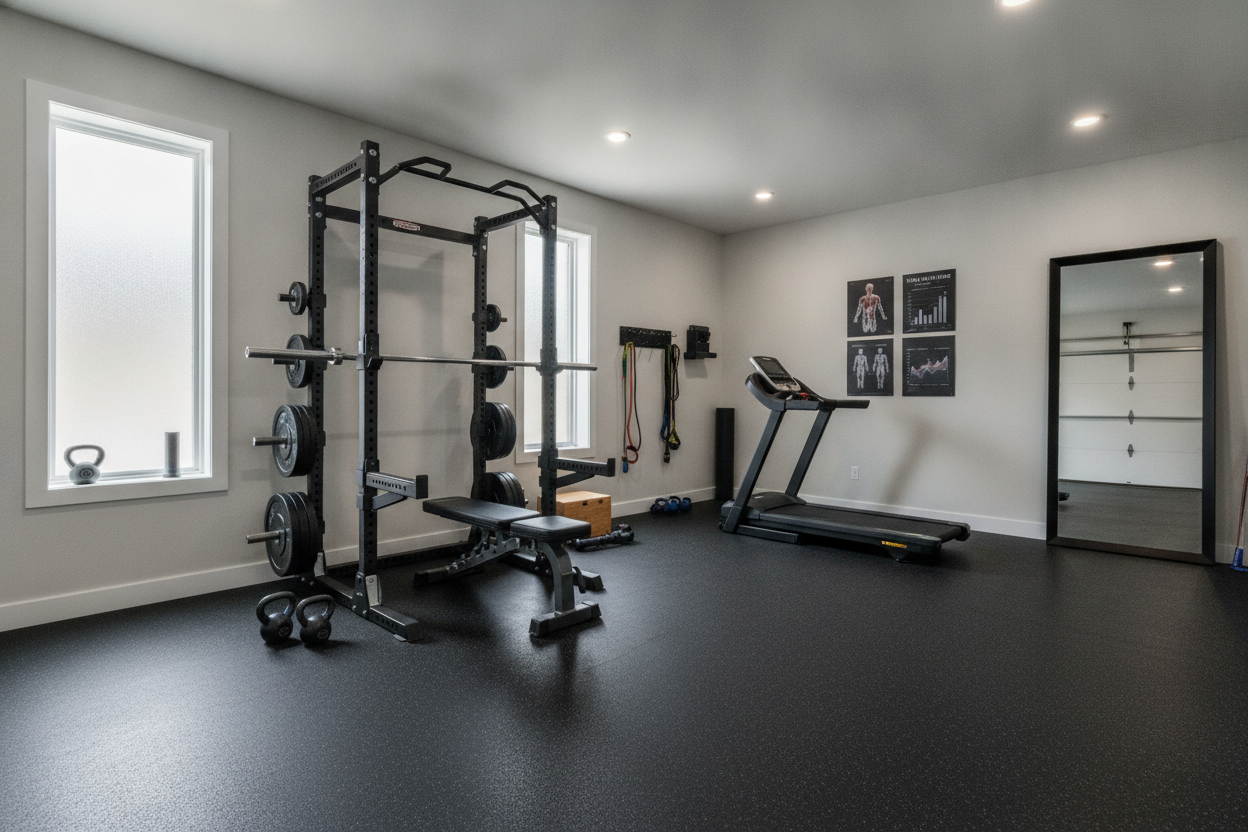
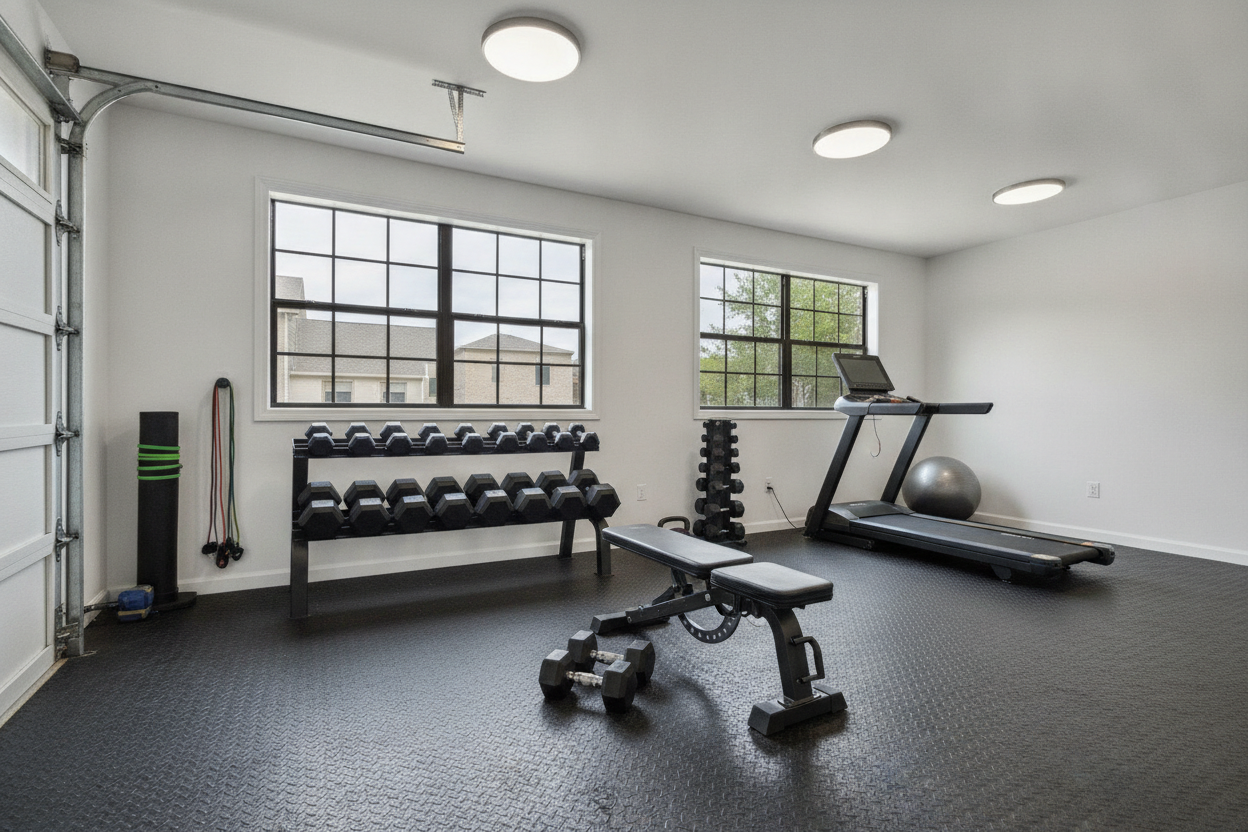
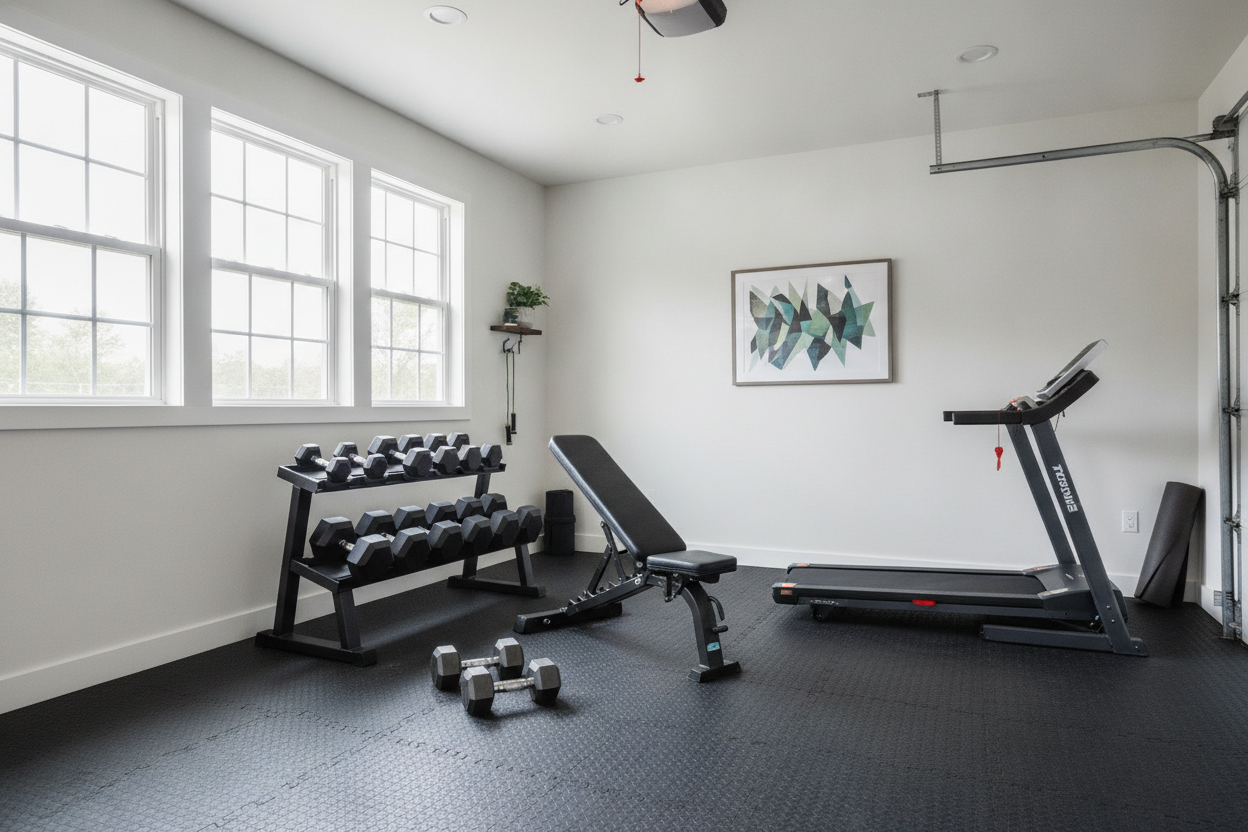
Usually, as your collection grows, your space needs to grow too. Expanding your gear collection often starts with expanding your footprint, perhaps moving to a large exercise mat for home gym in the garage or a spare bedroom. This allows you to drop weights safely and gives you the room to swing a kettlebell without taking out a floor lamp.
My Personal Experience
I once spent $400 on a fancy adjustable bench before I even had a set of dumbbells. It sat in the corner of my bedroom as a very expensive clothes rack for six months. I made the mistake of buying 'outcome' gear instead of 'habit' gear. I thought buying the bench would make me the kind of person who worked out. It didn't. What worked was clearing a 6x8 space on the floor and promising myself I'd move for 10 minutes a day, no matter what. Start small, buy later.
FAQ
Do I need to wear shoes for a home workout?
If you have a high-quality, non-slip mat, training barefoot is actually great for foot and ankle stability. If you're on hardwood or cheap carpet, wear shoes to avoid slipping.
Is 15 minutes really enough to see results?
For health and maintenance? Absolutely. For high-level bodybuilding? No. But 15 minutes every day is infinitely better than a 90-minute workout you only do once a month.
What if I miss a day?
Never miss twice. Life happens, but a single missed day is an anomaly; two missed days is the start of a new habit of NOT working out. Get back on the mat the next morning.