I Built Real Women's Strength When I Left the Commercial Gym
I remember standing in a 24-hour fitness at 5:30 PM, staring at the only two power racks in the building. Both were occupied by guys doing curls or scrolling TikTok between sets of three. I had a 5-lb squat PR planned, but I spent 40 minutes hovering like a vulture near the cable machines. That was the night I realized building real women's strength wasn't going to happen in a place that treated the heavy lifting zone like a private club for guys.
I was tired of being steered toward the 'cardio cinema' or the rack of 2-lb neoprene dumbbells. The commercial gym environment is built for retention, not for pushing limits. I didn't want to 'tone'; I wanted to move heavy iron without feeling like I was intruding on someone else's territory. So, I bought a rack, cleared out the garden tools, and moved into the garage.
- Commercial gym layouts often prioritize machines over functional racks.
- Home gyms remove the 'performance' aspect and social anxiety of lifting heavy.
- Upper body training is the missing link in most female programs.
- Fractional plates are the secret to consistent linear progression.
The Day I Walked Out of the Big Box Gym
The breaking point wasn't a single event; it was the cumulative weight of 'gym timidity.' I’m a veteran lifter, yet I still found myself checking my phone to look busy while waiting for equipment. The final straw was a trainer telling me I shouldn't go too heavy on deadlifts because it would 'thicken my waist.' I was pulling 225 for reps at the time.
I left mid-workout. I realized that as long as I was paying $60 a month to fight for a 4x4 square of rubber flooring, I was never going to prioritize my own progress. I was more worried about not being in the way than I was about my technique. When I walked out, I wasn't just quitting a gym; I was deciding that my female strength deserved a dedicated space where the only ego in the room was mine.
The garage was cold, dusty, and cramped. But it was mine. I didn't have to wait for a rack. I didn't have to wipe someone else's sweat off a bench. I could finally fail a rep without a crowd watching, which is ironically the only way to actually get stronger.
Why Commercial Spaces Stifle True Female Strength
Commercial gyms are designed by architects who think 'fitness' means rows of treadmills. The free-weight area is usually tucked into a corner, often surrounded by mirrors that make you feel like you're on a stage. For many women, this creates a psychological barrier. You feel watched, judged, or—worse—like you're about to receive 'helpful' unsolicited advice from a guy who hasn't hit depth on a squat since 2012.
This environment forces a lot of us into the 'safe' zones: machines and light dumbbells. But you can't build elite power on a Smith Machine. The lack of proper equipment like 15kg bars with thinner diameters or enough 2.5-lb plates makes it harder for women to progress. When the smallest jump you can make is 10 lbs on a barbell, you're going to plateau fast.
In my garage, the intimidation factor dropped to zero. I could grunt, I could use chalk without getting a fine, and I could take the 10 minutes I needed between heavy sets of five. True strength requires a level of focus that is almost impossible to maintain when you're dodging influencers and gym creeps.
The Core Gear I Used to Build My Garage Setup
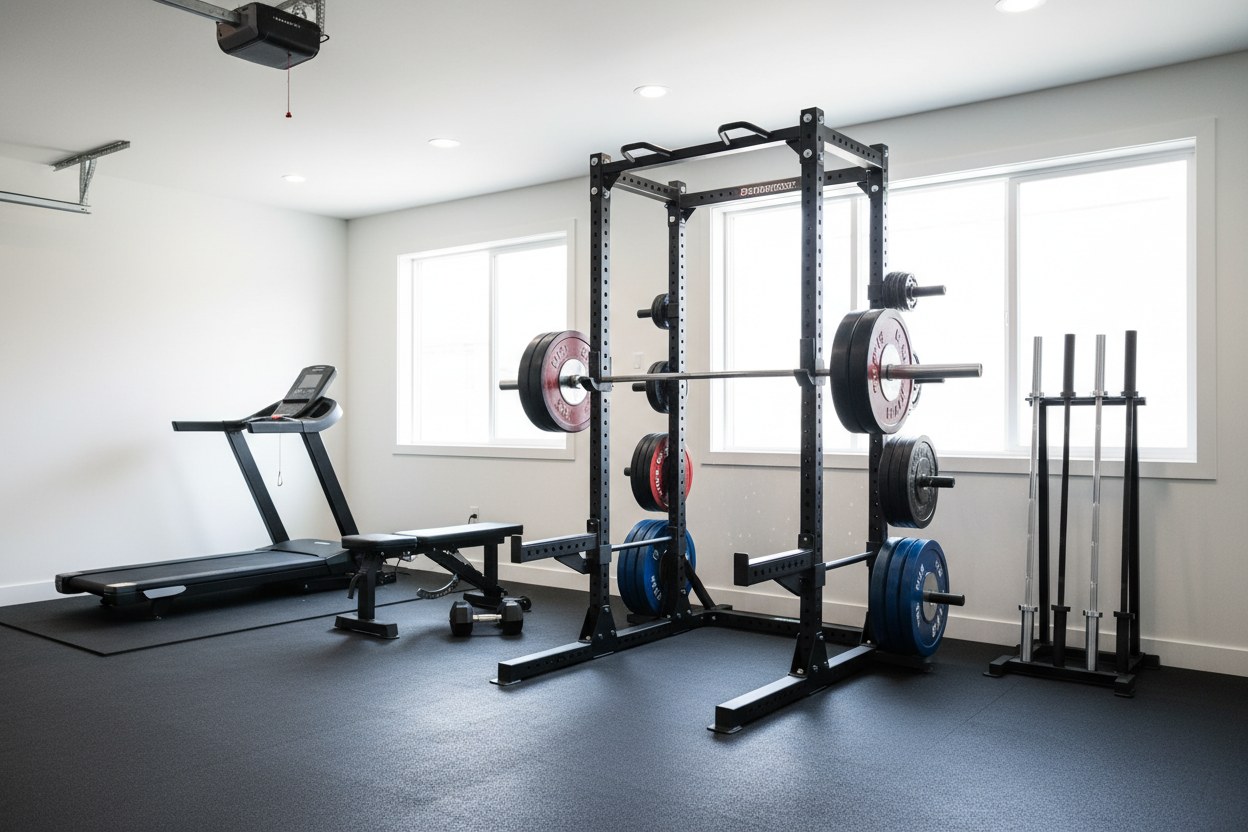
I didn't start with a massive budget. I started with the essentials: a 4-post power rack with a 700-lb capacity and a decent barbell. If you're transitioning to a home setup, don't get distracted by fancy cable attachments. You need a solid foundation of strength equipment that fits your footprint. I chose a rack with 2x3 steel tubing because it's sturdy enough for heavy triples but doesn't require me to bolt it into my foundation.
My 15kg bar was the biggest 'aha' moment. Most commercial gyms only have 20kg (44-lb) bars with a 28mm-29mm grip. For women with smaller hands, that extra thickness makes a huge difference in grip fatigue during deadlifts. Switching to a bar designed for my anatomy allowed my posterior chain to be the limiting factor, not my hands.
I also invested in a set of bumper plates. If you're training alone, you need to be able to bail on a lift safely. Knowing I can drop 200 lbs from my shoulders without cracking the concrete gives me the confidence to actually push toward a 1RM. My entire setup fits in a 10x10 corner, proving you don't need a warehouse to get strong.
Why I Finally Started Training My Chest
For years, I fell for the myth that women shouldn't bench press. I thought it would make my chest look 'flat' or 'masculine.' Total nonsense. Once I moved into the garage, I started following a real powerlifting split that included heavy pressing twice a week. The aesthetic payoff was immediate, but the functional payoff was even better.
There is a specific confidence that comes with building strength and definition in the female chest muscles. It improves your posture and provides a stable base for every other upper-body movement, from overhead presses to pull-ups. My shoulders stopped nagging me, and I finally lost that 'slumped' look that comes from too much desk work and not enough anterior chain development.
I started with the bar and focused on the 'touch and go' technique. Within six months, I was repping out 135 lbs. Benching isn't just about the pecs; it's a full-body lift that requires leg drive and a tight core. Don't skip it because a magazine told you to stick to push-ups.
Ditch the Fluff: Gear That Actually Helps You Lift
If you look at 'fitness accessories' marketed to women, it’s mostly pastel-colored resistance bands and waist trainers. That stuff is garbage for building actual power. When you're training in a garage, you need gear that supports heavy loads. I swapped the 'aesthetic' gear for a 10mm leather lever belt. It provides a wall for my abs to brace against, which is essential when you're squatting 2x your bodyweight.
The most underrated tool in my kit? Fractional plates. When you're working on your overhead press, a 5-lb jump is often a 10% increase, which is unsustainable. Adding 1.25-lb plates allows you to keep the 'linear' in linear progression. Having these strength training accessories in your gym bag means you never have to stall just because the gym doesn't have the right increments.
I also highly recommend a pair of stiff wrist wraps for bench days and some liquid chalk. You don't need a lot of gear, but you need the right gear. Forget the 'toning' tools and buy things that help you move more weight safely.
How much space do I really need?
You can do 90% of a strength program in an 8x8 foot space. A standard power rack is about 4 feet wide, and a 7-foot barbell needs a little room on either side for plate loading. If you have a one-car garage, you have more than enough room.
Will lifting heavy make me bulky?
Only if you are eating in a massive caloric surplus and training for hypertrophy for years. For most women, lifting heavy leads to a 'dense' look—you'll actually take up less space because muscle is more compact than fat.
What's the best barbell for a woman starting out?
Look for a 15kg 'Wonder Bar' or a female-specific Olympic bar. The 25mm shaft diameter is much easier to grip, which helps with everything from cleans to deadlifts. It makes the weight feel more secure in your hands.