I Built My Entire Garage Gym Around Just Four Strength Moves
I remember the night I hit 'order' on a $600 cable crossover that I absolutely did not have room for. My garage was already a Tetris puzzle of cheap hex dumbbells and a wobbly bench that shook every time I touched 185. I thought more gear meant more gains, but I was just buying clutter. I eventually realized that my best progress came when I stopped trying to do everything and focused on a few strength moves that actually move the needle.
- Focus on Essentials: A rack, a barbell, and plates are 90% of what you need.
- Save Space: Eliminating single-use machines frees up room for a dedicated lifting platform.
- Better Quality: Buying fewer items allows you to invest in a barbell with better knurling and smoother rotation.
- Reduced Friction: Less time spent changing attachments means more time under tension.
Why I Stopped Trying to Replicate 24 Hour Fitness
In the early days of my home gym, I had 'commercial gym envy.' I thought if I didn't have a leg press, a lat pulldown, and a dedicated preacher curl station, I was leaving gains on the table. I spent months scouring Craigslist for used machines, only to end up with a garage that felt like a storage unit rather than a training space. I had 15 square feet taken up by a leg extension machine that I used for exactly six minutes a week. It was a massive waste of real estate.
The reality is that commercial gyms are designed to keep hundreds of people busy at once. They need machines to guide beginners who don't know how to brace. In your garage, you don't have that problem. You have the luxury of focus. When I finally sold off the bulky, single-use equipment, I realized I could actually breathe. I stopped tripping over cable attachments and started focusing on the quality of my reps. If you're working with a standard two-car garage, every square foot is a premium asset. Don't trade it for a machine that only works one muscle group.
The Real Problem With Complex Home Workouts
We’ve all seen the social media clips where someone is doing a superset that involves four different stations across the gym. That works in a 20,000-square-foot facility where you aren't the one cleaning up. In a home gym, you are the janitor, the loader, and the athlete. If your workout requires you to unload 315 from a bar, move to a cable machine, then setup a bench for incline work, you’re going to spend more time moving plates than lifting them.
The fitness industry loves to overcomplicate things because variety sells subscriptions. They want you to believe you need 'muscle confusion' or some proprietary 'flow' to see results. I refuse to buy into the hype of advanced strength exercises that look more like circus acts than training. When you strip away the fluff, you realize that complexity is usually just a mask for a lack of effort. Loading a bar for a heavy set of five is hard work. Doing three different variations of a cable flye while balancing on a BOSU ball is just busy work. I’d rather spend my energy on the lift itself rather than the logistics of the circuit.
The 4 Core Strength Moves That Matter
If you want to get strong without spending $10,000 on a full Rogue catalog, you only need to master four specific strength moves: the Back Squat, the Overhead Press, the Deadlift, and the Barbell Row. These are the pillars. If you get strong at these, everything else is just icing on the cake. These strength movements recruit the maximum amount of muscle mass and allow for the most significant progressive overload over time.
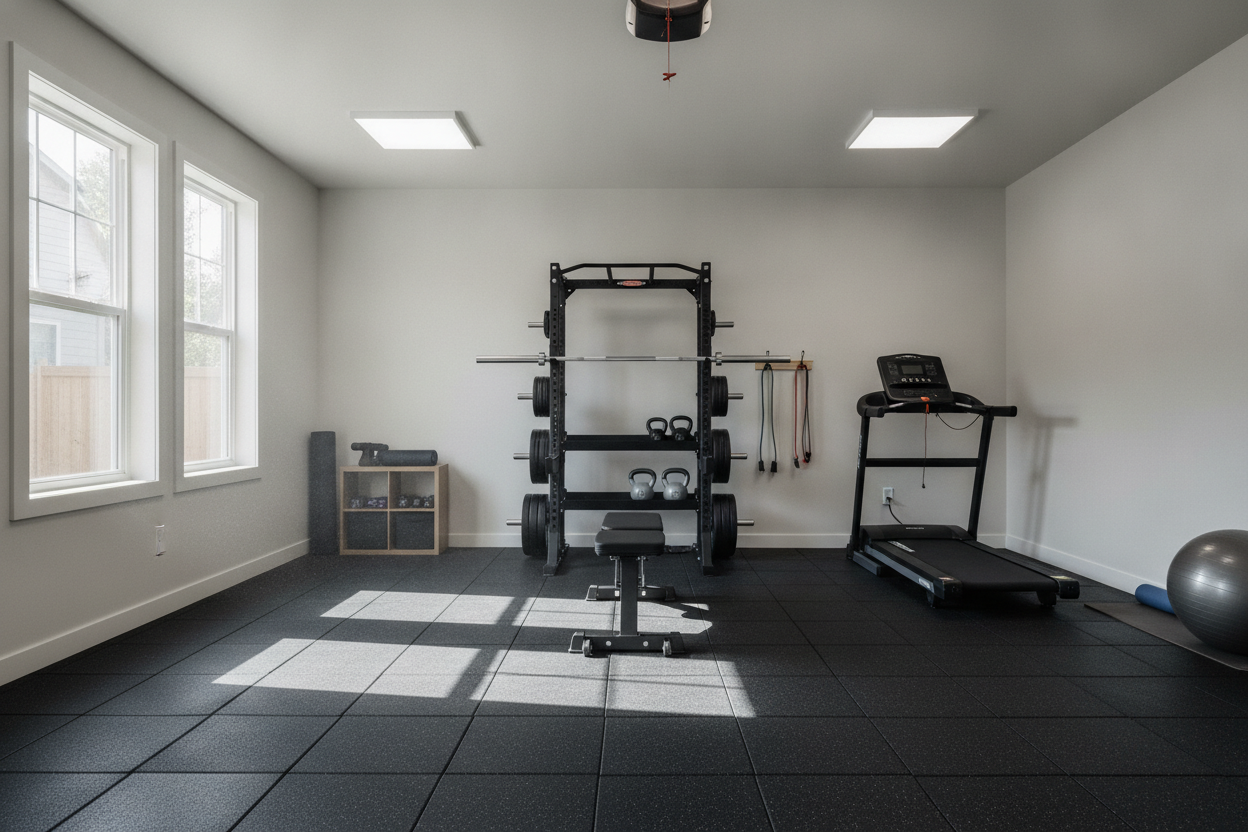
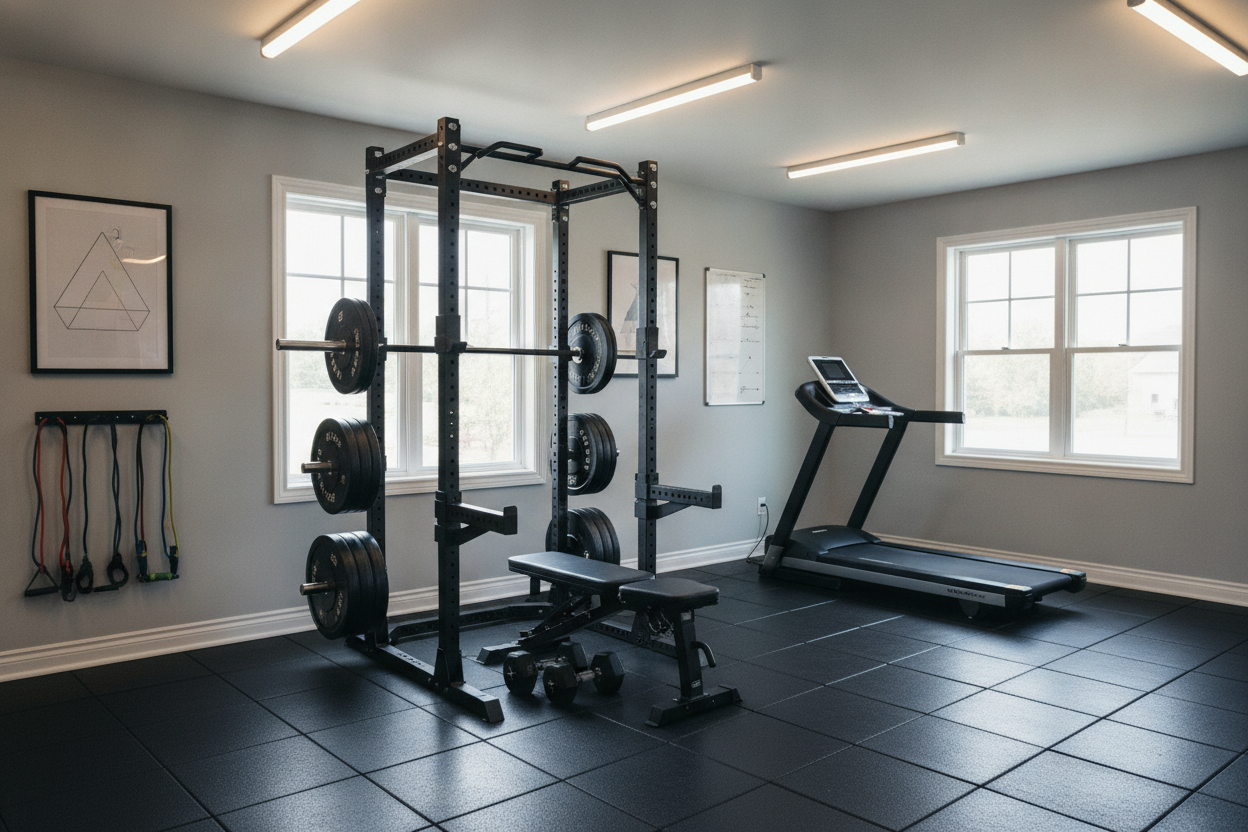
Think about the equipment requirements for these moves. You need a solid power rack with 3x3-inch 11-gauge steel uprights, a 20kg multi-purpose barbell, and a stack of iron or bumper plates. That’s it. For the squat and overhead press, the rack keeps you safe. For the deadlift and row, the floor is your platform. You aren't limited by the weight stack of a cheap pulley system or the flimsy 250-lb weight capacity of a department store bench. When you prioritize these lifts, you’re training your body as a single unit. The barbell row builds a thick back better than any seated cable row ever could, and the overhead press builds shoulder stability that translates to real-world strength. By focusing on these four, you ensure that every session is high-impact and low-clutter.
How Minimalist Programming Saves You Money
Letting your exercise selection dictate your purchases is the ultimate budget hack. When I decided to restart my strength fitness training, I stopped looking at 'cool' attachments and started looking at the quality of my core gear. Instead of buying a $300 wobbly rack and five $200 specialty bars, I bought one $1,000 rack that will outlive me and a $300 barbell with a lifetime warranty. This 'buy once, cry once' mentality only works if you aren't trying to buy 50 different pieces of equipment.
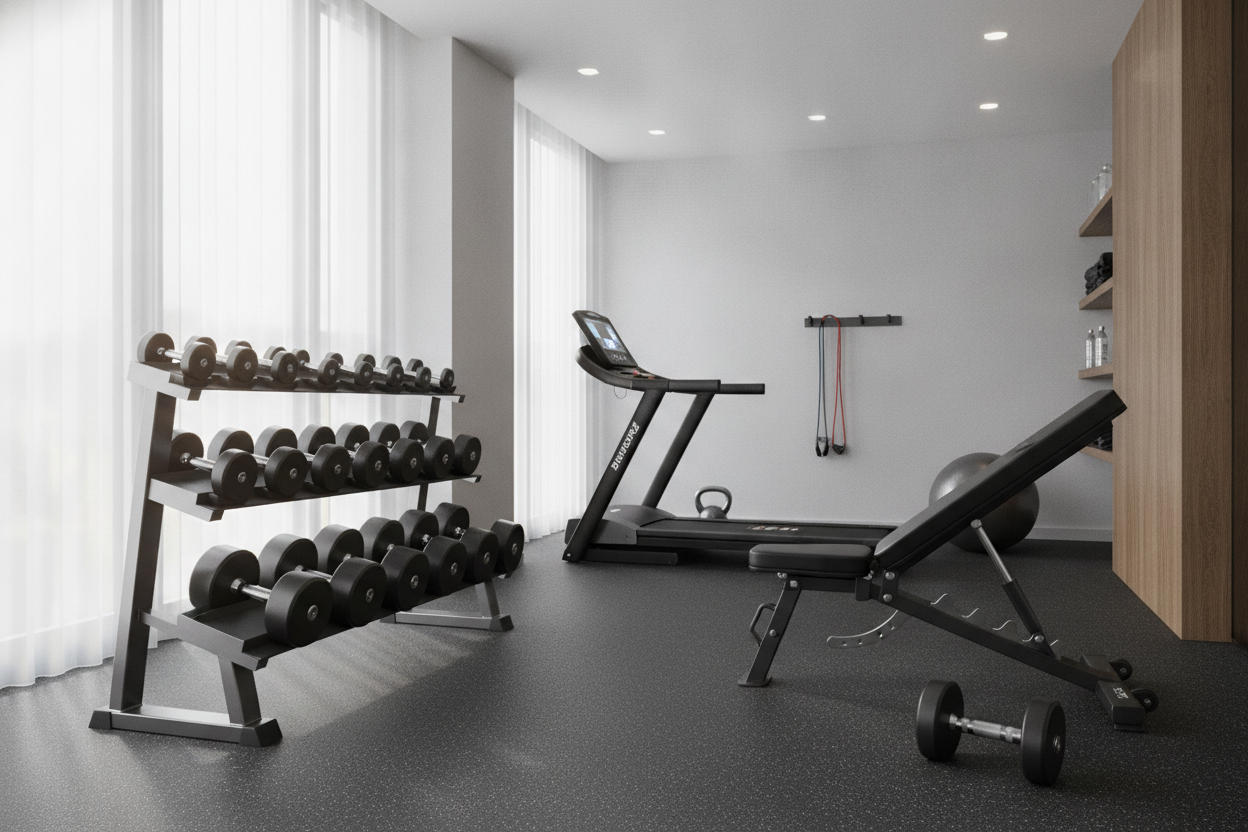
Focusing on the basics prevents the dreaded buyer's remorse. You’ll never regret buying a high-quality set of iron plates that stay within a 2% weight tolerance. You will, however, regret buying a cheap adjustable dumbbell set that rattles and feels like it’s going to fall apart during a heavy press. When you limit your moves, you can afford the 'good stuff.' You can afford the bar with the aggressive knurling that sticks to your hands like glue during a heavy pull. You can afford the flat bench with the high-density foam that doesn't bottom out when you're under load. Minimalism isn't about sacrifice; it's about shifting your budget to the things that actually matter for your progress.
Personal Experience: My $1,200 Mistake
I once spent nearly $1,200 on a multi-gym unit because I thought I needed the variety. It had a 'leg press' attachment that felt like pushing against a wet sponge and a lat pulldown that caught on every rep. It took up half my garage. I used it for three months before I realized I was avoiding my workouts because the equipment felt so cheap. I eventually sold it for $400 on Facebook Marketplace and bought a proper power rack. The lesson? A basic barbell and a sturdy rack feel better than a mediocre machine every single time. Don't let a 'do-it-all' machine ruin your motivation.
Frequently Asked Questions
Do I really only need four exercises?
For building a foundation of raw strength, yes. You can always add chin-ups or dips later, but these four moves cover your entire body. If you’re getting stronger at these, you aren't missing anything vital.
Can I do this with just dumbbells?
You can, but you'll hit a ceiling much faster. It's hard to find 150-lb dumbbells for a reasonable price, but adding another 45-lb plate to a barbell costs $50. For long-term strength, the barbell is king.
What if I don't have room for a full power rack?
Look into a folding rack or a high-quality squat stand. As long as it has J-cups and some form of spotting arms or straps, you can safely perform all four of these moves in a very small footprint.