I Broke the Three Rules of Safety When It Comes to Strength Training
I was 225 pounds deep into a late-night bench press session in my garage when the world started closing in. No spotter, no safety pins, and a bar that suddenly felt like it was made of lead. I’d hit that weight for triples a dozen times before, but fatigue is a liar. When the bar stalled three inches off my chest, the 'hardcore' DIY gym vibe I’d cultivated evaporated, replaced by the cold realization that I was about to be pinned.
Lifting alone is the ultimate freedom until it isn't. Most of the three rules of safety when it comes to strength training are treated like legal fine print in big-box gyms, but in a garage, they are the only things keeping you from a catastrophic injury. I spent ten minutes performing a desperate 'roll of shame' to get that bar off my ribs. I walked away with a bruised ego and a purple torso, but it could have been much worse.
Quick Takeaways
- Never lift heavy without physical mechanical failsafes like spotter arms.
- Learn how to fail a lift before you actually have to do it under load.
- Invest in high-quality flooring and footwear to prevent slipping during a bail.
- Bracing and intra-abdominal pressure are your internal safety gear.
The Day My Garage Gym Tried to Kill Me
The problem with most advice is that it’s written for people with a floor staff and a dozen trainers nearby. If you read a beginner gym strength training guide, it might tell you to 'ask a friend for a spot.' That’s great, but what if it’s 6 AM on a Tuesday and your only training partner is a sleeping golden retriever?
Lifting alone requires a mindset shift from 'don't get hurt' to 'assume the equipment will fail.' My mistake wasn't just the weight on the bar; it was the arrogance of thinking I didn't need the safety pins because I 'knew' my limits. A garage gym is a vacuum. There is no one to pull the bar off your throat if you misgroove a rep. You have to be your own safety officer, equipment mechanic, and medic all at once. If your setup isn't bulletproof, you're just gambling with your joints.
So, What Are Three Safety Guidelines to Follow During Strength Training?
If you're tired of the generic 'stretch before you lift' advice, you're in the right place. When we talk about survival in a heavy session, what are three safety guidelines to follow during strength training that actually matter? We aren't talking about checking your heart rate or wearing neon vests. We’re talking about the hard protocols that keep the iron from winning. These are the non-negotiables: mechanical spotters, the technical skill of bailing, and managing your internal 'armor' through bracing and fatigue management.
Rule 1: Your Equipment Must Act As Your Spotter
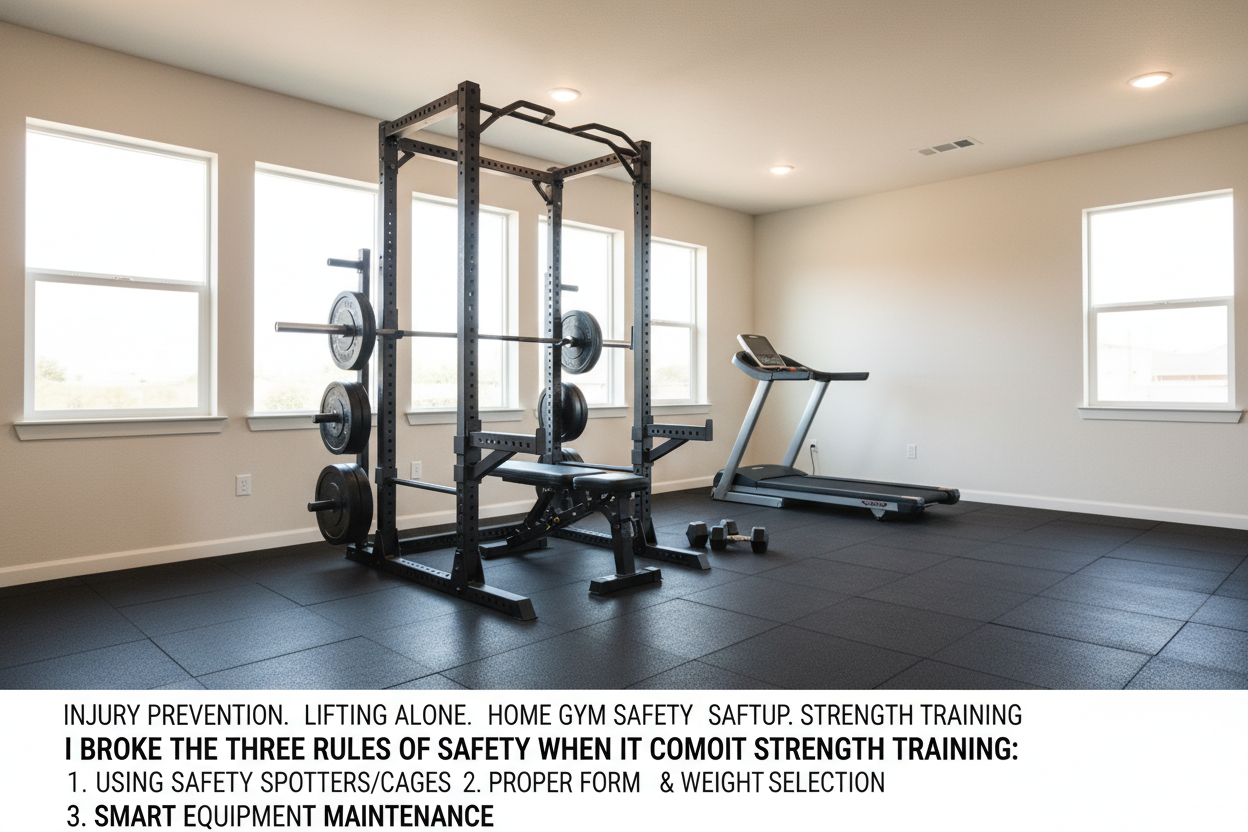
If you are benching or squatting in a rack without safeties, you are doing it wrong. Period. I’ve seen guys use cheap, thin-walled racks that shake when they rack 135 pounds. Cheaping out on your foundation is a recipe for disaster. A reliable strength equipment setup starts with a rack made of 11-gauge steel and, more importantly, properly adjusted spotter arms or flip-down safeties.
Setting the height is a science. For the bench press, the pins should be just low enough that you can touch your chest with a full arch, but high enough that if you flatten your back, the bar rests on the steel rather than your sternum. For squats, set them just an inch below your deepest point. I’ve seen people set them too low because they’re afraid of the 'clank'—don’t be that guy. The clank is the sound of you staying alive. Use high-quality J-cups with plastic liners to protect your bar’s knurling, but never trust a J-cup to hold a falling bar; that’s what the spotter arms are for.
Rule 2: Master the Art of the Bail
You need to know how to lose. Most injuries don't happen because the weight was too heavy; they happen because the lifter panicked when they realized they couldn't finish the rep. You should practice failing with an empty bar, then a light load, until it’s muscle memory. If you're back squatting and you hit the 'hole' and can't get out, you need to know how to throw the bar backward while jumping your hips forward. It sounds violent, but it’s the safest way to exit the lift.
This is where your environment matters. You need high-traction exercise mats that won't slide or bunch up when you're trying to move your feet quickly. If you're lifting on bare concrete or cheap, slippery foam, your feet can slip during a bail, turning a controlled drop into a catastrophic fall. For the bench press, if you don't have safeties, you must learn the 'roll of shame'—lowering the bar to your stomach and rolling it down to your hips so you can sit up. It hurts, it’s embarrassing, but it works. Better yet? Don't use collars on the bench if you're alone; that way, you can tilt the bar and let the plates slide off if you get stuck.
Rule 3: Armor Up and Manage Fatigue
Internal safety is just as vital as external gear. This means mastering intra-abdominal pressure. Bracing isn't just 'sucking in your gut'; it’s creating a 360-degree wall of pressure around your spine. When you're pushing past 80% of your one-rep max (1RM), your body needs extra support. I always recommend using protective strength training accessories like a high-quality leather lifting belt and stiff wrist wraps. These aren't crutches; they are tools that allow you to maintain form when your smaller stabilizer muscles start to give out.
The ultimate safety tool, however, is the 'stop' button in your brain. Fatigue management is about knowing when a RPE 9 (Rate of Perceived Exertion) is turning into an RPE 11. If your bar speed drops significantly or your form starts to break down, the set is over. Pushing for 'one more' when your lower back is rounding is how you end up on a surgical table. Real strength is built in the 70-85% range, not by redlining your nervous system every single day until something snaps.
The Unsexy Reality of Training for Longevity
At the end of the day, nobody cares how much you benched if you can't pick up your kids or go for a hike because your back is trashed. We lift to be better versions of ourselves, not to become a cautionary tale on a home gym forum. Staying safe isn't about being afraid of the weight; it's about respecting it. When you audit your rack, your floor, and your ego, you're ensuring that you can keep showing up year after year.
That is what strength training leads to when done correctly: a resilient body that lasts for decades. Don't wait for a near-miss like mine to fix your setup. Check your pins, practice your bails, and leave your ego at the garage door. The iron doesn't have a conscience—it's your job to have one.
FAQ
Should I always use collars on my barbell?
If you have a spotter or safety pins, yes. If you are benching alone without safety pins, leave them off. This allows you to dump the plates off the sides if you get pinned under the bar.
How often should I check my gym equipment for wear?
Do a quick visual check every session, but do a deep dive once a month. Look for hairline cracks in welds, frayed cables on pully systems, and loose bolts on your power rack. Vibrations from dropping weights can loosen hardware over time.
Is it safer to use machines than free weights?
Machines have a fixed path which can prevent some accidents, but they can also force your joints into unnatural positions. For solo lifters, a power rack with safeties offers the best balance of freedom and security.