How to Strip Down Your Weight Gain Exercise Program for a Home Gym
I remember the day I finally ditched my commercial gym membership. I was tired of the commute and the guy spending twenty minutes on the only squat rack to do upright rows. I thought I could just drag a rusty bar into my garage and keep my exact same bodybuilding routine. I was wrong. My progress stalled because I was trying to force a machine-heavy weight gain exercise program into a space that didn't have the tools for it.
Quick Takeaways
- Focus on big compound movements like squats, deadlifts, and presses.
- Prioritize equipment stability over fancy features.
- Train 3-4 days a week to allow for maximum recovery and growth.
- Track your lifts religiously; if the weight isn't moving up, you aren't growing.
Stop Trying to Replicate a Commercial Gym Setup
Most lifters fail when they try to adapt a 6-day machine-based bodybuilding split to their garage. You don't have a leg press, a cable crossover, or a row of Hammer Strength machines. Trying to 'mimic' these with bands or awkward dumbbell variations usually results in a low-intensity weight gain fitness plan that doesn't provide enough stimulus. This is why your workout for weight gain fails most of the time.
A real weight gain workout plan at home requires focusing on movement patterns, not specific pieces of hardware. You need to squat, hinge, push, and pull. If you try to do a weight gain workout schedule that calls for four different types of chest flyes, you're going to get frustrated. Stick to the basics that actually move the needle on your body weight.
The Core Movements You Actually Need for Mass
If you want a workout program to gain weight, you need to fall in love with the barbell. The back squat, the overhead press, the deadlift, and the bench press are the kings of mass. These movements recruit the most muscle fibers and allow for the greatest amount of progressive overload. I've wasted months on 'accessory' movements that did nothing compared to a heavy set of five on the squat rack.
Your weight gain fitness program should also include heavy rows and pull-ups. If you can't do a pull-up yet, get some heavy-duty resistance bands to assist you. The goal of a weight gain gym plan is to get as strong as possible in these fundamental patterns. When you're moving 225 for reps on the bench, you won't care about the pec deck you don't have.
Why the Bench and Rack Dictate Your Success
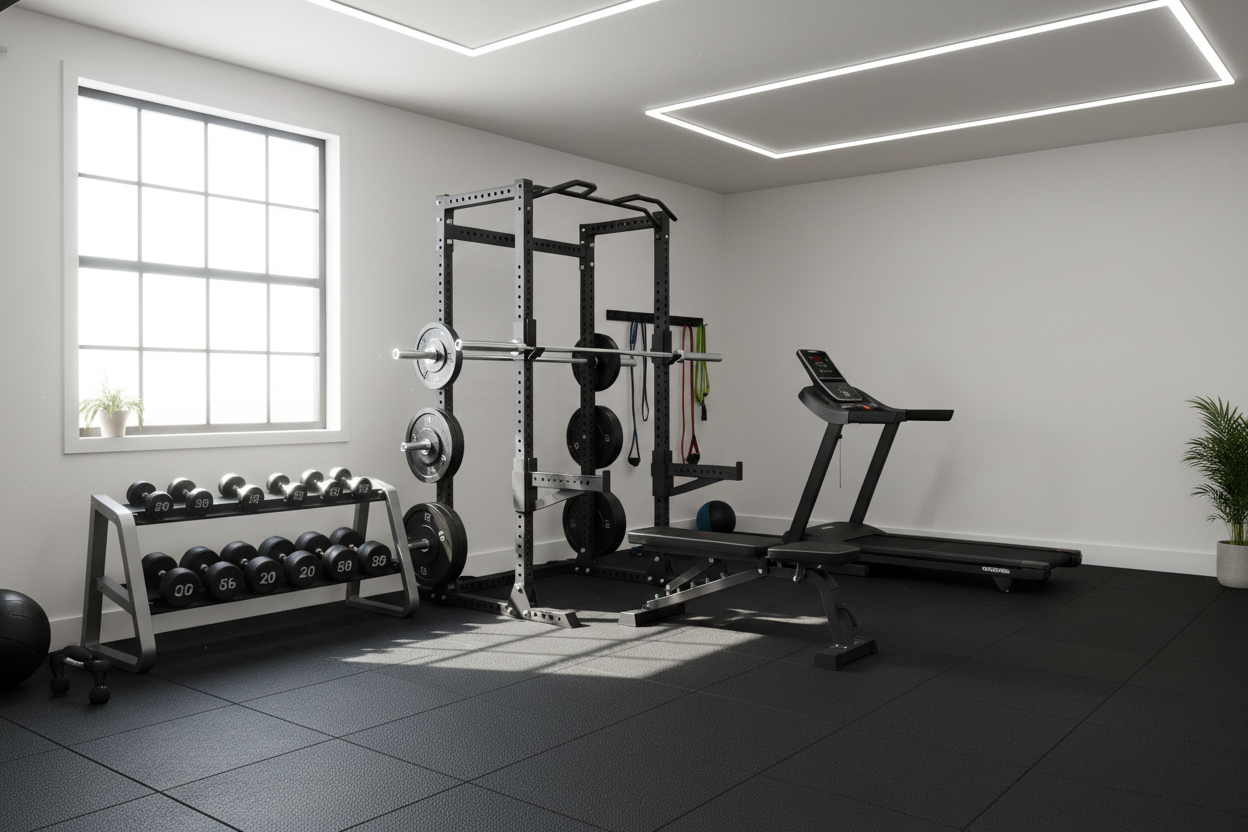
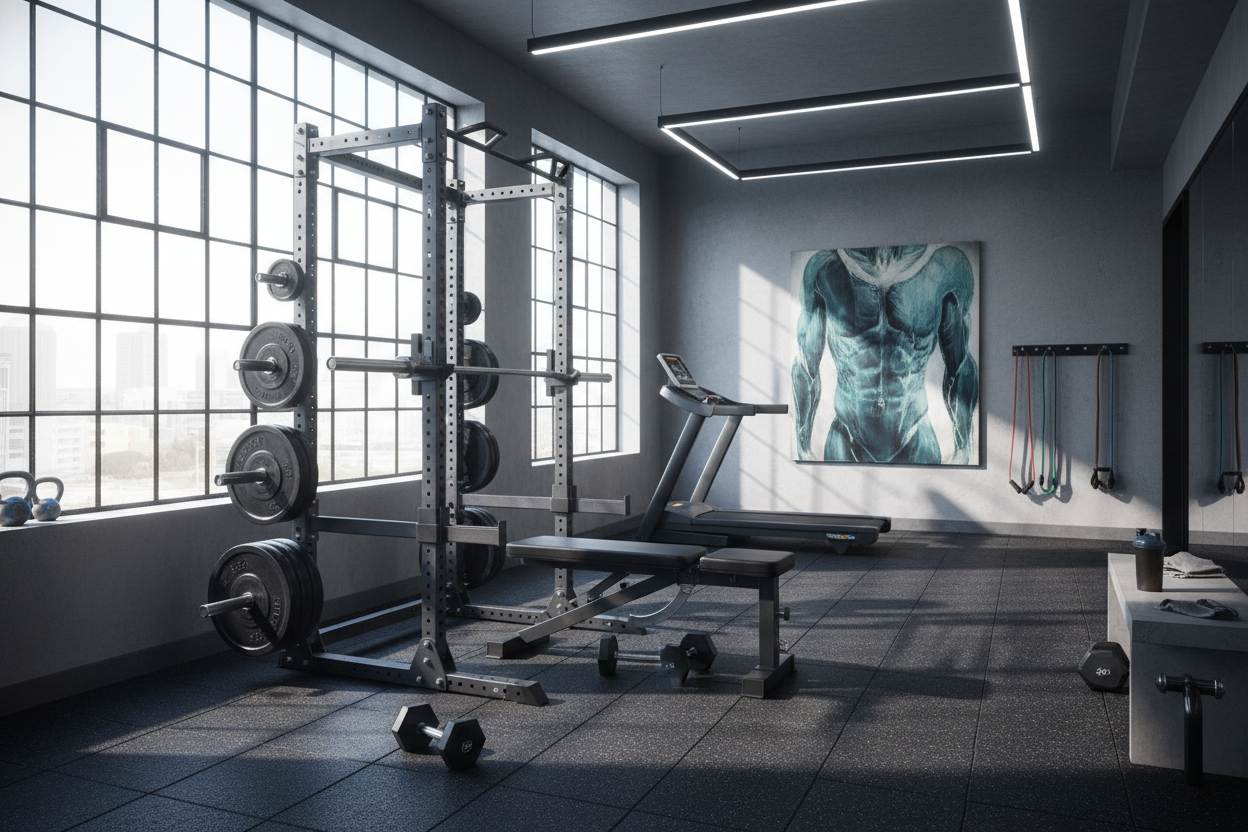
Stability is the most underrated factor in muscle growth. If your rack shakes when you re-rack a heavy set of squats, you're going to subconsciously hold back on your next set. You can't execute a weight gain gym program effectively if you don't trust your gear. Investing in a sturdy power rack and weight bench package is the best move I ever made for my home gym.
When you have a rack with 11-gauge steel and a bench that doesn't wobble, you can actually train to failure. That safety allows you to push those last two reps that actually trigger hypertrophy. A workout plan to gain weight is only as good as the intensity you can safely bring to it.
Building Your Weekly Schedule Without Burning Out
When you're trying to add size, more is not better. You grow while you're sleeping and eating, not while you're lifting. I've found that a 3-day or 4-day gain weight gym program is the sweet spot. This gives your central nervous system time to recover between heavy sessions. I personally use a trusted exercise plan to gain weight that alternates between heavy compound days and slightly higher-volume accessory days.
Your weight gain gym workout plan should be intense but brief. If you're in the gym for two hours, you're probably just talking or scrolling on your phone. Hit your main lifts, do your accessories, and get out to the kitchen. That is the only way a weight gain workout regimen actually results in a bigger frame.
The Minimalist Gear Required to Pull This Off
You don't need a 2,000-square-foot facility. You need a weight gain workout routine and about 60 square feet of floor space. Start with a reliable weight set and bench. You want plates that are accurately calibrated and a bar that has a decent knurl—nothing is worse than a bar slipping out of your hands during a heavy deadlift because the knurling is smooth as a pool cue.
To add some variety to your fitness plan to gain weight and muscle, I highly recommend a heavy-duty adjustable weight bench. Being able to hit incline presses and seated dumbbell work opens up a lot of hypertrophy options for the upper body. Look for a bench with a 1,000-lb capacity; it sounds like overkill until you realize that's your body weight plus the weight you're lifting.
Progression: How to Know You're Actually Growing
The biggest mistake I made early on was not keeping a logbook. A workout routine to gain weight and muscle is just a list of ideas if you aren't tracking the numbers. If you did 185 for 5 reps last week, you better do 190 for 5 or 185 for 6 this week. If the numbers on the bar stay the same, your muscles will stay the same size. It’s simple math.
FAQ
Can I gain weight with just dumbbells?
You can, but it's harder. You'll eventually need 100-lb+ dumbbells for rows and presses, which get expensive fast. A barbell is much more cost-effective for heavy loading.
How much should I eat on this plan?
Eat in a 300-500 calorie surplus. If you aren't gaining about 0.5 to 1 pound a week, you aren't eating enough to support the training volume.
What if I don't have room for a full power rack?
Look into a squat stand or a folding rack. They have a smaller footprint but still offer the safety of spotter arms for when you're pushing heavy sets.