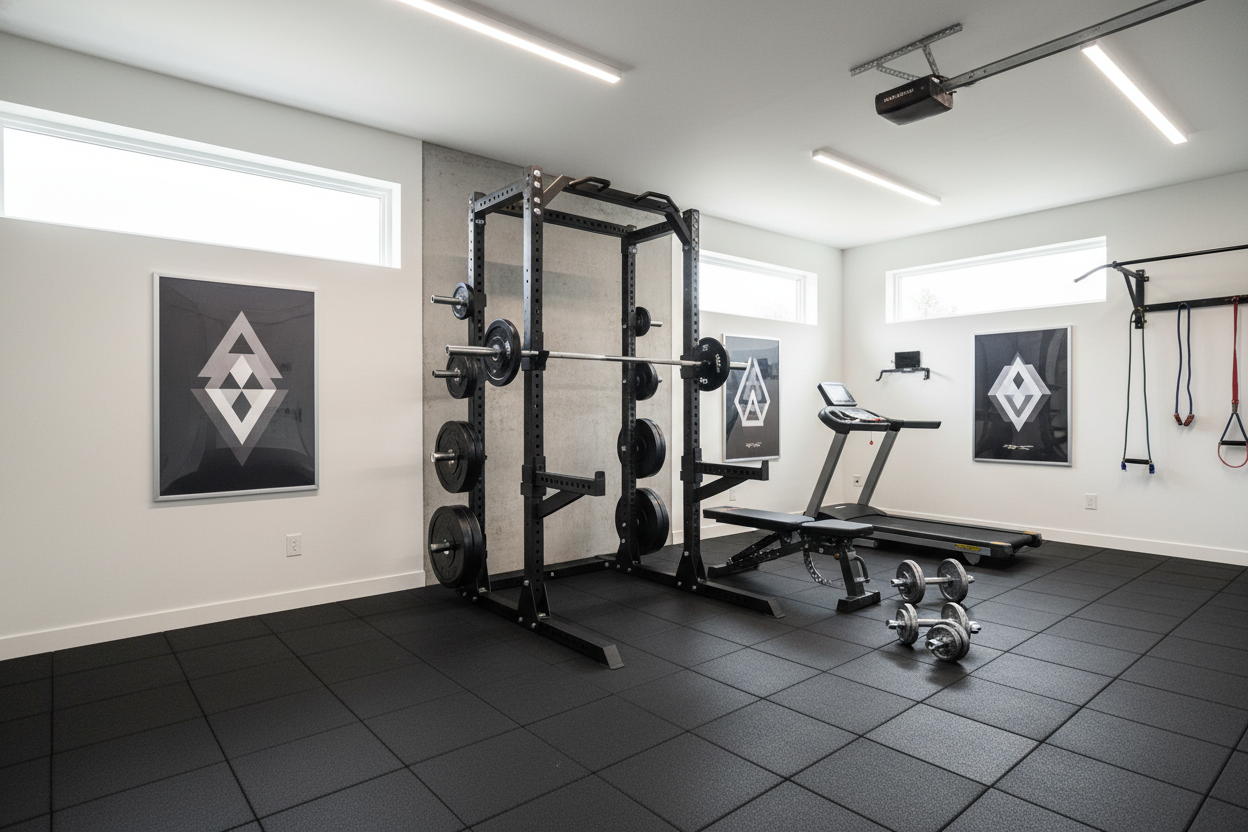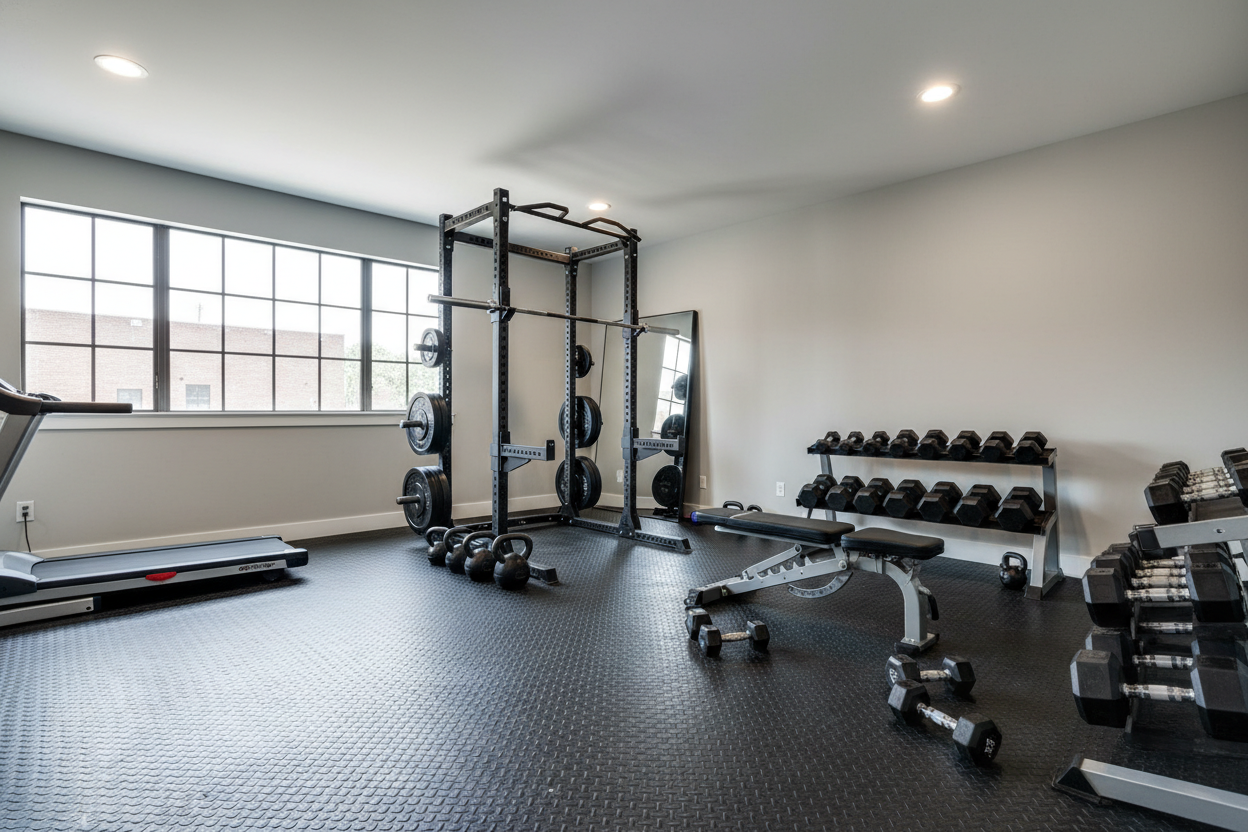
How to Run a Physique Training Program Without Cable Machines
I remember the first time I moved my training to a garage. I looked at my single barbell and a pair of mismatched dumbbells and felt a wave of panic. How was I supposed to build a 'complete' body without a lat pulldown or a cable crossover? I’d been conditioned to believe that aesthetics required a 20-piece circuit of selectorized machines.
The truth is, your muscles don't have eyes. They don't know if the resistance is coming from a high-tech pulley system or a rusty chunk of iron. To run a successful physique training program, you just need to understand how to manipulate gravity and body position to hit the right angles. You can build a pro-level back and shoulders in a 10x10 space if you stop worrying about what you're missing and start mastering what you have.
Quick Takeaways
- Gravity is your cable machine: Adjust your bench angle to change the resistance curve.
- Stability is king: You can't grow if you're wobbling; secure your feet and back.
- Micro-loading matters: When you can't move a pin, use fractional plates to keep progressing.
- Focus on the 'stretch': Free weights excel at the eccentric phase, which is vital for hypertrophy.
The Commercial Gym Illusion in Aesthetic Lifting
Commercial gyms want you to believe that isolation requires a machine. They line up rows of chest press and row machines because they’re easy to use and look expensive. But often, those machines are built for the 'average' person, meaning the range of motion might not even fit your limb length. When you're following a home gym hypertrophy guide, you realize that free weights allow for a natural path of motion that machines often ignore.
A real physique training routine isn't about the equipment; it's about tension. In a garage gym, you are the architect. You don't need a $3,000 functional trainer to hit your rear delts. You need a pair of 15-lb dumbbells and a willingness to hinge at the hips until your chest is parallel to the floor. The commercial setup is a luxury, not a necessity, for building a balanced body.
Swapping Pulleys for Gravity: The Dumbbell Advantage
The biggest knock against dumbbells is the 'dead zone' at the top of a movement where tension disappears. Think about a standard dumbbell lateral raise—at the bottom, there’s zero tension. To fix this, you have to get creative with your body’s relationship to the floor. Instead of standing straight, do a leaning lateral raise by holding onto your power rack. This shifts the resistance curve, making the movement hardest at the bottom and mid-range, just like a cable.
For chest work, stop doing standard flat flyes if they hurt your shoulders. Instead, use a slight incline and focus on the bottom two-thirds of the movement. Gravity is most punishing when your arms are extended. By staying in that 'stretch' zone, you’re maximizing the muscle-building signal without needing a pulley to pull your arms apart. It’s about working with physics, not fighting it.
A 4-Day Free Weight Physique Workout Plan
This split focuses on the 'show' muscles—shoulders, upper chest, and back width—using only a barbell, dumbbells, and a bench. Don't fall into the trap of thinking more is better. Often, a physique training program takes too damn long because people add 'filler' sets. Stick to the heavy hitters.
- Day 1: Upper (Push Focus): Incline Barbell Bench, Dumbbell Overhead Press, Weighted Dips, Lateral Raises (3 sets of 12-15).
- Day 2: Lower (Quad Focus): High Bar Squats, Dumbbell Lunges, Goblet Squats, Standing Calf Raises.
- Day 3: Upper (Pull Focus): Barbell Rows, Weighted Pull-ups, Chest-Supported Dumbbell Rows, Rear Delt Flyes.
- Day 4: Lower (Hinge Focus): Romanian Deadlifts, Dumbbell Bulgarian Split Squats, Nordic Curls (if you have a floor anchor), Seated Calf Raises.
This 4-day physique workout plan ensures you hit every muscle group twice a week. The focus is on the 8-12 rep range for the big lifts and 12-20 for the isolation moves. If you can do more than 20 reps with perfect form, the weight is too light.
Why Your Dumbbell Isolation Work Feels Terrible (And How to Fix It)
If you feel 'shaky' during dumbbell flyes or overhead extensions, it’s usually not a strength issue—it’s a stability issue. In a commercial gym, the machine handles the stabilization. In a home gym, your feet and back have to do the work. If your feet are sliding on smooth concrete, your nervous system will 'brake' your strength to protect you.
I’ve found that having high-grip gym flooring is actually a performance enhancer. When you can drive your heels into the ground during a heavy dumbbell press without sliding, you can move significantly more weight. That stability allows you to actually target the chest or shoulders rather than just trying not to fall off your bench. If you're lifting on a slippery surface, you're leaving gains on the table.
Progressive Overload When You Can't Just Move the Pin
In a commercial gym, you just move the pin down one slot to add 10 lbs. In a garage, the jump from 40-lb dumbbells to 45-lb dumbbells is a massive 12.5% increase. That’s a recipe for a plateau. This is where strength training accessories like fractional plates or magnetic weights become essential. Adding a literal 1-lb plate to each side of a dumbbell allows you to keep the 'progressive' in progressive overload.
You can also progress by manipulating tempo. If you can't add weight, add a three-second eccentric (lowering) phase to every rep. Or, add 'pause reps' at the bottom of your chest press. A physique workout program is about stimulating the muscle, not just moving the weight from point A to point B. If the weight stays the same but the intensity of the contraction increases, you're still growing.
My Personal Experience
I spent two years trying to replicate a commercial gym in my garage by buying cheap, plate-loaded machines. They were noisy, took up too much space, and the resistance curves were terrible. I eventually sold them all and went back to the basics: a solid bench, a heavy set of adjustable dumbbells, and a barbell. My biggest mistake was thinking I needed variety to see results. Once I focused on getting brutally strong on incline presses and weighted pull-ups, my physique changed more in six months than it had in the previous two years of 'machine hunting.'
FAQ
Can I build big arms without a cable machine?
Absolutely. Heavy barbell curls and weighted dips are the foundation. For the 'pump' work, use incline dumbbell curls to get a massive stretch on the biceps that cables can't quite replicate.
How do I hit my lats without a pulldown?
Pull-ups are the gold standard. If you can't do many, use a heavy resistance band for assistance. For thickness, nothing beats a heavy bent-over barbell row.
Is a physique training routine different from a bodybuilding routine?
They overlap significantly, but a physique-focused plan often prioritizes the 'V-taper'—meaning more volume on the side delts and upper chest—whereas traditional bodybuilding might focus more on overall mass and leg thickness.