How to Rig Your Garage for All Types of Physical Strength
I remember standing in my driveway three years ago, watching a freight truck drop off my first real power rack. Before that, I was trying to get strong using a pair of adjustable dumbbells that rattled like a box of loose bolts every time I cleaned them. I thought 'strength' was just one thing—the ability to move a heavy object from point A to point B. I was wrong. Building a home gym taught me that if you don't understand the different types of physical strength, you'll end up with a garage full of expensive dust-collectors and a body that's perpetually tweaked but never truly capable.
- Absolute Strength requires high-tensile steel and heavy iron plates.
- Explosive Power demands floor space and equipment you can drop without a second thought.
- Strength Endurance is about mental grit and simple, versatile tools like sandbags.
- Relative Strength is the foundation—if you can't move yourself, don't try to move the world.
The Trap of Chasing 'Strong' Without Any Context
Most guys start a home gym with a vague goal of 'getting strong.' They buy a barbell, some plates, and maybe a bench, then proceed to do the same three lifts for six months. The problem is that they haven't defined the muscular exercise meaning in their own lives. Are you trying to win a local powerlifting meet, or do you want to be the guy who can carry a 100-pound bag of concrete across a muddy job site without blowing out an L5-S1 disk? These are different goals that require different stimulus.
In a real-world context, muscle isn't just about cross-sectional area; it's about the nervous system's ability to recruit those fibers under duress. When you're training in a 200-square-foot garage, every square inch has to earn its keep. You can't afford to waste space on a dedicated leg press machine that only helps you with one specific, non-functional movement. The Unsexy Reality of What Strength Training Leads To: it's often more about the joints you didn't break and the days you didn't feel like a total wreck than it is about the shirtless selfies.
True strength training in a home setting is about building a base of resilience. It's the boring stuff—the warm-ups, the bracing, and the understanding that 'strong' is a multi-faceted metric. If you can bench 315 but get winded walking up a flight of stairs, you aren't strong; you're just specialized. My goal for my garage is to be a generalist who can survive anything, which means I have to program for every biological demand, not just the ones that look good on a platform.
What Are the Three Types of Strength Actually Useful For?
When people ask 'what are the three types of strength,' they are usually looking for a way to categorize their suffering. In the garage gym world, we break this down into Absolute Strength, Explosive Power, and Strength Endurance. Each one feels different. Absolute strength feels like a slow, grinding pressure in your skull. Explosive power feels like a lightning strike. Strength endurance feels like your lungs are on fire and your muscles are filled with hot lead.
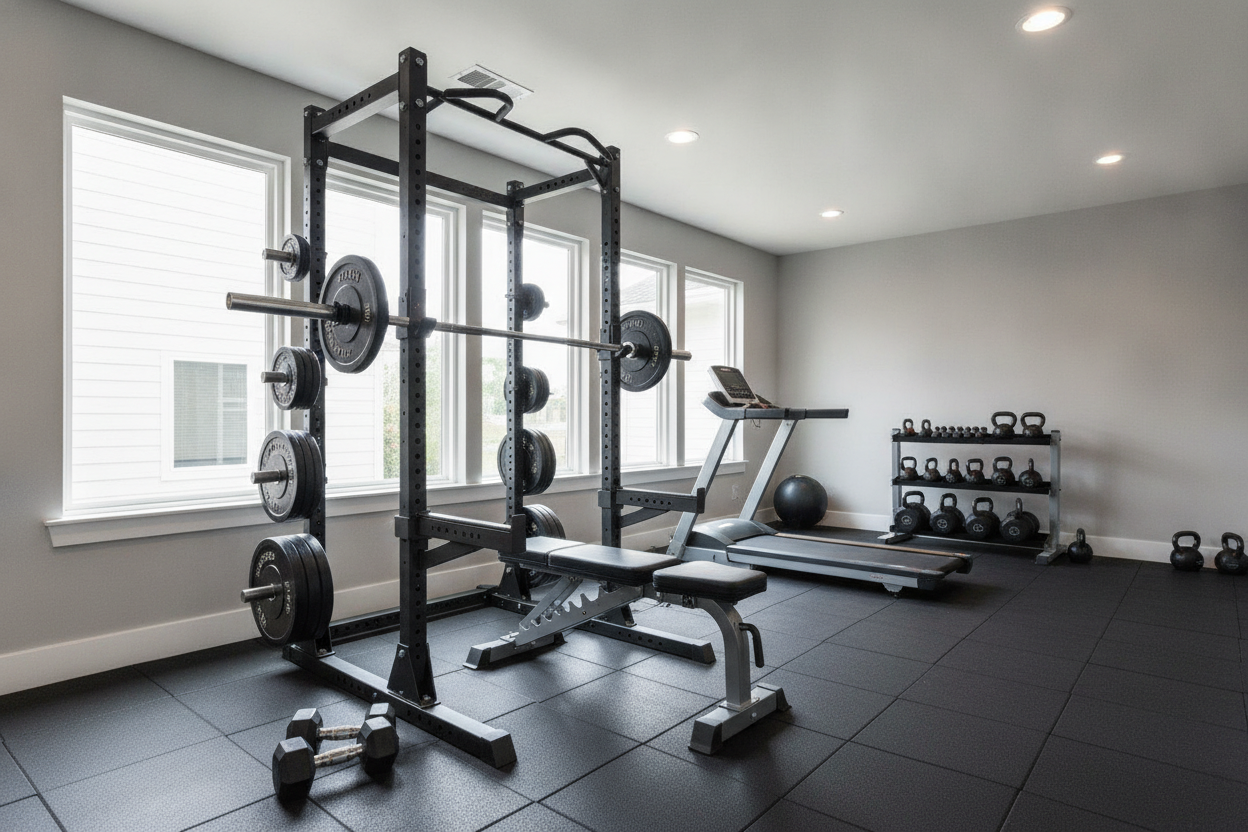
Absolute strength is your ceiling. It’s the maximum force you can produce, usually measured by a one-rep max. In a home gym, this is where you spend the most money. You need a rack that won't tip when you re-rack a heavy squat and a barbell that won't permanently 'U' on you after a year of heavy deadlifts. I recommend looking for 11-gauge steel frames—anything less feels like a toy when you start moving real weight.
Explosive power is about the rate of force development. It’s not just about moving the weight; it’s about how fast you can get it moving. This is where your neighbors start to hate you. This involves cleans, snatches, and heavy kettlebell swings. You need bumper plates here. If you try to do explosive work with thin, cast-iron plates, you’re going to crack your foundation or shatter the plates themselves. I’ve seen it happen, and it’s a $400 mistake you only make once.
Strength endurance is the ability to maintain a percentage of your max strength over a long period. Think of a 20-rep set of squats or a 500-meter row. This is the 'work capacity' that keeps you functional. In my gym, I use sandbags for this. There is something about a shifting, 150-pound bag that challenges your endurance in a way a perfectly balanced barbell never will. It forces your stabilizer muscles to work overtime while your heart rate stays in the red zone.
Absolute Strength: Moving the Heavy Iron
To build absolute strength, you need a high-capacity barbell. Don't cheap out here. A bar with a 190,000 PSI tensile strength is the baseline. You want something with a decent knurl—not so aggressive it draws blood on every set, but enough that it stays put when your palms are sweaty in a humid garage. I personally use a power bar with a 29mm diameter because it feels more stable in the hands for presses and squats.
Your rack is your sanctuary. If you have the space, a full four-post power rack is the way to go. It allows you to use safety pins or straps, which are essential when you're training alone at 6:00 AM and there's no one to spot you. I’ve had to dump a 400-pound squat onto safety straps before, and let me tell you, that $100 upgrade for the straps felt like the best investment I ever made in that moment.
Explosive Power: When Speed Meets Force
Building power requires you to move fast, which means you need floor space. If your gym is so cluttered that you're worried about hitting a lawnmower during a power clean, you won't commit to the movement. I cleared out an 8x8 foot area specifically for dynamic work. This is where the 'speed' happens. You aren't just lifting; you're launching.
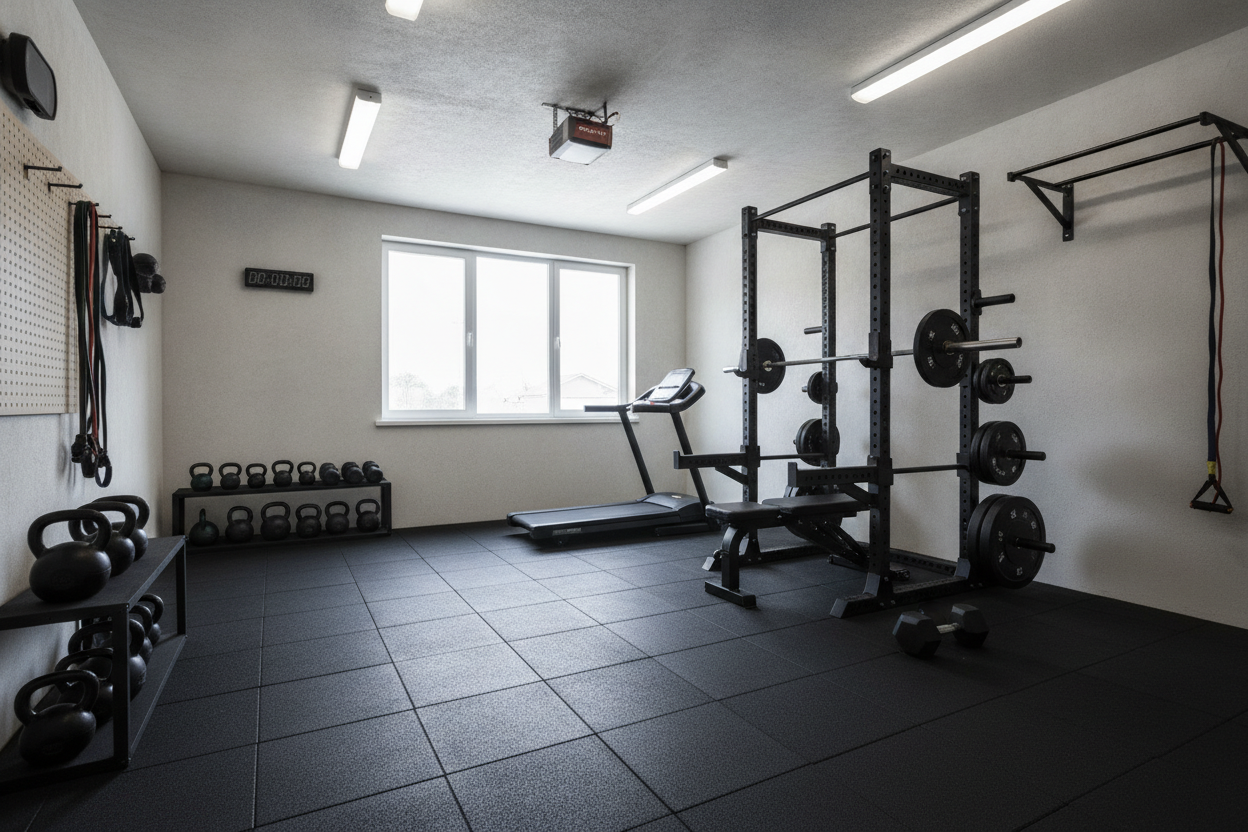
Kettlebells are the kings of home gym power. A 24kg or 32kg bell takes up almost no space but can provide a brutal power workout through swings and snatches. The key is the hinge. You’re teaching your hips to explode. If you're doing it right, the bell should feel weightless at the top of the swing. If you're muscling it up with your shoulders, you're missing the point of explosive training entirely.
Strength Endurance: Surviving the High Reps
This is where the mental game lives. Strength endurance is about teaching your body to buffer lactic acid. You don't need fancy machines for this. In fact, machines make it too easy by stabilizing the weight for you. Use 'odd objects.' A heavy medicine ball or a sandbag carried for distance will build a type of 'farm strong' endurance that translates to everything from moving furniture to hiking with a heavy pack.
I like to finish my heavy sessions with a 'finisher' focused on endurance. Five minutes of continuous sandbag over-the-shoulder tosses will tell you a lot about your character. It’s not about the weight on the bag as much as it is about the lack of rest. You’re training your muscles to keep firing even when they’re screaming for oxygen. It’s miserable, but it’s the most functional thing you can do in a garage.
Wait, What Are the 4 Types of Strength?
You’ll often hear people ask 'what are the 4 types of strength,' adding Relative Strength to the mix. Relative strength is simply how strong you are compared to your own body weight. This is the most overlooked metric in the home gym community. Everyone wants to talk about their deadlift, but half those people can't do five strict pull-ups or a single-leg pistol squat without falling over.
Mastering your own body weight is a prerequisite for heavy loading. If you can’t control your own frame, you have no business putting a 300-pound barbell on your back. I spent the first year of my training journey focused on the basics: push-ups, pull-ups, and lunges. I realized my floor was too hard for high-volume calisthenics, so I invested in a Large Exercise Mat 6X4. Having a dedicated, shock-absorbing space made a massive difference in my joint health when doing plyometrics and relative strength drills.
Relative strength is also the ultimate ego-checker. It doesn't care how much you weigh. In fact, if you put on 20 pounds of 'bulk' that is mostly fat, your relative strength will plummet. It keeps you honest about your body composition. I keep a pull-up bar in the doorway of my garage, and I make myself do five reps every time I walk in. If those five reps start feeling heavy, I know my diet has slipped.
Structuring Your Week Without Wrecking Your Central Nervous System
The biggest mistake I see? Trying to do everything at once. You cannot hit a 1RM deadlift, do 50 box jumps, and then run a 10-mile endurance circuit in the same afternoon without frying your Central Nervous System (CNS). When your CNS is toasted, your strength disappears, your sleep goes to hell, and you become prone to stupid injuries. You have to be smart about how you layer these types of physical strength.
I follow a simple split: Monday is Absolute Strength (heavy), Wednesday is Explosive Power (fast), and Friday is Strength Endurance (high volume). Tuesday and Thursday are for Relative Strength and mobility work on the mat. This allows my nervous system to recover between the high-intensity days. Stop Blending the Different Types of Strength Exercises Into One Day if you actually want to see progress in any of them. Specialization requires recovery.
Listen to your body. If you wake up and your grip strength feels weak—like you can't even squeeze a gripper or a barbell firmly—that's a sign your CNS hasn't recovered. On those days, I swap my heavy lifting for light mobility or a long walk. Pushing through a CNS deficit is a fast track to a month-long plateau. A home gym is a marathon, not a sprint. The equipment will be there tomorrow; make sure your joints are too.
Personal Experience: The Day the Bar Won
I once tried to test my absolute strength max on a day I should have been doing endurance. I had spent the previous day doing 100-meter sprints and felt 'fine.' I loaded 405 on the bar for a deadlift, pulled, and felt my back turn into a wet noodle. I didn't have the neurological 'pop' because I'd drained the tank 24 hours earlier. I spent two weeks hobbling around my garage just doing light stretches. It was a humbling reminder that 'feeling fine' isn't the same as being recovered. Now, I stick to the schedule religiously.
FAQ
Do I need a separate bar for explosive lifts?
Not necessarily, but a multi-purpose bar with 'dual knurl marks' is best. It has the whip needed for cleans but the stiffness needed for squats. If you're serious about Olympic lifting, eventually you'll want a bearing bar, but for most garage athletes, a high-quality bushing bar is plenty.
Can I build strength endurance with just a barbell?
Yes, through high-rep complexes (doing 4-5 exercises back-to-back without putting the bar down). However, I find sandbags or kettlebells easier on the wrists for high-volume work. Barbells can get 'clunky' when you're gasping for air.
How do I measure relative strength?
The gold standards are pull-ups, dips, and the ability to hold a plank for two minutes. If you can do 10+ strict pull-ups and 20+ dips, your relative strength is in a good spot. If not, spend more time on the mat and less time under the bar.