The 2.5lb Rule: How Do I Increase Weight Without Stalling?
I remember the exact Tuesday my overhead press died. I had been adding five pounds to the bar every week for two months like a clockwork soldier. Then, 135 pounds felt like a house. I tried 140 the next week and it didn't even clear my forehead. I spent three months stuck there, getting frustrated and wondering how do i increase weight when my body clearly said 'no more.'
The problem wasn't my work ethic. It was my math. Most people treat progression like a straight line up a mountain, but eventually, the slope gets too steep for standard plates. If you want to keep the needle moving, you have to stop thinking in five-pound increments and start thinking about the physics of force production.
Quick Takeaways
- Standard linear progression usually dies after 3-6 months of consistent lifting.
- Fractional plates (1.25 lbs and smaller) are the most underrated tool in a home gym.
- If your form breaks down to complete a rep, you haven't actually 'hit' that weight.
- Stability is strength; a wobbly bench or rack will literally steal pounds from your total.
The 'Just Add 10 Pounds' Trap
When you first start out, your nervous system is basically just learning how to turn on the lights. You get 'stronger' rapidly because your brain is getting efficient, not necessarily because you've built massive new slabs of muscle. This is the honeymoon phase where you can slap a ten-pound plate on each side every week and feel like a god. But math is a cruel mistress.
If you added just five pounds to your bench press every week, you would add 260 pounds to your max in a year. Nobody does that. If they did, the local YMCA would be full of guys benching 600 pounds. When the newbie gains evaporate, you hit the wall. Many lifters think they need a new program or more supplements, but the reality of how to increase weight in exercise is that you've simply reached the limit of large-jump progression. Stalling isn't failure; it is a signal to change your increment.
Micro-Loading: The Boring Secret to Getting Stronger
If 135 pounds is easy but 140 pounds crushes you, the jump is too big. That is a 3.7% increase in total load. Imagine trying to increase your mortgage payment by 4% every single month—eventually, you're going to go broke. This is where people get stuck asking how to increase weight lifting without failing reps. The answer is fractional plates.
I started carrying a pair of 1.25-pound plates in my gym bag. Adding 2.5 pounds total to the bar is a psychological and physiological win. Your nervous system doesn't panic because the load feels nearly identical to last week, but the math doesn't lie: you are lifting more. Over ten weeks, that is a 25-pound PR that you actually earned without grinding your joints into dust. If you are still confused by a confusing weight lifting name like RPE or RIR, just focus on this: if the last rep felt like a 9 out of 10 effort, only add a tiny fraction of weight next time.
Master the Rep Before You Add the Plate
Adding weight to a lift with garbage form is just 'ego-lifting' with a different name. If you have to arch your back like a bridge to finish a bench press, you didn't beat the weight; you cheated the movement. I see guys constantly asking how to increase your weight lifting numbers while their knees are caving in on every squat. That is a recipe for a meniscus tear, not a PR.
Own the weight first. If your program calls for 3x5 at 225, and you hit it but the last two reps were shaky, don't move up. Stay at 225 next week and focus on 'tempo'—three seconds down, a slight pause, and an explosive drive up. When you can move that weight with total authority, you've earned the right to add more. This approach is how you fix your weight lifting exercises upper body issues. Pushing too much weight too fast is usually why your shoulders feel like they're full of broken glass every morning.
Your Bench Is Probably Bleeding Your Power
Here is something most people overlook when wondering how to increase lifting weight in gym settings: the floor and the bench. Your body has a built-in safety mechanism called neural inhibition. If your brain senses that the surface you are standing or lying on is unstable, it will literally prevent your muscles from firing at 100% to protect your spine. It's like trying to fire a cannon from a canoe.
If you are using a cheap, narrow bench that wobbles when you settle under the bar, you are 'bleeding' force. You're using energy to stay balanced instead of using it to move the iron. Upgrading to a rock-solid platform like the Gxmmat Adjustable Weight Bench changed my pressing game because I finally felt 'locked in.' When your shoulder blades are dug into a wide, grippy pad that doesn't budge, your brain gives you the green light to use every ounce of strength you have.
A Bulletproof Progression Plan for Your Next Workout
Stop trying to max out every session. If you want to know how to increase weight in gym sessions without burning out your adrenals, use a wave progression. Instead of adding weight every single time, cycle your intensity. Week 1 might be 3 sets of 8 with a moderate weight. Week 2, you do 3 sets of 5 with more weight. Week 3, you do 3 sets of 3 with your heavy 'top' weight. Week 4, you drop the weight back down (a deload) to let your joints recover.
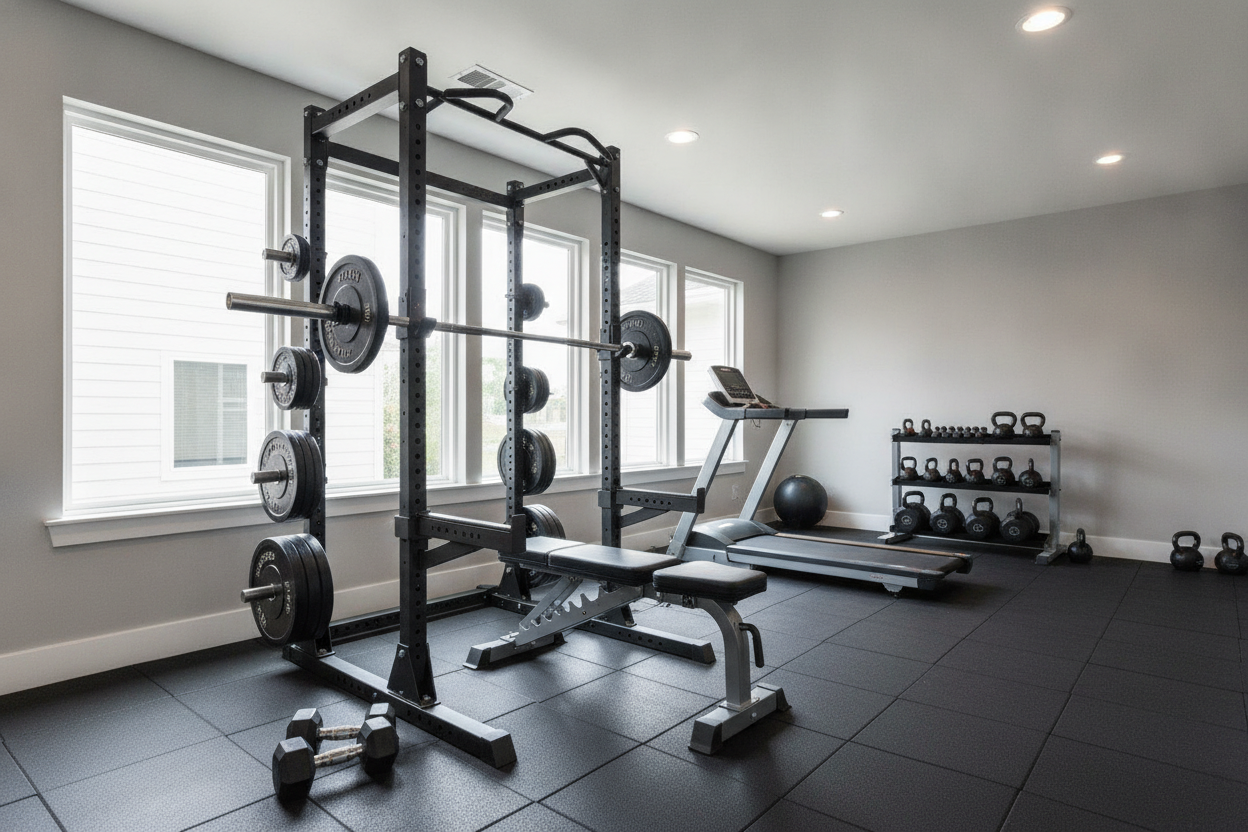
This 'three steps forward, one step back' approach is how the pros train. It’s also much safer if you’re training alone in a garage. I always tell people to invest in a full power rack weight bench package. Having those steel safety arms means you can actually test your limits on how to increase weight at gym without the fear of the barbell pinning you to the floor. When you aren't scared of the weight, you lift more of it. Simple as that.
Personal Experience: The Day I Almost Ate a Barbell
Early in my home gym days, I was stubborn. I was trying to hit a 315-pound squat in a cheap, bolt-together rack that had no business holding that much weight. As I descended, the rack shifted. I panicked, my form broke, and I barely managed to dump the bar without breaking my neck. I realized then that my equipment was limiting my strength. I was subconsciously holding back because I didn't trust the gear. Once I moved to a heavy-duty setup, my squat jumped 20 pounds in a month just because I finally felt safe enough to strain.
FAQ
How often should I increase the weight?
For big compound lifts like squats and deadlifts, try to add weight every 1-2 weeks. For smaller isolation moves like curls or lateral raises, you might only add weight once a month. Focus on adding reps first, then weight.
What if I can't add even 2.5 pounds?
If you can't add weight, add a rep. If you did 200 lbs for 5 reps last week, and you do 200 lbs for 6 reps this week, you have officially increased your strength. Once you hit the top of a rep range (like 8 reps), then add weight and drop back to 5 reps.
Does my grip strength affect how much weight I can lift?
Absolutely. Especially on pulls. If your hands give out before your back does, you aren't training your back to its full potential. Use straps for your heaviest sets so your big muscles get the work they need.