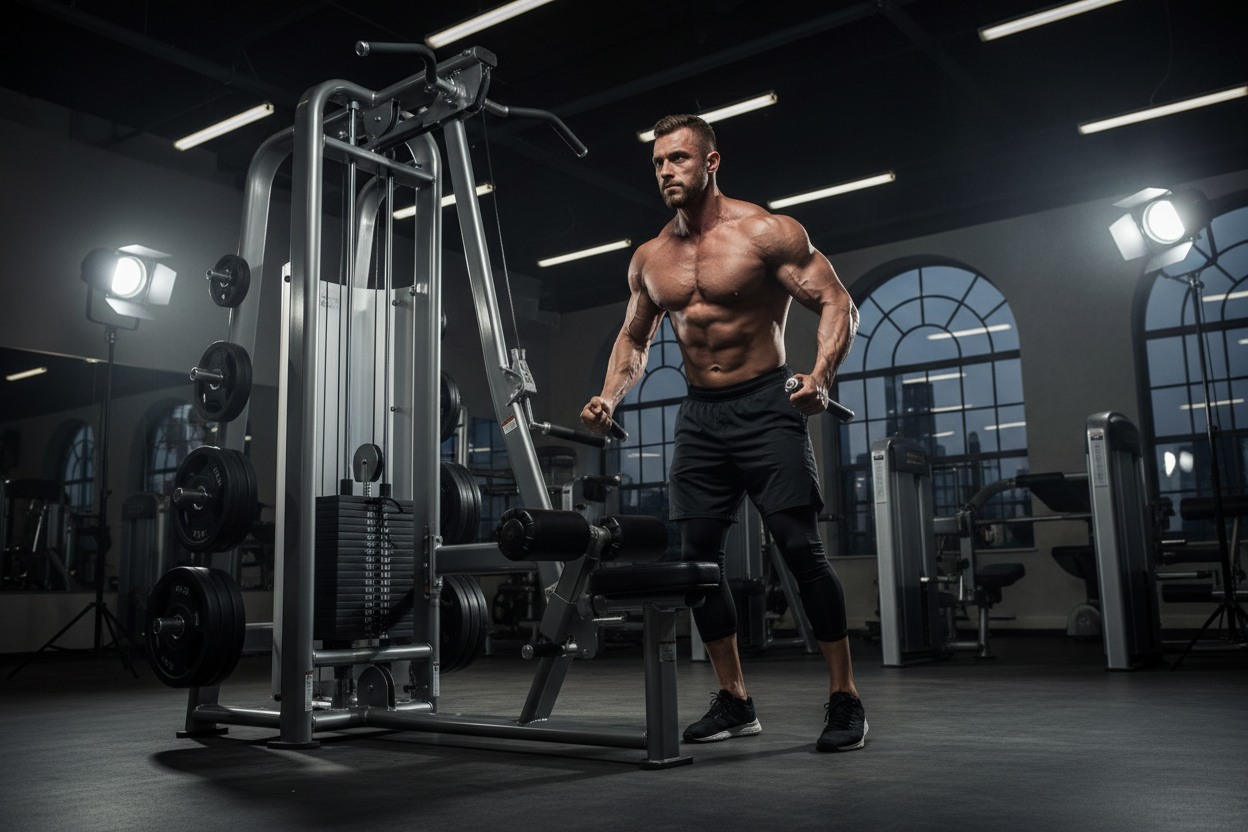
How to Maximize Gains With the Right Breast Exercise Equipment
Let’s clear up a common misconception right out of the gate. When we talk about breast exercise equipment, we are really discussing the tools necessary to build and strengthen the pectoral muscles that sit underneath the chest tissue. You cannot exercise fat or glandular tissue, but lifting the muscles underneath provides a natural lift and improved posture.
Many gym-goers hop from machine to machine without understanding the mechanics of tension. They push weight from point A to point B, but they never actually feel the chest contract. Selecting the right gear isn't just about availability; it is about matching the resistance curve of the machine to the natural movement of your body.
Key Takeaways: Quick Summary
- Compound Movements First: The best equipment for mass is usually a flat or incline bench press (barbell or dumbbell).
- Cables for Constant Tension: Unlike dumbbells, cables provide resistance throughout the entire range of motion, vital for inner chest development.
- Machine Stability: Hammer Strength or selectorized press machines allow you to train to failure safely without a spotter.
- Anatomy Matters: You need equipment that hits both the clavicular (upper) and sternocostal (mid/lower) heads of the pec.
The Mechanics of Chest Growth
Before buying a membership or building a home gym, you need to understand why certain equipment works. The pectoral muscles fan out across the chest. To stimulate them, you need to bring your upper arm across your body (adduction).
The best equipment for chest workout sessions allows for a full stretch at the bottom and a hard contraction at the top. If the equipment locks your shoulders into an uncomfortable position, you aren't training your chest; you are grinding your rotator cuffs.
Free Weights: The Gold Standard for Stabilization
When looking for the best chest workout equipment, free weights often reign supreme because they require you to stabilize the load. This recruits more muscle fibers.
Dumbbells vs. Barbells
Barbells allow for maximum load. If your goal is raw strength, the barbell bench press is non-negotiable. However, dumbbells are often superior for hypertrophy (muscle growth). They allow for a deeper stretch at the bottom of the movement and freedom of wrist rotation, which can alleviate joint pain.
Machines and Cables: Isolation and Safety
Free weights have a drawback: gravity. At the top of a dumbbell fly, there is almost no tension on the chest. This is where machines shine.
The Cable Crossover
This is arguably the best machine for chest workout finishers. Cables provide a vector of resistance that doesn't rely on gravity. When you cross your hands at the peak of the movement, the tension is just as high as it was at the start. This continuous tension creates metabolic stress, a key driver for muscle growth.
The Pec Deck / Machine Fly
This piece of equipment removes the need for stabilization entirely. This sounds like a negative, but it allows you to focus 100% of your mental energy on squeezing the muscle. It is excellent for pre-exhausting the chest before heavy pressing or burning it out at the end of a session.
Common Mistakes When Selecting Gear
Don't be fooled by gimmicky gadgets sold on late-night TV. The most effective tools are usually the ones that have been around for decades.
Avoid equipment that uses hydraulic resistance or springs that degrade over time. You need linear, measurable resistance—plates, stacks, or high-quality bands—to apply the principle of progressive overload.
My Training Log: Real Talk on Breast Exercise Equipment
I want to share a specific observation from my years on the gym floor regarding the "Pec Deck" machine. Everyone says it's great for isolation, but nobody talks about the specific "bite" of the pads.
There is a specific machine at my old gym—an old-school Nautilus model. The vinyl on the elbow pads was worn smooth and slick from sweat. When I tried to go heavy, my forearms would literally slide up the pads as soon as I started to sweat, killing my leverage. I had to start bringing a distinct, chalky towel just to drape over the pads to get any traction.
Furthermore, on the cable crossover, there is often a "dead zone" or a mechanical hiccup if the pulleys aren't oiled. I remember doing cable flys and feeling a gritty vibration in the handle every time I passed the midpoint. That friction breaks your mind-muscle connection. The specs on paper don't matter if the machine feels like a rusty bicycle chain in your hands. Real equipment quality is felt in the smoothness of the pulley, not the shine of the paint.
Conclusion
Building a better upper body requires a mix of stability and isolation. Start your workout with the best chest workout equipment for heavy loads, like dumbbells or barbells, and finish with the best machine for chest workout isolation, like cables or the pec deck.
Consistency beats variety. Pick three solid pieces of equipment, master the form, and add weight slowly over time.
Frequently Asked Questions
Can breast exercise equipment lift sagging breasts?
No equipment can tighten skin or remove fat. However, developing the pectoral muscles underneath the breast tissue can add volume to the upper chest, potentially creating a subtle "lifted" appearance and improved posture.
What is the single best piece of equipment for home chest workouts?
Adjustable dumbbells and an adjustable bench offer the most versatility. They allow you to perform flat presses, incline presses, and flys, covering all heads of the pectoral muscle without taking up much space.
How often should I use chest machines?
For most lifters, training the chest twice a week is the sweet spot. This allows for sufficient volume to stimulate growth while providing 48 to 72 hours of rest for the muscles to repair and grow stronger.