How to Master Home Tumbling With the Right 4x10 Gym Mat
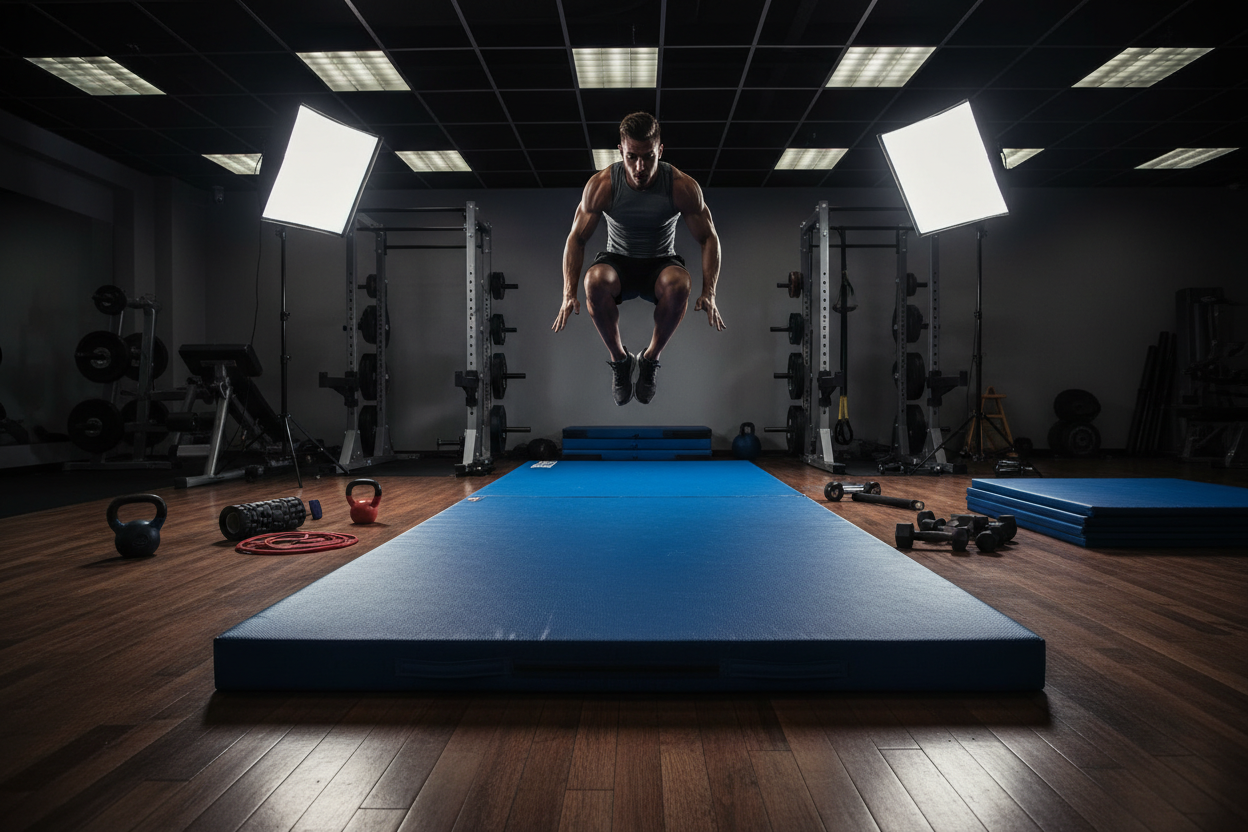
You have cleared the furniture in the living room, but you are still hesitating on the gear. You know you need impact protection, but the standard sizes just feel... restrictive. If you are serious about progressing skills at home without twisting an ankle on the hardwood, the 4x10 gym mat is likely the sweet spot you have been ignoring.
Most home athletes default to the standard 4x8 options found in big-box stores. The problem? That missing two feet of length is often the difference between a safe landing and stepping off the edge mid-tumble. Let's break down why this specific dimension is the superior choice for home setups and how to choose one that won't fall apart after a month of heavy landings.
Key Takeaways
- The "Two-Step" Rule: The 4x10 size accommodates an extra tumbling step or skill connection (like a round-off back handspring) that a 4x8 cannot safely support.
- Foam Density Over Softness: Look for Cross-Linked Polyethylene foam (firm) for tumbling, not open-cell foam (squishy), to prevent wrist injuries.
- Velcro Connectivity: Ensure V4 (Velcro on all 4 sides) if you plan to expand your floor area later.
- Thickness Matters: A 2-inch thickness provides optimal shock absorption for high-impact landings compared to the standard 1.3/8 inch mats.
Why Length Dictates Your Skill Ceiling
In gymnastics and martial arts, space dictates confidence. When you are working on a gymnastics mat 4x10, you aren't just paying for extra vinyl; you are buying psychological safety.
Consider the biomechanics of a round-off. An average athlete covers significant ground. On a standard 8-foot mat, a tall athlete or an explosive teen has almost zero margin for error. If they overshoot the entry, they land on the floor. The 10-foot length provides that critical buffer zone, allowing for a pre-hurdle step or a safer, controlled landing.
The Science of Impact Absorption
Not all mats cushion the same way. The biggest mistake buyers make is assuming "softer is better." For a gymnastics mat 4 x 10 intended for tumbling, soft is dangerous.
You need a mat constructed with Cross-Linked Polyethylene (EPE) foam. This foam has a closed-cell structure. When you impact it, the air bubbles don't burst; they compress and rebound immediately. This provides the resistance needed to push off for a jump. If the mat is too soft (like a sleeping mattress), your wrists sink in, increasing the torque on the joint and killing your momentum.
Durability: The 18oz Vinyl Standard
If you have ever seen a cheap mat flake or crack, it's because the vinyl casing was too thin. In the industry, we look for 18oz heavy-duty vinyl covers.
This weight resists punctures and tears from zippers or even the occasional sneaker (though you should really be barefoot or in cheer shoes). Furthermore, look for double-stitching along the seams. A single stitch line is the first thing to blow out when a heavy athlete lands near the edge of a panel.
My Training Log: Real Talk
I want to be transparent about my time testing these mats. I recently swapped out my old 4x8 for a 4x10 panel mat for garage drills, and the difference was immediate—but there were quirks.
The first thing I noticed was the "slap." High-quality vinyl is loud. When I hit a burpee or a drop-landing, it creates a distinct, sharp sound. It’s annoying to the rest of the house, but it’s actually a sign of good tension in the casing. If it sounds dull or muffled, the vinyl is often too loose, which creates wrinkles that can catch your toe.
Another gritty detail: The Velcro seams. On my 4x10, the panels fold accordion-style. When I was doing sit-ups, if I positioned my tailbone right over the fold, the Velcro strips (even when flat) were abrasive enough to pill the fabric on my shorts. I learned quickly to lay a towel down for core work or position myself in the center of a panel, not the seam. However, for standing tumbling, that firmness at the seam is exactly what kept my ankles stable.
Conclusion
Upgrading to a 4x10 gym mat isn't just about covering more floor; it's about unlocking the ability to chain skills together safely. By prioritizing high-density foam and heavy-duty vinyl, you ensure that your home gym supports your progress rather than hindering it. Don't settle for the minimum size—give yourself the room to land.
Frequently Asked Questions
Can I connect two 4x10 mats together?
Yes, but you must check the Velcro configuration. Look for mats labeled "V4" (Velcro on all 4 sides) or "V2" (Velcro on the two ends). V4 allows you to create large square areas (8x10 or 10x8), while V2 only allows you to create a long 4x20 tumbling strip.
Is a 2-inch mat too thick for yoga or balance work?
It can be. A 2-inch gymnastics mat 4x10 is designed for impact absorption. For balance poses like Tree Pose or heavy barbell lifting, the foam may compress slightly underfoot, causing instability. It is excellent for tumbling, stretching, and martial arts falls, but less ideal for static balance.
How do I clean the vinyl surface without damaging it?
Avoid bleach or harsh chemicals, as they can dry out the vinyl and cause cracking over time. Use a mixture of warm water and a few drops of mild dish soap. Wipe it down with a soft cloth and, crucially, let it air dry completely before folding it back up to prevent mildew in the creases.