How to Make Light Weights Work for Intense Leg Exercises
I remember standing in my garage at 10 PM, staring at a measly 165 pounds of bumper plates and feeling defeated. I had just finished watching a pro bodybuilder squat 600 pounds, and my humble home setup felt like a toy. But that night, I learned that intense leg exercises aren't about the number on the iron; they are about how much of that iron your muscle actually feels.
If you are short on plates or training in a space where dropping 500 pounds isn't an option, you have to get creative. You don't need a massive commercial rack to build wheels that stretch your jeans. You just need to stop moving weight and start challenging your muscle fibers through smarter mechanical tension.
- Tempo is your best friend—slow down the descent to 4 seconds.
- Eliminate the 'bounce' by pausing for 2 seconds at the bottom of every rep.
- The 1.5 rep method creates a level of metabolic stress that high-weight sets can't match.
- Pre-exhausting your quads allows you to hit failure with significantly less load on your spine.
The Difference Between Muscle Fatigue and Just Breathing Hard
A lot of people confuse being out of breath with having an intense workout for legs. If you are doing 50 air squats or jumping around your living room, your heart rate is going to spike, and you will definitely sweat. But that is cardiovascular fatigue, not muscular hypertrophy. To grow, you need to recruit high-threshold motor units, and that requires tension, not just movement.
Intense leg training means the muscle literally cannot complete another rep with good form. When you have 400 pounds on your back, that failure happens quickly. When you only have 135 pounds, you have to manipulate the way you move to reach that same point of failure. It is the difference between doing 'cardio with weights' and actual resistance training. If you can still walk perfectly fine immediately after a set, you didn't reach the level of intensity needed for growth.
Why Your Home Gym Is Perfect for an Intense Workout for Legs
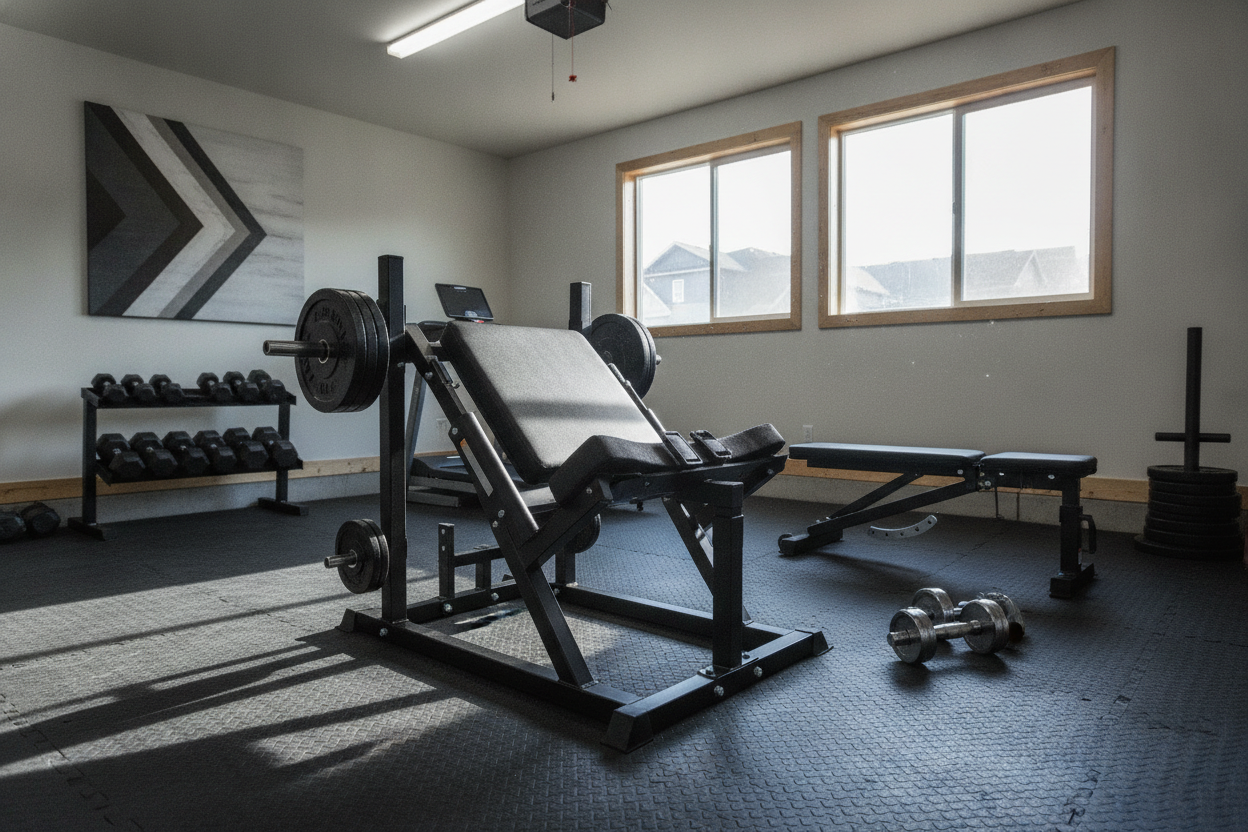
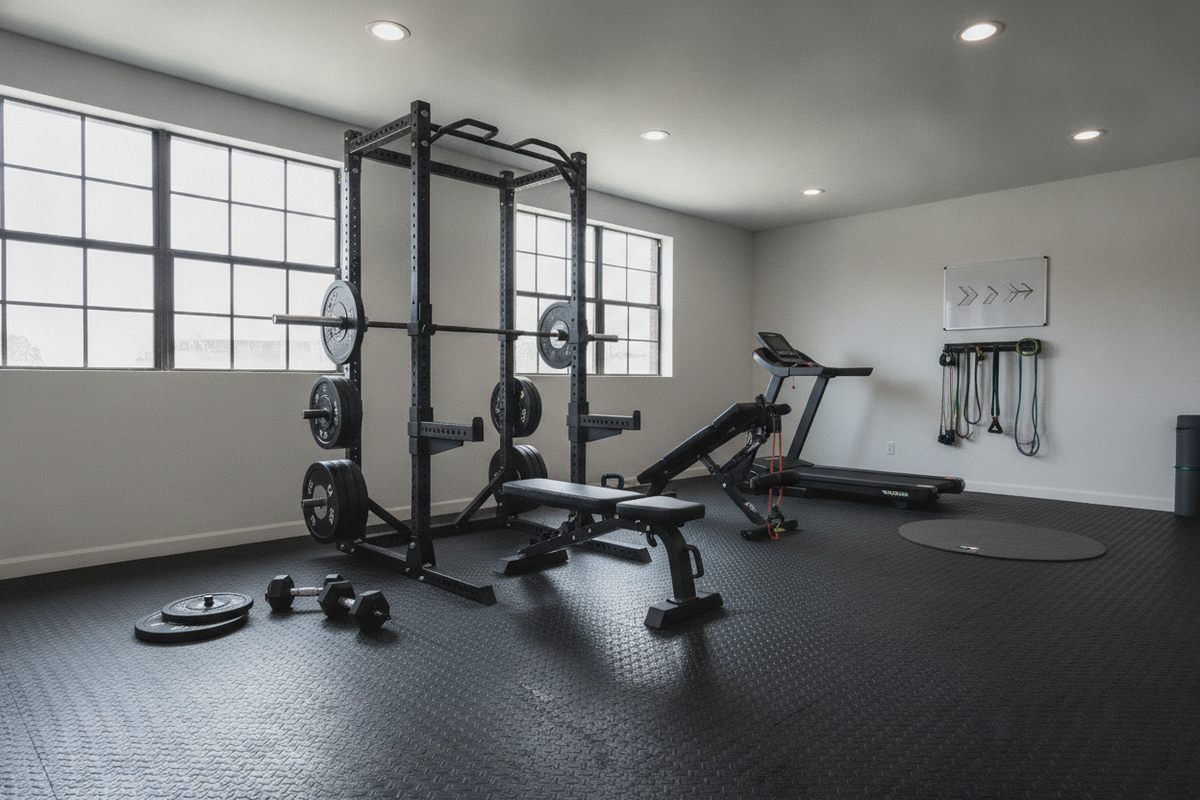
The biggest hurdle in a commercial gym is ego. You see the guy next to you loading up the leg press, and suddenly you’re more worried about looking strong than actually getting strong. In your garage, nobody cares if there’s only one plate on each side of the bar. This privacy is a massive advantage for intense leg workouts.
Without the pressure to perform for an audience, you can focus purely on the mind-muscle connection. You can take those 'ugly' sets to absolute failure. You can grunt, you can shake, and you can take the extra three minutes between sets to let your nervous system recover. Your home gym allows you to prioritize mechanical tension and time under load—the two biggest drivers of muscle growth—without the distraction of a crowded weight room.
3 Brutal Ways to Force Growth Without Adding Extra Plates
When you hit a ceiling on the amount of weight you own, you have to change the 'quality' of the reps. Here are three methods I use to make a light barbell feel like a ton of bricks.
The 1.5 Rep Method for Constant Tension
This is a personal favorite for quads. You squat all the way down, come halfway up, go back down to the bottom, and then stand all the way up. That is one rep. By adding that 'half-rep' at the bottom, you are spending double the time in the hardest part of the movement. It keeps the muscle under constant stress and prevents you from using momentum to cheat the lift. By the time you hit rep eight, your quads will be screaming.
Paused Reps in the Deepest Part of the Hole
Most people use the 'stretch reflex'—that little bounce at the bottom of a squat—to get the weight moving again. When you have limited weight, you want to kill that bounce. Sink to the bottom of your squat or lunge and hold it for a full two-count. This forces your muscle fibers to produce force from a dead stop. It removes the help from your tendons and puts 100 percent of the load on the muscle tissue. It’s a humbling way to make 135 pounds feel like 315.
Pre-Exhausting the Quads Before the Compound Lift
If I start my workout with heavy squats, my lower back often gives out before my quads do. To fix this, I often fatigue my quads before an intense home leg workout by doing isolation work first. If you do three sets of high-rep leg extensions or sissy squats before you ever touch the barbell, your quads will already be at 60 percent capacity. This means when you finally start your 'heavy' lifting, you’ll hit muscular failure much sooner, keeping the total weight lower and your joints safer.
When You Actually Need Equipment for Isolation
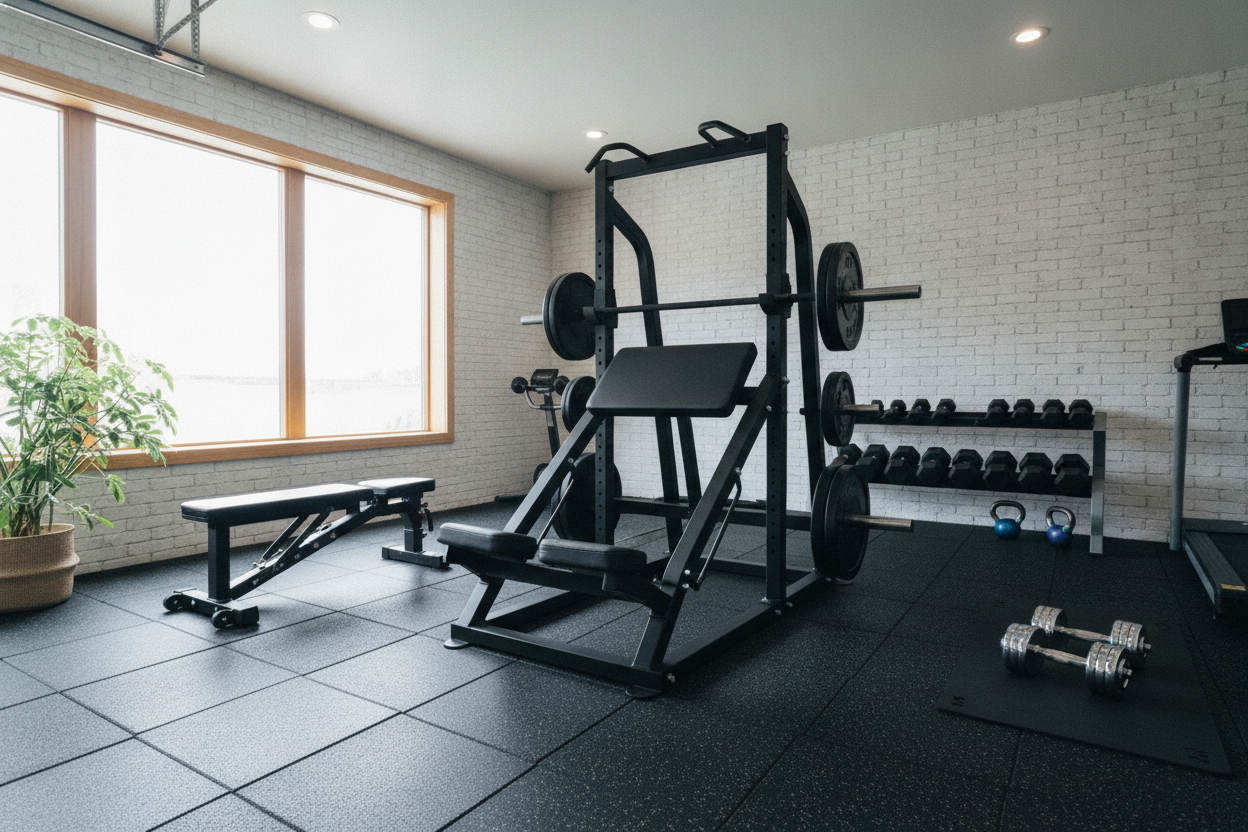
Free weights are king, but they have a flaw: the resistance curve isn't always consistent. For example, at the top of a squat, there is almost no tension on the quads. To really round out your leg development, eventually, you’ll want to move from the barbell to a dedicated leg machine. Machines allow you to keep tension on the muscle through the entire range of motion, which is vital for that 'teardrop' quad look.
For a home setup, I’m a big fan of the Gxmmat Leg Extension Curl Machine. It has a relatively small footprint—perfect for a 6x8 corner—and it lets you hammer your quads and hamstrings without the systemic fatigue of a heavy barbell. Being able to sit down and just focus on the squeeze of the quad is a luxury that makes a huge difference in how your legs actually look and feel.
How to Program These Intense Leg Workouts Without Burning Out
Intensity is a double-edged sword. If you take every single set to absolute failure using these methods, you will wreck your central nervous system. I’ve learned the hard way that an intense leg workout makes you sick if you don't respect the recovery process. You might feel like a warrior in the moment, but if you’re dizzy and nauseous for three hours afterward, you’ve overshot the mark.
Aim for two intense sessions per week. Focus on one 'big' movement like a squat or lunge using the tempo and pause techniques, then finish with two isolation movements. Keep your total working sets for legs between 8 and 12 per week. If you are truly pushing the intensity, that is more than enough to spark growth.
Personal Experience: The 135-Pound Lesson
A few years back, I moved into a second-floor apartment and couldn't keep my 500-pound plate set. I was stuck with a pair of 45s and a 25-pound pair of dumbbells. I thought my legs would shrink to nothing. Instead, I started doing 4-second eccentrics and 1.5 reps on Bulgarian split squats. It was the most painful training of my life. My legs actually grew an inch in three months because I was finally forcing the muscle to do the work rather than just moving a heavy object from point A to point B. It taught me that tension is the only language the body speaks.
FAQ
Can I build big legs with just dumbbells?
Yes. Movements like Bulgarian split squats and goblet squats are incredibly effective when you use slow tempos and pauses. You don't need a barbell to create high levels of mechanical tension.
How long should my rest periods be?
For hypertrophy, 2 to 3 minutes is the sweet spot. You want your breathing to settle enough so that your lungs aren't the limiting factor on the next set, but you want to keep the muscle focused.
Is it okay to do these exercises every day?
Absolutely not. Your muscles grow while you sleep, not while you're training. These methods create significant muscle damage; give yourself at least 48 to 72 hours between sessions.