How to Make Free Weight Exercises for Hypertrophy Feel Like Machines
I spent years chasing a pump in a commercial gym, relying on those fancy, plate-loaded ISO-lateral machines. Then I moved my training to a 200-square-foot garage. Suddenly, my exercises for hypertrophy felt less like a muscle-building stimulus and more like a circus act. Balancing on a cracked concrete floor while trying to press 80-pound dumbbells isn't training; it's survival.
The reality is that your muscles don't know if you're holding a barbell or sitting in a $5,000 Prime Fitness machine. They only know tension. But if you're wobbling, your nervous system pulls the emergency brake, limiting how much force you can actually produce. To grow, you have to stop fighting for balance and start fighting the weight.
Quick Takeaways
- Stability is the secret sauce that turns a 'good' lift into a massive growth stimulus.
- Ditch the squishy yoga mats; a dense, firm surface is non-negotiable for force production.
- Use your environment—benches, racks, and straps—to lock your body into place.
- Sequence your hypertrophy training schedule to move from high-stability to high-fatigue.
Why We All Secretly Miss Commercial Gym Machines
We love to talk trash about 'functional' training, but there's a reason pro bodybuilders flock to machines. Machines provide external stability. When your torso is pinned against a seat, you don't have to worry about your core caving or your ankles rolling. You just push.
In a home gym, a standard workout for hypertrophy often suffers because you're the one providing all the stability. If you're doing standing overhead presses, your limit isn't just your shoulders; it's your ability to keep your spine from turning into a noodle. That's fine for general strength, but for pure mass, it's a bottleneck. We need to find ways to recreate that 'locked-in' machine feel using the gear we actually own.
Your Exercises for Hypertrophy Are Only as Good as Your Floor
If you're training on those interlocking foam puzzle mats from a big-box store, you're killing your gains. Period. When you stand on a soft surface with 225 pounds on your back, your brain senses instability. It won't let you contract your quads at 100% because it’s terrified you’re going to snap an ACL.
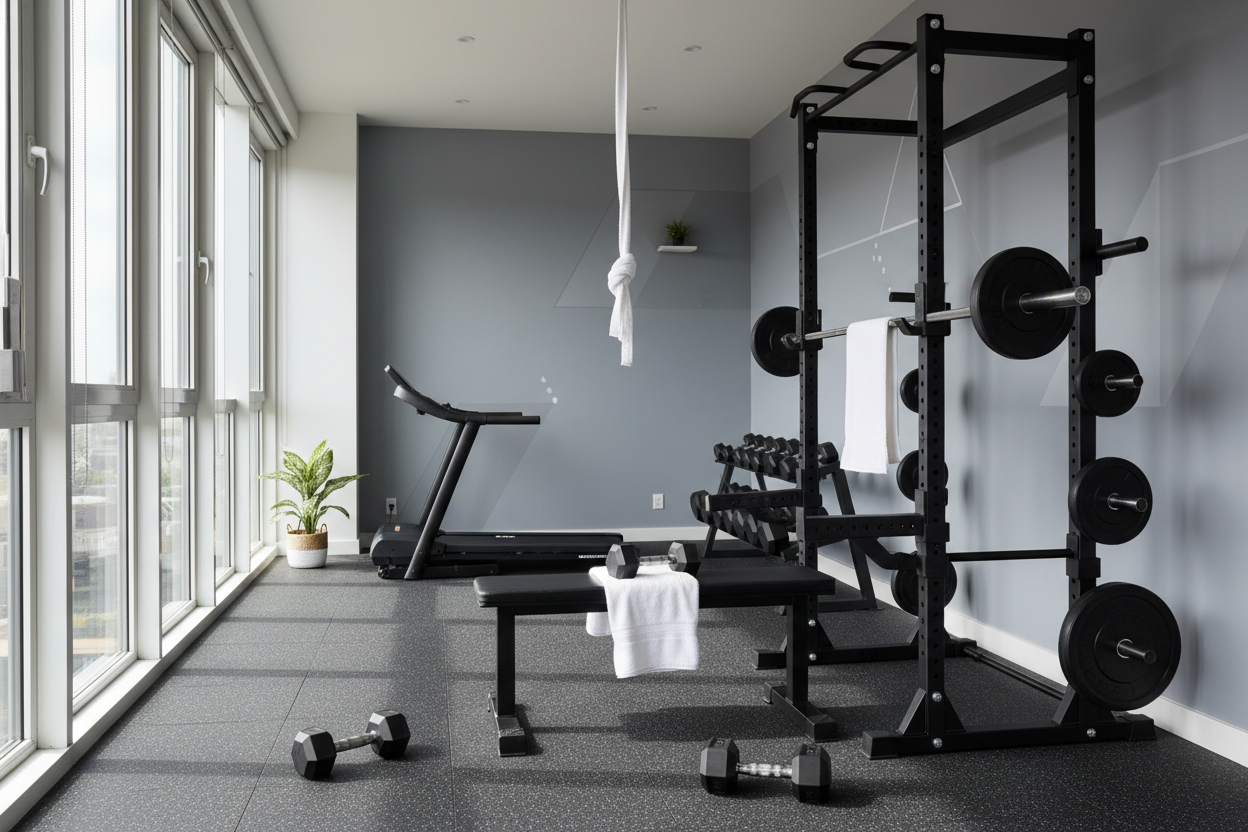
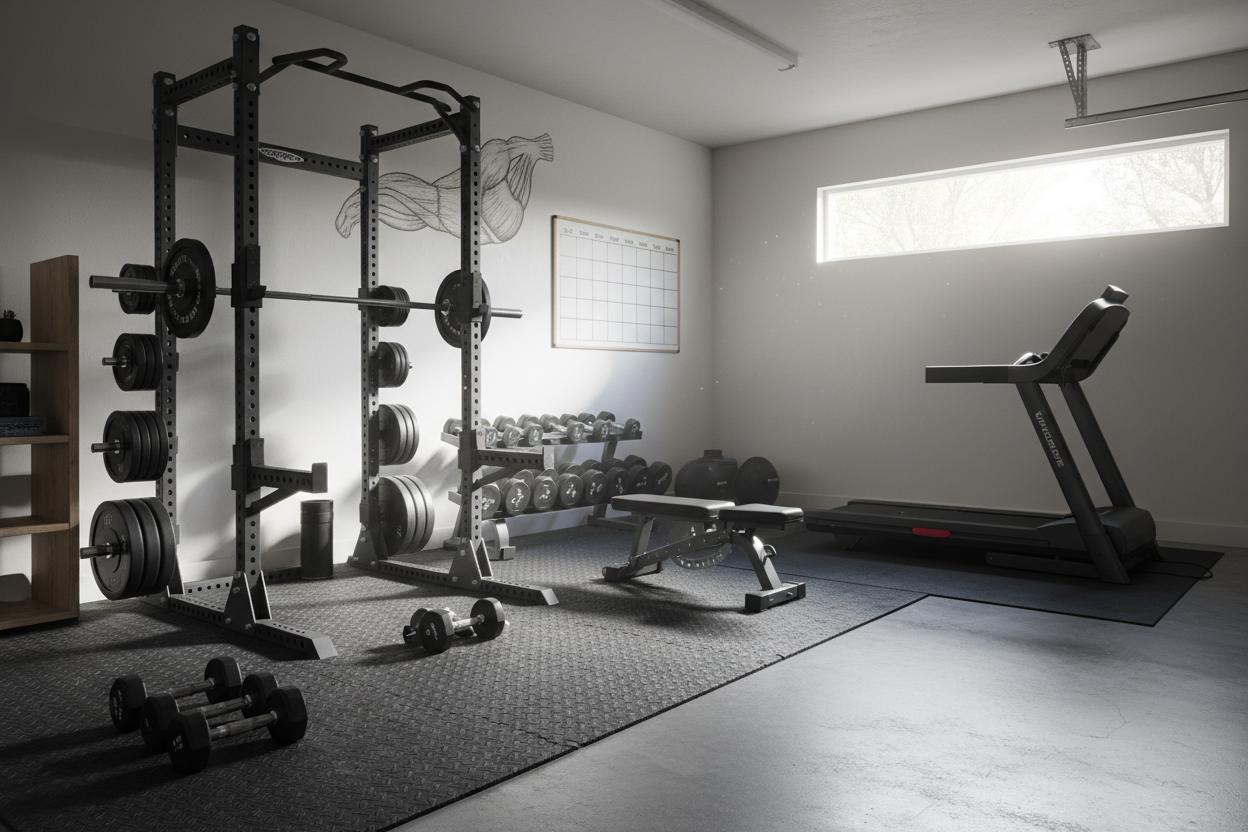
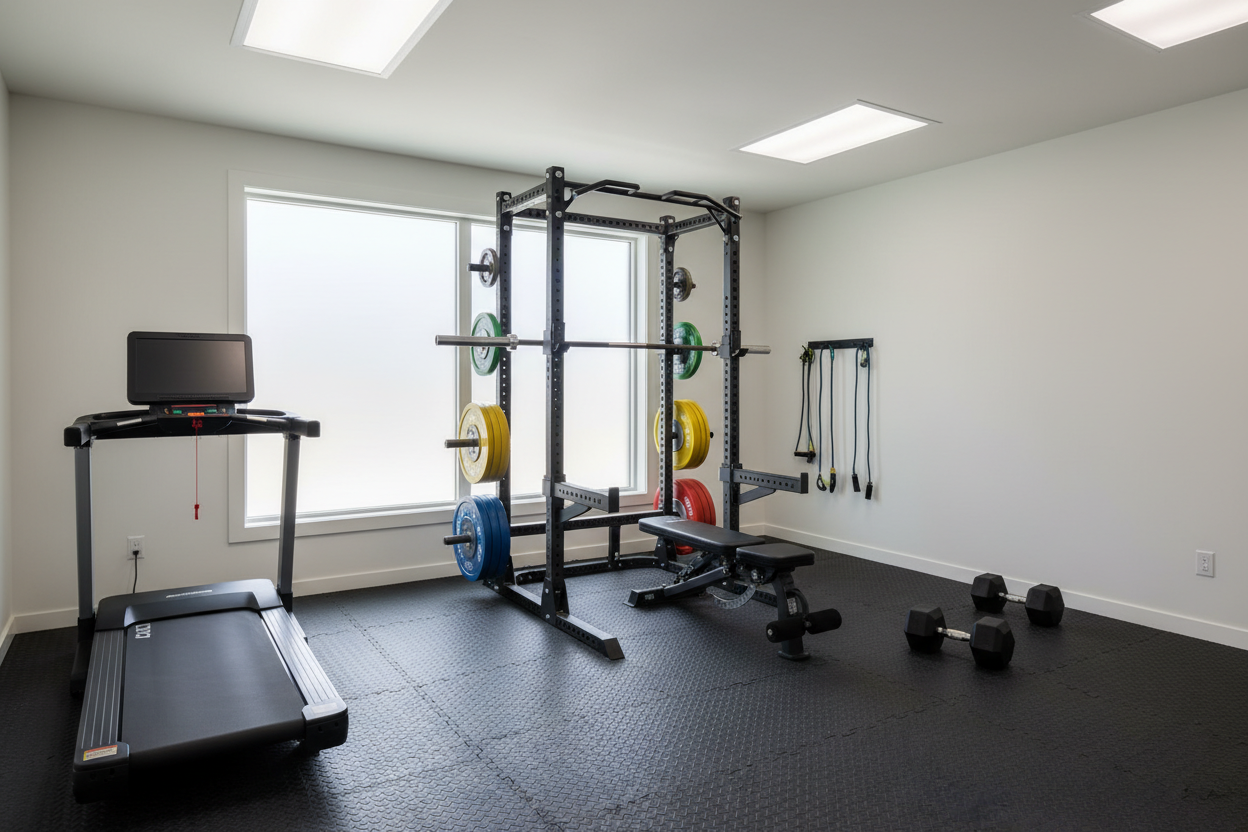
You need a surface that doesn't compress. I've found that a dense 6x8ft exercise mat is the bare minimum for a serious setup. It needs to be heavy enough to stay put and firm enough that you can feel the floor through your shoes. When your foundation is solid, your nervous system relaxes, and you can actually recruit the high-threshold motor units required for growth.
I've seen guys try to squat heavy on plush carpet or uneven concrete. It’s a mess. A dedicated, high-density mat provides the grip and the 'dead' feel you need to drive through the floor without losing power to the squish.
How to Hack Free Weights to Give You a Mechanical Advantage
To make free weights feel like machines, you have to get creative with 'bracing.' If you're doing rows, don't do them standing and bent over. Put your chest on an incline bench. Now, your lower back isn't the limiting factor—your lats are. That's a machine-quality stimulus from a pair of dumbbells.
Another massive bottleneck is your grip. If your forearms give out before your back does during a set of RDLs, you didn't finish your hypertrophy day; you just had a mediocre grip workout. Using strength training accessories like Versa Gripps or basic figure-8 straps allows you to bypass the hands and load the target muscle directly. It mimics the fixed handles of a machine, letting you focus entirely on the stretch and contraction.
Don't be afraid to use your power rack as a stabilizer, either. For single-arm dumbbell rows, don't just lean on your knee. Grab the upright of the rack. That extra point of contact turns a shaky movement into a rock-solid pull.
Stop Ruining Your Hypertrophy Day With Balance Acts
Leg day is where most home gym lifters fail. We think we have to do walking lunges because that's what the 'hardcore' guys do. But if you're stumbling every third step, you aren't getting a great hypertrophy training programme stimulus. You're just doing cardio with a high risk of a twisted ankle.
Swap those walking lunges for a rack-supported Bulgarian split squat. Hold the upright of your rack with one hand and a heavy dumbbell in the other. By removing the balance requirement, you can take your quads to absolute failure safely. This is a core pillar of a heavy legs workout protocol. When you don't have to worry about falling over, you can push into the 'dark place' where actual growth happens.
Structuring Your New Hypertrophy Training Programme
The order of your workout plans for hypertrophy matters just as much as the exercises themselves. I like to start with the movements that require the most coordination while I'm fresh, but I quickly transition to 'braced' movements as fatigue sets in. If you save a high-skill, low-stability movement for the end of the session, your form will be garbage.
A smart science-based leg workout usually starts with a primary compound like a squat or high-bar squat, then moves into highly stable variations like a heel-elevated goblet squat or a braced split squat. By the end of your hypertrophy training schedule, you should be doing movements where it is physically impossible to lose your balance. This allows you to chase that final bit of metabolic stress without ending up in an ER waiting room.
My Honest Take: The Time I Almost Trashed My Back
I learned the stability lesson the hard way. I was trying to do heavy 'Kroc Rows' with a 100-pound dumbbell, standing on a cheap 1/2-inch foam mat. Halfway through the set, the mat slid about two inches on the dusty concrete. My foot slipped, my hips shifted, and I felt a 'pop' in my SI joint that kept me out of the gym for three weeks. It wasn't the weight that hurt me; it was the lack of a stable environment. Now, I won't even pick up a dumbbell unless my feet are glued to a high-traction, high-density surface. Stability isn't just about safety; it's about the permission to go heavy.
FAQ
Do I really need a lifting belt for hypertrophy?
A belt isn't just for 1-rep maxes. It provides a wall for your abs to push against, creating internal stability. If it helps you feel more 'locked in' during a set of 10-12 reps on squats or rows, wear it. It's a tool for better tension.
Can I build big legs with just dumbbells?
Absolutely, but you have to stop doing 'free-standing' movements. Use a bench for split squats and use the wall for sissy squats. The more you can 'machine-ify' the dumbbell, the better the growth will be.
Is training to failure necessary for hypertrophy?
You don't need to hit failure every set, but you need to be close (1-2 reps away). This is why stability is key—you can't safely get close to failure on a movement where you're wobbling or losing your balance.