How to Lift Dumbbells for Beginners (Without Wrecking Your Shoulders)
I remember my first pair of 20-lb hex dumbbells. I bought them from a big-box store because I was too intimidated to walk into a commercial gym and look like I didn't know what I was doing. If you're wondering how to lift dumbbells for beginners, you're likely feeling that same mix of excitement and 'don't-let-me-snap-my-spine' anxiety. It's okay. Most of the influencer advice out there overcomplicates the movement to sell you a program you don't need.
- Form beats weight every single time on day one.
- Your grip dictates how your shoulders will feel tomorrow morning.
- Core bracing is about tension, not just sucking in your gut.
- Controlling the descent is where the actual muscle growth happens.
The 'First Day' Jitters Are Completely Normal
Walking into a weight room or even unboxing your first set at home feels awkward. You feel like everyone is watching your form, but here is the truth: nobody cares as much as you think they do. The biggest mistake you can make is trying to look 'advanced' by grabbing the 40-pounders before you can move the 15s with precision. Mastering the absolute basics of movement—how your joints stack and how your muscles tension—is infinitely more valuable than the number stamped on the side of the weight.
Rule #1: Picking Them Up (The Hinge Method)
Lifting dumbbells for beginners starts before the actual set begins. I’ve seen more people tweak their lower back picking a weight up off the floor than during the actual exercise. Stop rounding your spine like a fishing pole. Stand directly over the dumbbells, push your hips back like you’re trying to close a car door with your butt, and keep your chest proud. This is a hinge. Grip the handles tight and stand up by driving through your heels. If you can’t pick them up safely, you have no business trying to press them over your head.
The 'Neutral Grip' Cheat Code for Happy Joints
Most beginners think they have to have their palms facing forward for every move. That’s a one-way ticket to impingement city if your mobility isn't perfect. A neutral grip—where your palms face each other—is the safest mechanical position for your shoulders. It keeps the humeral head tucked nicely in the joint socket. This is especially true for effective chest workouts with dumbbells where a flared elbow usually leads to a nagging ache. Whether you are rowing or pressing, start with a neutral grip to keep the stress on the muscle and off the tendons.
Bracing Your Core (Imagine Getting Punched)
Coaches love to say 'engage your core,' but that means nothing to a novice. Here is the real-world translation: imagine I am about to punch you right in the solar plexus. You wouldn't suck your stomach in; you’d stiffen up and create a rigid shield of muscle. That is bracing. You need that internal pressure to stabilize your spine before you move a single inch. Take a breath, tighten that 'shield,' and then execute the lift. It turns your torso into a solid pillar rather than a wet noodle.
Stop Dropping Your Iron on the Bare Floor
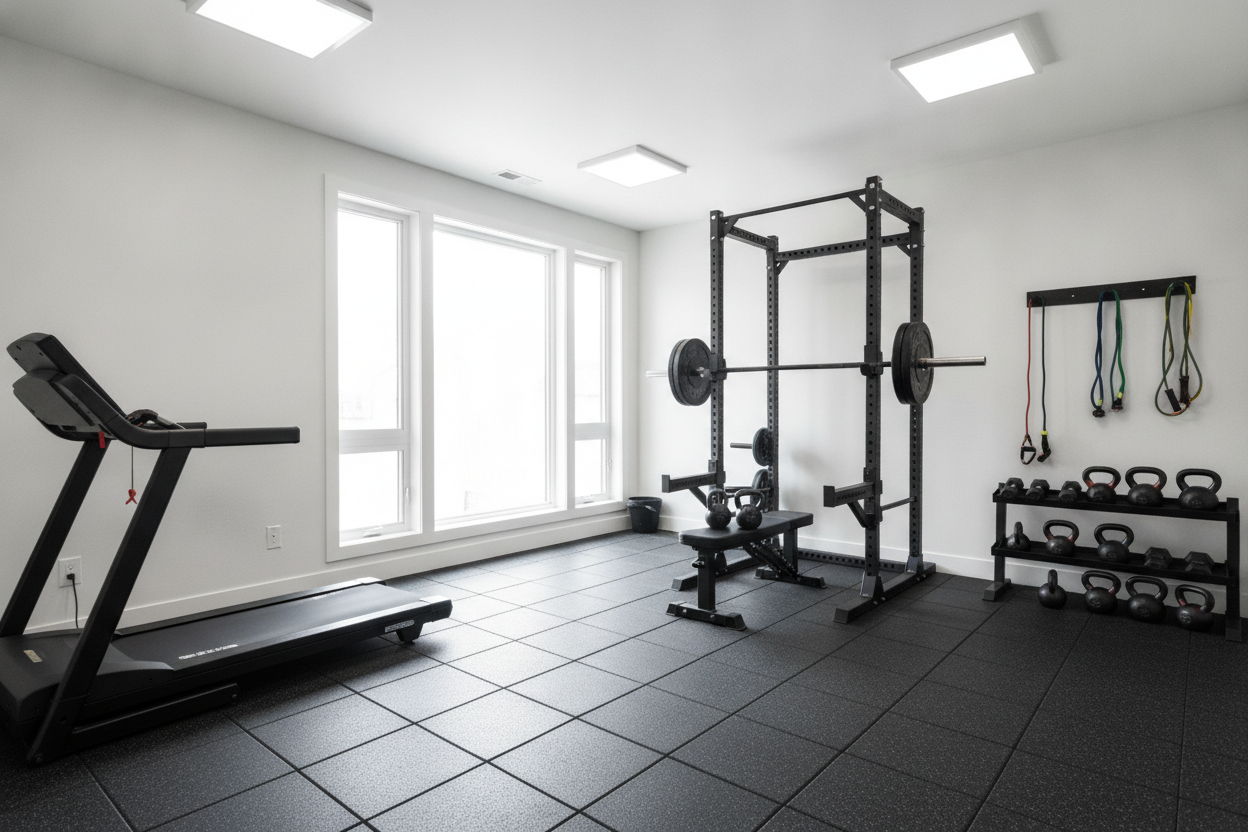
I get it, the pros on YouTube drop their weights after a heavy set. Don't do that. Unless you are using competition-grade bumper plates, dropping dumbbells is a great way to bend the handles or crack the casting. More importantly, you're missing out on half the workout. The eccentric phase—the part where you lower the weight—is where the most mechanical tension occurs. Control it. If you're training in a garage or spare room, invest in some gym flooring for home workout. It saves your concrete from spider-web cracks and keeps the noise from vibrating through the entire house.
A Dead-Simple 3-Move Routine to Try Today
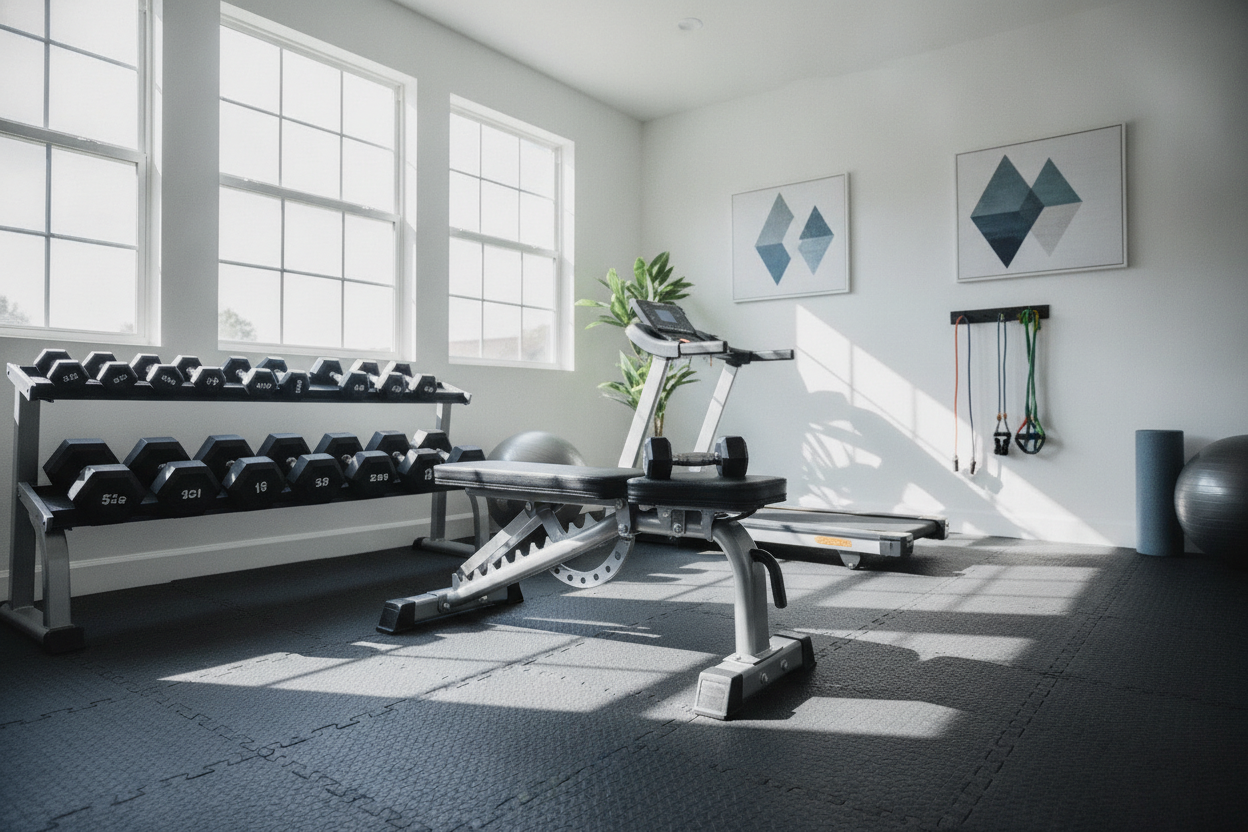
Don't worry about complex splits yet. Master these three moves first: the Goblet Squat (holding one dumbbell at your chest), the Floor Press (lying on the ground to limit shoulder range of motion), and the Bent-Over Row. The floor press is a personal favorite because the floor acts as a safety stop for your elbows. As you get stronger and want to increase the challenge, you can look into more strength equipment like an adjustable bench, but the floor is a perfectly valid place to start. Aim for 3 sets of 10 reps for each, focusing entirely on that 'punch-ready' core and a controlled descent.
Personal Experience: My 80-lb Mistake
Years ago, I tried to ego-lift a pair of 80-lb dumbbells for an overhead press. I didn't brace, I didn't hinge to pick them up, and I flared my elbows out wide. I felt a sharp 'zip' in my left shoulder that sidelined me for a month. I wasn't training; I was just exercising my ego. I had to go back to 10-lb weights and relearn how to actually move. Save yourself the month of physical therapy and start small. Respect the mechanics, and the strength will follow.
FAQ
How heavy should my first dumbbells be?
Pick a weight you can move for 12 reps with perfect form. If your last three reps look like you're fighting for your life, it's too heavy. Usually, a pair of 15s or 20s is the sweet spot for most men starting out, and 5s or 10s for women.
Should I buy adjustable or fixed dumbbells?
If you have the budget and space, fixed hex dumbbells feel better and are more durable. If you're in an apartment, a decent set of adjustables saves a massive amount of floor space, though they can feel a bit clunky during fast movements.
Is it okay to lift every day?
No. Your muscles grow while you sleep, not while you're lifting. Start with three days a week (Monday, Wednesday, Friday) to give your joints and nervous system time to recover from the new stress.