How to Flex Shoulder Muscles for Maximum Width
You’ve put in the work on the overhead press. You’ve done your lateral raises until your arms felt like lead. But when you stand in front of the mirror to check your progress, your shoulders look flat or narrow. The issue often isn't a lack of muscle mass; it is a lack of understanding regarding how to flex shoulder muscles correctly.
Posing is a skill separate from lifting. If you simply squeeze your arm, you likely engage your trapezius (traps) or triceps, washing out the roundness of the deltoid. This guide breaks down the biomechanics of isolating the three heads of the shoulder for that 3D look.
Key Takeaways: The Shoulder Flex Checklist
- Depress the Scapula: Always pull your shoulder blades down before flexing to avoid the "shrugged" look that hides width.
- Internal Rotation is Key: For the side delts, slightly rotating your thumb down helps pop the lateral head.
- The Mind-Muscle Connection: Flexing is static contraction; practice holding the tension without holding your breath.
- Angles Matter: The front, side, and rear delts require different arm positions to become visible.
Understanding the Anatomy of the Flex
To know how to flex your shoulders effectively, you have to respect the anatomy. The deltoid isn't one big slab of meat; it’s three distinct heads. If you try to flex them all at once, you usually end up flexing none of them well.
1. The Anterior (Front) Delt
This is the easiest to connect with but the easiest to overpower with your chest. To flex this, raise your arm forward slightly. Instead of just squeezing, imagine you are trying to push your arm against an invisible wall in front of you. This isometric pressure forces the front fibers to stand up.
2. The Lateral (Side) Delt
This is the money muscle for width. The biggest mistake here is lifting the arm too high. Keep your arm by your side, slightly away from your body. Rotate your elbow so it points outward, not backward. Tense the muscle as if you are starting a lateral raise but stop the movement immediately. If you lift too high, the trap takes over.
3. The Posterior (Rear) Delt
This is the hardest to flex because you can't see it. To hit this, extend your arm behind you and rotate your thumb toward the floor. It feels unnatural, almost like a cramp waiting to happen. That discomfort usually means you are doing it right.
Common Mistakes That Kill Your Posing
When learning how to flex shoulder muscles, most people accidentally shrink their frame. Here is why that happens.
The "Trap" Trap
When we think "flex," we instinctively tense our neck and traps. When your traps shoot up toward your ears, your shoulders visually slope downward. This makes you look narrow. Consciously force your shoulders down (depress them) before you apply tension to the deltoid.
Hiding the Separation
If you press your arm flat against your torso, the tricep pushes the fat and skin up, blurring the definition of the shoulder. Always keep a small gap—imagine holding a grapefruit in your armpit. This "air gap" creates shadows that highlight the separation between the shoulder and the arm.
My Training Log: Real Talk
I remember the first time I actually felt my rear delt contract properly—it wasn't during a workout. I was trying to take a progress photo in a poorly lit locker room.
I was twisting my arm back to find the lighting, and suddenly, I felt this sharp, almost sickening cramp right behind my armpit, deep under the posterior head. It wasn't the burning sensation of a high-rep set; it was a knot. I tried to replicate it, and I realized that to make that muscle pop, I had to twist my wrist much further internally than I ever did with a dumbbell.
The reality is, flexing your shoulders for a photo or a pose feels awkward. If you feel comfortable and relaxed, you probably look flat. The best flexes I've ever pulled off felt like I was on the verge of a charley horse. That specific, gritty cramping sensation is your signal that you've actually isolated the muscle.
Conclusion
Mastering the shoulder flex is about control, not brute force. By depressing your scapula and understanding the rotation of your arm, you can make your physique look wider and more developed instantly. Practice these cues in the mirror post-workout when the blood is already in the muscle to solidify that connection.
Frequently Asked Questions
Does flexing your shoulders build muscle?
Flexing is a form of isometric exercise. While it won't build mass like heavy overhead presses, it improves the mind-muscle connection. This improved neural connection can help you recruit more muscle fibers during your actual workouts, leading to better growth over time.
Why can't I feel my side delts when I flex?
The side delt is a small muscle often overpowered by the larger trapezius. If you can't feel it, you are likely shrugging your shoulders up. Try reaching your fingertips toward the floor to lengthen the neck before trying to tense the shoulder again.
Is it better to flex with a bent or straight arm?
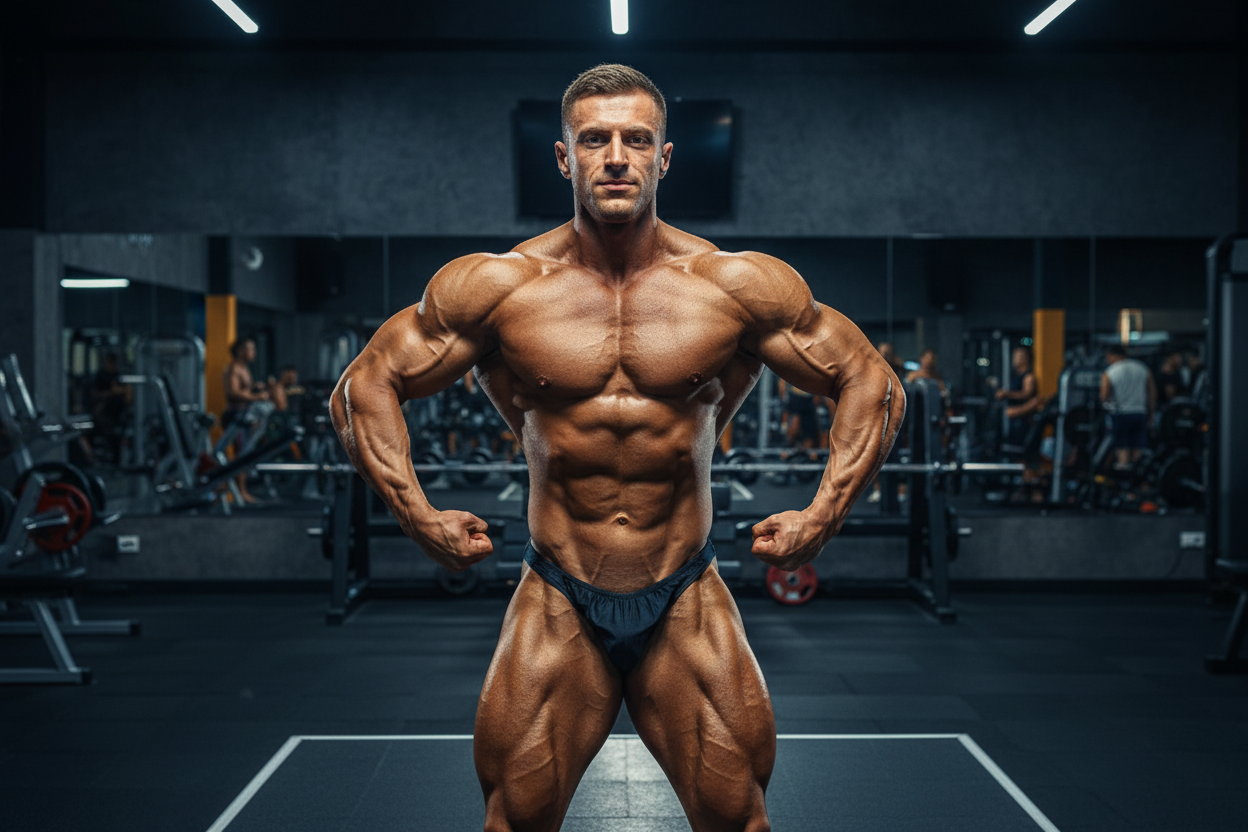
It depends on the target. For the front delt, a bent arm (like a front double bicep pose) works well. For the side delt, a straighter arm hanging by the side usually displays the width and separation better.