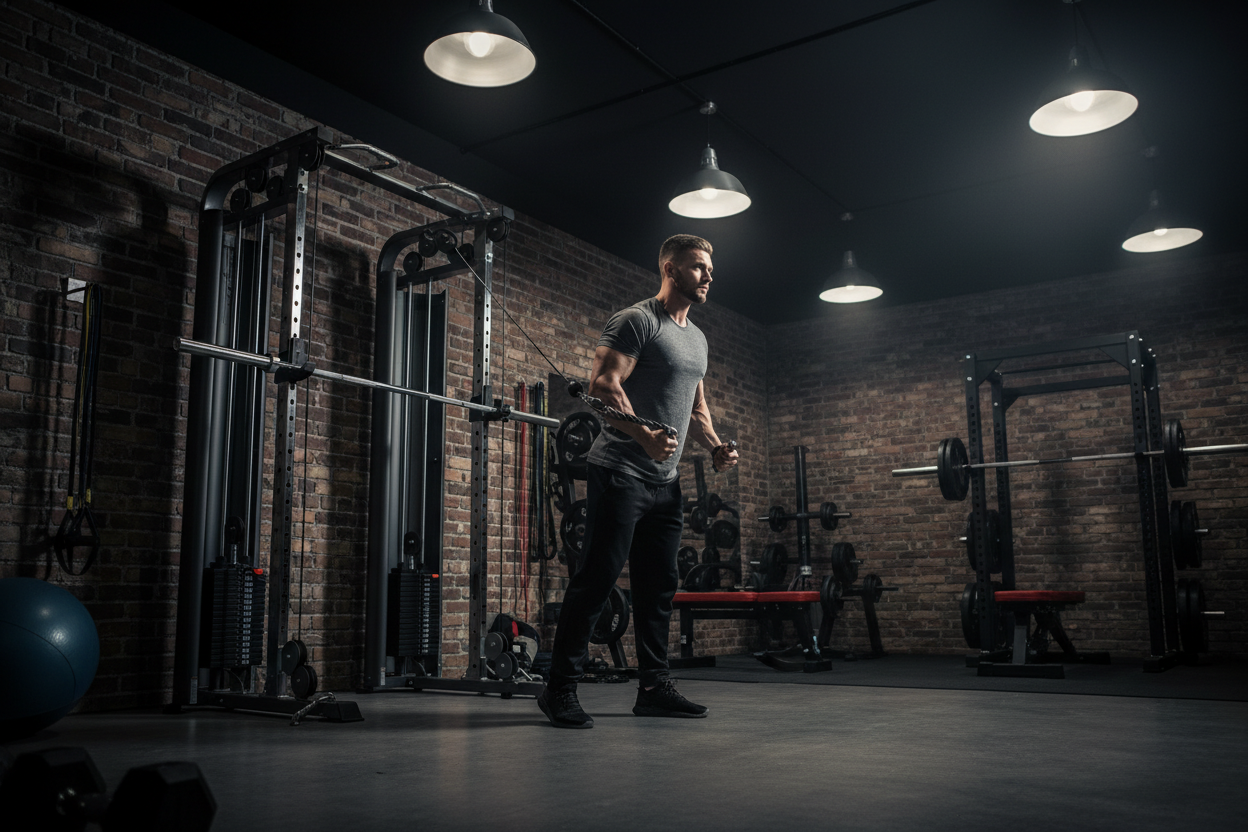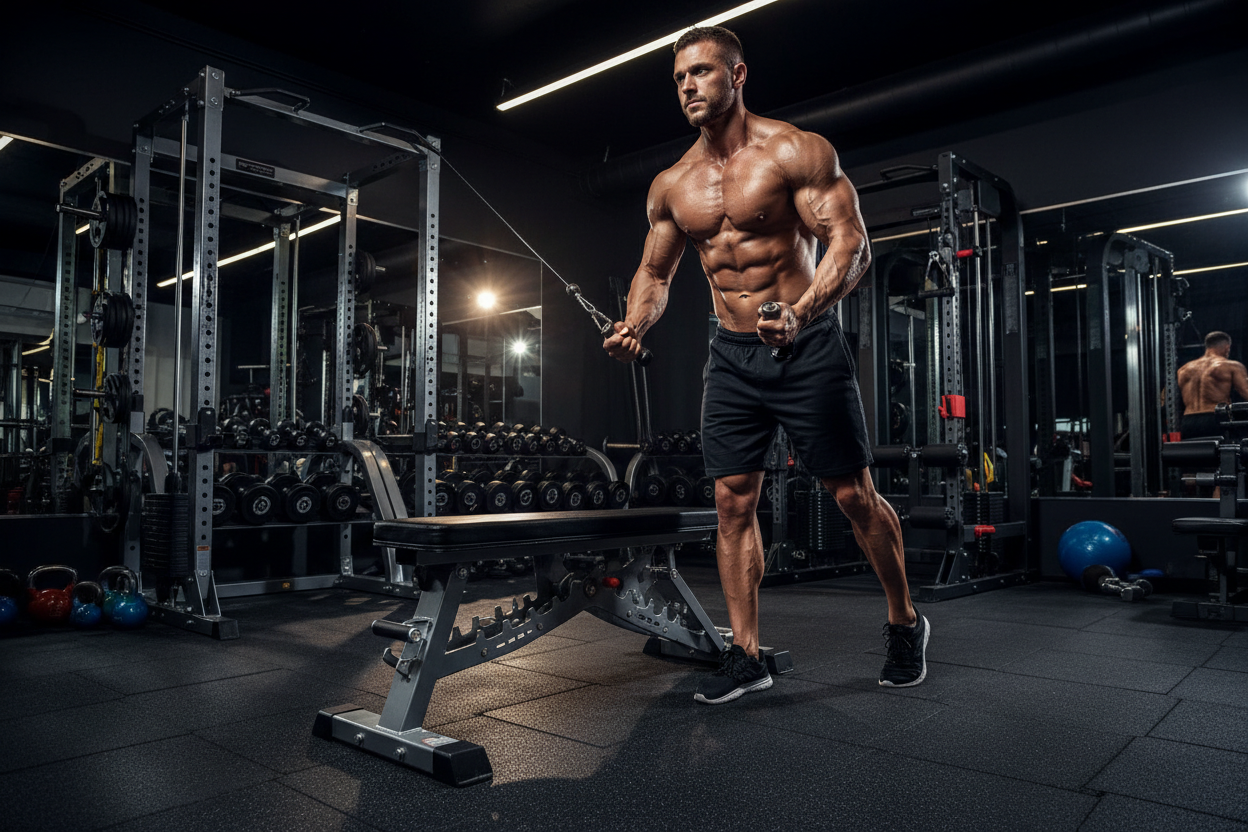
Weight Bench With Cables: Is It Worth The Hype?
If you are trying to build a versatile home gym in a spare bedroom or a crowded garage, space is your ultimate currency. You want the heavy free-weight capabilities of a traditional setup, but you also crave the constant tension and isolation exercises that a commercial cable machine provides. Enter the weight bench with cables—a hybrid piece of equipment designed to solve the ultimate home gym dilemma.
Instead of choosing between a bulky functional trainer and a standard flat-incline-decline (FID) bench, this combo unit promises the best of both worlds. But does it actually deliver, or is it just a gimmicky compromise? In this guide, we will break down exactly what you need to know before adding one to your training space.
Key Takeaways
- Space Efficiency: Combines free weight pressing and cable resistance in a footprint usually reserved for a standard bench.
- Exercise Versatility: Allows for chest flyes, lat pulldowns, and arm isolations without needing a separate functional trainer.
- Weight Capacity Matters: Entry-level models often max out around 300 lbs, while premium units can handle 600+ lbs.
- Resistance Type: Most utilize plate-loaded pegs rather than selectorized weight stacks to keep costs and weight down.
Why This Hybrid Setup Makes Sense
Maximizing Your Floor Plan
A typical North American garage gym easily gets eaten up by a power rack, barbell, and weight plates. Adding a standalone cable crossover machine usually requires an extra 10 to 15 square feet. By integrating pulleys directly into the frame of an FID bench, a cable weight bench drastically reduces your equipment footprint. You get a functional training station that easily tucks away into a corner or sits neatly inside a standard half-rack.
Expanding Your Exercise Library
Free weights are fantastic for compound movements, but they rely entirely on gravity. Cables provide continuous tension throughout the entire range of motion. With a high and low pulley system attached to your bench, you can seamlessly transition from heavy dumbbell bench presses to seated cable rows or triceps pushdowns. It bridges the gap between powerlifting and bodybuilding-style hypertrophy work.
What to Look For Before Buying
Pulley Smoothness and Ratio
Not all cable systems are created equal. Look for nylon-coated steel cables and sealed bearing pulleys. Cheap plastic pulleys will drag and fray over time. Additionally, check the pulley ratio. A 1:1 ratio means 50 pounds of plates feels like 50 pounds of resistance, while a 2:1 ratio halves the felt weight but allows for faster, more explosive movements.
Frame Stability and Weight Limits
Because you will be pulling weight from different angles, the base needs to be rock solid. Look for 11-gauge or 14-gauge steel construction. Ensure the manufacturer lists both the user weight capacity for the bench and the maximum load capacity for the cable system. You do not want a bench that tips forward during heavy lat pulldowns.
From Our Gym: Honest Take
We recently spent three months testing a popular plate-loaded cable weight bench in our facility's 150-square-foot secondary testing room. The biggest standout? The continuous tension on seated chest flyes was incredible, completely mimicking a commercial pec deck machine.
However, I have to be honest about a minor caveat. At 6'1", I found that the high pulley on some mid-tier models is just a bit too short for a full-stretch lat pulldown. I had to perform them kneeling on the floor rather than seated on the bench to get a proper stretch. Also, assembly took me just over two hours—the cable routing requires serious patience. But once tightened down, the 11-gauge steel frame didn't budge, even when I loaded 180 pounds onto the rear pegs for low rows.
Frequently Asked Questions
Is a weight bench with cables worth the investment?
Yes, especially if you have limited space and a moderate budget. It provides access to dozens of isolation exercises that are difficult to replicate with dumbbells alone, making it a highly cost-effective addition to a home gym.
Can I build muscle using a plate-loaded cable bench?
Absolutely. The constant tension provided by cables is excellent for muscle hypertrophy. It allows you to target muscles from multiple angles, which is a key driver for muscle growth when combined with progressive overload.
Do these benches use standard or Olympic weight plates?
Most models come with 1-inch weight horns for standard plates, but include a 2-inch adapter sleeve so you can use your Olympic bumper or cast iron plates. Always double-check the product specs to ensure compatibility with your current weights.