How to Fix Your weight lifting exercises upper body When Shoulders Ache
I remember the morning I couldn't reach for a coffee mug without a sharp wince in my front delt. I’d been hammering the same heavy weight lifting exercises upper body routine for months, convinced that if I just squeezed my shoulder blades harder, the pain would vanish. It didn't. Most of us are taught to treat our shoulders like they're bolted to a wall, but that's exactly why your rotator cuffs feel like they're being chewed by a lawnmower.
Quick Takeaways
- Your shoulder blades (scapulae) are designed to rotate, not stay pinned.
- Standard bench presses often 'trap' the scapula against the pad, causing friction.
- Landmine presses offer a safer, angled path for cranky joints.
- Free weights allow for natural joint arcs that machines often block.
The Cue That's Quietly Wrecking Your Rotator Cuffs
Bodybuilding 101 usually starts with the cue: 'pin your shoulders back and down.' While that creates a stable base for a massive powerlifting bench press, it is often a disaster for general shoulder health. When you lock the scapula into the bench, you're essentially forcing the humerus—your arm bone—to grind against the acromion process. It’s like trying to open a heavy door when the hinges are welded shut.
You need what PTs call 'scapulohumeral rhythm.' This is the natural dance where the shoulder blade moves in tandem with the arm. If the arm goes up or forward, the blade needs to slide and rotate. When you deprive your body of this movement during heavy upper body weight lifting exercises, the joint has nowhere to go but into a state of impingement. I’ve seen guys with 400-pound benches who can't reach behind their own heads because they've 'stabilized' their joints into a cage of scar tissue.
Why Fixed Machines Force a Dangerous Range of Motion
I’ve spent time on plenty of Weight Lifting Machines in commercial gyms that felt like they were designed by someone who had never actually lifted a barbell. These machines often lock you into a strictly linear or fixed circular path. If your specific shoulder anatomy wants to move in a slight, natural arc—which it almost certainly does—but the machine only moves in a straight line, your tendons are the ones that pay the price.
This is why I'm a free-weight advocate for 90% of my training. Free weights allow for those tiny, micro-adjustments during a rep that keep you out of the physical therapist's office. When you’re using a barbell or dumbbells, your body can find the 'path of least resistance' for the joint while still maintaining maximum tension on the muscle. Machines don't give you that luxury; they demand you conform to their steel rails.
3 Simple Tweaks for Pain-Free upper body weight lifting exercises
You don't need to stop lifting heavy. You just need to stop lifting like a statue. By making a few adjustments to how your body interacts with your equipment, you can move more weight with significantly less 'grind' in the joints.
Let Your Shoulder Blades Actually Move on the Bench
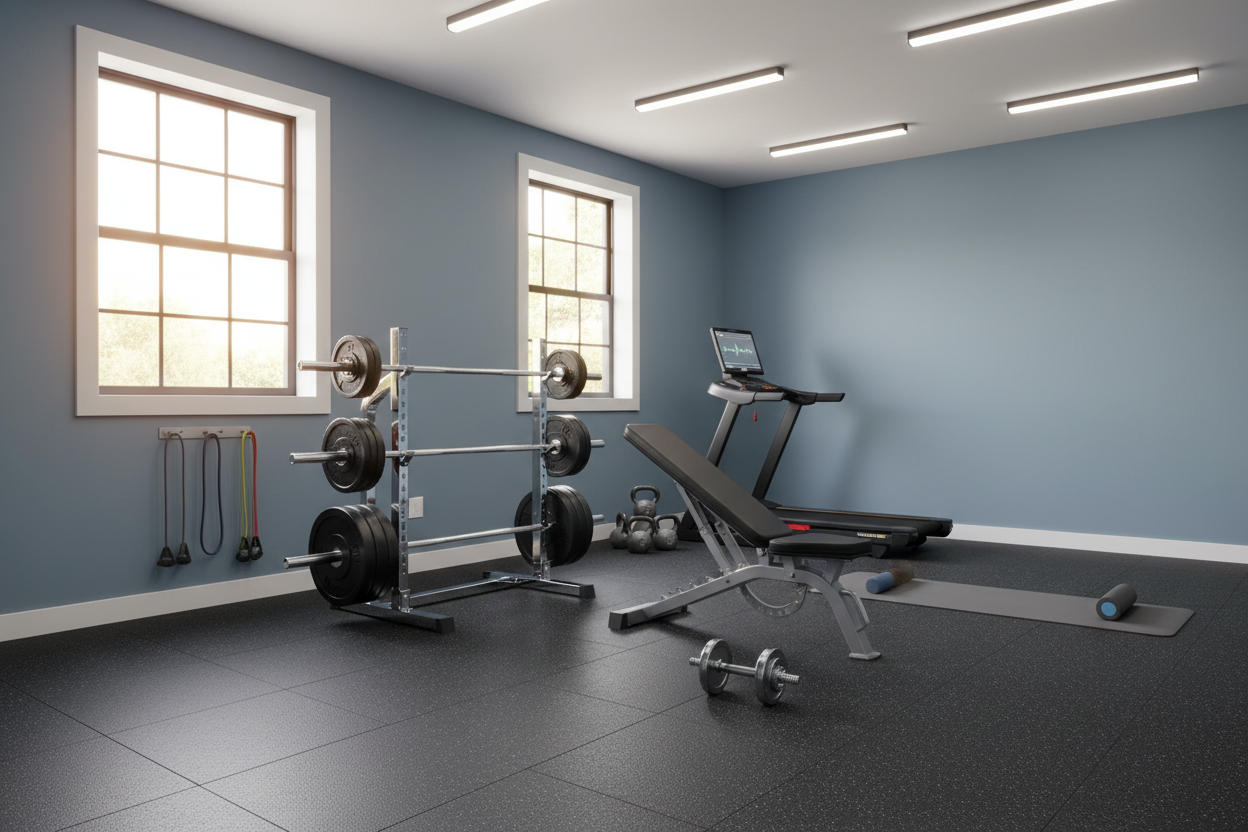
Stop trying to disappear into the padding. When I use the Gxmmat Adjustable Weight Bench, I’m looking for that sweet spot—usually a slight 15-to-30-degree incline—where my blades can wrap around my ribcage at the bottom of the press. This slight angle often opens up the joint space more than a flat bench does.
If your bench is too wide or the material is too 'sticky,' it swallows your shoulders and kills that movement. You want a firm pad that supports your spine but allows your outer shoulders to move. Instead of pinning them 'down,' think about 'reaching' at the top of a press. That slight extra inch of movement at the lockout allows the scapula to finish its natural rotation.
Anchor a Barbell for Half-Kneeling Presses
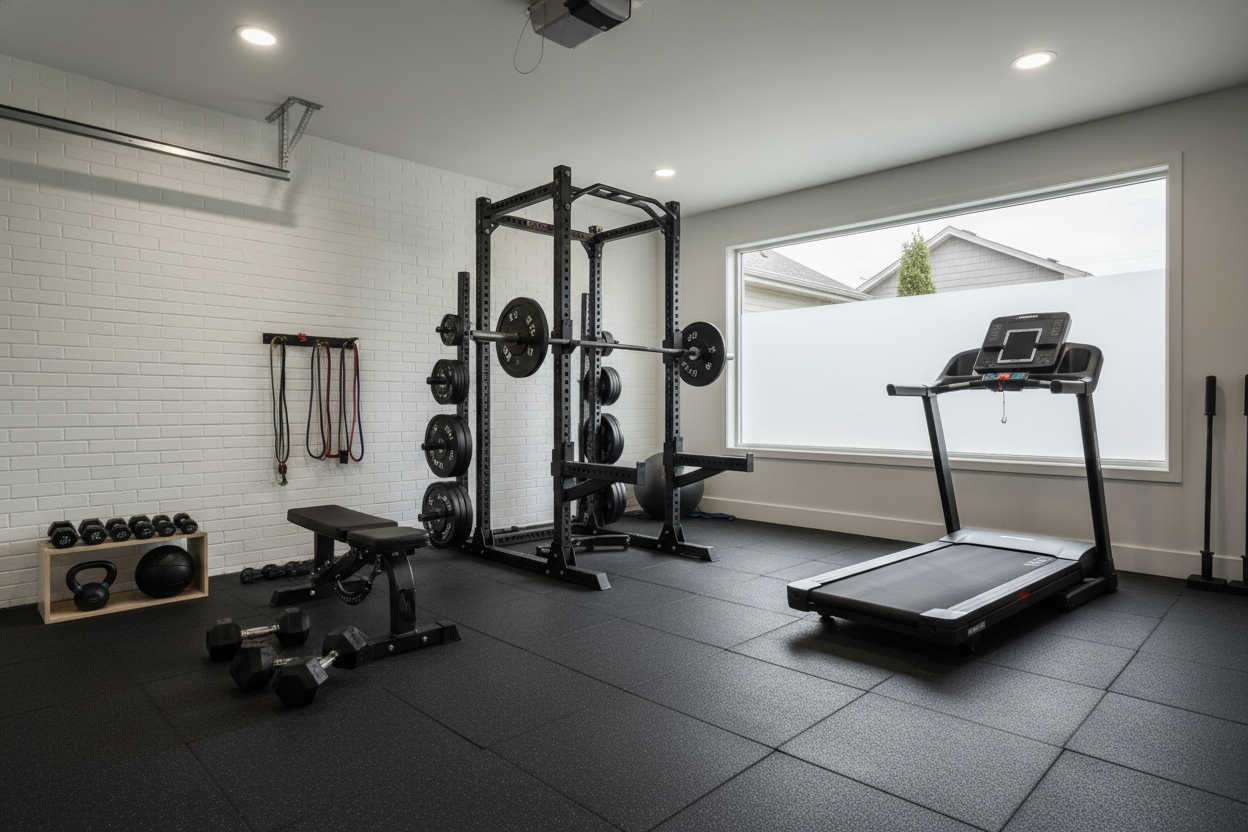
If overhead pressing feels like a knife in the trap, stop doing it vertically. I like to wedge a barbell into the corner of the Gxmmat X6 Power Rack Weight Bench Package to create a DIY landmine setup. This is a lifesaver for anyone with limited overhead mobility.
The roughly 45-degree angle of a landmine press is the 'Goldilocks' zone for shoulder mechanics. It’s not quite a horizontal press and not quite a vertical one. This angled path allows the shoulder blade to rotate upward naturally without hitting the 'ceiling' of your joint. Plus, the half-kneeling position forces your core to stabilize, preventing you from arching your lower back to cheat the weight up.
A Garage-Ready Routine That Won't Leave You Needing an Ice Pack
This routine focuses on 'scapular freedom.' We want high mechanical tension on the chest, shoulders, and triceps without the joint degradation that comes from rigid positioning. Give this a shot for four weeks and see how your shoulders feel.
- Landmine Press: 3 sets of 10 reps. Focus on a hard 'reach' at the top of every rep.
- Neutral Grip Dumbbell Bench: 3 sets of 12 reps. Keep your palms facing each other to keep the elbows tucked.
- Face Pulls: 4 sets of 15 reps. Use a rope attachment and pull toward your forehead, focusing on the squeeze between the blades.
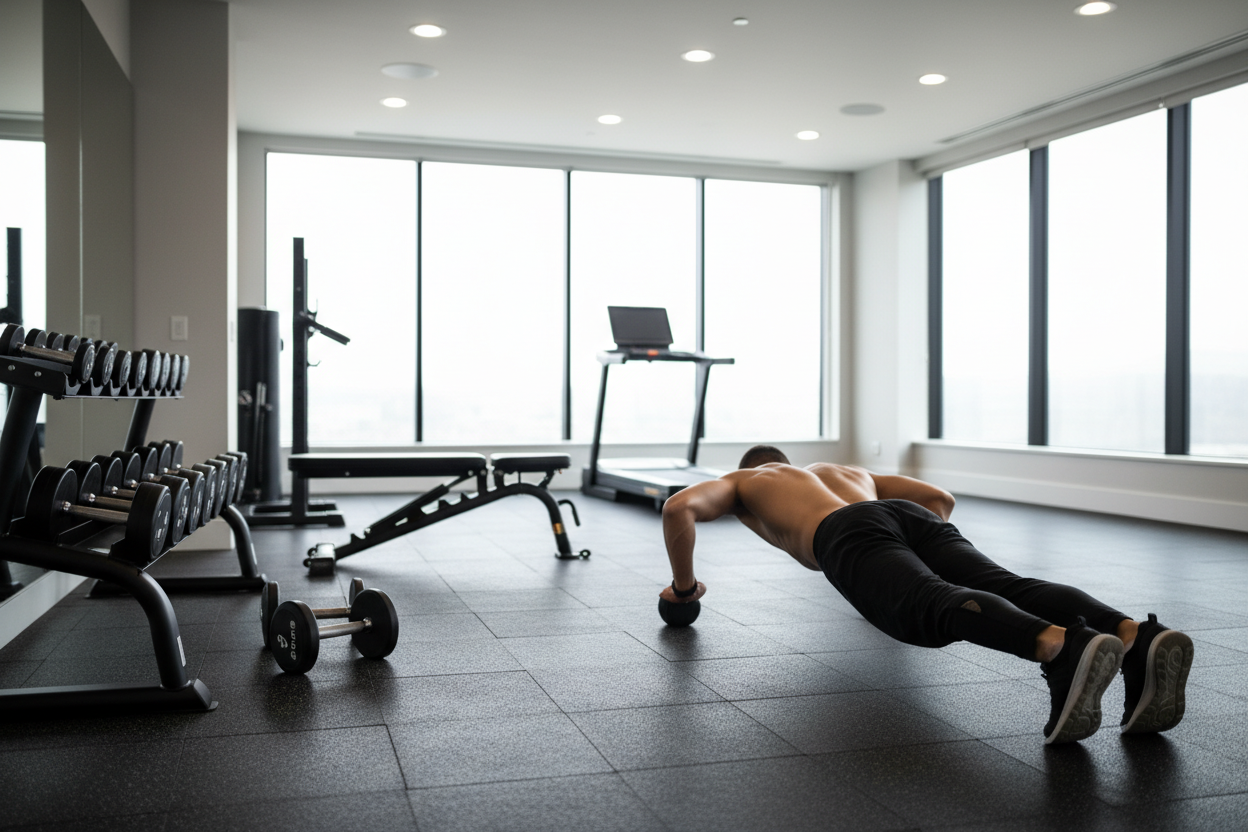
- Push-ups: 2 sets to failure. Unlike the bench press, push-ups allow your shoulder blades to move completely freely.
I’ve found that backing off the ego-heavy flat bench and moving toward these variations actually improved my physique. Why? Because I could finally train consistently without taking two weeks off every month to let my 'angry' shoulder calm down. Consistency beats intensity when intensity keeps you on the sidelines.
Personal Experience: My $800 Mistake
I once spent nearly a thousand dollars on a specialized 'shoulder-saver' barbell, thinking the equipment was the problem. It sat in my rack for six months before I realized the bar wasn't the issue—my setup was. I was pinning my shoulders so aggressively that I was actually bruising my own upper back. Once I ditched the 'back and down' dogma and started letting my scapulae move, even a basic, cheap barbell felt fine. Don't buy a solution for a problem you can fix with better form.
FAQ
Is the bench press actually bad for your shoulders?
Not inherently. But doing it with a 'pinned' scapula on a mushy, wide bench is a recipe for impingement. If it hurts, switch to dumbbells or a slight incline to give the joint more room.
What if I only have a flat bench at home?
Try floor presses. By lying on the floor, the ground stops your elbows before they can go too deep and over-extend the shoulder joint. It's a great way to build tricep power while protecting the rotator cuff.
How do I know if my shoulder blades are moving?
Film yourself from the back during a set of push-ups. You should see the blades 'wing' out slightly as you go down and 'wrap' around your ribs as you push up. If they stay dead still, you're too rigid.