How to Bulk Up in a Month Using the Heavy/Light Method
I remember the first time I tried a frantic mass phase in my garage. I ate everything in sight, trained until my eyes bled, and ended up with a soft midsection and a nagging rotator cuff injury by week three. If you are looking at your calendar and trying to figure out how to bulk up in a month, you need a plan that does not involve breaking yourself before the finish line.
Thirty days is a blip in the grand scheme of training, but it is enough time to pack on noticeable size if you stop training like a headless chicken. You cannot just add 10 pounds to the bar every session and expect your central nervous system to keep up. You need a strategy that balances brutal mechanical tension with smart recovery.
- High Intensity, Low Frequency: Hit the heavy compounds hard, then back off immediately.
- The 500-Calorie Rule: Do not eat like a professional strongman unless you want to look like a marshmallow.
- Blood Flow is King: Use light days to flush nutrients into the muscle, not to burn more calories.
- Protect Your Chassis: Your joints will feel the weight before your muscles do; use proper flooring.
Stop Treating a 30-Day Sprint Like a Year-Long Marathon
Most guys approach a 30-day window with the 'more is better' fallacy. They add sets, they add cardio, and they add calories until they are bloated and exhausted. A one-month timeline is a sprint, and in a sprint, every single session counts. You do not have the luxury of a down week or a deload halfway through. You have four weeks to stimulate as much hypertrophy as possible.
This requires a radical shift in how you view intensity. Instead of grinding out every set to failure, you need to manage your fatigue like a bank account. If you spend too much on Monday, you will be bankrupt by Thursday. The goal is to stay just on the edge of overreaching without actually falling into the pit of overtraining. It is about being surgical, not just being loud.
The Heavy/Light Protocol: Why You Can't Go 100% Every Day
The secret to surviving a hyper-aggressive mass phase is the Heavy/Light split. On Monday, you might be pulling heavy deadlifts for sets of five. On Tuesday, if you try to squat heavy, your nervous system is going to revolt. By alternating these days, you give your brain and your joints a chance to catch up while your muscles stay in an anabolic state. This is exactly how to get bigger in a month without spending the first two weeks just digging a hole of fatigue you cannot climb out of.
Heavy days are for structural changes. Light days are for metabolic changes. You need both to fill out a t-shirt in 30 days. If you only do heavy work, you will get strong but stay flat. If you only do light work, you will get a pump that disappears two hours after you leave the garage. The synergy between the two is what creates that dense, hard-muscle look that people actually notice.
Heavy Days: Forcing the Mechanical Tension
Heavy days are simple but miserable. We are talking about the big four: Squat, Bench, Deadlift, and Overhead Press. Keep the reps in the 5 to 8 range. This is not powerlifting—you are not looking for a 1RM—but the weight needs to be heavy enough that the last rep of every set is a genuine struggle. Rest long. Three to five minutes between sets is fine. You want your ATP stores fully recovered so you can move the maximum amount of weight possible.
Light Days: Flushing Blood and Feeding Tissue
On light days, the goal is blood volume. Leave the ego at the door and grab the dumbbells. We are looking for reps of 12 to 20. Think lateral raises, face pulls, bicep curls, and leg extensions. You are not trying to tear the muscle fibers here; you are trying to engorge them with blood. This delivery of nutrients helps repair the damage from the heavy days and keeps that full look throughout the week.
The Caloric Reality of a Four-Week Window
You cannot out-train a bad diet, but you also cannot out-eat a bad program. To support this kind of volume, you need a surplus. I have tracked how to build muscle in a month and found that a 500-calorie daily surplus is the sweet spot. Any more and you are just adding body fat that you will have to diet off later. Any less and you will not have the fuel to recover from the heavy sessions.
Focus on 'vertical' eating. Rice, potatoes, lean meats, and eggs. Keep the digestion easy so your body can focus on repair rather than processing junk food. If you are waking up feeling sluggish and bloated, you have gone too far. If you are waking up hungry despite the extra food, you are exactly where you need to be to see how to bulk in a month without the spill-over.
Protecting Your Joints When the Volume Spikes
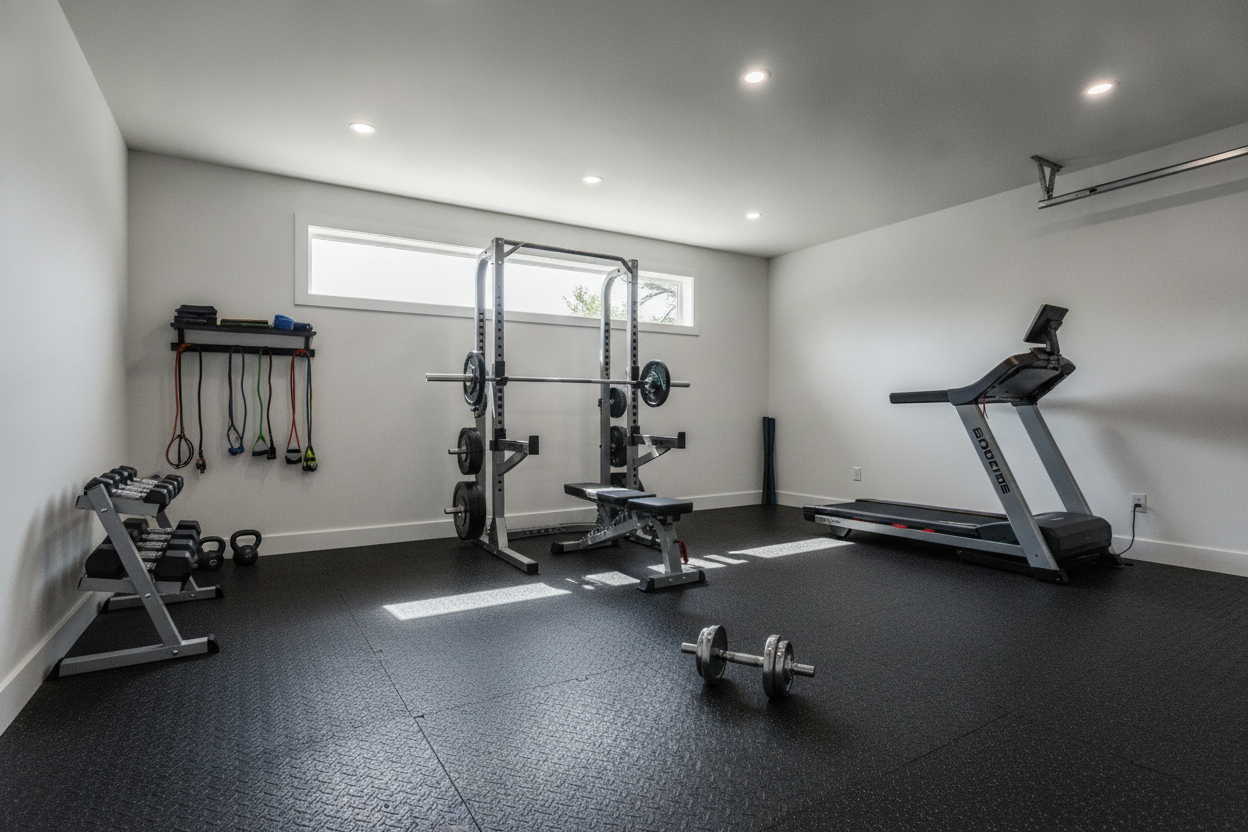
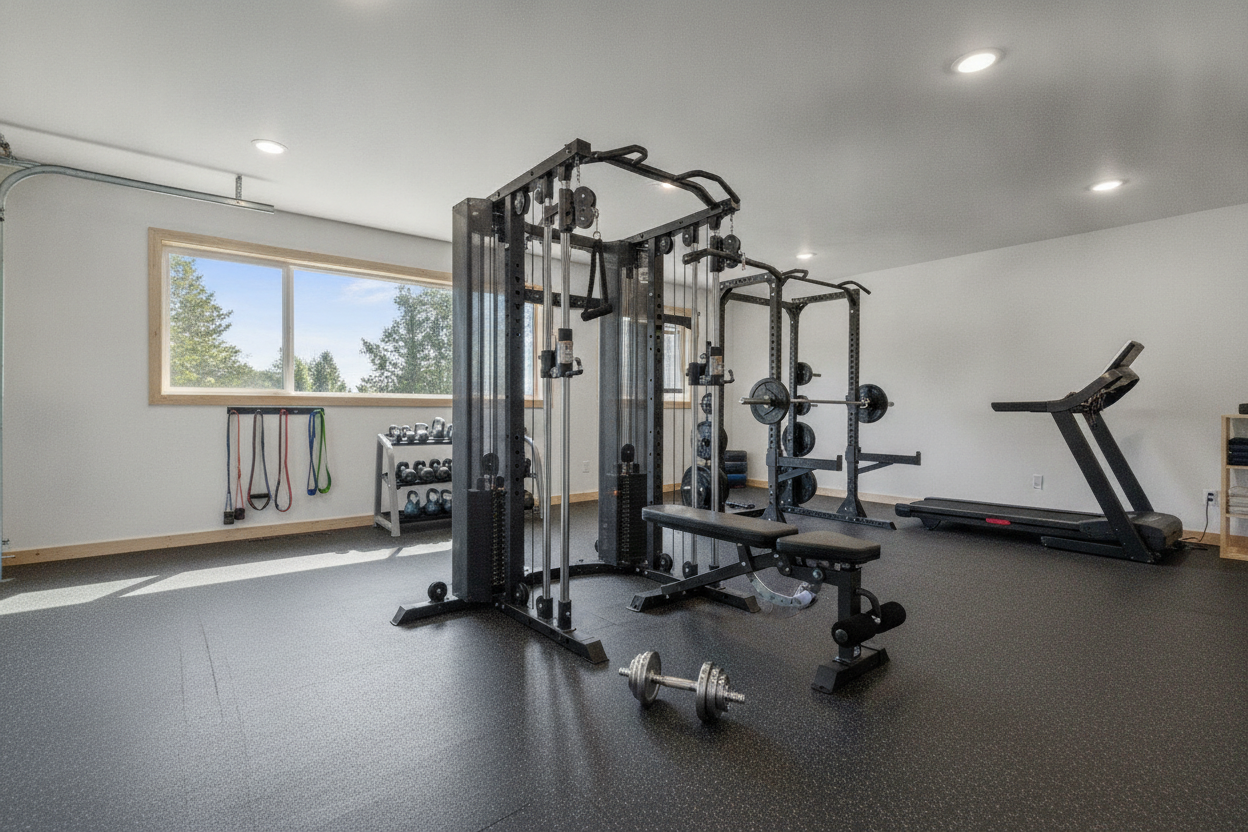
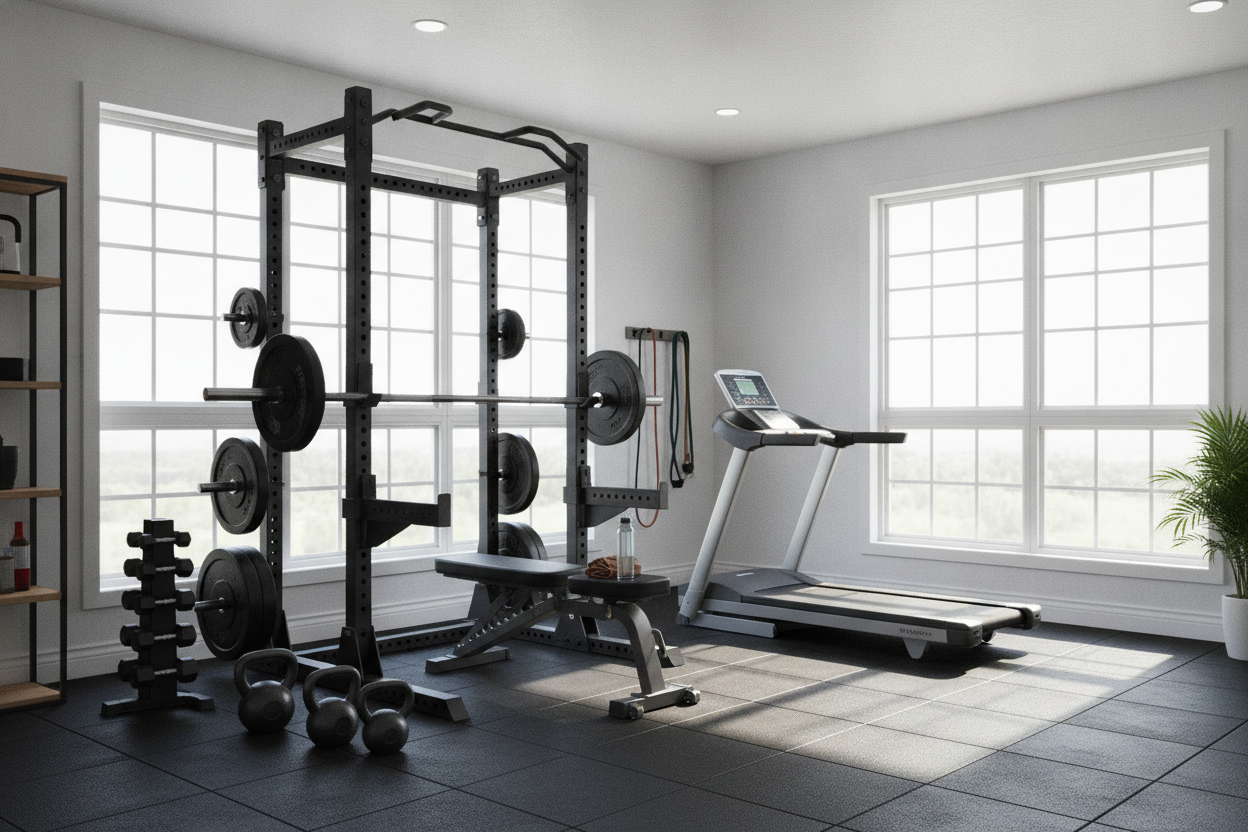
Rapid weight gain, even if it is mostly muscle and water, puts a new kind of stress on your connective tissue. Your tendons do not adapt as fast as your muscles do. In a garage gym, this is compounded by lifting on hard concrete. I have learned the hard way that a pair of decent sleeves and good flooring are non-negotiable when you are pushing your limits.
I highly recommend investing in high-density rubber like Gxmmat New Upgraded Exercise Mats. Dropping a 400-lb deadlift on bare concrete sends a shockwave straight up your spine. These mats absorb that impact, saving your ankles and knees from the repetitive stress of heavy lifting. Plus, they give you a stable, non-slip surface for those high-rep light days where balance becomes an issue under fatigue.
How to Measure Real Success on Day 30
At the end of the month, do not just look at the scale. If you gained 10 pounds, half of that is likely water and glycogen. Look at your logbook. Are you moving 10-15% more weight on your main lifts? That is real growth. Look in the mirror—do your shoulders look wider? Does your chest have more pop? These are the markers of a successful short-term bulk. Weight is just a number; performance and composition are the proof.
My Personal Take
I once tried a 'GOMAD' (Gallon of Milk a Day) bulk in my early twenties because I read it on a forum. I gained 15 pounds in three weeks, but my squat only went up by 10 pounds and I could not walk up stairs without getting winded. It was a disaster. Since then, I have stuck to the heavy/light method. It is the difference between looking like an athlete and looking like you just discovered a buffet. My biggest mistake was ignoring my joints; once I upgraded my floor mats and started respectng the light days, the nagging pains vanished.
FAQ
Can I do this with just dumbbells?
Yes, but you will need a heavy set. If your dumbbells max out at 50 lbs, you will struggle to create enough mechanical tension for the heavy days. You will need to focus on tempo and pause reps to make the light weights feel heavy.
Should I do cardio during a bulk?
Keep it low impact. A 20-minute walk is great for recovery and digestion. Avoid high-intensity interval training (HIIT) as it competes for the same recovery resources your muscles need to grow.
What if I miss a meal?
Do not panic and do not try to eat a 2,000-calorie makeup meal before bed. Just get back on track the next day. Consistency over the 30 days is more important than one perfect 24-hour cycle.