How to Build True Athletic Power With Performance Exercise Equipment
You can have a 500-pound deadlift and still move like a tractor on the field. This is the disconnect many athletes face when they train exclusively with commercial machines designed for hypertrophy rather than function. If your goal is to run faster, cut sharper, or generate explosive power, standard selectorized machines often fall short.
To bridge the gap between gym strength and field reality, you need performance exercise equipment. This category of gear isn't just about adding resistance; it's about challenging your stability, velocity, and range of motion in ways that mimic athletic demands. Let's look at how to curate a setup that actually translates to sport.
Key Takeaways: Quick Summary
- Focus on Transferability: Choose gear that mimics the movement patterns of your sport, not just isolated muscle groups.
- Velocity Matters: Incorporate equipment that accommodates speed, such as sleds and bands, rather than just heavy static loads.
- Data is King: Modern performance gear often includes metrics (watts, velocity) to track output, not just weight.
- Durability is Non-Negotiable: Performance training involves high impact; consumer-grade plastic parts will break under the stress of plyometrics or ballistic movements.
Defining Performance Gym Equipment vs. Commercial Gear
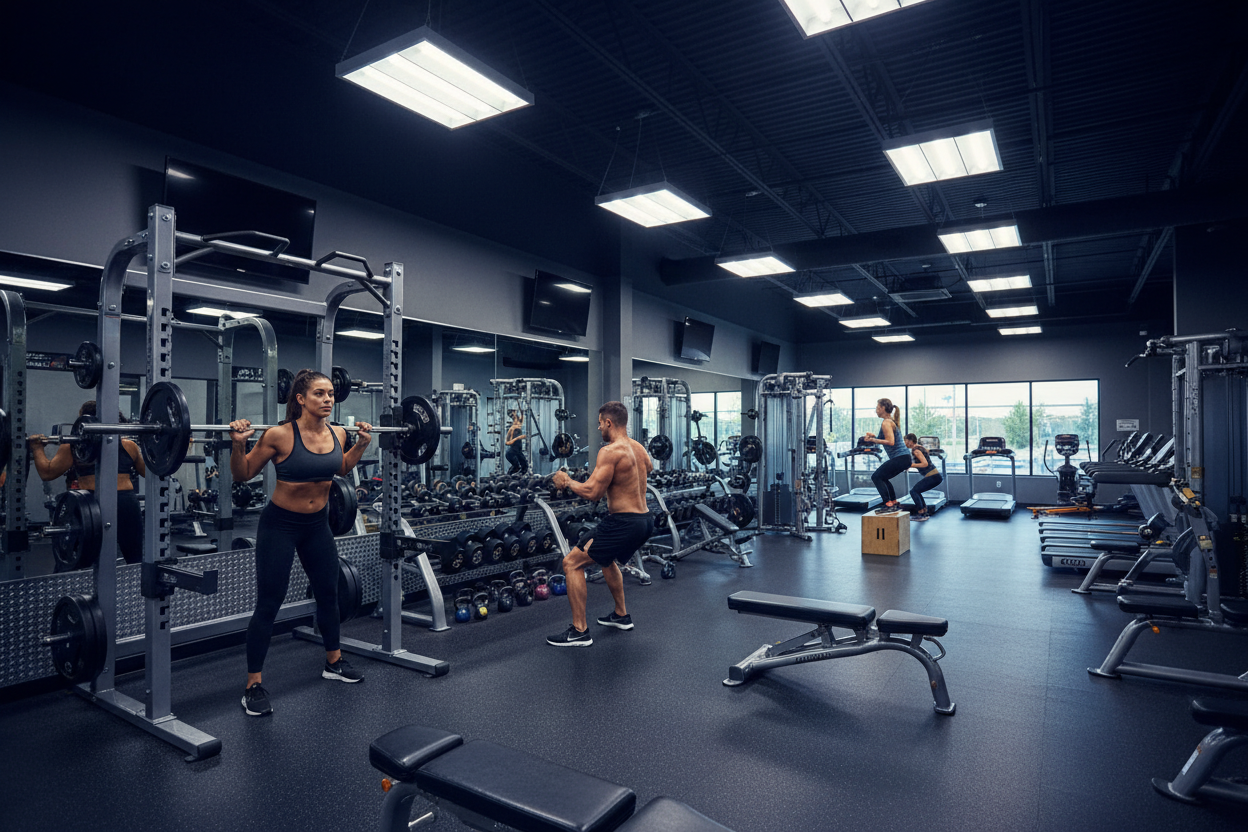
Walk into a standard fitness chain, and you see rows of machines that lock you into a fixed path of motion. That is great for safety and isolation, but terrible for athleticism. Athleticism is chaotic. It requires your body to stabilize a load while moving through space.
Performance gym equipment focuses on three pillars:
- Unstable Loads: Forcing your central nervous system (CNS) to recruit stabilizer muscles.
- Variable Resistance: Matching the strength curve of human movement (e.g., getting heavier as you reach the strongest point of a lift).
- Ballistic Capability: Allowing you to accelerate through the entire range of motion without decelerating at the end to protect joints.
The Essential Performance Workout Equipment List
1. The Curved Non-Motorized Treadmill
Unlike a standard treadmill that moves the belt for you, a curved treadmill requires you to pull the belt with your hamstrings and glutes. This forces proper running mechanics. If you heel strike or over-stride, the machine punishes you by slowing down. It is self-limiting and self-correcting, providing immediate feedback on your gait efficiency.
2. Velocity-Based Training (VBT) Sensors
Weight on the bar tells you how much you lifted. VBT sensors tell you how fast you moved it. In performance training, speed is a proxy for power. If you are grinding out reps slowly, you are building strength, but not necessarily explosiveness. Attaching a VBT unit to your barbell ensures you are training in the correct power zone (usually 0.75 to 1.0 meters per second).
3. Sleds and Prowlers
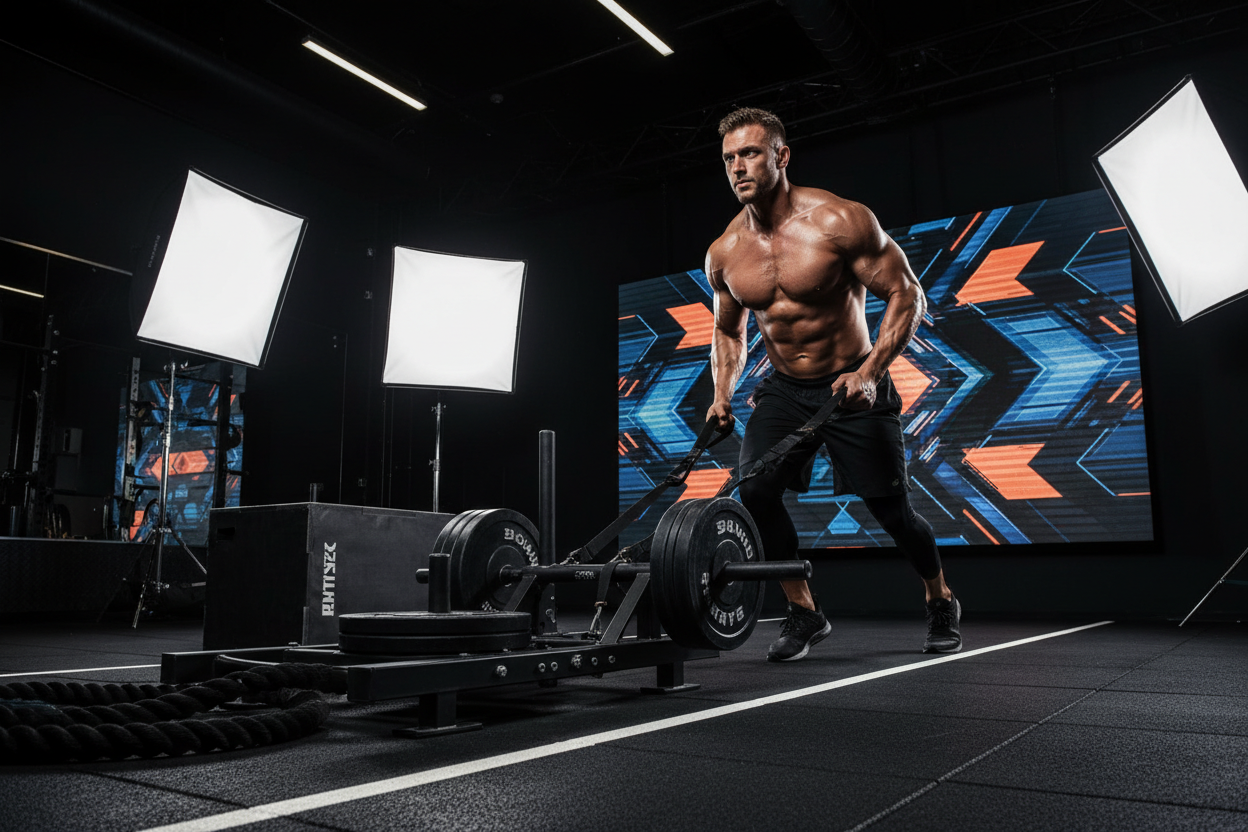
The sled is the ultimate piece of performance workout equipment because it removes the eccentric (lowering) phase of movement. This means you can train at maximum intensity with very little muscle soreness the next day. It allows for pure concentric output—essential for acceleration training and conditioning without the joint pounding of distance running.
The "Science" of Variable Resistance
Why do elite facilities use bands and chains? It comes down to the strength curve. In a bench press, you are weakest at the bottom (off the chest) and strongest at the top (lockout). With straight weight, the load is limited by your weakest point.
By adding bands to a rack or lifting platform, the weight increases as you push. This forces you to accelerate through the "sticking point." This teaches your nervous system to fire harder and faster, a trait that directly improves vertical jump and sprinting speed.
My Personal Experience with Performance Exercise Equipment
I want to talk about the reality of using this gear, specifically the Assault Bike (air bike). The specs say it's great for "metabolic conditioning," but that clinical term doesn't prepare you for the actual feeling.
I remember the first time I did a max-effort interval session on one. It wasn't just the lung burn; it was the specific, metallic taste—often called "Fran lung" in CrossFit circles—that lingered in the back of my throat for an hour. But the most distinct detail was the wobble in my legs when I stepped off. Unlike a spin bike where the flywheel carries momentum, an air bike stops the second you stop pushing. There is no coasting.
Another specific nuance is the knurling on high-end performance barbells (like an Ohio Power Bar). Commercial gym bars usually have smooth, passive knurling. Real performance bars have a bite. I've had sessions where I didn't need chalk because the steel dug into my skin so aggressively. It hurts, but when you are pulling 400+ pounds, that pain is reassurance. It means the bar isn't going anywhere.
Conclusion
Investing in or utilizing performance exercise equipment requires a shift in mindset. You are trading comfort for capability. You are trading the smooth, guided motion of a leg press for the awkward, stabilizing challenge of a safety squat bar. The learning curve is steeper, but the payoff is a body that doesn't just look strong, but actually performs when it counts.
Frequently Asked Questions
What is the difference between standard and performance equipment?
Standard equipment usually isolates muscles using fixed paths of motion (like a chest press machine). Performance equipment allows for free motion, requires stabilization, and is designed to improve athletic attributes like speed, power, and agility rather than just muscle size.
Is performance gear suitable for beginners?
Yes, but with coaching. Because performance gear (like kettlebells or non-motorized treadmills) requires more stability and coordination, the risk of injury is higher if your form is poor. Beginners should master bodyweight movements before adding high-performance loads.
Can I build muscle with performance equipment?
Absolutely. While the primary focus is often power or speed, the high intensity and mechanical tension provided by sleds, free weights, and resistance bands are highly effective for hypertrophy (muscle growth) as a secondary benefit.