How to Build Perfect Symmetry With The Chest Press Machine One Arm
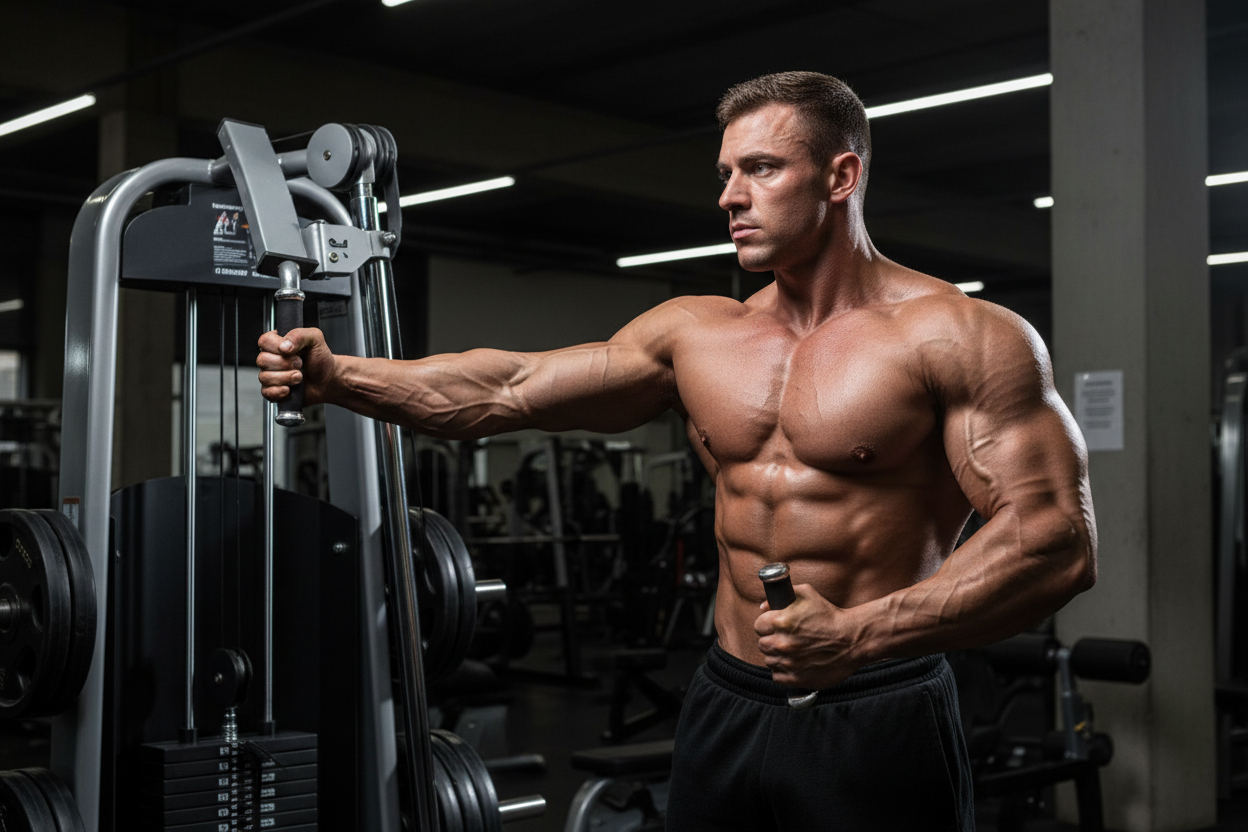
We have all been there. You finish a heavy set of barbell bench presses, racking the weight with a sense of accomplishment, only to realize your right arm did 60% of the work. The barbell is great for moving max loads, but it is terrible for exposing—and hiding—weaknesses. That is where the chest press machine one arm variation comes into play.
If you are chasing aesthetic symmetry or rehabbing a nagging shoulder, switching to unilateral work isn't just an option; it is a necessity. This movement forces each side of your chest to pull its own weight, literally, while demanding significant core stability to keep you from rotating out of the seat.
Key Takeaways
- Fixes Muscle Imbalances: Forces the weaker side to work independently, preventing the dominant side from taking over.
- Increases Core Activation: Acts as an anti-rotation exercise, firing up the obliques to stabilize the torso.
- Improves Mind-Muscle Connection: Allows for a deeper focus on the contraction of a single pectoral muscle without balancing a heavy bar.
- Safer Failure Point: Machine stability means you can push to failure safely without a spotter.
Why You Need The Single-Arm Chest Press Machine
Most lifters treat machines as the "easy" way out after free weights. That is a mistake. When you lock yourself into a single-arm chest press machine, you remove the stability requirements of the shoulder joint found in dumbbell work, allowing you to focus purely on output and tension.
More importantly, this movement exploits the "bilateral deficit." This is a physiological phenomenon where the sum of force produced by each limb individually is often greater than the force produced by both limbs together. By isolating one side, you can often overload the muscle more effectively than you could with a bilateral press.
Execution: The Anti-Rotation Setup
The setup for the single arm machine press is different from the standard version. If you set up exactly as you would for a two-arm press, you will slide off the seat the moment you push.
1. The Base
Plant your feet wider than usual. Think of this like a tripod. Your feet are the base, and your hips are the anchor. If you are pressing with your right arm, drive your left foot hard into the floor. This cross-body tension is vital.
2. The Non-Working Hand
Do not let your free hand dangle. Grip the side of the seat or the machine frame tightly. This creates "irradiation"—tension that travels through your arm and stiffens your torso, giving you a solid platform to press from.
3. The Press path
Drive the handle forward, focusing on bringing your bicep across your chest toward your sternum. The machine dictates the path, but your intent dictates the muscle recruitment. Squeeze hard at the peak contraction for a full second.
Common Mistakes That Kill Gains
Twisting the Torso
The most common error I see is using the torso to generate momentum. As you push the weight, your shoulder rotates forward, and your back peels off the pad. If your shoulders aren't square to the backrest throughout the entire rep, you aren't training your chest; you're just doing a bad rotation exercise.
Ignoring the Eccentric
On a machine, it is easy to let the weight stack slam down. Don't do it. The friction of the machine cables can steal tension from the muscle. Control the negative for two to three seconds. You should feel a deep stretch in the pec insertion near the armpit before reversing the motion.
My Training Log: Real Talk
I want to be honest about the first time I really committed to this movement. I had a nagging click in my left shoulder and a right pec that was visibly larger than my left. I swapped my heavy barbell benching for the chest press machine one arm variation for six weeks.
The first thing I noticed wasn't the chest pump—it was my obliques. The next day, the side of my abs opposite to the pressing arm was incredibly sore. I hadn't realized how much I was relying on the seat structure rather than my own core to stay upright.
Another specific nuance: gripping the machine frame with my non-working hand actually caused calluses on my left hand (the non-pressing side) because I was white-knuckling the metal frame so hard to prevent my body from twisting. It's a humbling exercise. You will likely need to drop the weight to about 30-40% of your bilateral max, not 50%, because the stability demand is so high. But once you feel that deep, isolated burn near the sternum without your front delt taking over, you won't go back.
Conclusion
Symmetry isn't just about aesthetics; it's about longevity and injury prevention. The chest press machine one arm is the most honest tool in the gym. It tells you exactly how strong you are, without your dominant side lying for you. Add this as a secondary movement on your push day for 3 sets of 12-15 reps, and watch your bench press numbers—and your shirt fit—improve.
Frequently Asked Questions
What muscles does the single-arm chest press machine work?
It primarily targets the pectoralis major (chest) and anterior deltoids (front shoulders). However, unlike the two-arm version, it heavily recruits the obliques and transverse abdominis to stabilize the torso against rotation.
Is the single arm machine press better than dumbbells?
It isn't necessarily "better," but it is different. Dumbbells require more shoulder stabilization, while the machine offers more stability, allowing you to safely push closer to muscular failure without risking dropping a weight on your face.
Should I sit sideways or straight forward?
For the standard variation, sit straight forward with your back flat against the pad. Sitting sideways changes the resistance curve and turns it into more of a hybrid press-fly movement, which is advanced and requires different mechanics.