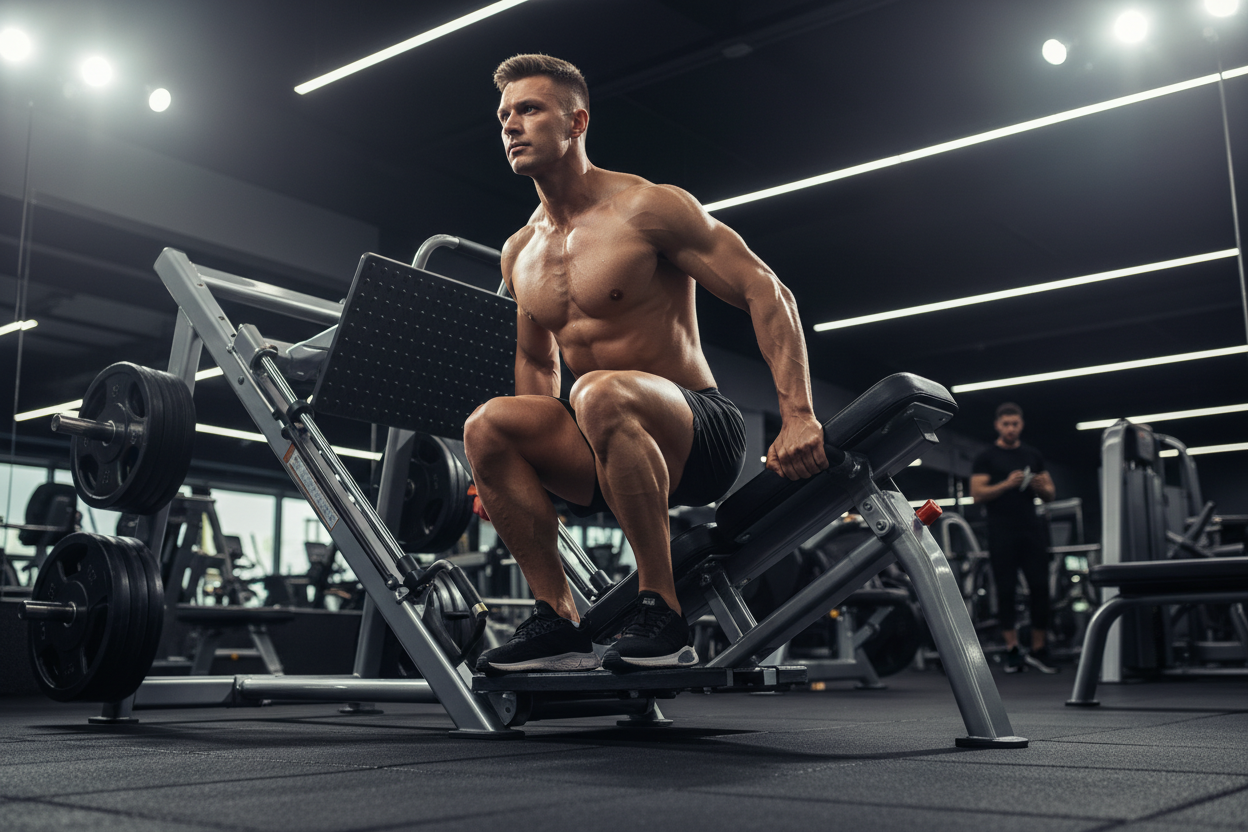
How to Build Massive Legs Using the 10 Best Leg Exercises
You can’t build a skyscraper on a swamp foundation. Yet, walk into any commercial gym, and you’ll see people treating their lower body training as an afterthought. If you want a physique that commands respect and functions athletically, you need to prioritize the 10 best leg exercises for hypertrophy and strength.
Forget the endless hours on the elliptical. We are going to look at the biomechanics of growth. We aren't just listing movements; we are looking at motor unit recruitment, tension curves, and structural balance. If you are tired of stagnant numbers and jeans that fit too loosely, this protocol is your fix.
Quick Summary: The Top 10 Leg Exercises
If you are looking for the most effective movements to construct your routine, here is the definitive list based on muscle activation and load potential:
- Barbell Back Squat: The king of lower body compound movements.
- Romanian Deadlift (RDL): Essential for posterior chain and hamstring development.
- Bulgarian Split Squat: The ultimate unilateral exercise for imbalances.
- Leg Press: High-volume hypertrophy without axial fatigue.
- Walking Lunges: Functional strength and dynamic stability.
- Hack Squat: Quads-focused movement with back support.
- Leg Extensions: Isolation work to target the rectus femoris.
- Seated/Lying Leg Curls: Direct hamstring isolation for knee flexion.
- Goblet Squat: Great for mobility and quad dominance.
- Standing Calf Raises: Essential for lower leg aesthetics.
The Compound Kings: Where Growth Happens
You cannot replace heavy compound lifts. These movements allow for the greatest mechanical tension, which is the primary driver of muscle growth.
1. The Barbell Back Squat
This isn't just a leg exercise; it is a systemic shock to your central nervous system. The squat recruits nearly every muscle in your lower body. The key here is depth. If you aren't breaking parallel, you are shortchanging your glute activation. Keep your chest up, brace your core, and drive through the mid-foot.
2. The Romanian Deadlift (RDL)
While the conventional deadlift is great, the RDL is superior for pure hypertrophy of the hamstrings and glutes. By keeping the knees slightly bent but fixed, you force the hips to hinge. This puts a massive stretch on the hamstrings. Control the eccentric (lowering) phase for a full three seconds to maximize micro-tears in the muscle fiber.
Unilateral Training: Fixing Imbalances
Most lifters have a dominant side. If you only do bilateral work (two legs at once), that dominant side will take over, leading to injury down the road. These are the top 10 leg exercises for symmetry.
3. The Bulgarian Split Squat
Often hated, always effective. By elevating the rear foot, you place the entire load on the front quad and glute. This removes the lower back from the equation almost entirely, allowing you to hammer the legs even if your spine is fatigued.
4. Walking Lunges
Dynamic movement changes the game. Lunges challenge your proprioception (body awareness) and stabilizer muscles. High reps here create significant metabolic stress—the "burn" associated with endurance and growth.
Machine Work: Isolation and Failure
Don't let functional training purists tell you machines are useless. When your stabilizers are shot from squats, machines let you safely take muscles to absolute failure.
5. The Leg Press
This allows you to move maximum weight safely. Foot placement matters here. Place feet lower on the platform to target quads; place them higher to recruit more glute and hamstring. This is a staple in any list of the 10 best leg workouts.
6. Leg Extensions and Curls
These are "finisher" movements. The leg extension is one of the few moves that fully shortens the quad muscle. Similarly, the leg curl is non-negotiable because the hamstrings have two functions: hip extension (RDLs) and knee flexion (Curls). You must do both for complete development.
My Training Log: Real Talk
Let’s step away from the science for a second. I want to talk about my personal experience with the 10 best leg exercises, specifically the Bulgarian Split Squat. On paper, it looks great. In reality, it is a nightmare that works.
I remember a specific session last month. I was holding 60lb dumbbells, sweat dripping onto the bench behind me. The hardest part wasn't the burn in my quad—it was the balance. My back foot kept slipping on the slick leather of the bench, and my grip was failing before my legs were. I had to use lifting straps just to ensure my legs reached failure before my hands did.
There is a specific feeling of nausea that hits around rep 10 on the second leg. It’s not pain; it’s a systemic alarm bell. But the next morning? The soreness was deep in the glute-ham tie-in, a spot I can never seem to hit with standard squats. That “waddle” you do walking out of the gym? That’s the badge of honor. If you aren't dreading it, you aren't doing it heavy enough.
Conclusion
Building legs takes grit. It requires doing the movements that are uncomfortable. By rotating these 10 exercises for legs into your program, you ensure that every angle, from the hip hinge to knee flexion, is covered. Don't try to do all ten in one session. Split them across two days to maintain intensity.
Frequently Asked Questions
How often should I train legs?
For most natural lifters, training legs twice a week is optimal. This allows you to split the volume of these 10 leg workouts, perhaps focusing on quad-dominant movements one day and hamstring-dominant movements on the other.
Can I build big legs with just dumbbells?
Absolutely. Exercises like the Bulgarian split squat, goblet squat, and lunges are incredibly difficult with heavy dumbbells. While barbells are easier for maximum loading, dumbbells require more stability and can induce massive growth.
What is the best rep range for leg growth?
Legs respond well to varied rep ranges. Compound lifts like squats work best in the 5–8 rep range for strength. Isolation movements like extensions and the top 10 leg exercises on machines often benefit from higher reps (12–20) to maximize metabolic stress and blood flow.