How to Build Effective Home Exercises From the Floor Up
I remember training a client who worked brutal 12-hour nursing shifts. By the time she got back to her apartment, the mere thought of lacing up sneakers and doing standing barbell squats was enough to make her skip training entirely. That is when I introduced her to the floor-bound method. You can actually perform highly effective home exercises without ever standing up. This entirely removes the massive energetic barrier of getting ready. You just drop to the floor and start moving.
When you are exhausted, gravity feels like your biggest enemy. By designing a sequence that starts on your back and transitions to your stomach, you trick your brain into starting. It feels like resting, but it quickly evolves into a legitimate training session.
Quick Takeaways
- Start your routine lying down to bypass mental fatigue and workout dread.
- Target every major muscle group using gravity and leverage instead of heavy weights.
- Transition smoothly between core, lower, and upper body movements with zero setup time.
- Scale up easily with light resistance bands or dumbbells when your bodyweight is no longer challenging.
The Floor-Bound Philosophy: Why Start on the Ground?
When motivation tanks, standing up to exercise feels like a monumental task. By starting your routine supine (on your back), you eliminate that initial friction. Lying down is one of the most accessible and easy ways to workout because it demands zero balance or stabilization from your feet and ankles. Your nervous system can focus entirely on muscle contraction rather than keeping you upright.
Over the last five years of building home gyms and programming for remote clients, I always specify a comfortable, thick surface for these routines. A thin, cheap yoga mat will leave your tailbone bruised and your knees aching after 50 reps of core work. To do this right, I usually recommend laying down a large 6x8ft exercise mat. It gives you enough square footage to roll from side to side and extend your limbs fully without ending up on the hard hardwood floor.
Once you are comfortably on the floor, the workout practically runs itself. You remove the intimidation factor. There are no heavy plates to load, no squat racks to adjust, and no loud dropping noises to annoy your downstairs neighbors. It is just you, the mat, and controlled movement.
Core Control: Simple Effective Workouts for the Midsection
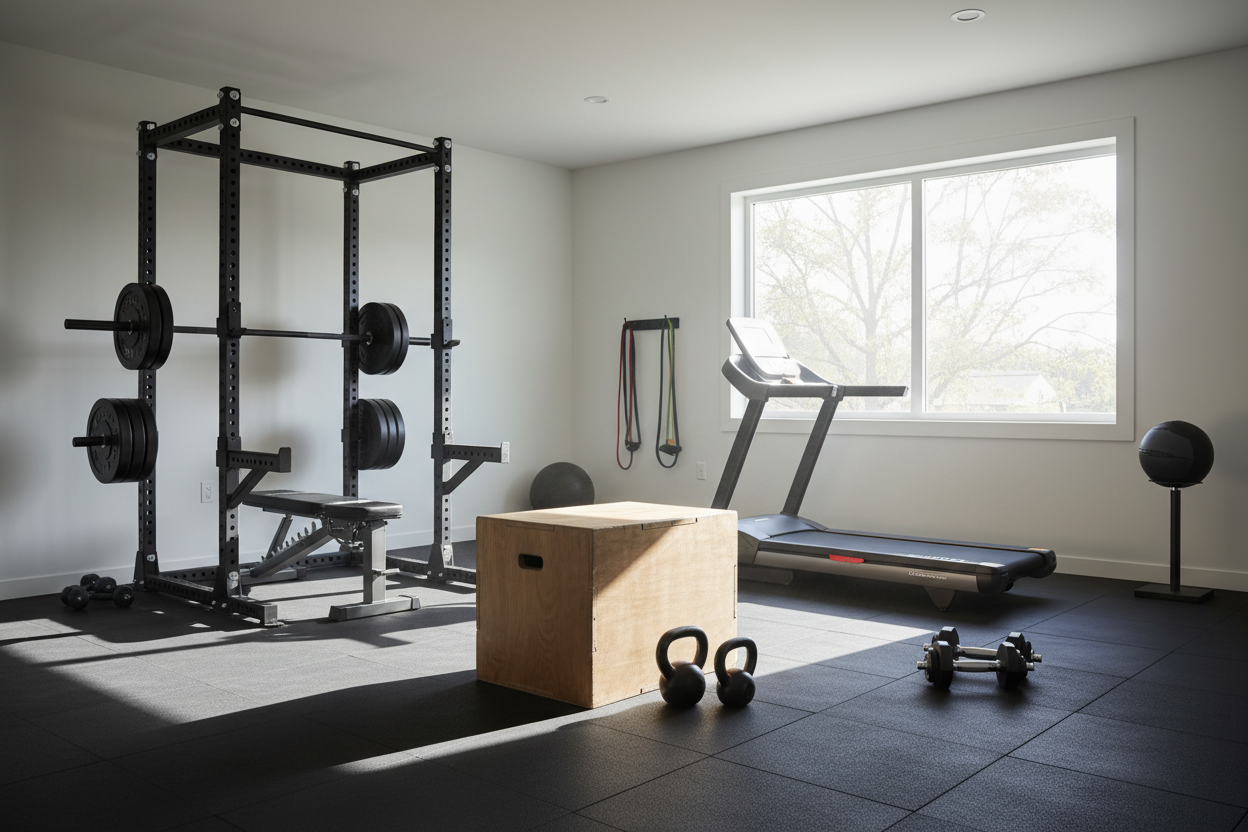
Let's look at the midsection first. You do not need to do explosive box jumps or heavy kettlebell swings to build a rigid core. In fact, floor-based movements like dead-bugs and hollow-body holds are simple effective workouts that protect the lumbar spine while completely frying the abdominals.
For a proper dead-bug, you lie flat, press your lower back aggressively into the mat, and slowly extend your opposite arm and leg toward the floor. I usually program 3 sets of 12 to 15 reps per side. The goal is to move slowly, taking a full three seconds to lower your limbs. These are simple but effective exercises that force your deep transverse abdominis to fire, stabilizing your pelvis.
Hollow-body holds take this a step further. By lifting your shoulder blades and legs just two inches off the floor and holding that tension for 30 to 45 seconds, you build incredible isometric strength. If you want to dive deeper into targeted midsection programming, you can check out some effective chest and abs workouts to add variety to your routine once you master the basics.
Lower Body Power: Easy But Effective Exercises for Glutes and Legs
Building leg strength from the floor is entirely possible if you know how to manipulate leverage. Since we cannot load a heavy barbell on your back, we rely on unilateral (single-leg) movements to increase the challenge. Single-leg glute bridges, clamshells, and side-lying hip abductions form an easy effective workout for the lower body.
For the single-leg glute bridge, drive through one heel and hold the top position for two full seconds. This creates massive time under tension for the glute max and hamstrings. I had a client in a tiny 400-square-foot studio apartment who built her entire lower body routine on a compact 6x4ft yoga mat. She performed strict, high-rep clamshells (20-25 reps per side) and found them to be highly easy but effective exercises for fixing her chronic hip pain.
To target the outer glutes, side-lying hip abductions are my go-to. Lie on your side, keep your top leg perfectly straight, and lift it toward the ceiling, leading with your heel. Three sets of 20 reps will create a deep burn without any equipment.
I will be completely honest: the only downside I have found with floor-bound leg work is that you cannot load the hamstrings as heavily as you would with a Romanian deadlift. But for beginners or those training for general fitness, the stimulus from these bodyweight movements is more than enough to drive progress.
Upper Body Stability: Mat-Based Pushing and Pulling
Flipping over to a prone (face-down) position opens up your upper body options. You might think you need a cable machine to train your back, but prone cobras are incredible for your lower traps and rhomboids. You simply lie on your stomach, squeeze your glutes, and lift your chest and hands off the floor, rotating your thumbs toward the ceiling. Hold that top squeeze for three seconds.
Pair these cobras with floor presses and modified kneeling push-ups, and you have easy and effective workouts that protect the shoulder joints. The floor actually acts as a physical depth gauge during a push-up or floor press, preventing your elbows from dipping too far past your torso and straining the rotator cuff. This makes it incredibly safe for clients with a history of shoulder impingement.
If you need visual cues on hand placement or elbow tracking, a comprehensive workout hub can help you nail the specific form. These are easy workouts that are effective for building a baseline of pushing strength before you ever touch a bench press.
Advancing Your Setup: When to Add Resistance
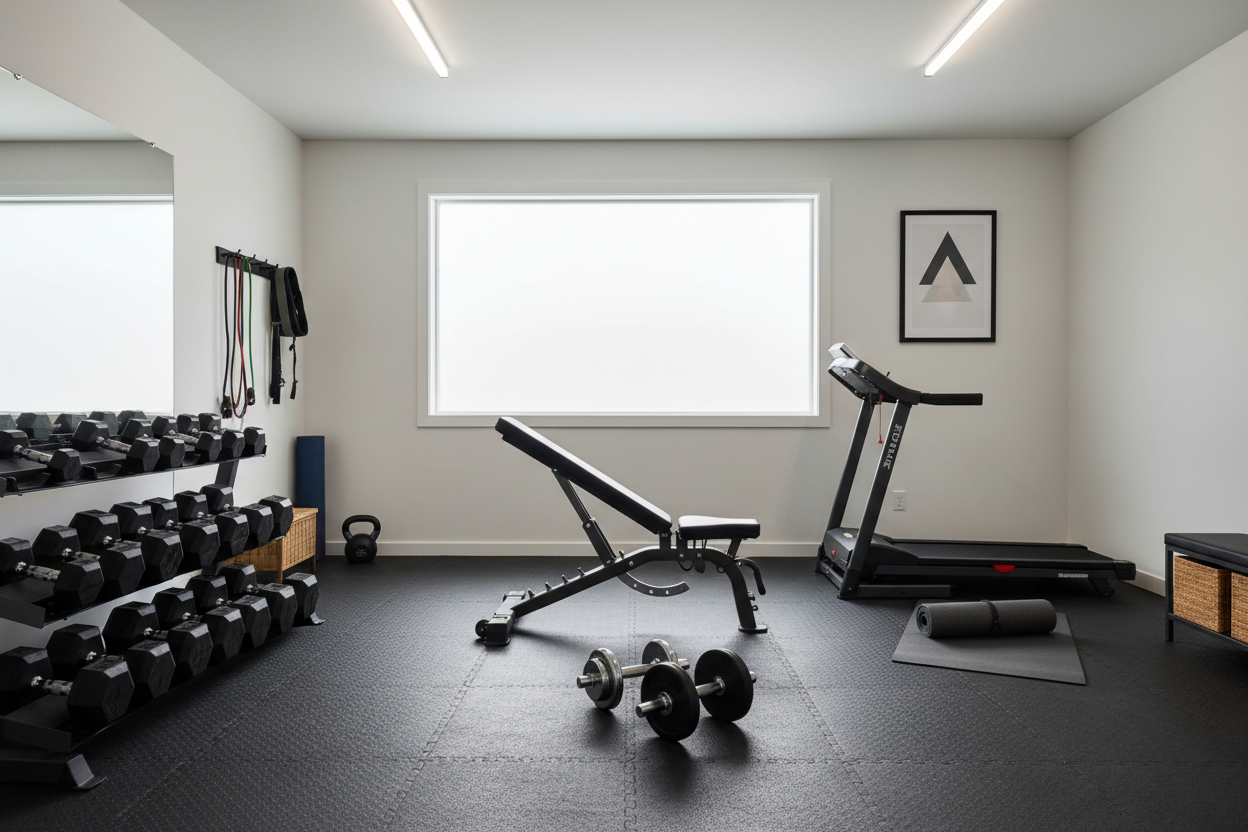
Eventually, your bodyweight will not provide enough resistance. When 20 reps of a floor press feels like a warm-up, it is time to add external load. You can easily incorporate a pair of adjustable dumbbells (I prefer the 5 to 52.5 lb range for maximum versatility) or a set of looped resistance bands into these simple but effective workouts.
Doing a floor press with 30-pound dumbbells or adding a heavy resistance band across your hips during glute bridges completely changes the stimulus. These remain easy effective exercises logistically, but the added tension forces new muscle adaptation and bone density improvements. I highly recommend bands for floor work because they provide ascending resistance—the movement gets harder at the exact point where your muscles are in their strongest position.
Once you max out the weight on your floor routine and feel ready to stand up and lift heavy, you might be ready to graduate to top home gym machines for vertical loading. But until then, the floor is your best friend.
Frequently Asked Questions
Can I build muscle using only floor exercises?
Yes, especially as a beginner. By manipulating leverage, slowing down your tempo, and increasing time under tension, floor-bound movements provide enough stimulus for hypertrophy. Eventually, you will need to add resistance like bands or dumbbells to continue growing.
How many days a week should I do this floor routine?
I typically program this full-body floor sequence 3 to 4 days a week for my clients. This allows 48 hours of recovery between sessions, which is optimal for muscle repair and central nervous system recovery.
What is the biggest limitation of floor-bound workouts?
Vertical pulling is the main drawback. You cannot effectively replicate a pull-up or lat pulldown while lying flat on the floor. I usually have clients add a simple doorway pull-up bar or a suspension trainer to cover that gap once they build baseline strength.