How to Build a Strength Training Regime You Won't Quit in 2 Weeks
I remember staring at a 12-week powerlifting spreadsheet that required two hours of accessory work every Tuesday. I lasted eight days before I threw the clipboard across the garage. It’s the same story for everyone: you get motivated, download a pro's routine, and realize you don’t have the time or the central nervous system of a 22-year-old on 'supplements.'
Building a sustainable strength training regime isn't about complexity. It’s about showing up when you’d rather be on the couch and having a plan that doesn't feel like a second job. I've spent a decade testing racks, breaking bars, and realizing that the simplest programs are the ones that actually build muscle.
Here is the reality: you can get stronger than 95% of the population by lifting heavy things three days a week and going for a walk on the other four.
Quick Takeaways
- Consistency beats complexity every single time.
- Focus on the 'Big Five' movement patterns: Squat, Hinge, Push, Pull, and Carry.
- Three full-body sessions per week is the sweet spot for most lifters.
- Don't buy flashy machines; stick to a rack, a bar, and some plates.
Why the 'Optimal' Spreadsheet is Ruining Your Progress
The fitness industry loves to sell 'optimal.' They want you to believe that if you aren't hitting your lateral delts from three different angles, you're wasting your time. This creates a psychological burnout that kills routines before they start. When you miss one day of a six-day split, the whole week feels like a failure.
Most modern advice sets people up to quit. It’s particularly egregious how we teach strength training for overweight beginners by demanding high-frequency schedules that ignore the reality of joint stress and recovery. You don't need a spreadsheet; you need a habit.
Stop trying to train like a professional athlete if you have a 40-hour work week. Your goal is to get under the bar, move some weight, and get out before your kids start screaming.
The Anatomy of a Sustainable Strength Training Regime
A routine that lasts is built on movements, not muscles. I don't care about your 'bicep day.' I care if you can pick something heavy up off the floor and put something heavy over your head. When you train movement patterns, you build functional, dense muscle that actually does something.
Every session should include a squat (goblet squats, back squats), a hinge (deadlifts, swings), a push (bench, overhead press), a pull (rows, pull-ups), and a carry (farmer's walks). This hits every major muscle group without needing 15 different exercises. It’s efficient, and it works.
The 3-Day Rule for Normal People
I’ve tried the 5-day bro-splits and the 6-day routines. They work great until life happens. Three full-body days per week is the gold standard because it allows for 48 hours of recovery between sessions. This is where many strength training programs for beginners fail—they demand too much frequency, leading to tendonitis or just plain old boredom.
With a 3-day schedule, if you miss Monday, you just go Tuesday. You haven't ruined the 'split.' You're still hitting every muscle three times a week, which is plenty of stimulus for growth.
A Dead-Simple Strength Training Plan for Beginners
If you want results, stop overthinking. Alternate between these two workouts (A and B) three times a week (e.g., Mon/Wed/Fri). This is a foundational strength training plan for beginners that I still return to when life gets busy.
Workout A:
1. Back Squats: 3 sets of 5 reps
2. Bench Press: 3 sets of 5 reps
3. Barbell Rows: 3 sets of 8 reps
4. Planks: 3 sets to failure
Workout B:
1. Deadlifts: 1 set of 5 reps (heavy)
2. Overhead Press: 3 sets of 5 reps
3. Pull-ups or Lat Pulldowns: 3 sets of 8-10 reps
4. Farmer's Walks: 3 sets of 40 yards
Keep the main lifts (squats, deadlifts, presses) in the 5-rep range. This builds raw strength. Use the 8-12 range for your 'accessories' like rows and pull-ups to build muscle volume. It’s not flashy, but after six months of this, you won't recognize yourself in the mirror.
The Bare Minimum Hardware Required
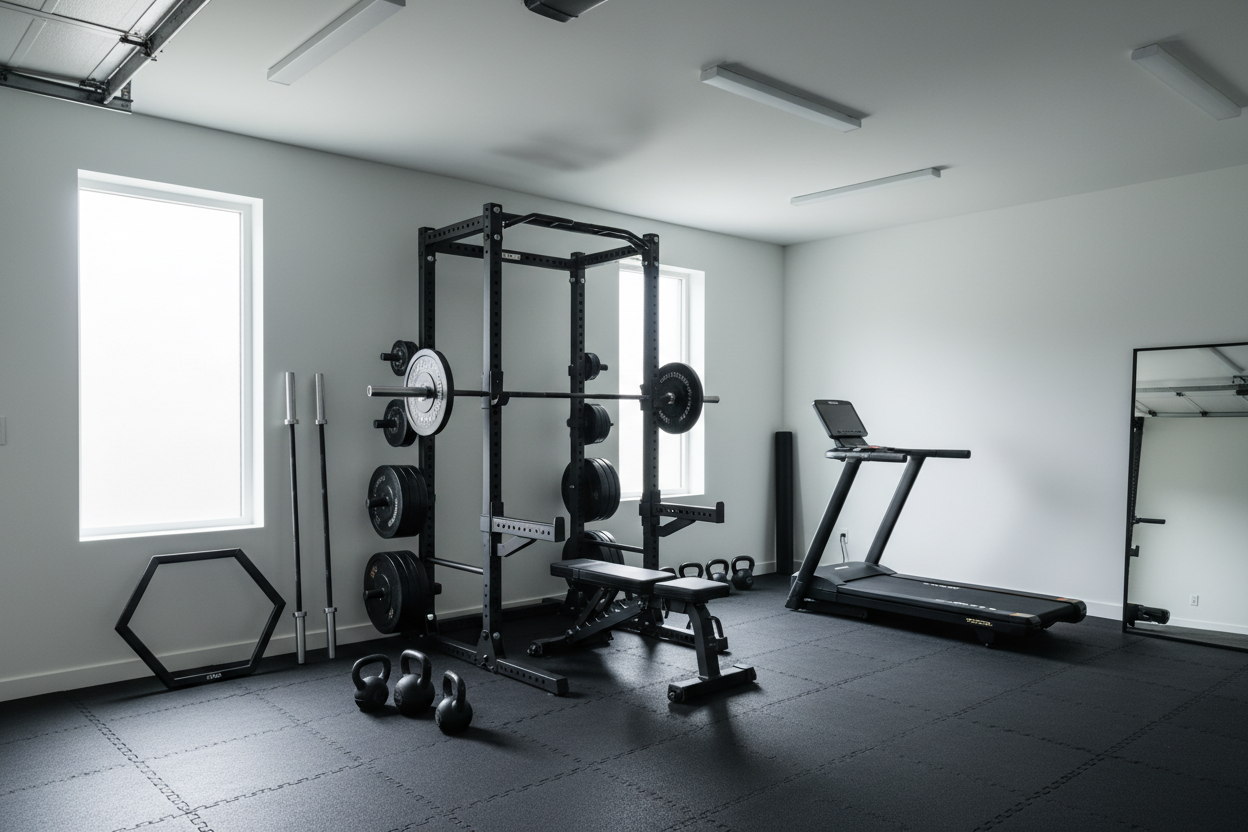
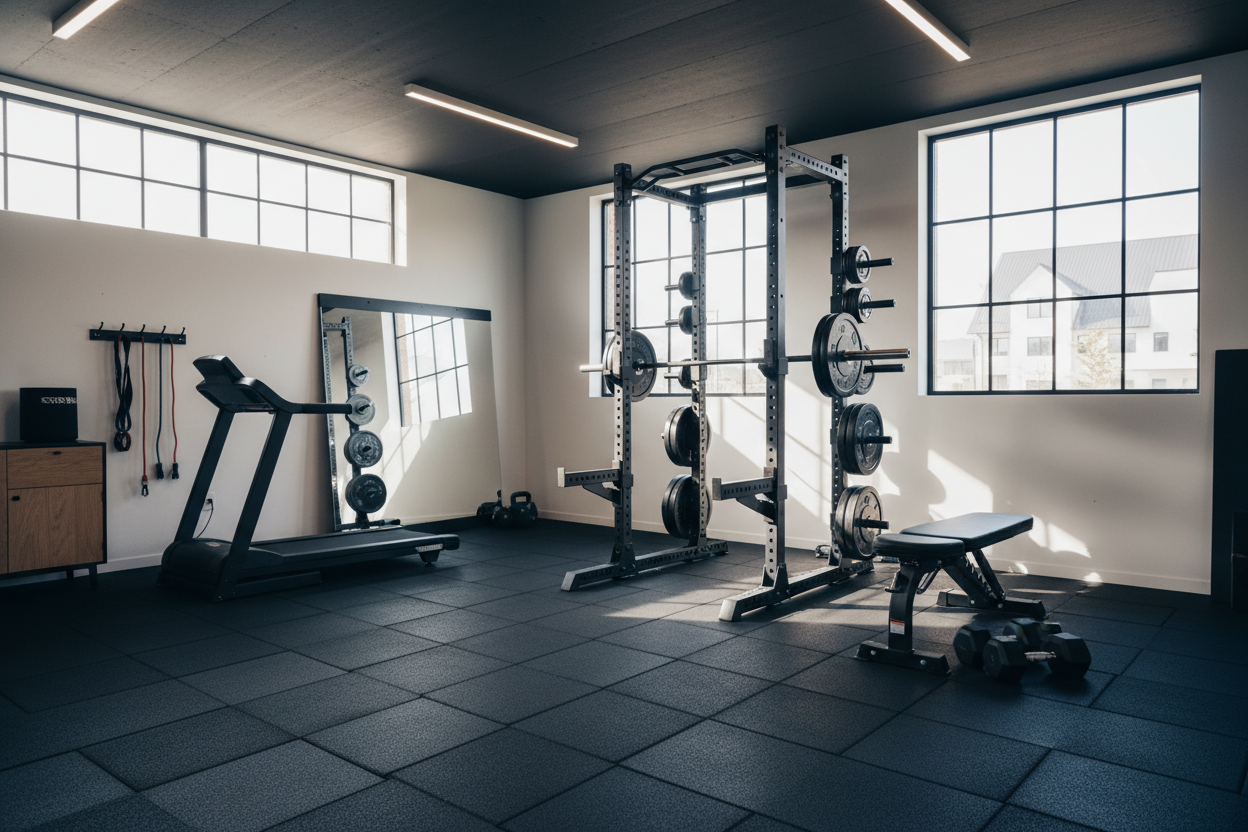
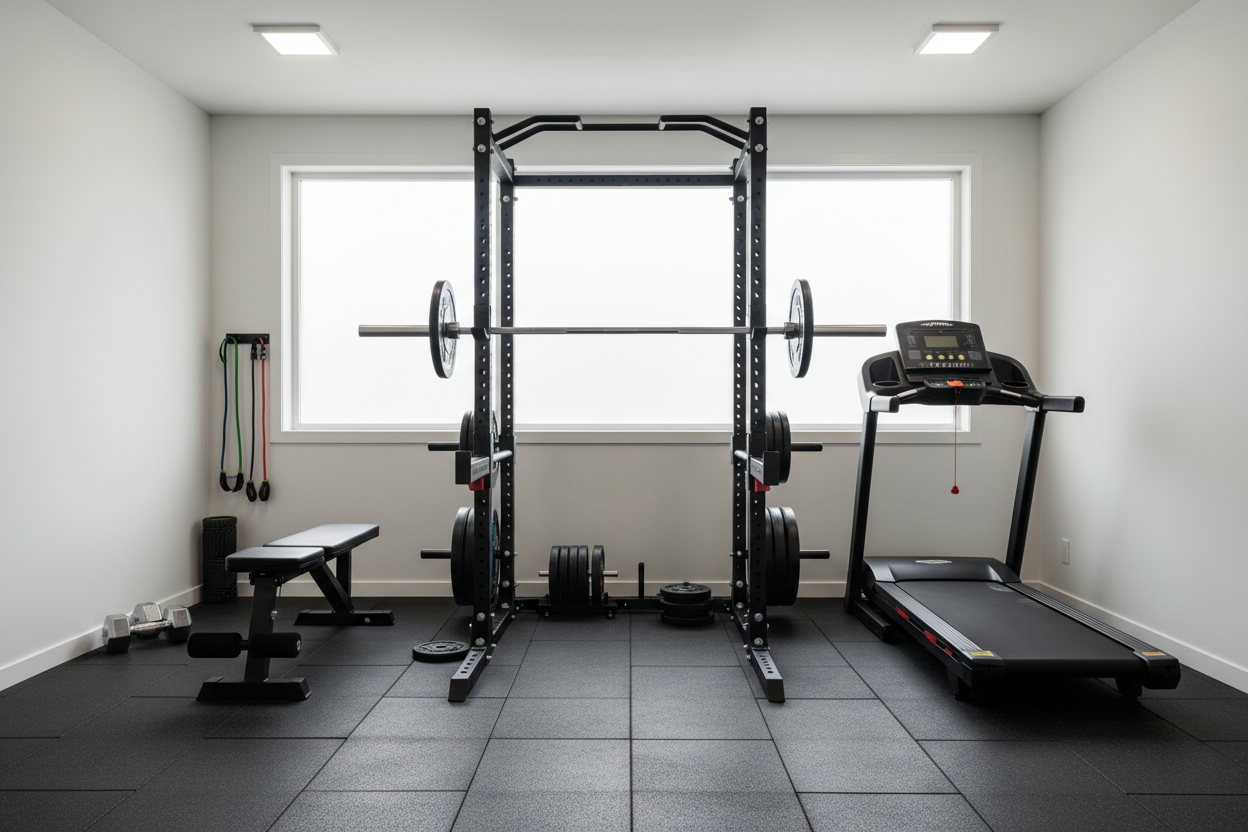
You don't need a commercial gym membership. I built my first setup in a 10x10 corner of my garage. Start with some heavy-duty strength equipment that can take a beating. You need a squat rack with safety arms, a 20kg barbell, and at least 300 lbs of iron plates.
Don't skip the floor. Dropping a 405-lb deadlift on bare concrete is a great way to lose your security deposit. A solid exercise mat provides the stability you need for heavy squats and protects your gear. Once you have the basics, you can look into strength training accessories like a 10mm lever belt or some liquid chalk to help with your grip on those heavy pulling days.
The Boring Secret to Getting Stronger Every Week
The secret isn't a new supplement or a 'shock the muscle' technique. It’s progressive overload. If you lifted 135 lbs for 5 reps last week, you lift 140 lbs this week. That’s it. That is the entire 'secret.'
Chase the numbers on the bar, not the 'pump' or the sweat. If you're sweating but the weight on the bar hasn't changed in three months, you aren't doing a strength program—you're doing cardio with weights. Add five pounds, rest three minutes between sets, and stay patient.
Personal Experience: The 'More is Better' Trap
When I started, I thought I needed to do 20 sets per body part. I bought every attachment for my rack and spent two hours a night training. My elbows started screaming, and my squat plateaued for a year. I finally cut my volume in half, focused on hitting one heavy set of five, and my numbers shot up 50 lbs in two months. Lesson learned: intensity beats volume every time for natural lifters.
FAQ
How long should my workouts take?
If you're resting properly between heavy sets (2-3 minutes), expect to be in the gym for 45 to 60 minutes. Anything longer and you're likely scrolling on your phone too much.
Can I do cardio on off days?
Absolutely. Go for a walk, a light ruck, or a swim. Just don't do a HIIT session that leaves you too sore to squat the next day.
What if I can't do a pull-up yet?
Use a resistance band for assistance or do lat pulldowns. Everyone starts somewhere; just make sure you're progressing the resistance over time.