How to Build a Massive Back Using Only the Rows Machine
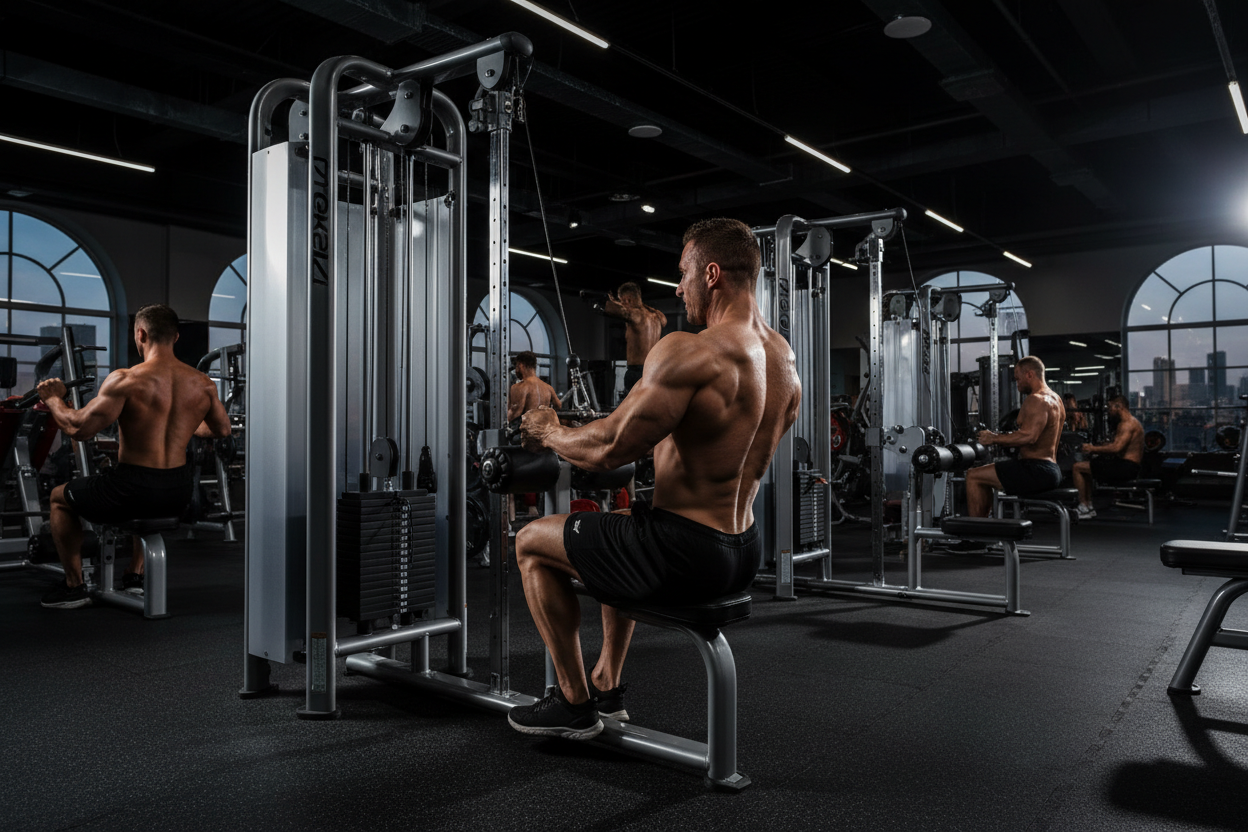
Walk into any commercial gym, and you will see a line forming at the squat rack for barbell rows. Meanwhile, the rows machine often sits empty, unfairly labeled as a tool for beginners. This is a mistake. While free weights have their place, ignoring the machine variation means leaving hypertrophy on the table.
If your goal is pure muscle isolation without the limiting factor of lower back fatigue, this piece of equipment is superior. Let’s break down how to use it correctly to thicken your lats and rhomboids.
Key Takeaways
- Stability Equals Output: The chest support eliminates momentum, forcing the back muscles to move the load rather than your hips.
- Safety First: Reduces shear force on the lumbar spine, making it ideal for lifters with lower back history.
- Targeted Angles: Adjusting seat height allows you to shift focus from lats (low pull) to upper back (high pull).
- Unilateral Capability: Most machines allow single-arm work to fix muscular imbalances.
Why the Rows Exercise Machine Wins on Hypertrophy
The biggest enemy of back growth isn't a lack of effort; it's a lack of stability. When you perform a bent-over barbell row, your lower back (erector spinae) acts as a stabilizer. Often, your lower back gives out before your lats do.
The rows exercise machine solves this physics problem. By pressing your chest against the pad, you create an external brace. This removes the neurological "safety brake" your body applies when it senses instability. The result? You can drive the target muscles to true failure without worrying about a disc slipping.
Constant Tension Profile
Free weights rely on gravity. At the bottom of a dumbbell row, the tension is high. At the top, it changes depending on the arc. A well-designed rows workout machine—especially plate-loaded or cable variations—keeps the resistance curve consistent. You fight the weight from full stretch to peak contraction.
Setting Up: Don't Just Sit and Pull
Most lifters get the setup wrong. They hop on, grab the handles, and start jerking the weight. Precision is required here.
1. The Seat Height
This dictates which muscle fibers you hit. If the seat is too low, you will pull high, engaging the upper traps and rear delts. If the seat is too high, you pull low, targeting the lats. For general back thickness, align the handles with your lower chest.
2. The Chest Pad Gap
Don't jam your chest into the pad immediately. Sit so that when you grab the handles, your shoulders are pulled forward slightly, protracting the scapula. This ensures you get a deep stretch at the start of every rep. If you can't feel a stretch in your armpits, you are starting too close.
Execution: The Elbow Drive
Grip the handles, but don't squeeze them to death. Over-gripping activates the forearms and biceps, turning the movement into an arm workout. Instead, use your hands as hooks.
Initiate the pull by driving your elbows back behind your torso. Imagine there is a string attached to your elbows pulling them toward the wall behind you. Squeeze your shoulder blades together at the peak, hold for a one-count, and control the negative for three seconds.
My Personal Experience with rows machine
I have a love-hate relationship with the plate-loaded ISO-row. While the pump is undeniable, there is a specific nuance to the chest pad that rarely gets mentioned in manuals.
When I’m pushing heavy loads—three or four plates per side—the pressure of the chest pad against my sternum actually restricts my diaphragm. I learned the hard way that breathing timing is critical here. If I try to inhale during the concentric (pulling) phase, the pad compresses my chest, and I get lightheaded.
I've found I have to take a massive belly breath before the pull, brace hard against the pad, and only exhale once the weight is back at the starting position. Also, on older machines with vinyl pads, once you start sweating, you slide. I actually bring a small microfiber towel specifically to drape over the chest support so I don't lose leverage mid-set. It’s gritty, unglamorous, but necessary for a heavy set.
Conclusion
The rows machine is not a crutch; it is a precision tool. It allows you to overload the back musculature safely and effectively. Stop viewing it as a secondary accessory and start treating it as a primary lift for hypertrophy. Adjust your seat, control your tempo, and let the machine handle the stability so you can handle the growth.