How Picking One Staple Exercise Cured My Program Hopping
I remember staring at my squat rack, surrounded by half-finished PDF programs and a stack of notebooks I never filled. I would do three weeks of a powerlifting block, see a cool kettlebell flow on Instagram, and abandon ship for the next shiny object. That cycle of program hopping is the fastest way to stay exactly the same size and strength for years. The fix wasn't a more complex spreadsheet; it was picking one staple exercise for every session and refusing to negotiate on it.
- Anchoring your workout with one heavy lift prevents 'novelty fatigue.'
- Track your main lift with data; treat everything else as flexible play.
- Reducing setup friction in your home gym is half the battle.
- Focus on compound movements that offer the highest ROI for your time.
The Trap of the 'New and Shiny' Routine
We are suckers for novelty. Every time a new 'science-based' influencer drops a video about the 'perfect' way to hit the long head of the tricep, we feel like our current routine is obsolete. It is not. Social media thrives on the new, but muscle growth thrives on the boring. If you change your entire staple workout every 14 days, you never actually learn the skill of the lift or give your body a reason to adapt.
I have been there. I have bought the specialized bars and the fancy chains, thinking they would fix my lack of progress. They did not. What fixed it was the realization that I was chasing the 'pump' and the dopamine hit of a new routine rather than the grit of adding five pounds to a barbell. You do not need a new program; you need a better relationship with the basics.
What Actually Makes Something a Staple Exercise?
A staple is not a cable fly or a concentration curl. It is the big, heavy, multi-joint movement that makes you want to sit down for five minutes afterward. I am talking about back squats, deadlifts, overhead presses, or weighted chin-ups. These are the anchors. They drive 80 percent of your progress.
If you are not tracking the weight and reps on these specific movements with religious fervor, you are just exercising, not training. A staple exercise needs to be something you can safely load with heavy weight and something that has a clear path for progression. If you cannot measure it easily, it is probably a filler movement, not a staple.
The 'One Anchor' Method for Building a Staple Workout
Here is how I stopped the bleeding: The first 20 minutes of my session are non-negotiable. I pick one big lift, hit my sets, and record the numbers in my log. Once that is done, I give myself permission to be a 'fitness tourist.' It keeps my brain from getting bored while my body gets stronger.
After the main lift is in the books, I will roll out a large exercise mat to create a dedicated space for whatever random accessory work I feel like doing. Maybe I want to do some kettlebell swings, or maybe I want to try that core circuit I saw online. Because I already finished my anchor lift, these 'fun' movements do not detract from my progress—they just add a bit of flavor to the session.
Leg and Hip Anchors You Shouldn't Skip
For lower body, I am a stickler for the low-bar squat or the RDL. These movements build a foundation that smaller isolation moves simply cannot touch. However, as I have gotten older, I have realized I cannot just walk into the garage and pull 400 pounds without some prep work.
I usually spend ten minutes on a stretching workout at home to get my hips and ankles behaving before I even touch the barbell. Opening up the joints is not a waste of time; it is an insurance policy for your heavy lower-body anchors. If your hips are locked up, your squat form will break down, and your staple exercise will become a liability rather than an asset.
Upper Body Anchors Worth Tracking
Do not overthink this. A strict overhead press or a weighted dip will do more for your physique than six different variations of lateral raises. I personally track my weighted pull-ups more than anything else. If that number goes up, my back gets wider. It is simple math, and it is a hell of a lot more effective than chasing a 'pump' with light dumbbells every Monday. Choose one push and one pull to treat as your primary focuses for the month.
Setting Up Your Home Space for Zero Friction
The biggest killer of a consistent routine is setup time. If I have to move a lawnmower, three bikes, and a stack of storage bins just to get to my rack, I am probably going to skip the workout. Friction is the enemy of the staple exercise. You want your gym to be 'plug and play' so you can get to the hard work immediately.
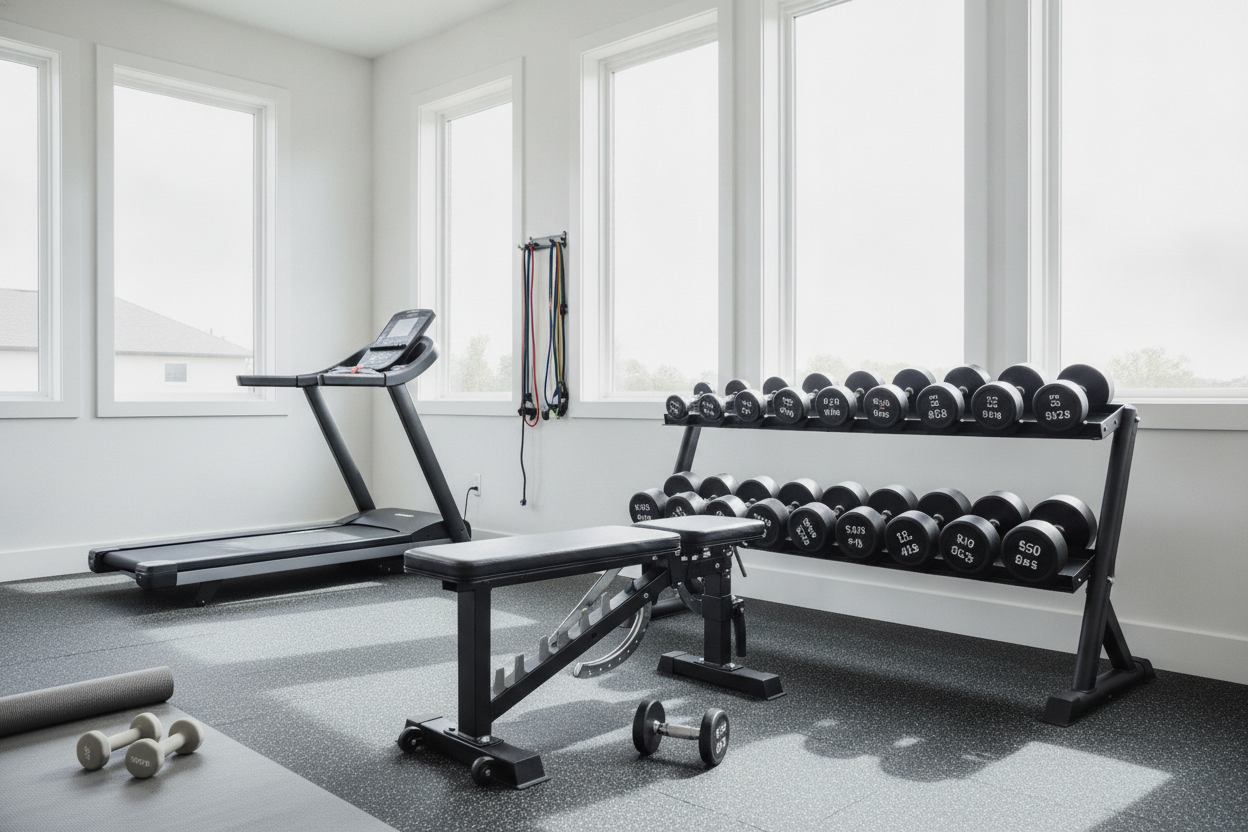
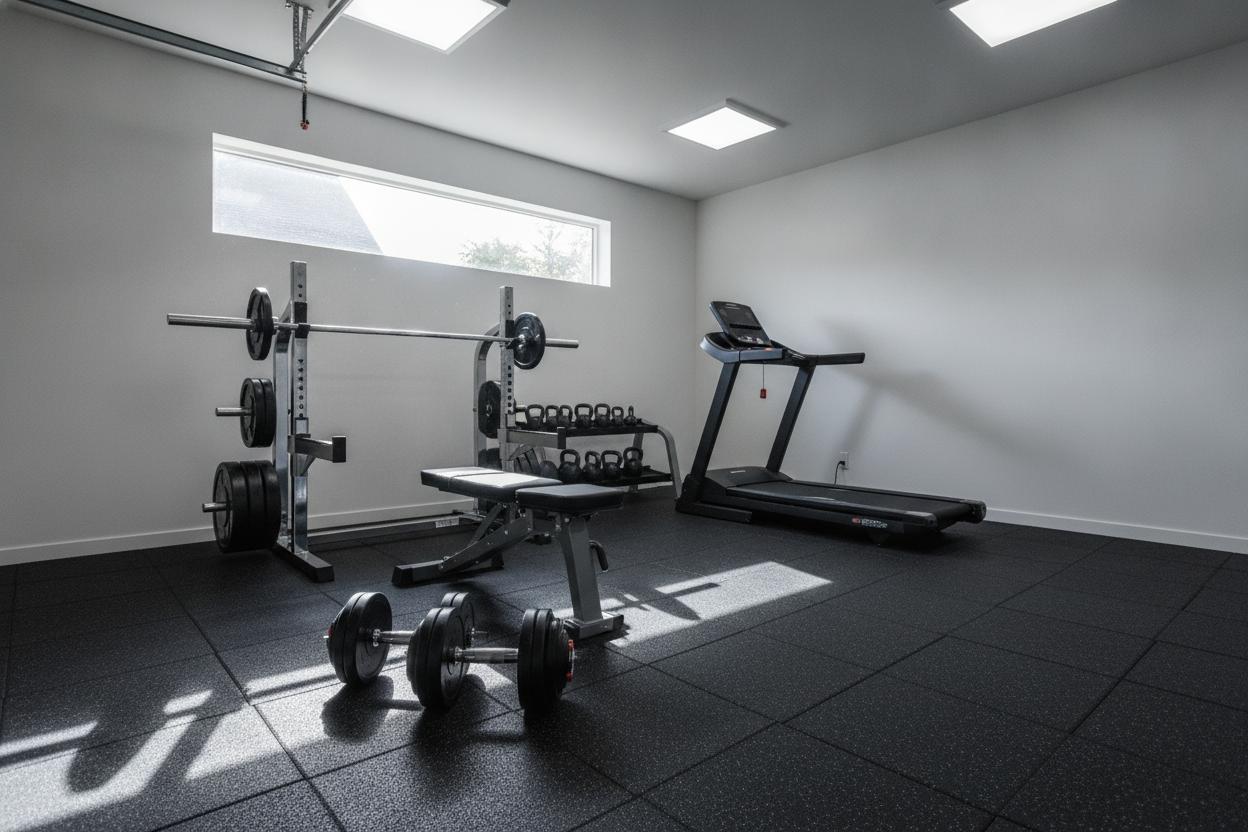
I finally got smart and laid down a permanent 6x8ft exercise mat in a dedicated corner of the garage. Now, that primary training zone is always ready. No excuses. I walk in, the floor is grippy and leveled, and I can get straight to my anchor lift without a 15-minute logistics meeting with myself. If your space is inviting, you are more likely to show up when the motivation is low.
FAQ
How many staple exercises should I have?
Keep it simple. Pick one major lift per session. Over a week, you might have four different staples—like Squat, Bench, Deadlift, and Press. That is plenty to keep you growing for years.
Can a bodyweight move be a staple?
Only if you can progress it. A standard push-up becomes 'filler' once you can do 30 of them. A weighted dip or a chin-up where you are adding plates to a belt? That is a perfect staple.
What if I really want to try a new routine?
Go for it, but only with your accessory work. Keep your anchor lift the same for at least 8-12 weeks. Use the 'One Anchor' method to scratch that itch for variety without sacrificing your strength gains.