How I Finally Stuck to a Lifting Weight Program for a Full Year
I used to spend more time color-coding Excel cells than actually touching a barbell. I had a 12-week peak cycle planned out down to the gram, but I’d quit by week four because life—kids, work, a leaky roof—doesn't care about your RPE 8 squats. Finding a lifting weight program that actually sticks is about managing your ego as much as your iron.
My garage gym used to be a graveyard of half-finished routines. I’d buy a new bar, get hyped for a 6-day split, and then burn out when I missed one Tuesday session. It wasn't until I stopped trying to train like a pro bodybuilder and started training like a guy with a job that I actually saw my deadlift move for the first time in three years.
- Consistency beats intensity every single time.
- A 3-day full-body split is more effective than a 6-day split you only do half the time.
- Big compound movements are the priority; arm curls are the dessert.
- Equipment footprint matters more than the number of machines you own.
The Spreadsheet Trap: Why We Always Quit by Week Three
We’ve all been there. You find a PDF online that promises a 20-pound muscle gain in two months. It’s got percentages, RPE scales, and accessory work that takes two hours to complete. For most of us, these weight lifting training programs for beginners are a recipe for failure because they demand perfection in an imperfect world.
The spreadsheet trap makes you feel like if you miss one set of face pulls, the whole week is a wash. I spent years in this cycle. I’d hit the gym hard for twenty days, miss a Monday because of a late meeting, feel like a failure, and then not touch a weight for a month. It’s a mental hurdle that kills progress faster than bad form ever could.
Real growth happens in months four through twelve, not weeks one through three. When you download a routine that requires 90 minutes of focused effort six days a week, you aren't building a habit; you're setting a trap for yourself. I had to learn to embrace the 'good enough' workout on days when a 'perfect' workout was impossible.
Building a Baseline With Simple Weight Training Exercises
If your routine looks like a circus act with bands, chains, and BOSU balls, you're probably spinning your wheels. A sustainable weights training routine should be built on the 'Big Five': squat, hinge, push, pull, and carry. That’s it. Everything else is just noise designed to sell fitness magazines.
I stopped doing 14 different variations of lateral raises and went back to heavy overhead presses and rows. These simple weight training exercises allow you to focus on the one thing that actually matters: progressive overload. If you can’t tell me exactly how much weight you added to your squat this month, your program isn't working.
The beauty of a minimalist approach is the mental clarity it provides. When I walk into my garage, I know I have three main lifts to crush. I’m not scrolling through a phone app trying to remember which machine I’m supposed to use next. I’m just moving heavy metal. This simplicity is what allowed me to train for 52 weeks straight without a 're-load' or a mental breakdown.
My Bare-Bones Garage Setup for Consistency
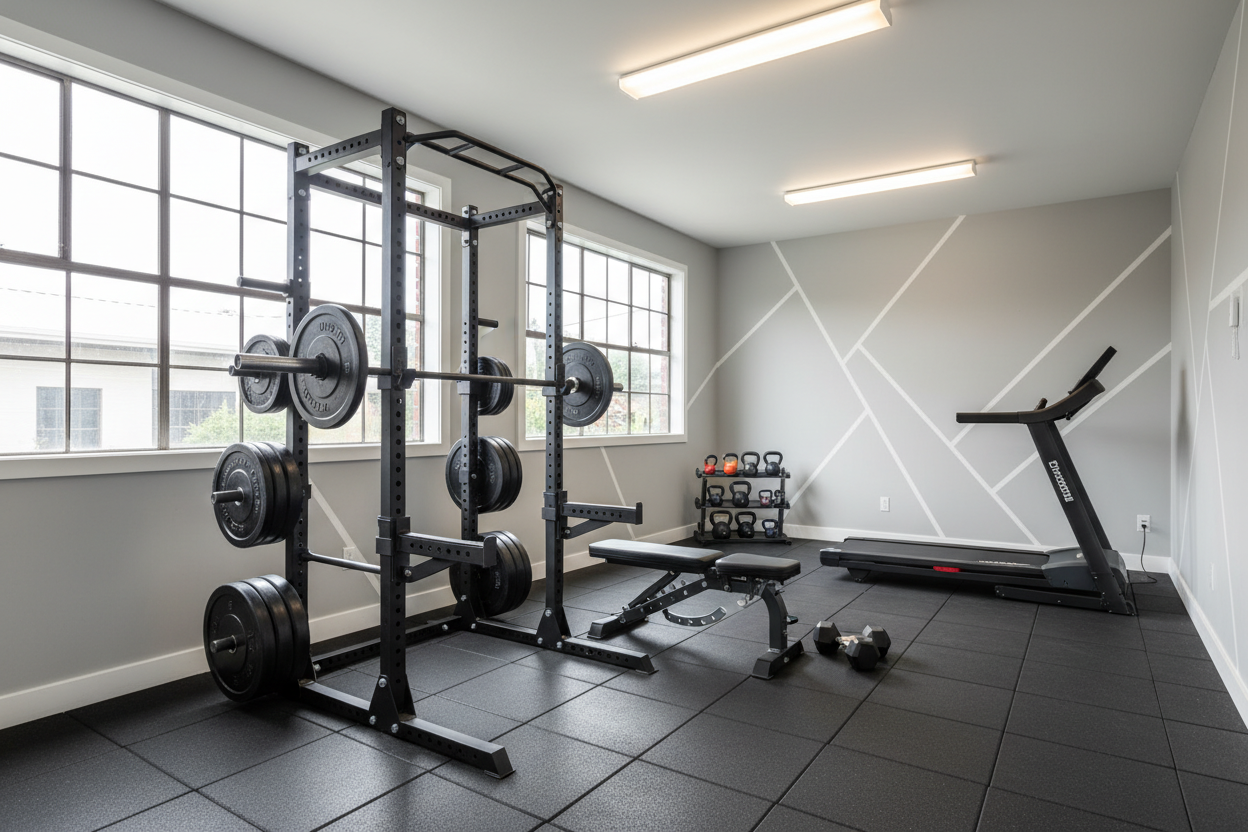
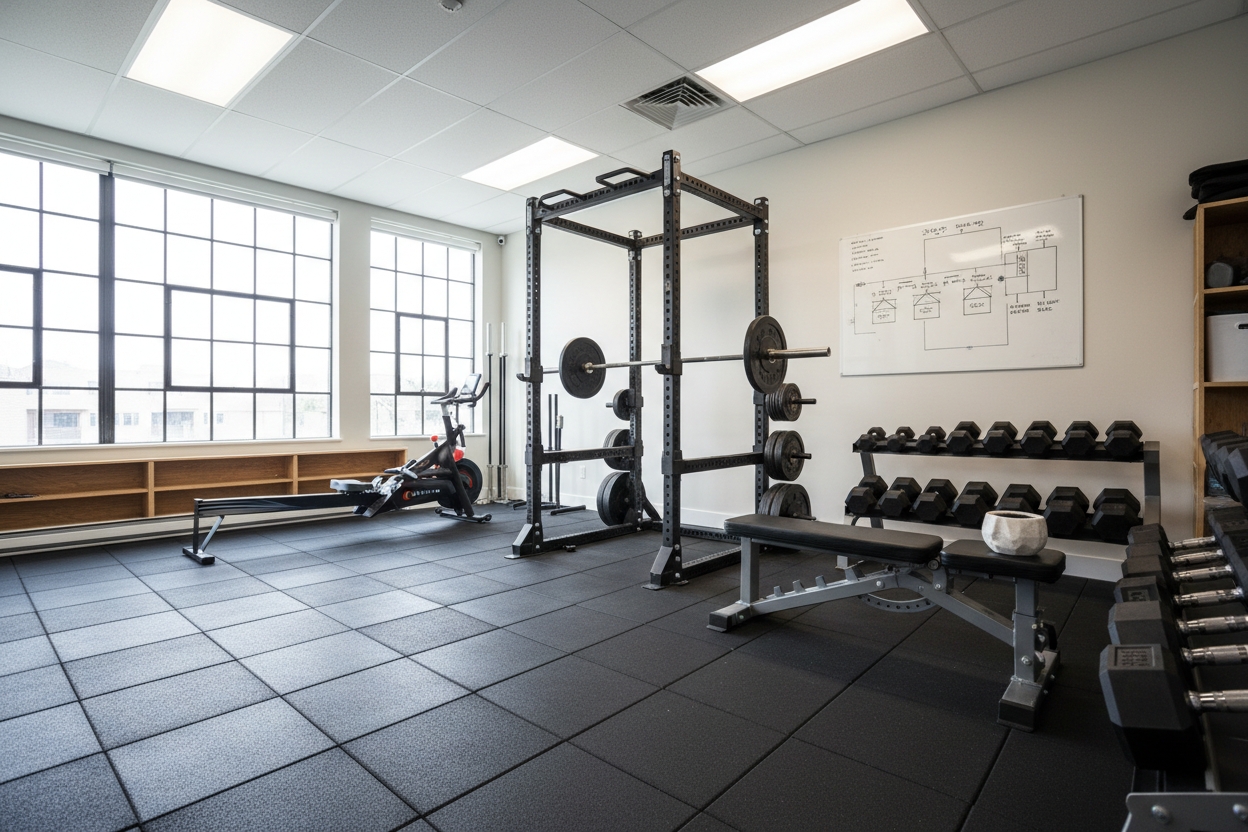
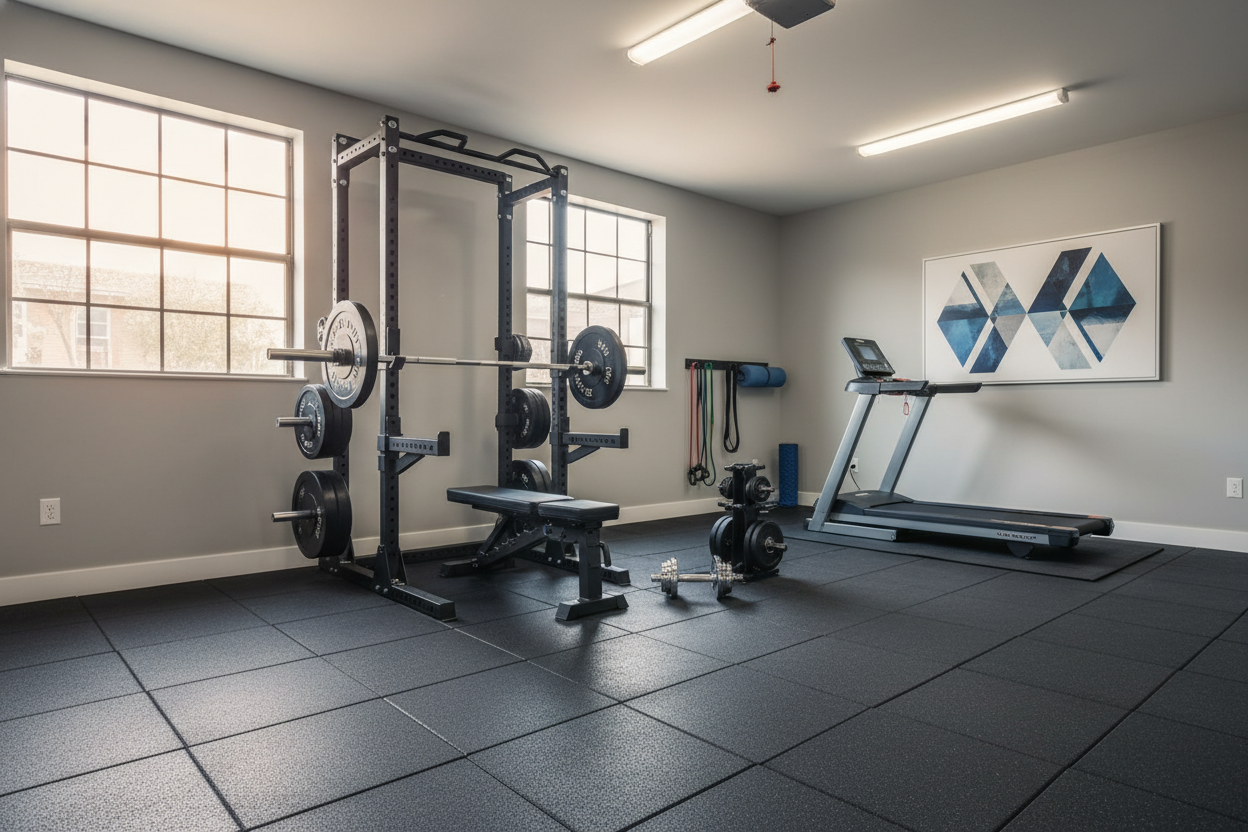
You don't need a 2,000-square-foot commercial space to get strong. In fact, too much equipment often leads to 'choice paralysis.' I narrowed my setup down to a 4-post rack and a solid bench. That’s the entire foundation of a home-based lifting weight program. If it doesn't fit in a 6x8 foot space, I probably don't need it.
The centerpiece of my current setup is the X6 Power Rack Weight Bench Package. It gives me the safety of spotter arms—essential when you’re training alone in a garage—and a bench that doesn't wobble when I’m trying to press 225. Having everything in one footprint means I can go from my kitchen to my first warm-up set in under five minutes.
I’ve tested the cheap racks that shake when you rack a 45-pound plate. Don't do that to yourself. You want something with at least 11-gauge steel and a weight capacity that exceeds your goals by at least 200 pounds. It’s about confidence. If you’re worried the rack is going to tip, you’re not going to push your limits on the squat.
The Core Movements: Easy Weight Lifting Exercises That Work
Consistency is built on easy weight lifting exercises—not 'easy' in terms of effort, but easy in terms of technical execution and setup. A goblet squat is much easier to set up than a geared box squat, but for 95% of the population, it’s just as effective for building quad density. My routine revolves around these high-ROI movements.
For my upper body, I rely heavily on an adjustable weight bench. Being able to toggle between flat, incline, and seated positions means I can hit every angle of my chest and shoulders without needing three different pieces of gear. I’ve found that a 30-degree incline press is far easier on my shoulders than a standard flat bench, and it’s built more upper-chest mass than anything else I’ve tried.
I also prioritize easy weight training exercises like the chest-supported row. By laying face-down on the incline bench, I take my lower back out of the equation. This allows me to hammer my lats without the fatigue that usually comes from heavy barbell rows. It’s small tweaks like this that keep you from feeling 'beat up' by week six of your program.
How to Progress Without Needing a Calculator
Stop overthinking the math. You don't need a spreadsheet to tell you when to add weight. I follow a simple rule: if I can hit my target reps for every set with perfect form, I add five pounds next week. If I struggle or my form breaks down, I stay at the same weight. It’s the weight lifting training guide I wish I had when I started.
This 'auto-regulation' approach accounts for the days when you didn't sleep well or had a stressful day at the office. If the weight feels like a mountain, you don't force a PR and risk an injury. You do the work, get the volume in, and live to fight another day. This mindset shift was the single biggest reason I didn't quit this year.
My biggest mistake in the past was trying to 'test' my max every other week. Now, I focus on 'building' strength rather than 'testing' it. I’d rather hit a solid set of 8 with 200 pounds than a shaky, grindy single with 250. The former builds muscle; the latter just builds ego and joint pain.
How many days a week do I actually need to lift?
For most people, three days a week is the sweet spot. It allows for a full day of recovery between sessions, which is when the actual muscle growth happens. If you’re feeling ambitious, four days is fine, but anything beyond that usually leads to diminishing returns for non-athletes.
What if I don't have room for a full power rack?
If space is tight, a set of adjustable dumbbells and a folding bench can get you 80% of the way there. However, if you want to move serious weight safely, a compact rack with a small footprint is always the better long-term investment.
Is it okay to skip the 'big' lifts if my joints hurt?
Absolutely. If back squats hurt your knees, do Bulgarian split squats or trap bar deadlifts. The 'best' exercise is the one you can do pain-free with high intensity. There are no mandatory exercises, only mandatory movement patterns.