How I Built Mass Using Only Low Impact Exercises for Legs
I remember the exact moment my ego met my reality. It was a Tuesday, 6:00 AM in my garage, and I had 405 pounds on my back. As I hit the hole, my left knee sounded like a handful of gravel being crushed in a blender. I finished the rep—because I'm stubborn—but I couldn't walk right for three weeks.
That was the end of my 'heavy or bust' era. I spent years thinking that if I wasn't rattling the plates on a barbell, I wasn't training. I was wrong. By pivoting to low impact exercises for legs, I actually managed to grow my quad sweep while finally losing the chronic inflammation that made stairs feel like a mountain climb.
Quick Takeaways
- Low impact does not mean low intensity; you can still hit failure without jumping or heavy axial loading.
- Tempo is your best friend—slowing down the eccentric phase builds more muscle than bouncing out of a squat.
- Equipment like furniture sliders and heavy resistance bands are more effective for hypertrophy than you think.
- Your floor matters: concrete is a joint killer, even for low-impact movements.
The Day I Realized My Knees Were Done
For a decade, my lower body workout was a checklist of joint-crushing movements. Heavy back squats, walking lunges on concrete, and high-box jumps. I ignored the 'hot' feeling in my patellar tendons because I thought it was just the price of admission. It wasn't until I couldn't even do a bodyweight air squat without a sharp stabbing sensation that I had to face the music.
Training through pain isn't hardcore; it's stupid. I was losing gains because I had to take every other week off to let my joints settle down. I had to find a way to create a low impact leg day that actually stimulated muscle growth without requiring a bottle of ibuprofen afterward. I realized that the muscle doesn't know how much weight is on the bar; it only knows tension. If I could create massive tension without the impact, I could still grow.
What 'Low Impact' Actually Means for Lifters
Let's clear the air: a low-impact leg workout is not a 'toning' session with 2-pound plastic weights. When I talk about real low-impact strength exercises, I'm talking about movements that eliminate the 'shock' to the joints—no jumping, no harsh transitions, and often, less total weight on the spine.
The secret is mechanical disadvantage and time-under-tension. Instead of doing 10 explosive reps, I do 10 reps with a 4-second eccentric (lowering) phase and a 2-second pause at the bottom. This keeps the tension strictly on the muscle fibers. You'll find that you can reach absolute muscular failure with half the weight, which is a win for your long-term health. Low-impact thigh exercises can be just as brutal as a heavy set of five if you do them right.
My 4 Go-To Joint-Friendly Lower Body Builders
If you want to build a low-impact lower body workout that actually works, you need to stop thinking about 'cardio' and start thinking about 'control.' Here are the four staples that saved my legs:
1. Spanish Squats: This is the holy grail for quad growth without knee pain. You loop a heavy-duty resistance band around a rack and then around the back of your knees. As you sit back into the squat, the band pulls your shins forward, forcing the quads to work overtime to keep you upright. It’s a pure quad isolation movement that feels like a leg extension but much more functional.
2. Sliding Reverse Lunges: Stop stepping back and start sliding. Using a furniture slider or a towel on a smooth floor, you slide your foot back into a lunge. This eliminates the 'impact' of the foot hitting the floor and forces the lead leg to stay under constant tension to control the slide. It’s one of the best low-impact leg strength exercises for glute and hamstring development.
3. B-Stance RDLs: I stopped doing heavy traditional deadlifts because my lower back was taking too much of the load. By shifting to a B-stance (one foot slightly behind the other, acting as a kickstand), I can hammer the hamstrings with significantly less weight. It’s a low intensity leg workout in terms of systemic fatigue, but the local muscle burn is insane.
4. Sissy Squats (Regressed): Don't let the name fool you. Holding onto a rack for balance and leaning back while pushing your knees forward (carefully) creates a massive stretch in the quads. This is one of those low impact squats variations that targets the rectus femoris in a way a traditional squat never could.
Why Your Garage Floor is Sabotaging Your Knees
Even if you are doing a low-impact thigh workout, doing it on raw concrete is a massive mistake. Concrete has zero 'give.' Every time you plant your foot, that force is traveling directly into your ankles and knees. I spent my first year training on a bare garage floor and my joints never felt fully recovered.
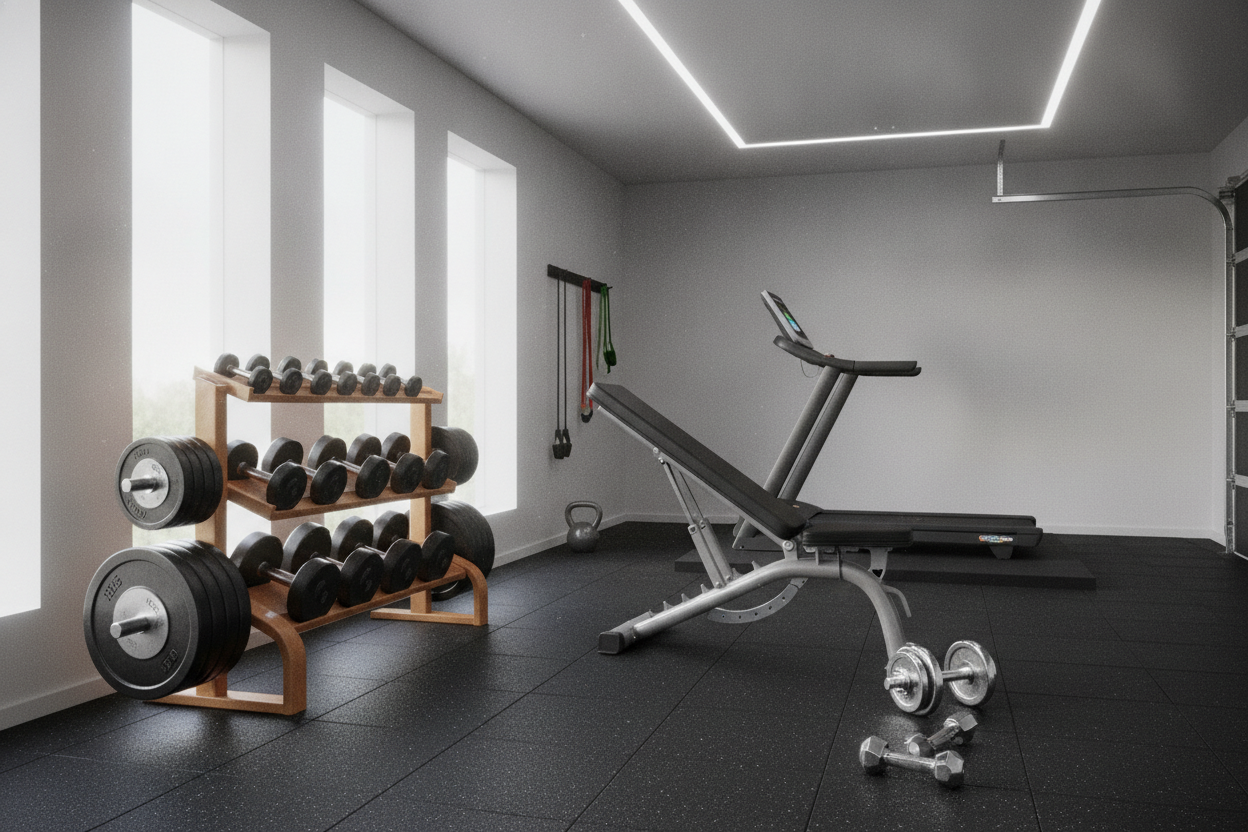
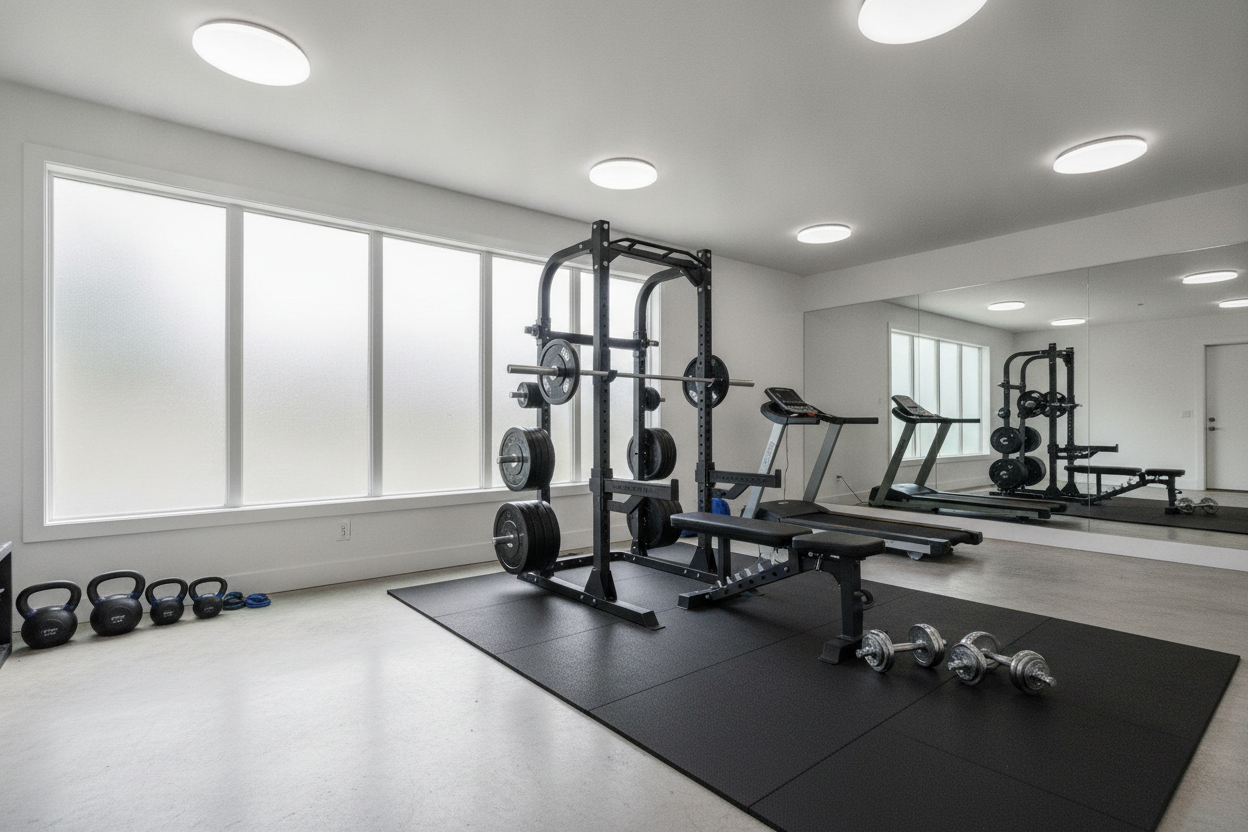
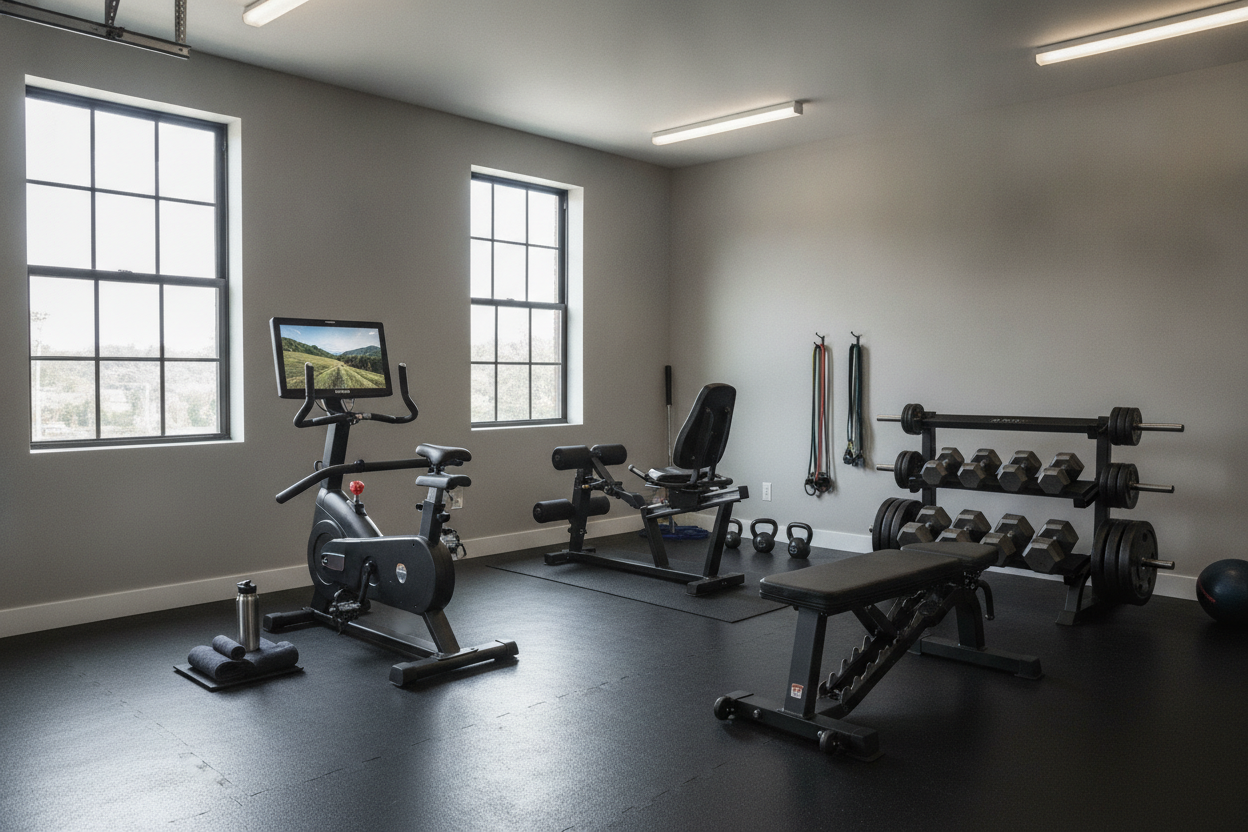
Investing in high-quality gym flooring for home workout setups is the most underrated 'supplement' you can buy. A dense 7mm or 8mm mat provides just enough shock absorption to take the edge off your joints during lunges and squats without being so squishy that you lose your balance. If you're training in a garage, this isn't an optional upgrade; it's a requirement for longevity.
When to Actually Invest in Leg Machines
Bodyweight and bands will get you far, but eventually, you'll want more resistance. The problem with barbells is the axial loading—putting that weight on your spine. Once you've mastered low-impact leg exercises with basic gear, it might be time to look at a lower body strength machine like a leg press or a seated leg curl.
Machines allow you to push to absolute failure without the risk of dropping a bar or losing your balance. I added a plate-loaded leg press to my corner, and it's been the best investment for my quad sweep. I can load it up, keep my back supported, and focus entirely on the leg drive. It’s the ultimate way to scale a low-impact lower body exercises routine once you've maxed out what your bands can provide.
Putting It All Together Without the Joint Pain
Here is how I structure a typical session. We aren't looking for 'explosive' here; we are looking for 'metabolic stress.' Aim for 3 sets of each, keeping the rest periods short (60 seconds).
- Spanish Squats: 15-20 reps (3-second descent, 2-second hold at bottom).
- Sliding Reverse Lunges: 12 reps per leg (focus on the slow slide back).
- B-Stance RDLs: 15 reps per leg (slow and controlled stretch).
- Wall Sits: 45-60 seconds (active quad contraction).
This isn't just a 'filler' workout. If you do this with the right tempo, you'll be hobbling to your car just as much as you would after a heavy squat session—only your knees won't feel like they're on fire the next morning.
FAQ
Can I really build muscle with low impact exercises?
Absolutely. Muscle growth is driven by mechanical tension, metabolic stress, and muscle damage. You can achieve all three by using slow tempos, high volume, and exercises that put the muscle at a mechanical disadvantage, even without heavy weights.
Are these exercises okay for someone with a meniscus tear?
I’m a writer, not a doctor. However, many people find that sliding movements and isometrics (like wall sits) are much more tolerable for meniscus issues than jumping or deep, weighted squats. Always clear it with your PT first.
Do I need a lot of space for a low-impact leg day?
Not at all. Most of these movements can be done in a 6x8 foot space. As long as you have enough room to lunge and a sturdy vertical post (like a power rack or a basement pole) to anchor a band, you're good to go.