How Bottom-Half Reps Fixed My Dumbbells Workout Shoulders Routine
I spent years chasing a 100-pound overhead press, convinced that the clink of the weights at the top was the sound of progress. I eventually hit it, but my delts looked exactly the same as when I was struggling with the 70s. My triceps were thick, sure, but my shoulders lacked that capped, 3D look I was after. I realized I wasn't actually doing a dumbbells workout shoulders would benefit from; I was just doing a glorified tricep extension with a heavy starting point.
The reality is that for most of us training in a garage or a spare bedroom, we’re obsessed with 'full range of motion' because that’s what the textbooks say. But the top third of a shoulder press is a dead zone for the deltoids. If you want to actually grow, you need to stay in the basement where the tension lives.
- Locking out shifts the load from your muscles to your joints and triceps.
- The bottom half of the movement provides the 'stretch-mediated hypertrophy' that triggers growth.
- You can get a better workout with 40-lb dumbbells than you used to get with 60s.
- This method is significantly safer for those with history of impingement or 'clicky' shoulders.
Stop Locking Out Your Overhead Presses
When you punch a pair of dumbbells toward the ceiling and lock your elbows, you’re essentially resting. At the top of the rep, the weight is stacked directly over your skeletal structure. Your bones are doing the work, not your medial or anterior delts. This is a massive waste of energy. If you’re looking for exercises for shoulders with weights, you have to remember that your front delts already get smashed during heavy bench or incline work. They don't need more lockout time.
By stopping the rep just before your triceps take over—usually around eye level or slightly higher—you keep the muscle under constant, agonizing tension. This is the 'active range.' When you eliminate the rest at the top, a set of 10 reps feels like 30. Your delts never get a chance to breathe, which is exactly what forces them to adapt and grow.
The Science of the Stretch: Why Bottom Partials Work
Recent hypertrophy research suggests that the 'lengthened' position of a muscle—where it’s stretched under load—is the most critical part of the rep for growth. This makes the deep bottom of a press the best dumbbell exercise for shoulders. When the dumbbells are hovering just above your shoulders, the muscle fibers are stretched to their limit while fighting gravity. That’s the 'growth zone.'
Most lifters rush through this part to get back to the easier lockout. We’re doing the opposite. By performing partial reps only in the bottom half of the movement, you are maximizing the time spent in that high-tension, stretched state. You don't need a 100-lb pair of bells to see results here. In fact, trying to use your 'max' weight with this technique is a recipe for a torn labrum. Drop the weight by 30%, slow down, and feel the stretch.
The Bottom-Half Routine You Can Do Anywhere
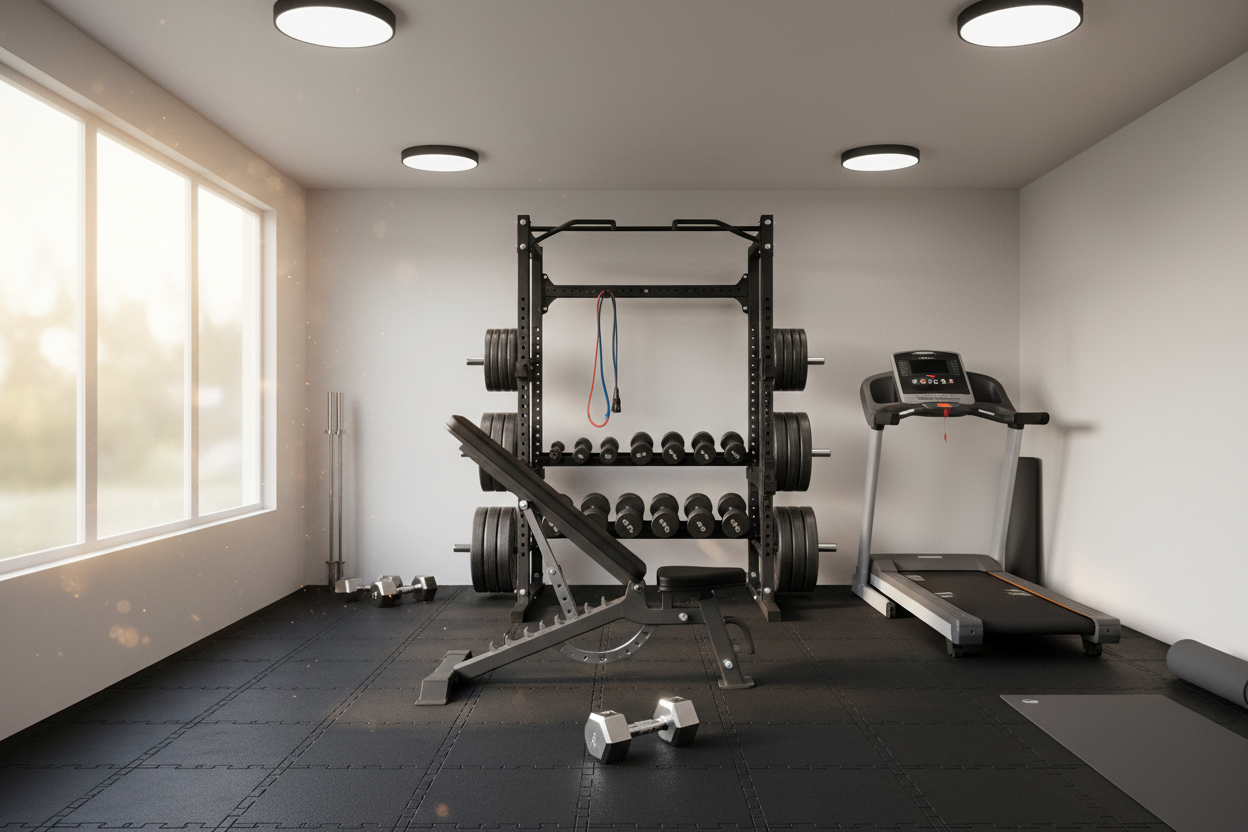
This isn't about ego; it’s about efficiency. This routine is designed for a home shoulder workout dumbbells setup where you might not have a full rack of weights up to 100 lbs. We are going to prioritize time under tension over total poundage. If you usually do good shoulder workouts with dumbbells that follow a standard 3x10 full-ROM approach, this will be a shock to your system.
Perform three sets of each movement. Aim for 12-15 reps, but don't count a rep unless it stays within the bottom 50% of the range of motion. If you accidentally lock out, the set is over. You want to maintain that 'burn' from the first rep to the last. This is shoulder exercise with dumbbell at home at its most brutal.
The Deep-Stretch Arnold Press
Start with the dumbbells in front of your face, palms facing you. As you press up and rotate, stop the movement the second your elbows are level with your ears. Do not go higher. Rotate back down into the deep starting position, feeling the stretch across the top of your shoulders. The rotation combined with the deep stretch makes this a superior shoulder exercises free weights option for hitting all three heads of the delt.
The Heavy Bottom-Half Lateral Raise
Grab a pair of dumbbells that are about 10-15 lbs heavier than what you’d use for a standard lateral raise. Instead of swinging them to shoulder height, you are only going to move them about 8 to 10 inches away from your thighs. Control the descent. This 'swing' range is where the side delt is under the most mechanical tension. It looks like you're doing half-reps, but your side delts will feel like they’re being hit with a blowtorch.
Setting Up Your Space for Heavy Iso-Tension
Since we are focusing on the bottom half, you'll often find that doing these seated or kneeling helps eliminate momentum. If you’re kneeling on a hard garage floor, you’re going to quit because of knee pain before your shoulders give out. I highly recommend a high-density, large exercise mat for home gym use. You need a surface that doesn't compress too much but offers enough grip so your knees don't slide out while you're stabilizing a heavy partial press.
A 1/4-inch or 7mm mat is the sweet spot. Anything thinner and you'll feel the concrete; anything thicker and you'll feel like you're standing on a marshmallow, which kills your power transfer. When you have a solid anchor point, you can focus entirely on the shoulder contraction rather than trying not to slip.
My Experience: The Ego Check
I tried this method for the first time with my old 52.5-lb adjustable dumbbells. I thought, 'I can press the 90s, these will be easy.' I was wrong. By rep eight of the bottom-half presses, my delts were shaking. I actually had to drop down to the 35s to finish the workout. The mistake I made was trying to keep my old weights with the new range of motion. Once I swallowed my pride and lowered the weight, my shoulder width actually started to improve for the first time in two years.
FAQ
Do partial reps ruin your flexibility?
No. In fact, by emphasizing the deep stretch at the bottom of the movement, you're often improving your active end-range strength. Just make sure you still move through a full range of motion during your warm-ups.
Can I do this every workout?
I wouldn't. This is high-intensity technique. Use it for a 4-week block, then return to full-range movements for 4 weeks to keep your joints happy and your progress steady.
Are bottom-half reps better than full ROM?
For pure muscle growth (hypertrophy) in the shoulders, they can be. For overhead strength or athletic performance, you still need to practice the lockout. It depends on your goals.