How Anatomy and Bodybuilding Books Ruined My First Split
I remember the night I decided to become a scholar of the iron. I was scrolling through forums, frustrated that my bench press had stalled, when I convinced myself the secret wasn't more effort—it was more science. I ordered three different anatomy and bodybuilding books, thinking I'd unlock some hidden muscle fiber by tilting my pinky three degrees to the left during a curl.
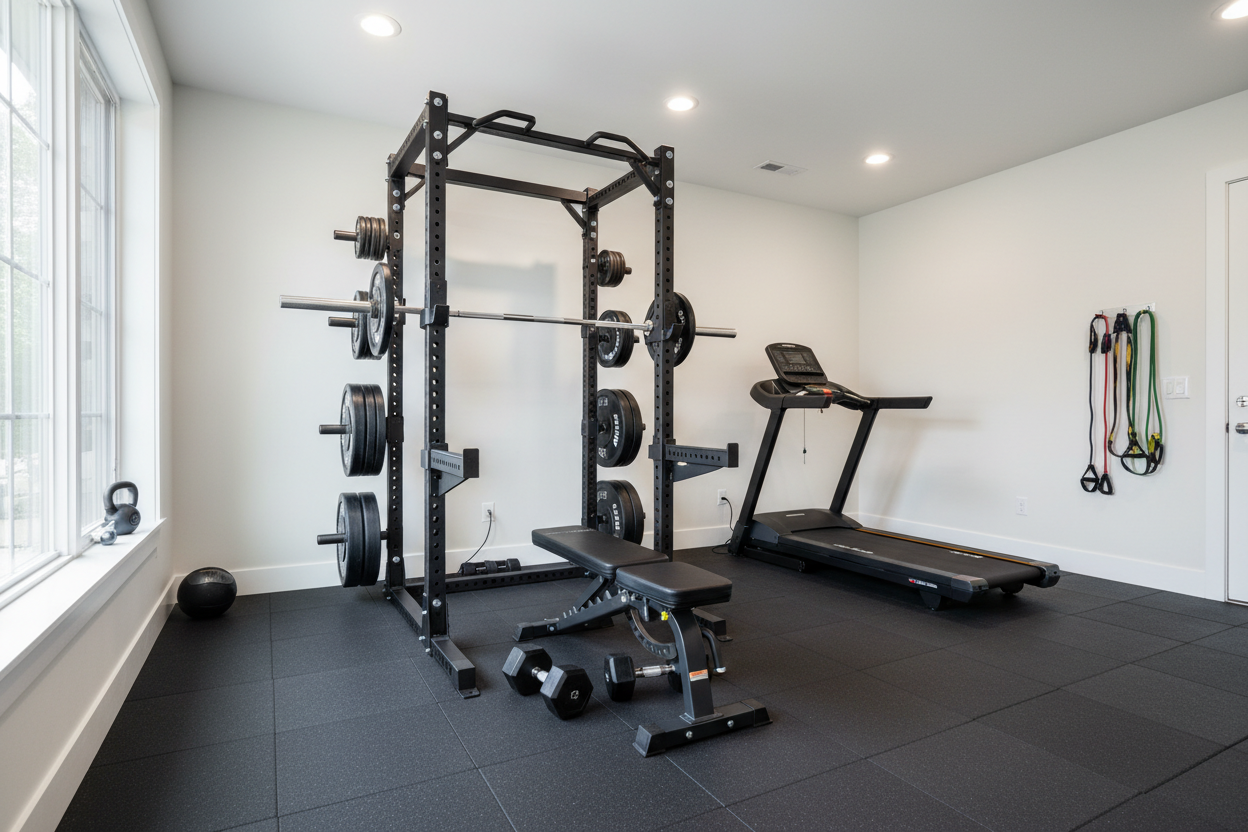
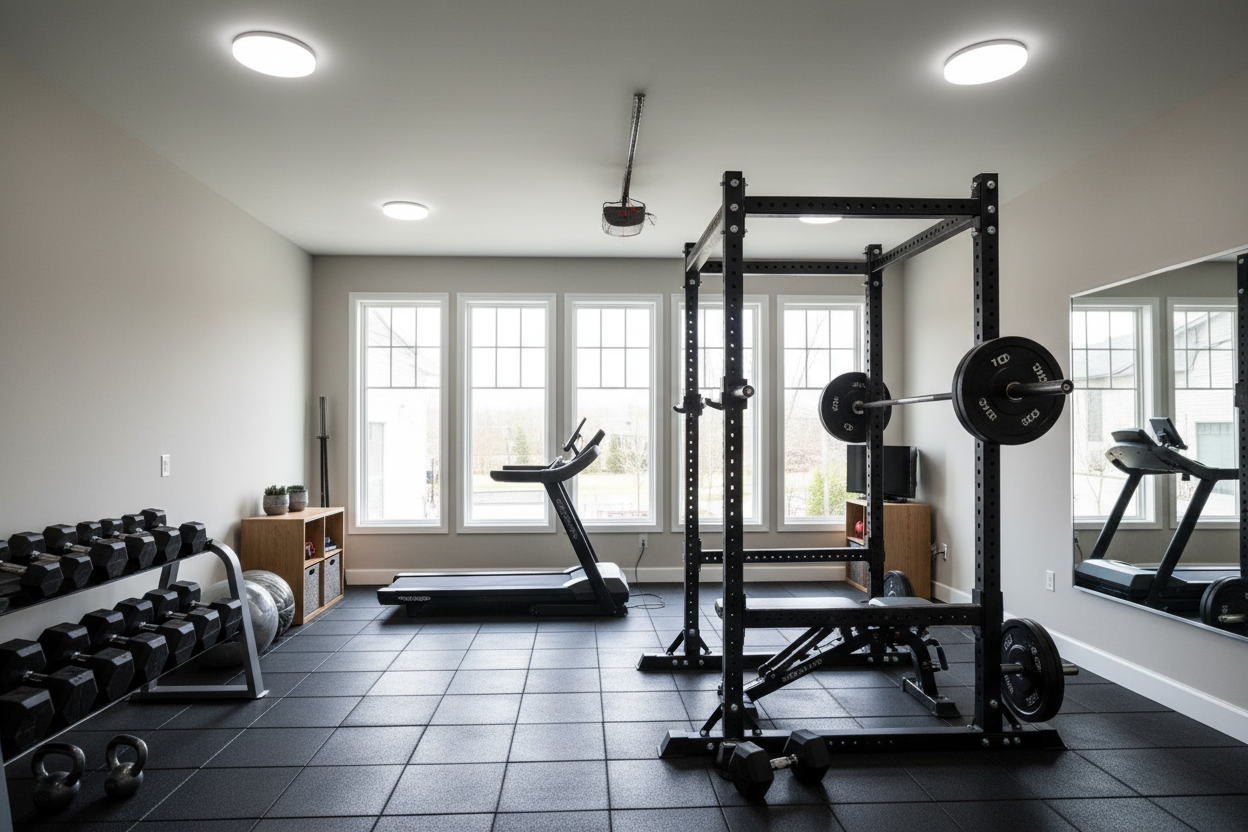
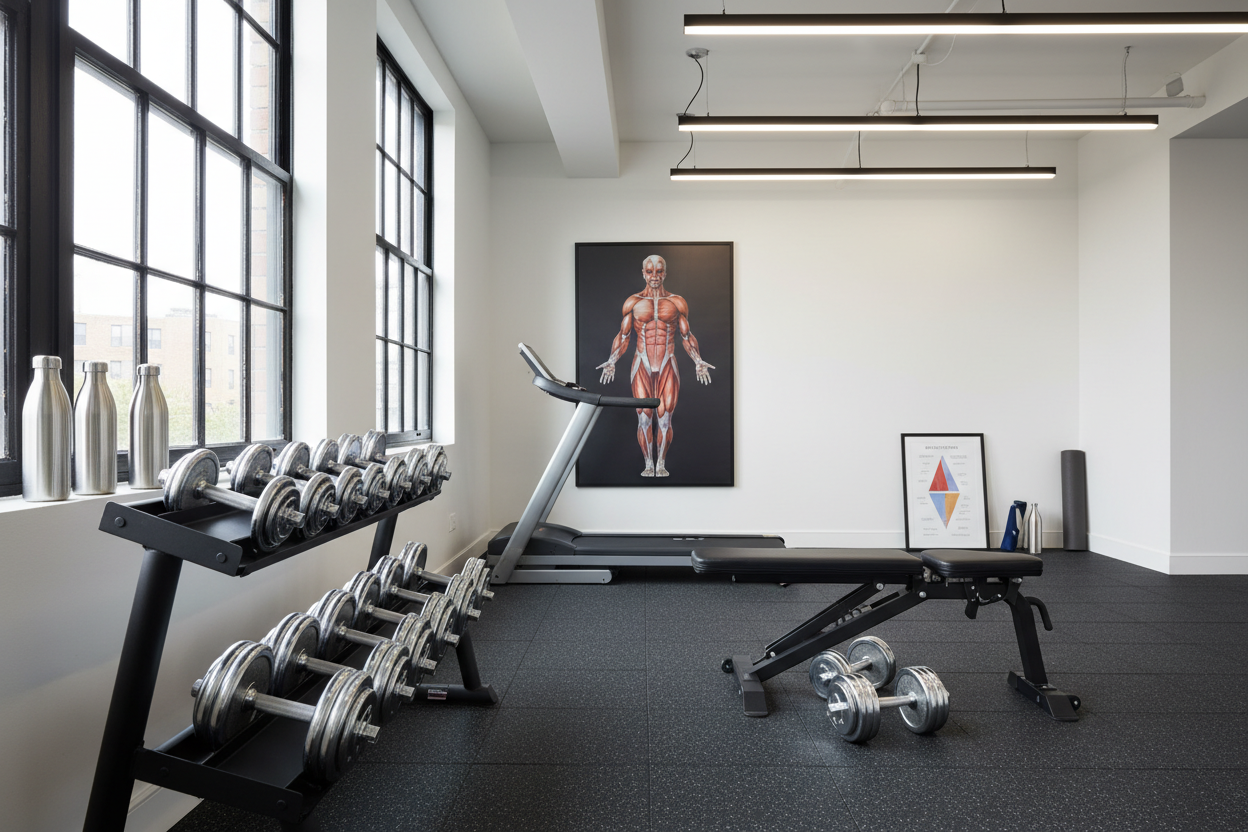
My garage gym soon looked less like a place of work and more like a doctor's office. I had a bodybuilder muscle chart taped over my squat rack. I spent more time squinting at the bodybuilding anatomy of my rear delts than I did actually moving heavy weight. It was a disaster that cost me months of gains.
- Muscle charts are maps, not the terrain—don't get lost in the labels.
- Isolation exercises in a home gym often lead to 'junk volume' that kills recovery.
- Focusing on movement patterns builds more mass than chasing 'micro-muscles.'
- Stability is the foundation of force—if your floor is slippery, your muscles won't fire.
The Day I Bought a Muscle Chart (And Stopped Growing)
I bought one of those famous bodybuilding anatomy books—the kind with the translucent overlays showing every vein and fiber. I was convinced that if I understood the anatomy bodybuilder types possessed, I could replicate it. I spent hours staring at that chart, trying to figure out why my medial triceps head didn't look like a horseshoe yet.
Suddenly, my simple, effective 45-minute sessions turned into two-hour marathons. I wasn't just doing rows; I was doing 'pronated-grip, slight-incline, single-arm scapular retractions' because the book said it isolated a specific centimeter of my back. I stopped getting stronger. I just got tired and small. I had fallen into the 'Atlas Trap,' where you think knowing the name of a muscle is the same as training it. My 300-lb deadlift actually went down because I was too busy doing 'corrective' isolation work.
Why You Can't Isolate Every Muscle in Your Garage
The biggest lie anatomy for bodybuilding tells you is that your muscles work in a vacuum. In a commercial gym with $10,000 ISO-lateral machines, you might be able to find a weird angle for your coracobrachialis or teres minor. In a garage with a barbell and some dumbbells, you can't. And honestly? You shouldn't try.
When you try to apply hyper-specific anatomy bodybuilding principles to a home setup, you end up with junk volume. You're doing six variations of a lateral raise to hit 'different heads' when your shoulders are already fried from overhead pressing. You’re accumulating systemic fatigue without the mechanical tension required to actually grow. Most of those tiny muscles shown in a bodybuilder muscle diagram are stabilizers that get plenty of work during heavy compound movements.
Your Body Operates in Chains, Not Pieces
If you look at the muscle anatomy for bodybuilding, it’s easy to see the body as a collection of parts. But the anatomy of a bodybuilder is built on chains. Your lats, traps, and erectors don't care about your textbook definitions when you're pulling a heavy deadlift. They work as a unit to survive the load. Compound movements hit those tiny muscles better than any weird cable variation ever could.
How to Actually Train Like You Know Muscle Anatomy
Stop trying to memorize the bodybuilding muscle anatomy of every tiny stabilizer. Instead, group your training by biomechanical function. If you understand how the hip hinge works, you've already mastered 80% of the bodybuilder anatomy chart for the lower body. You don't need five different machines to build a leg day.
For example, when you stop obsessing over leg anatomy bodybuilding and start focusing on the squat and the hinge, your results will explode. A heavy set of Bulgarian split squats does more for your quad development than three different leg extension variations. Similarly, understanding the back of thigh muscle function tells you that a heavy Romanian deadlift is the king of the posterior chain, hitting the hamstrings and glutes far more effectively than isolated curls in a cramped garage space.
By simplifying your training into push, pull, hinge, and squat, you ensure every muscle is hit through its full range of motion with enough load to actually cause hypertrophy. This is how you use your knowledge to your advantage without getting lost in the weeds of a bodybuilder muscle diagram.
The Forgotten Variable: Force Transfer and Your Floor
You can have the most perfect bodybuilding diagram of muscles in your head, but if your feet are sliding on bare concrete, your nervous system will pull the emergency brake. This is the 'Force Transfer' reality. Your brain won't let you fully recruit your quads or glutes if it feels unstable. It’s a protective mechanism that overrides your desire for gains.
I learned this the hard way trying to do heavy lunges on a dusty garage floor. I thought my body builder anatomy was the problem, but it was just my traction. Investing in a large exercise mat for home gym use isn't just about protecting the floor; it's about creating a high-friction surface where you can actually put power into the ground. If you want to grow, you need to be anchored.
Build the Slab Before You Carve the Details
Put the body muscle chart for bodybuilding away for a year. Stop worrying about the 'peak' of your biceps or the 'inner' part of your chest. Those things don't exist without a massive foundation of raw tissue first. You can't carve a pebble. Build a slab of muscle using the big lifts, and the anatomy will take care of itself. Once you're moving 405 on the bar, you'll find that your muscles look exactly like the ones in the books—no micro-isolation required.
FAQ
Do I need an anatomy book to start bodybuilding?
No. You need a barbell and a program that emphasizes progressive overload. Most bodybuilder anatomy is built through heavy basic movements, not academic study. Use books for reference, not as a workout guide.
What is the most important muscle to understand?
The ones you can't see in the mirror. Understanding the posterior chain—the hamstrings, glutes, and back—will do more for your physique than any bodybuilding diagram of muscles focusing on the abs or chest.
Can I build a pro physique in a garage gym?
Absolutely. You don't need 50 machines. You need a rack, a bench, and the discipline to stop overcomplicating your training and start lifting heavy with proper form.