Home Workouts That Work: The PHA Upper-Lower Strategy
I remember staring at a dusty pair of 15-pound dumbbells in my cramped 400-square-foot apartment back in 2020. I had lost access to my commercial gym, and doing endless sets of basic bicep curls was getting me nowhere fast. The lack of heavy plates made me feel like I was just going through the motions.
That is when I dug into old-school bodybuilding texts and rediscovered a method that completely changed my approach. If you are trying to find home workouts that work, you need to stop training like you have a full squat rack and start training for metabolic stress. The secret is Peripheral Heart Action (PHA) training.
Quick Takeaways
- PHA training forces your heart to pump blood rapidly between your upper and lower body, creating massive cardiovascular demand.
- You can build lean muscle and burn fat using minimal equipment, like a single pair of adjustable dumbbells.
- Rapid transitions are required, meaning your floor space must be clear, safe, and slip-resistant.
- Workouts usually last just 25 to 30 minutes but deliver the intensity of a 60-minute traditional gym session.
The Anatomy of Home Workouts That Work
Most living room routines fail because they lack the necessary intensity. When you are limited to bodyweight or light dumbbells, doing three sets of ten squats with two minutes of rest simply will not trigger adaptation. Your muscles recover too quickly, and your heart rate drops. To create the best home workouts, we have to manipulate rest periods and exercise sequencing.
Peripheral Heart Action training solves the light-weight problem. Instead of doing all your leg exercises and then moving to arms, you alternate continuously between the two extremes. You do a set of goblet squats, and immediately drop to the floor for push-ups. This constant shifting creates immense metabolic stress, forcing your body to adapt even if you are only holding 20 pounds.
What Are The Best At Home Workouts For Conditioning?
When clients ask me, "what are the best at home workouts for burning fat?", I immediately point them to PHA circuits. The science behind this method is brilliantly simple. Your heart has to work incredibly hard to shunt blood down to your legs for a heavy lunge, and then immediately push that same blood back up to your chest and arms for a dumbbell press.
This rapid vascular shunting spikes your heart rate higher than a steady jog on a treadmill. You get the cardiovascular benefits of a high-intensity interval session without the joint impact of endless burpees or jumping jacks. Because you are constantly moving blood up and down the body, lactic acid does not pool in one specific muscle group, allowing you to sustain a high work output for 20 to 30 minutes straight.
What Is The Best Workout At Home For Building Lean Muscle?
You might wonder what is the best workout at home if your goal is strict hypertrophy rather than just sweating. You can easily adapt the PHA principle to build muscle by slowing down the tempo and staying in the 10 to 15 rep range. The key is taking each set very close to failure before immediately switching to the opposite end of the body.
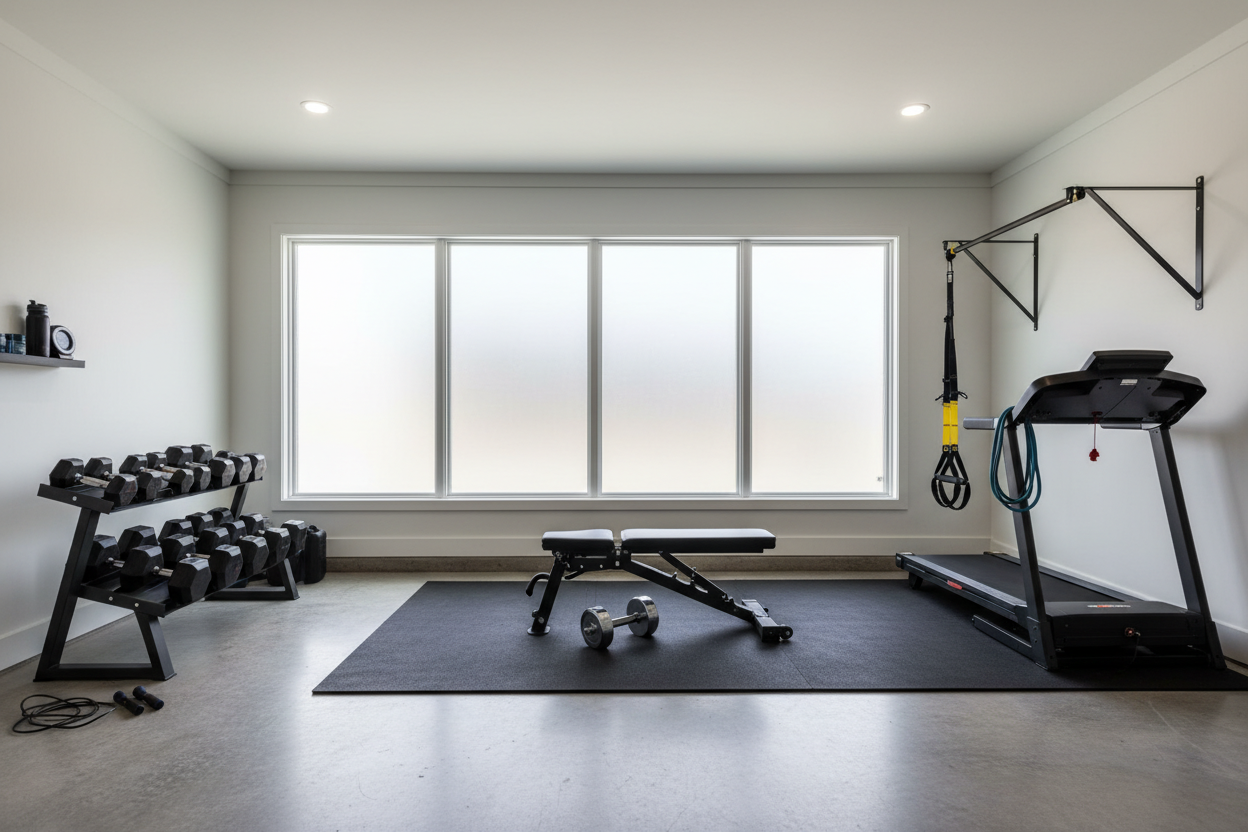
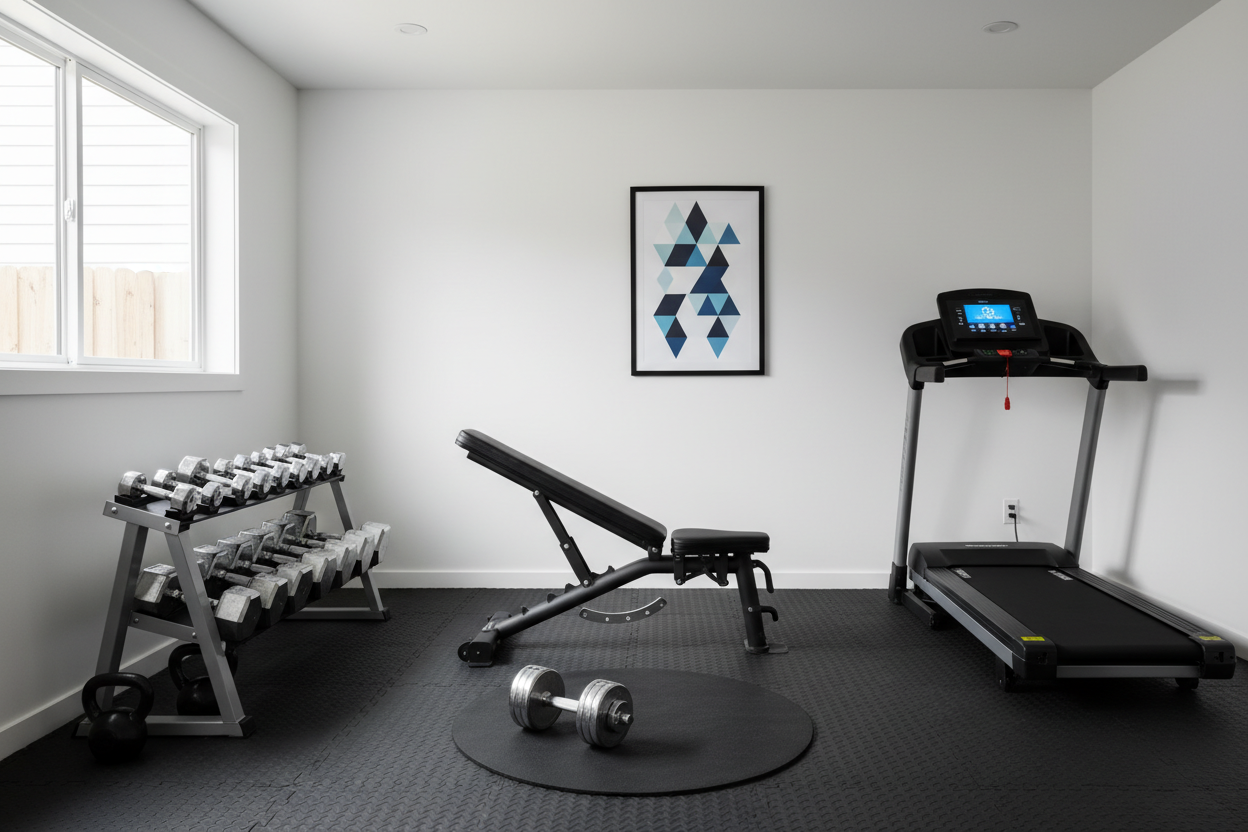
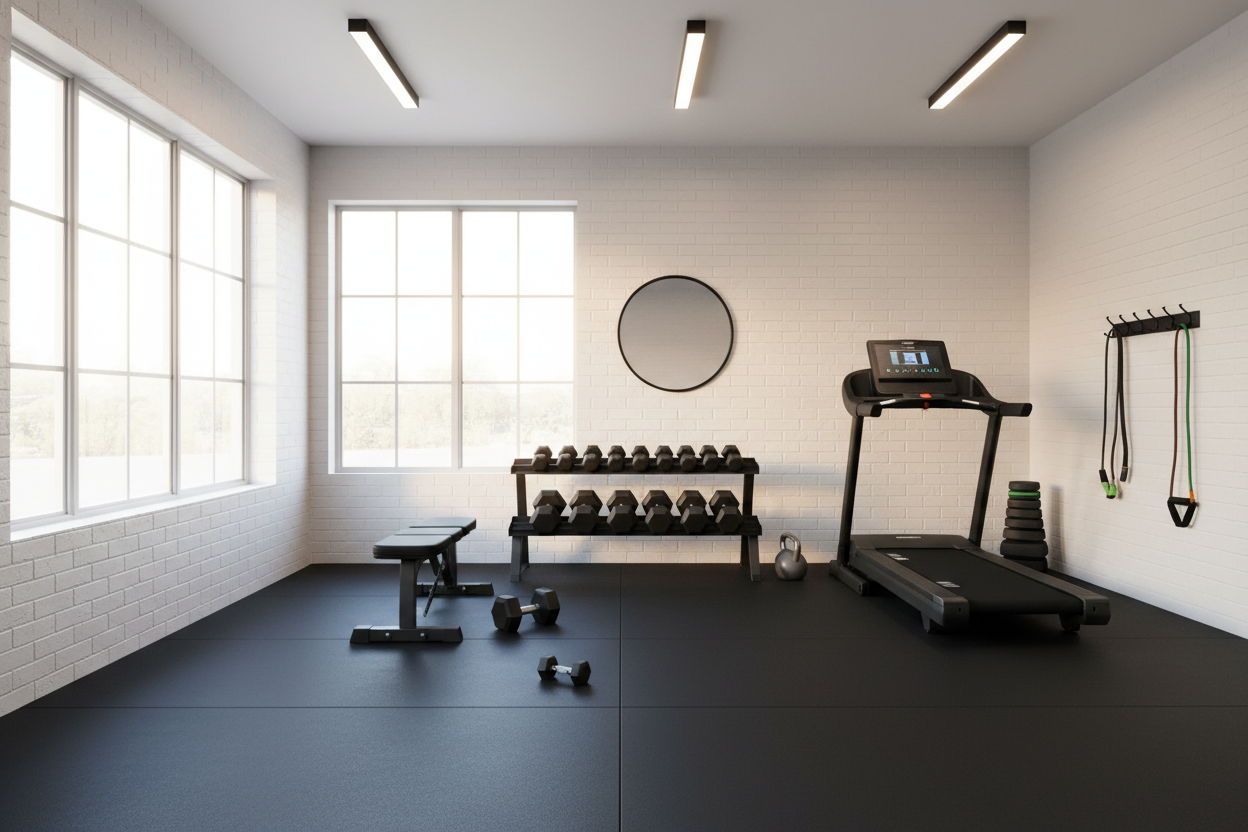
For example, you might perform heavy Romanian deadlifts, holding the stretch at the bottom, and then instantly transition to strict floor presses. Because you are moving rapidly from standing to lying down with weights in your hands, you need a stable, anti-slip surface. Doing this on a slippery hardwood floor or a sliding rug is a recipe for a twisted ankle. I always require my clients to set up reliable home gym flooring before attempting heavy PHA supersets. Shock absorption and grip are non-negotiable when you are fatigued and transitioning quickly.
What Are The Best Home Workouts For Beginners?
If you are new to this style of training, you need to know what are the best home workouts to start with so you do not burn out in the first five minutes. A beginner PHA circuit should focus on stable, multi-joint movements with slightly longer transition times.
Try this simple four-exercise block: perform 12 bodyweight squats, rest 15 seconds, and move to 10 kneeling push-ups. Rest another 15 seconds, perform 10 reverse lunges per leg, and finish with 15 resistance band rows. Repeat this entire block three to four times. The brief 15-second pauses allow your heart rate to settle just enough to maintain proper form. As your work capacity improves over a few weeks, you can cut those transition times down to zero.
Building Different Workouts At Home Using The PHA Framework
The beauty of this system is its infinite modularity. Once you understand the upper-lower concept, you can design dozens of different workouts at home just by swapping out the movement blocks. If you used dumbbells for your lower body on Monday, you might switch to explosive plyometrics like jump squats on Wednesday, paired with slow, eccentric push-ups.
To keep progressing over several months, you need to track your reps and gradually increase the difficulty. You might add a fifth exercise to the circuit, or hold a heavier dumbbell. If you want to see exactly how to map out these progressions over a multi-week timeline, I highly recommend looking into a phase-based at home workout program. Structuring your routines into clear phases ensures you do not hit a plateau after the first month.
The Foundation of the Best Home Workouts: Your Space
Continuous, high-intensity movement routines require an uninterrupted, dedicated floor space free of tripping hazards. You cannot effectively perform a PHA circuit if you have to step over a coffee table or dodge a rogue kettlebell while moving from a sprawling floor press to a wide sumo squat stance.
I always advise mapping out at least a 6x6 foot clear zone. To protect your joints and your subfloor, investing in a large exercise mat for home gym use is crucial. It keeps your sweat off the carpet, provides a designated boundary for your movements, and ensures you can drop a dumbbell safely if you hit failure during a rapid transition.
My Experience Testing PHA Training
Over the last five years, I have tested this exact protocol with dozens of online clients. I personally ran a 12-week PHA cycle using only a single pair of 5-52.5 lb adjustable dumbbells and a doorway pull-up bar. The cardiovascular conditioning I achieved rivaled my days doing heavy barbell complexes.
However, I have to share one honest downside: the systemic fatigue is brutal. Because your lungs are burning, it is incredibly easy for your form to break down on the last few reps of a lower-body movement. You have to check your ego, use slightly lighter weights than you think you need, and prioritize strict technique over speed.
Frequently Asked Questions
How many days a week should I do PHA workouts?
For most trainees, three to four days a week is ideal. Because these sessions are highly taxing on both the muscular and central nervous systems, taking a rest day or doing light active recovery between sessions yields the best results.
Can I build strength with this method?
Yes, but it is primarily geared toward hypertrophy and conditioning. Maximal strength requires heavy loads (1-5 rep max) and long rest periods (3-5 minutes), which contradicts the fast-paced nature of PHA.
Do I need heavy weights for this to work?
Not at all. The constant transitioning creates metabolic stress even with lighter loads. Bodyweight, resistance bands, or a light pair of dumbbells are more than enough to trigger a massive stimulus.