Best Beginners Workout Routine: The 20-Minute Rule
I remember sitting on the floor of my cramped one-bedroom apartment a few years ago, staring at a 60-minute bootcamp video on my laptop. I had a pair of 10-pound dumbbells, a sliver of floor space between the sofa and the TV, and absolutely zero motivation. I shut the laptop after ten minutes and ordered takeout instead. That night taught me a crucial lesson as a personal trainer: the best beginners workout routine is not about crushing your muscles for an hour. It is about tricking your brain into showing up.
When I design programs for new clients today, I use a strict 20-minute rule. We set a timer, we move continuously with good form, and when the alarm sounds, the workout is over. Period. No guilt, no unfinished checklists, and no dreading the next day's session.
Quick Takeaways
- Cap your workouts at exactly 20 minutes to build a sustainable daily habit.
- Focus on duration and movement quality rather than counting rigid sets and reps.
- Keep your workout space permanently set up to eliminate pre-workout friction.
- Scale up by adding resistance, not time, once the initial 20 minutes feels too easy.
Why the Best Beginners Workout Routine Respects the Clock
Most fitness resolutions fail by week three. People try to jump straight into five days of 45-minute, high-intensity sessions. They wake up sore, exhausted, and eventually find an excuse to skip a day. That one skipped day quickly turns into a skipped month. A good beginners workout routine respects the clock by limiting your exposure to physical stress.
By capping your session at 20 minutes, you remove the mental barrier of a grueling, hour-long commitment. You can always find 20 minutes. You can do it before your morning shower, during a lunch break, or while dinner is in the oven. The goal during your first 90 days is not to become an elite athlete; it is simply to prove to yourself that you can show up consistently.
What Is a Good Workout Plan for Beginners?
If you ask ten trainers, 'what is a good workout plan for beginners?', you will likely get ten wildly different answers involving complex splits and periodization. In reality, a successful starter plan prioritizes duration over intensity. You should leave your session feeling energized, not defeated.
When your muscles are constantly pushed to failure, your central nervous system takes a beating. This creates a subconscious aversion to training. Instead, a well-designed workout routine at home for beginners focuses on making your body feel better. We want to lubricate the joints, increase heart rate slightly, and stimulate the muscles without tearing them down completely.
The Problem with Traditional Sets and Reps
Rigid rep counts create anxiety. If a program tells you to complete 3 sets of 15 push-ups, but your arms give out at 8, you instantly feel like a failure. This makes working out feel like a chore instead of a self-care practice. Time-gating fixes this. When you operate on a timer, 8 reps in 45 seconds is just as successful as 15 reps. You work at your own capacity, resting when needed, until the clock runs out.
Building the best workout routine for beginner Success
The 20-Minute Time Gate methodology is incredibly simple. You set a timer on your phone for 20:00. You pick 3 to 4 fundamental movements. You perform them with perfect form, cycling through them at a steady pace. When the alarm sounds, you stop immediately. Even if you are in the middle of a squat, you rack the weight and walk away.
This creates a psychological phenomenon known as the Zeigarnik effect. Because you leave the task technically 'unfinished' by cutting it off mid-flow, your brain actually looks forward to returning to it the next day.
Setting Up Your Frictionless Workout Space
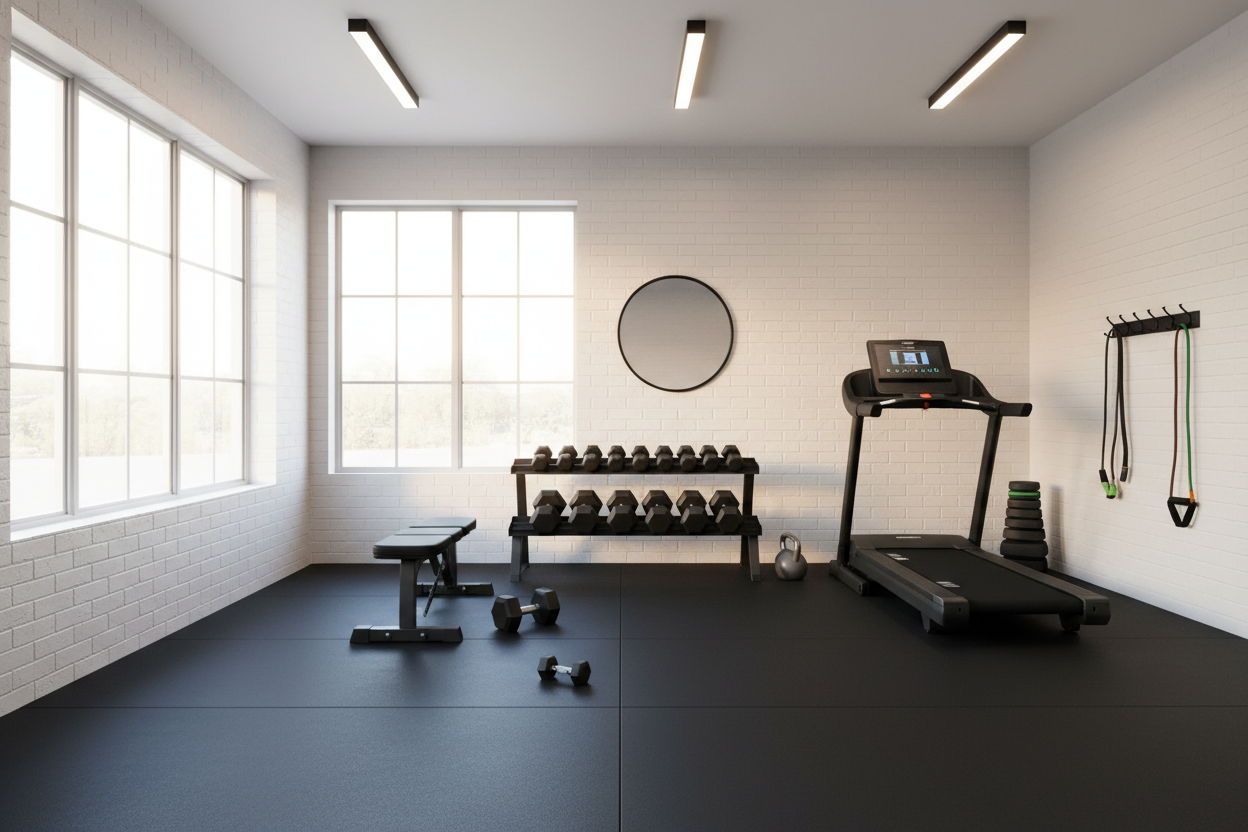
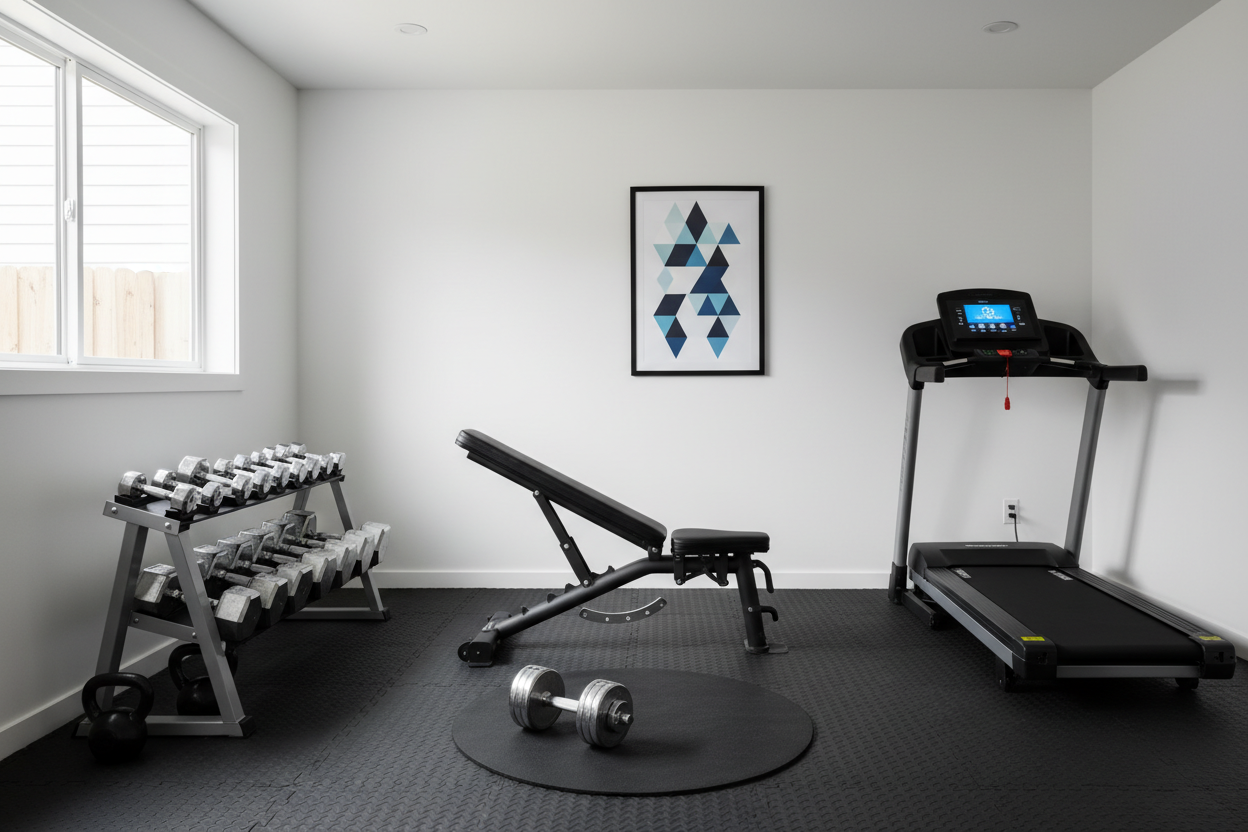
I have built dozens of home gyms for clients, ranging from basic corner setups to massive garage renovations. The biggest barrier to entry is always setup time. If you have to spend five minutes moving the coffee table and unrolling a flimsy yoga mat, you are burning precious willpower.
You need a dedicated, always-ready area. I strongly recommend putting down a permanent large home exercise mat. I personally tested a 6x8 ft mat in my own 10x10 spare room, and it completely transformed the space. It provides enough room for lateral movements and acts as a visual trigger to start your timer. The only honest downside is that thick black mats tend to attract pet hair, so keep a lint roller nearby. Having your space permanently ready means your 20 minutes is spent actually working out.
The Good Basic Workout Routine: Your 20-Minute Circuit
Let us map out a good basic workout routine you can use right now. This is a low-barrier circuit of fundamental movements. Set your timer for 20 minutes. Spend 45 seconds doing the first movement, rest for 15 seconds, and then move to the next. Repeat this cycle until the 20 minutes is up.
Movement 1: The Supported Squat
Stand facing a sturdy doorframe or hold onto the back of a heavy chair. Place your feet shoulder-width apart. Slowly sink your hips down and back, using the support to keep your chest tall. Focus on a 3-second descent, pause for 1 second at the bottom, and stand back up. The support removes the fear of falling backward, allowing you to safely improve your hip and ankle mobility.
Movement 2: The Incline Push
Instead of struggling with floor push-ups, place your hands on a stable kitchen counter or the back of a solid sofa. Your body should be at a 45-degree angle. Lower your chest to the edge, keeping your elbows tucked close to your ribs, and push back up. This builds upper body strength safely while protecting your lower back from sagging.
What Is the Best Workout Program for Beginners to Scale?
Eventually, the question shifts from 'how do I start?' to 'what is the best workout program for beginners to scale?' After three or four weeks of the 20-minute rule, your body will adapt. The circuit will feel too easy. The temptation here is to increase the timer to 30 or 40 minutes.
Resist that urge. Keep the 20-minute habit locked in, but increase the resistance. Swap the supported squats for goblet squats holding a 10-pound dumbbell. Move your incline pushes to a lower surface, like a sturdy bench, to increase the load. Once you have maxed out your basic home equipment and built an unbreakable daily habit, you can confidently graduate to a structured full body workout routine that introduces heavier weights and varied rep schemes.
Frequently Asked Questions
Can I lose weight working out 20 minutes a day?
Yes, absolutely. While diet plays the primary role in weight loss, a consistent 20-minute daily workout increases your overall daily energy expenditure, builds metabolically active muscle tissue, and regulates blood sugar levels better than sporadic, hour-long sessions.
What if I finish my circuit before 20 minutes?
In a time-gated routine, you don't 'finish' early. If you get through all your movements, you simply start back at the top of the list and keep cycling through until the 20-minute alarm sounds.
Do I need rest days with a 20-minute routine?
Because the volume is relatively low and we prioritize movement quality over muscle failure, you can safely do a 20-minute routine 5 to 6 days a week. Listen to your body; if you feel overly fatigued, use your 20 minutes for light stretching and mobility work instead.
Conclusion: Start Your Timer Today
The first 90 days of your fitness journey are entirely about building the habit. Consistency will always beat intensity. Stop worrying about finding the perfect hour in your schedule. Clear a small space, set your timer for 20 minutes, and just start moving. If you need more movement ideas to swap into your daily circuit, explore our workout hub for variations that match your current fitness level.