Home Gym Weight Equipment: The Only Setup You Actually Need
Commercial gyms are becoming increasingly frustrating. Between the waiting times for the squat rack and the questionable hygiene of the bench press, the appeal of a garage or basement setup is undeniable. But here is the problem: most people overcomplicate the process. You do not need a five-figure budget or a warehouse to build a physique that commands respect.
The truth is, effective home gym weight equipment isn't about buying the shiniest machine with a touchscreen. It is about acquiring tools that force adaptation through progressive overload. If you are tired of marketing fluff and want gear that actually works, you are in the right place.
Quick Summary: The Essentials
- Power Rack: The centerpiece for safety and compound movements.
- Olympic Barbell: Look for aggressive knurling and high tensile strength.
- Adjustable Bench: Essential for pressing and seated isolation work.
- Iron Plates: Cheaper than bumpers and easier to load heavily.
- Adjustable Dumbbells: The ultimate space-saver for accessory work.
The Foundation: Why Free Weights Win
When selecting at home lifting equipment, physics should dictate your purchase, not aesthetics. Machines lock you into a fixed path of motion. While useful for isolation, they rob you of the stabilizer muscle recruitment necessary for functional strength.
For a home setup, free weights are superior because they are versatile. A single barbell allows you to squat, deadlift, press, and row. This efficiency is critical when you are working with limited square footage. You are looking for high-ROI movements, and free weights deliver the best return on your energy investment.
Selecting Bodybuilding Equipment for Home
If your goal is purely hypertrophy (muscle growth), your needs shift slightly. Bodybuilding equipment for home must allow for isolation angles to target specific muscle heads. While the barbell builds the mass, the accessories carve the detail.
This is where adjustable dumbbells shine. Instead of a rack of fixed weights taking up an entire wall, a sturdy pair of adjustables allows you to perform lateral raises, skull crushers, and heavy rows. Combine this with a simple pulley system attached to your rack, and you have effective home bodybuilding equipment that rivals any commercial facility.
Choosing the Right Rack
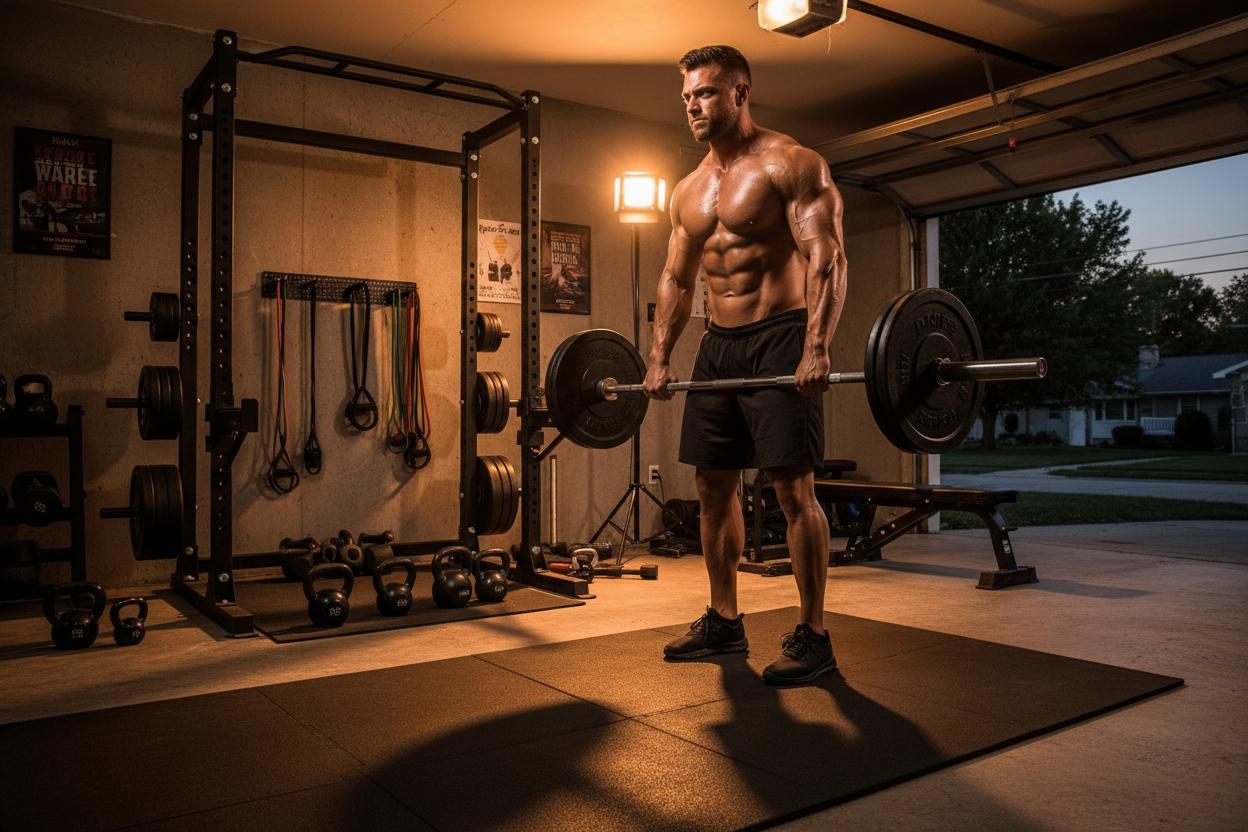
Don't skimp here. When looking at home gym workout equipment for heavy lifting, the rack is your safety net. If you fail a 300lb squat alone in your garage, the safety pins are the only thing standing between you and a serious injury. Look for 3x3 inch steel uprights and 1-inch hardware.
Common Mistakes to Avoid
The biggest error beginners make is buying "all-in-one" multi-gyms sold at big-box stores. These usually feature low-weight stacks, flimsy cables, and awkward biomechanics. They turn into expensive coat racks within six months because the movement quality is terrible.
Another mistake is underestimating flooring. You need horse stall mats (3/4 inch thick). They protect your foundation and deaden the sound of iron hitting the floor, which is vital if you have neighbors or sleeping family members.
My Training Log: Real Talk
Let me tell you something about training at home that the brochures won't mention: the temperature. I remember my first winter lifting in my uninsulated garage. I bought a cheap, smooth-chrome barbell because I wanted to save fifty bucks.
Big mistake. At 20 degrees Fahrenheit, that cheap chrome felt like an icicle, and as soon as my hands started sweating during deadlifts, the lack of proper knurling made it feel like I was gripping a wet fish. I missed a PR not because I was weak, but because the bar rolled right out of my hands.
I eventually upgraded to a bar with a raw steel shaft and aggressive "volcano" knurling. The difference was night and day. It tore up my shins and callused my hands, but the grip security gave me the confidence to add another 40 pounds to my lift. Quality gear has a tactile feel—a "bite"—that cheap gear simply lacks.
Conclusion
Building a home gym is an investment in your discipline. By focusing on essential, heavy-duty home gym weight equipment rather than flashy gadgets, you create an environment where progress is inevitable. Start with a rack, a bar, and plates. Master the basics, and the results will follow.
Frequently Asked Questions
What is the minimum space needed for a home gym?
You can build a functional setup in a 10x10 foot space. This accommodates a power rack (usually 4x4 footprint) and allows room for the barbell width (7 feet) plus room to load plates safely.
Are adjustable dumbbells durable enough for heavy lifting?
High-quality adjustable dumbbells (like iron or steel plate versions) are very durable. However, avoid dropping them from waist height, as the internal selection mechanisms can be sensitive to shock compared to solid hex dumbbells.
Do I need bumper plates or iron plates?
Unless you are doing Olympic weightlifting (cleans and snatches) where the bar is dropped from overhead, iron plates are better. They are cheaper, thinner (so you can load more), and last forever.