Home Gym Pulley System: Transform Your Space on a Budget
If you're tired of hitting a plateau with just barbells and dumbbells, you aren't alone. One of the biggest pain points for garage gym owners is replicating the constant tension and versatility of commercial cable machines without sacrificing precious floor space or draining their bank account.
That is exactly where a home gym pulley system changes the game. Whether you want to isolate your triceps, build a wider back, or perform functional core rotations, adding a compact pulley system to your existing setup bridges the gap between free weights and high-end selectorized machines. In this guide, we will cover everything you need to know to choose the perfect weightlifting pulley system for your training style.
Key Takeaways
- Space Efficiency: Most cable pulley systems can attach directly to your existing power rack, requiring zero additional floor footprint.
- Cost-Effective: A plate-loaded weight pulley system provides commercial-level tension for a fraction of the cost of a full functional trainer.
- Versatility: Easily swap attachments to perform lat pulldowns, tricep pushdowns, cable crunches, and low rows with your workout pulley system.
- Weight Capacity: Look for heavy-duty steel cables and loading pins rated for at least 250 to 300 pounds for safe progression.
Choosing the Right Cable Pulley System
Not every pulley weight system is created equal. Depending on your current equipment and fitness goals, you'll need to decide between a standalone home gym pulley machine and a rack-attached model.
Rack-Attached vs. Standalone
If you already own a squat cage, a weight rack pulley system is a no-brainer. These systems use straps and carabiners to loop over your pull-up bar, turning your rack into a highly functional lat pulley system for home gym use. Standalone wall-mounted units or dedicated towers offer more stability but require dedicated wall space and a higher budget.
Loading Pin and Cable Quality
The heart of any home gym cable pulley system lies in its hardware. You want high-strength, nylon-coated steel cables to prevent fraying and ensure a buttery smooth pull. Additionally, check the diameter of the loading pin—ensure it fits your Olympic plates so your weights don't rattle during vigorous sets on your at home cable pulley system.
Maximizing Your Space
One of the main reasons people opt for an at home pulley system is spatial economy. A full-sized functional trainer can eat up 15 square feet, while a compact home gym pulley system uses vertical space you already have.
Ideal Dimensions for Garage Gyms
For a garage gym pulley system, vertical clearance is your primary concern. You need a mounting point at least 78 to 84 inches high to get a full stretch. If you are mounting a pulley to a low ceiling basement rack, consider a dual-pulley setup so you can perform seated or kneeling exercises without bottoming out the home weight pulley system.
Unlocking New Workouts
Adding a workout cable pulley system isn't just about tricep pushdowns; it completely opens up your exercise selection.
Targeting Hard-to-Reach Muscles
Free weights are fantastic, but they rely on gravity, meaning the resistance curve changes throughout the movement. A home gym with pulley system capabilities provides constant tension. This makes it the ultimate tool for lateral raises, face pulls, and cable flyes—exercises where dumbbells often fall short at the bottom or top of the rep.
From Our Gym: Honest Take
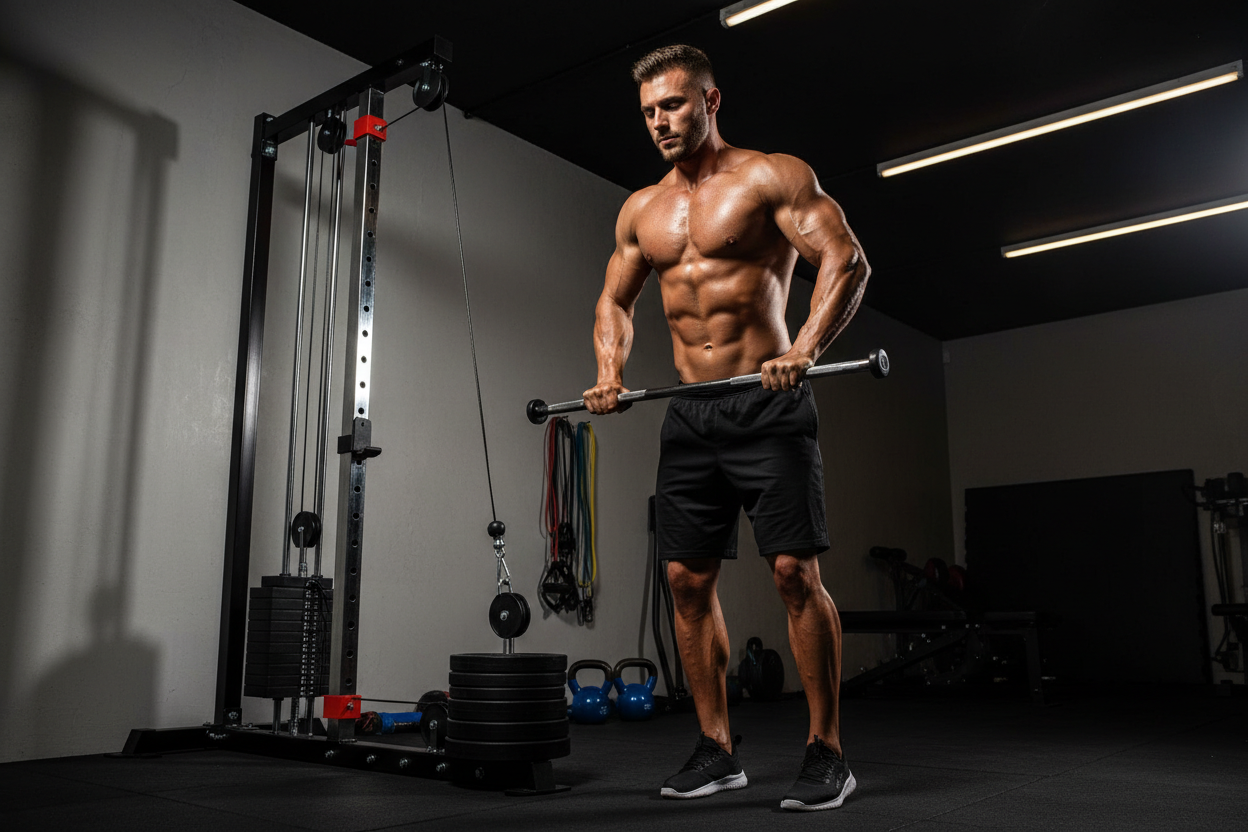
We've tested dozens of exercise pulley systems over the years, from cheap DIY hardware store builds to premium rack-integrated setups. Recently, I installed a plate-loaded weight cable pulley system on our primary power rack to see if it could truly replace our bulky standalone lat tower.
The verdict? The space savings are phenomenal. I was able to comfortably load 180 pounds onto the pin for heavy lat pulldowns. The nylon-coated cable was surprisingly smooth, though I did notice a slight pendulum swing on the weight pin if I performed the concentric phase too explosively. It's a minor trade-off; as long as you control the eccentric phase of your reps, the swing is practically non-existent. For the price, this pulley system home gym upgrade is an absolute must-have.
Frequently Asked Questions
Is a pulley system worth it for a home gym?
Absolutely. A cable pulley home gym setup is one of the most cost-effective ways to add dozens of isolation and constant-tension exercises to your routine without buying multiple expensive machines.
How much weight can a home pulley system hold?
Most quality weight pulley system home gym models feature high-tensile steel cables and loading pins rated between 250 and 300 pounds. Always check the manufacturer's weight capacity before loading heavy plates.
Can I use standard 1-inch plates with a weight rack pulley?
Many systems come with a standard 1-inch loading pin, but include a 2-inch adapter sleeve. If yours doesn't, standard plates will fit, but Olympic plates might wobble without an adapter or an Olympic-sized pin on your cable pulley system home gym.