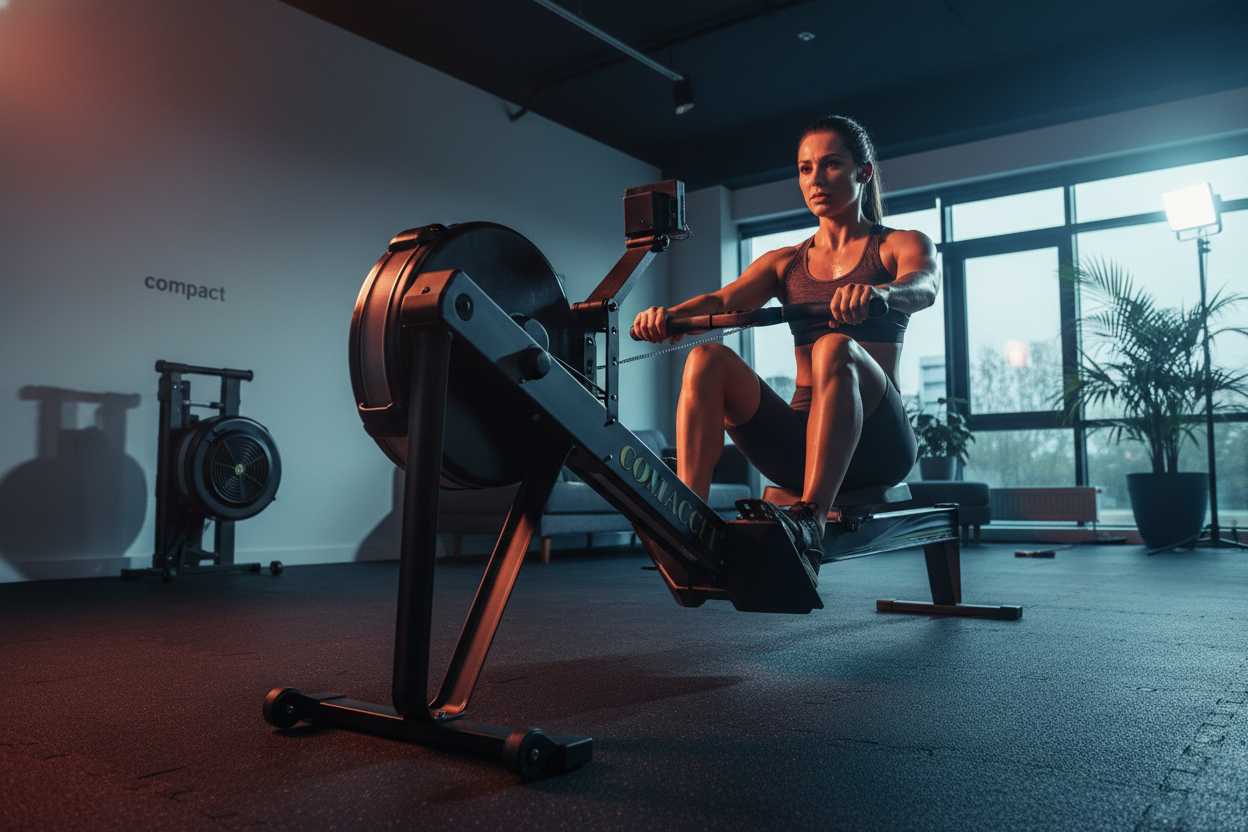
Finding the Best Compact Rowing Machine for Home: The Small Space Guide
Living in a city apartment or dealing with a shared living room often means compromising on square footage, but it shouldn't mean compromising on your cardio. You are likely here because you want the benefits of a crew workout without turning your living space into a permanent gym. The search for the best compact rowing machine for home is less about finding the smallest gadget and more about finding the right balance between structural integrity and storability.
Key Takeaways: Choosing a Rower for Small Spaces
- Measure Your Inseam, Not Just the Floor: A machine can be compact, but if the rail is too short for your legs, it is useless.
- Vertical Storage is King: The best space saving rowing machine is one that stands upright safely, reducing its footprint to that of a dining chair.
- Resistance Matters: Magnetic rowers offer the best balance of silence and size, while hydraulic pistons are the smallest but often suffer from overheating.
- Noise Level: For apartment dwellers, air rowers might be too loud; magnetic or water resistance is preferred for shared walls.
The "Footprint" Fallacy: It's Not Just About Length
When looking for the best rower for small spaces, most people obsess over the length of the machine while in use. This is a mistake. Unless you live in a closet, you likely have enough floor space to use the machine; the real problem is where it goes when you are done.
You need to differentiate between "usage footprint" and "storage footprint." The best rowing machine for small apartment living isn't necessarily a mini-rower; it's a full-sized rower with intelligent folding or upright storage capabilities. A machine that breaks in half or stands on its nose allows you to reclaim your living room instantly.
Analyzing Resistance Types for Compact Living
The mechanism that provides the drag significantly dictates the machine's size and portability. Here is the breakdown based on physics and spatial economy.
1. Hydraulic (Piston) Rowers
If you are looking for the absolute smallest, best portable rower, this is usually it. These use hydraulic cylinders under the rail. They are incredibly small and often fit under a bed. However, the rowing motion is often distinct from on-water rowing, and the pistons can leak or overheat during long endurance sessions.
2. Compact Magnetic Rowing Machines
For most users, a compact magnetic rowing machine is the gold standard. Because the resistance is generated by magnets moving closer to a metal flywheel, the housing is slim and silent. There is no massive fan cage (like on air rowers) or water tank taking up space. They are quiet enough to use while watching TV without turning the volume up, making them the best small space rowing machine for early morning workouts.
3. Compact Water Rowing Machines
A compact water rowing machine offers the best aesthetic. Standing upright, they look like wood furniture rather than gym equipment. While the water tank adds weight (making it harder to move), the vertical storage is usually very stable. The "whoosh" sound is pleasing, but consider if that noise will bother a roommate sleeping in the next room.
Portability and Durability Trade-offs
There is a direct correlation between the weight of the machine and how solid it feels during a sprint. A small portable rowing machine that weighs 30 pounds is easy to move, but it might lift off the ground if you pull hard.
When reading compact rowing machine reviews, look specifically for comments on "rail stability." If the machine utilizes a folding rail (a common space saver rowing machine feature), ensure the locking mechanism is robust. A hinge in the middle of the rail is a weak point; if it flexes while you slide over it, it ruins the stroke mechanics.
My Training Log: Real Talk on "Compact" Gear
I want to share a specific experience from when I tested a popular hydraulic "space saver" rower in my old 400-square-foot studio. On paper, it was perfect. It slid right under my sofa.
But here is the unpolished reality no one mentions in the spec sheet: Heat and The Wobble.
After about 20 minutes of moderate intensity rowing, the hydraulic pistons got scorching hot. I actually burned my calf on one when I clumsily tried to step off the machine in my cramped living room. Furthermore, because the machine was so light (to make it portable), the front stabilizer would hop off the floor every time I drove hard with my legs. I had to place 25lb dumbbell plates on the front feet just to keep it grounded. If you are a strong rower, skip the ultra-light piston models. You are better off with a slightly larger magnetic rower that stands vertically; the extra 5 inches of storage space is worth the stability.
Conclusion
Finding the best compact rowing machine for home use is about honesty regarding your available space and your fitness intensity. If you just want light movement, a hydraulic rower works. But if you want to build athleticism, prioritize a magnetic or water rower that stores vertically. Don't sacrifice the quality of your movement just to save six inches of floor space.
Frequently Asked Questions
What is the minimum space needed for a compact rower?
While machines vary, you generally need a clearance of about 7 to 8 feet in length and 2 to 3 feet in width for safe operation. For storage, the best space saving rowing machine models can occupy a footprint as small as 2 feet by 2 feet when stored upright.
Are foldable rowing machines sturdy?
It depends on the design. Machines that fold the rail in half can sometimes have a slight "bump" or flex at the junction point. Upright storage rowers (where the rail stays one solid piece but the machine tips up) usually offer better structural integrity than folding models.
Can I use a compact rower if I am tall?
This is the most critical check. Many rowing machines for small spaces shorten the rail to save space. If you are over 6'0", check the manufacturer's maximum inseam length. Your legs must be able to fully extend without the seat hitting the rear stop.