Become a Home Gym Chest Workouts Pro: Insider Tips and Tricks
Building a strong, well-defined chest does not require an expensive gym membership. With the right approach, you can achieve impressive results using your own home gym setup. Whether your goal is to increase strength, enhance endurance, or improve aesthetics, consistent and properly programmed chest exercises at home can help you reach these objectives.
Benefits of Chest Workouts in a Home Gym
Working out in a home gym offers multiple advantages. It saves time, provides comfort, and allows you to focus on your technique without distractions. Most importantly, you can tailor your training environment to meet your needs. A well-rounded chest workout home gym routine will help develop both the pectoralis major and pectoralis minor muscles, supporting better posture and upper body function.
Essential Equipment for Home Gym Chest Training
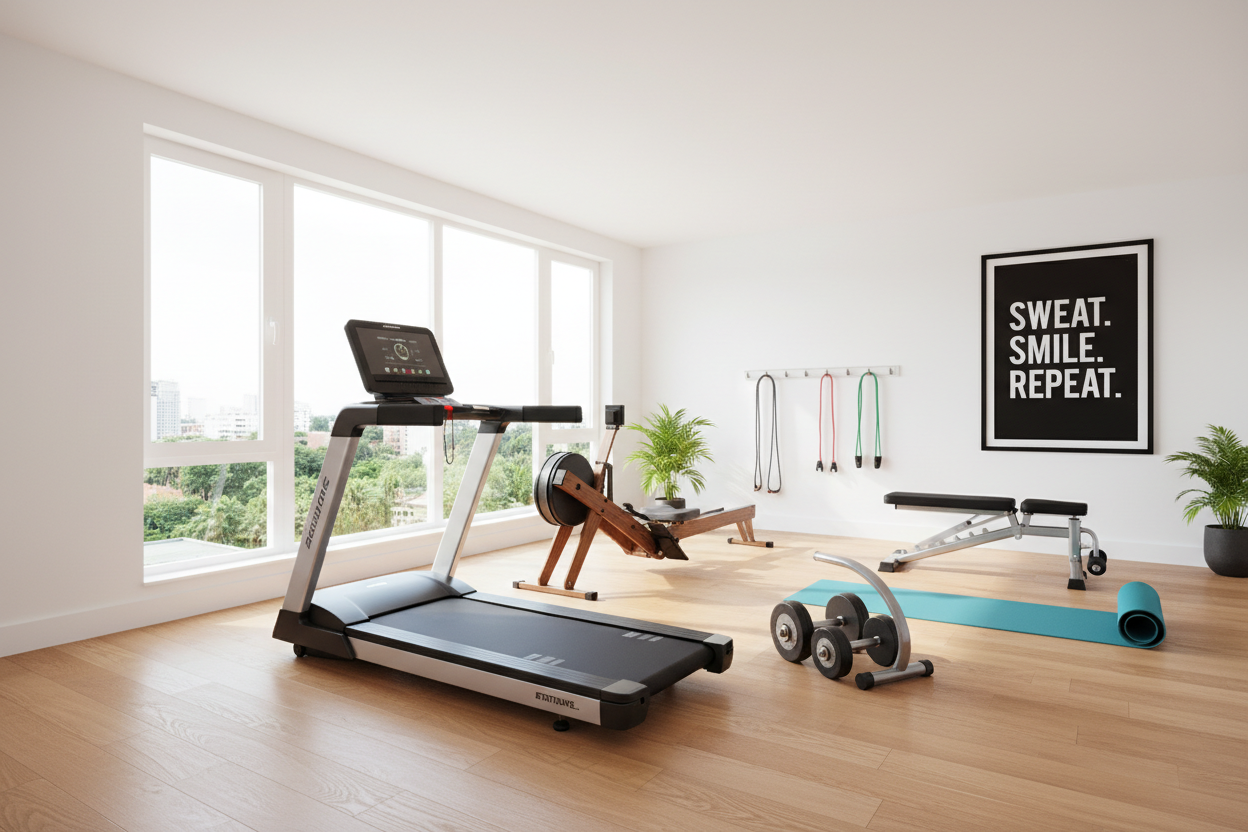
You don’t need a full professional gym to perform effective home gym exercises for chest development. A few versatile tools can make a big difference:
-
Dumbbells – Ideal for presses and fly movements.
-
Adjustable bench – Allows incline, flat, and decline positions for varied muscle targeting.
-
Resistance bands – Useful for progressive overload and warm-ups.
-
Push-up handles or bars – Provide better range of motion and reduce wrist strain.
Recommended Chest Exercises for a Home Gym
A home gym workout for chest should incorporate exercises that activate different areas of the chest for balanced growth. These exercises include:
1. Push-Ups
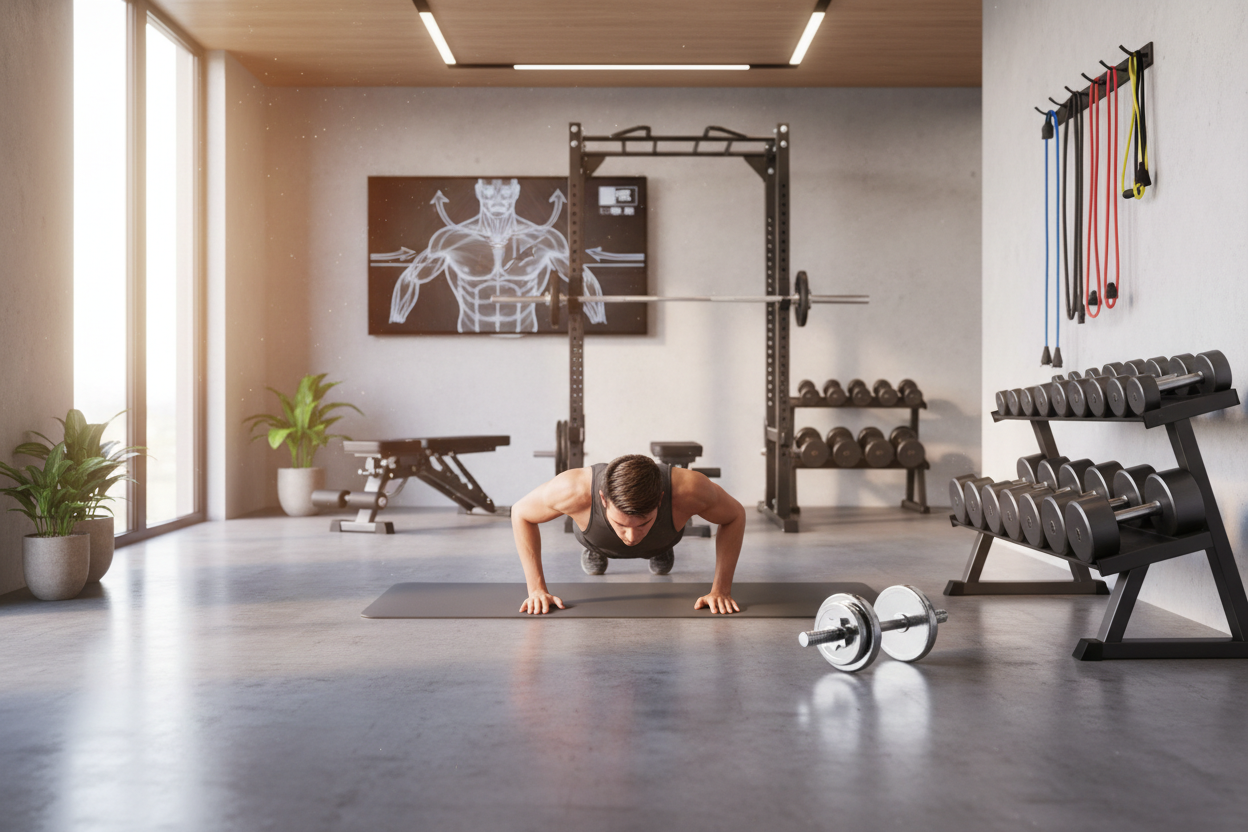
Classic and effective, push-ups target the chest, shoulders, and triceps. Variations such as incline push-ups, decline push-ups, and diamond push-ups can shift the emphasis or increase intensity.
2. Dumbbell Bench Press
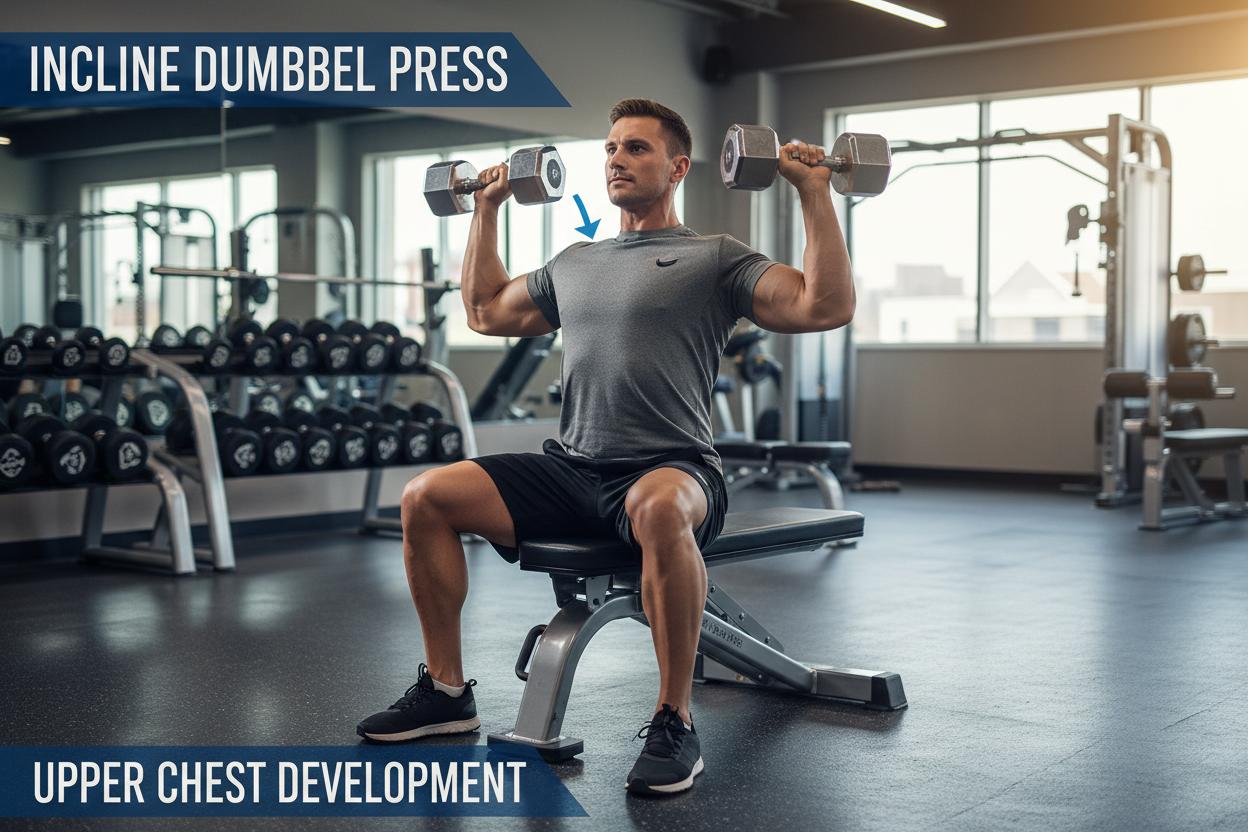
Using dumbbells instead of a barbell allows each side of the body to work independently, improving muscular balance and stability. Adjusting the bench angle changes the area of the chest being targeted, with incline focusing more on the upper chest and decline emphasizing the lower chest.
3. Dumbbell Fly
This movement isolates the chest muscles, encouraging stretch and contraction through a wide range of motion. Proper form is essential to reduce shoulder strain.
4. Resistance Band Chest Press
Resistance bands can be anchored at chest height for pressing movements, offering variable tension. This is particularly useful if you have limited space or want a portable workout solution.
5. Floor Press
Performing a press on the floor limits range of motion, reducing shoulder stress while still targeting the chest. This is a practical choice when no bench is available.
Structuring Your Chest Exercise Home Gym Routine
A balanced routine should include a mix of compound and isolation exercises. For example, start with push-ups or a bench press to handle most of your workload, then progress to fly movements for detail and separation. You can perform 3–4 exercises per session, with 3–4 sets each, keeping repetitions in the range of 8–12 for hypertrophy, or 15–20 for endurance.
Weekly Frequency
Most people achieve optimal results with two chest-focused sessions per week, allowing adequate recovery time. Recovery is essential, as muscle grows during rest, not during the workout itself.
Safety Considerations
To prevent injury, warm up thoroughly before starting your chest workout home gym routine. Stretching and light cardio prepare the muscles and joints for activity. Always maintain correct posture, avoid locking elbows during presses, and handle weights you can control for the entire set.
Personal Experience
When I first started home gym exercises for chest, I had only a set of resistance bands and a yoga mat. I was surprised by how challenging resistance band chest presses could be, especially when slowing down the motion and focusing on muscle engagement. Over time, I added dumbbells and an adjustable bench, which allowed more variety and progressive overload. My chest strength noticeably improved, and my posture benefited from the added upper body conditioning.
Tracking Progress
Documenting your workouts helps you measure improvement. Keep a training log that notes exercises performed, weights used, sets, reps, and subjective difficulty. Over time, gradually increase resistance or volume for continued gains.
Conclusion
With commitment and proper planning, a home gym workout for chest can rival the results from commercial gym routines. By combining fundamental exercises such as push-ups, dumbbell presses, and resistance band movements, you can effectively build chest strength, shape, and endurance—all from the comfort of your own space.