HIIT Workout with Equipment: Home Setup and Moves
Adding loaded resistance to interval training changes how you structure your home training zone. A balanced hiit workout with equipment combines rapid intervals of work and rest with external tools like dumbbells, kettlebells, and jump ropes. Unlike purely bodyweight routines, introducing free weights requires extra attention to footing, subfloor protection, and space management. When your room is properly arranged and your gear is matched to your training pace, you can move smoothly through high-intensity intervals while keeping your home gym organized and functional.
Essential Gear for High-Intensity Interval Sessions
Selecting gear for interval training requires balancing load and control. High intensity interval training moves at a brisk pace, which means cumbersome or slow-to-adjust tools can disrupt your training flow. The best tools for intervals are compact, quick to grip, and easy to transition between exercises.
- Dumbbells: Fixed-weight pairs or quick-change handles let you move directly from pressing movements into carrying drills. Selecting a moderate pair helps you maintain steady mechanics across every work interval.
- Kettlebells: A single kettlebell provides an ergonomic handle for dynamic hip-hinge drills like kettlebell swings and front-rack squats.
- Resistance Bands: Elastic bands take up almost no room while providing continuous tension for horizontal pulling and shoulder work.
- Jump Rope: Using a jump rope delivers rapid footwork intervals that can be alternated with weighted circuits.
When selecting items from a strength equipment collection, choose weights that allow crisp, controlled repetitions rather than maximum loads. Because each work interval involves continuous movement against a clock, managing fatigue with sensible resistance helps keep your form steady from the first round through the final set.
Setting Up Your Workout Floor for Floor Protection
Protecting your foundation is just as important as choosing the right weights. Performing a hiit workout with equipment on unprotected tile, hardwood, or thin carpet can risk scuffs, gouges, or cracks if hand weights contact the ground abruptly between rounds. Installing dedicated gym flooring creates a dependable barrier between heavy items and the underlying floor.
A supportive exercise mat provides floor protection by distributing the downward force of dropped or placed weights across a wider surface area. In addition to preserving subfloors, a durable mat supplies a textured, non-slip surface that gives shoes solid traction during lateral bounds, fast pivots, and wide stance movements. Sweat can quickly make smooth flooring slick, so choosing a dedicated 6x10ft exercise mat for home workouts offers broad coverage that stays flat during multi-directional footwork.
A large workout mat also softens joint impact when your routine transitions from standing weighted drills to floor work like mountain climbers and burpees. Having ample cushioned surface area means you can complete high-tempo movements without stepping off the padded boundary.
Effective Movements to Pair with Weights and Mats
Building a full body circuit for interval training involves pairing compound strength lifts with dynamic bodyweight transitions. Because the rest interval is short, multi-joint exercises give you broad muscular engagement without requiring complex equipment setups.
Consider rotating through three distinct movement categories within your interval schedule:
- Loaded Compound Exercises: Movements such as dumbbell thrusters, goblet squats, and suitcase deadlifts recruit large muscle groups and teach balanced core bracing under load.
- Dynamic Mat Work: Bodyweight drills like burpees, plank walks, and mountain climbers challenge core stability and grip stability against the floor.
- Power Drills: Controlled kettlebell swings and speed skater hops test balance, deceleration, and hip power.
For inspiration on blending structured lifting rounds with cardio, exploring a kickboxing and weights workout guide demonstrates how strike combinations and dumbbell complexes can be woven into a cohesive routine. If you ever need to train without weights on recovery days, reviewing a no-equipment kickboxing workout guide provides ideas for challenging core conditioning that relies purely on bodyweight and open floor space.
Room Arrangement and Safe Equipment Spacing
Fast-paced hiit training requires an intentional room setup. When transitioning between exercises with only brief pauses, leaving weights scattered across your main movement path can create tripping hazards. Structuring your space into distinct zones keeps intervals fluid and organized.
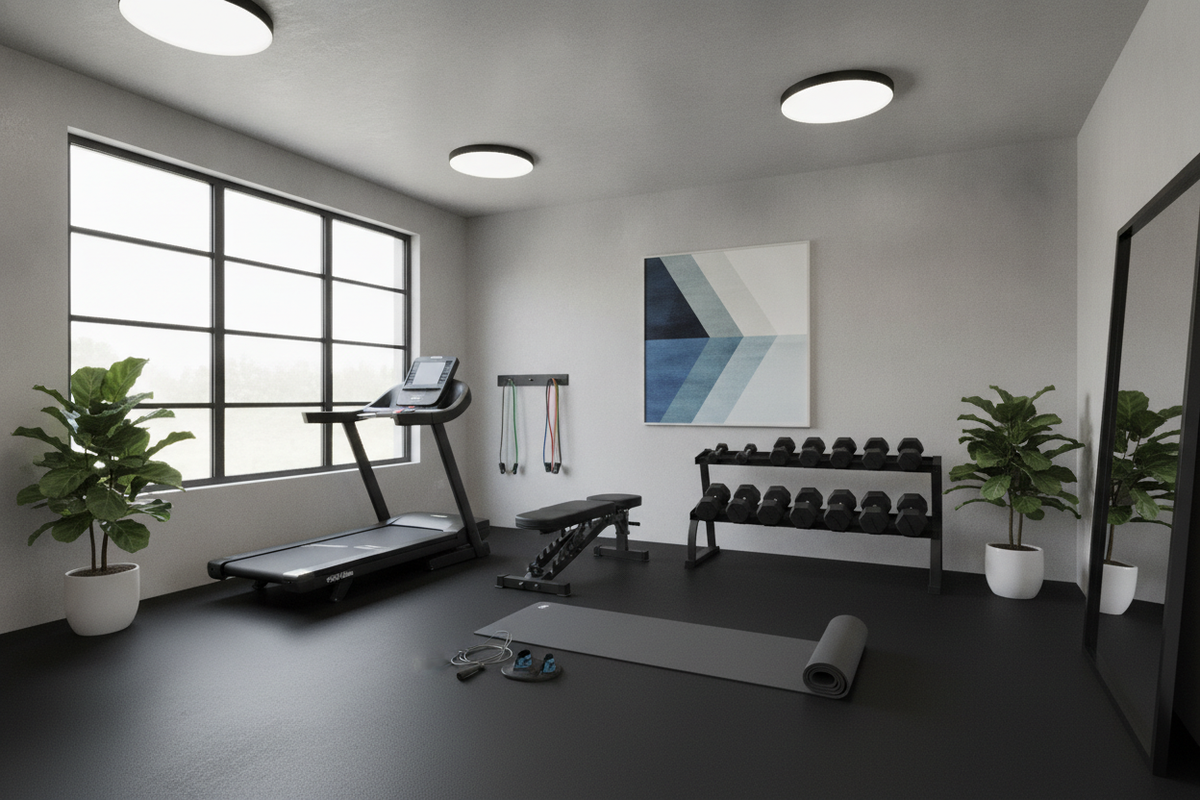
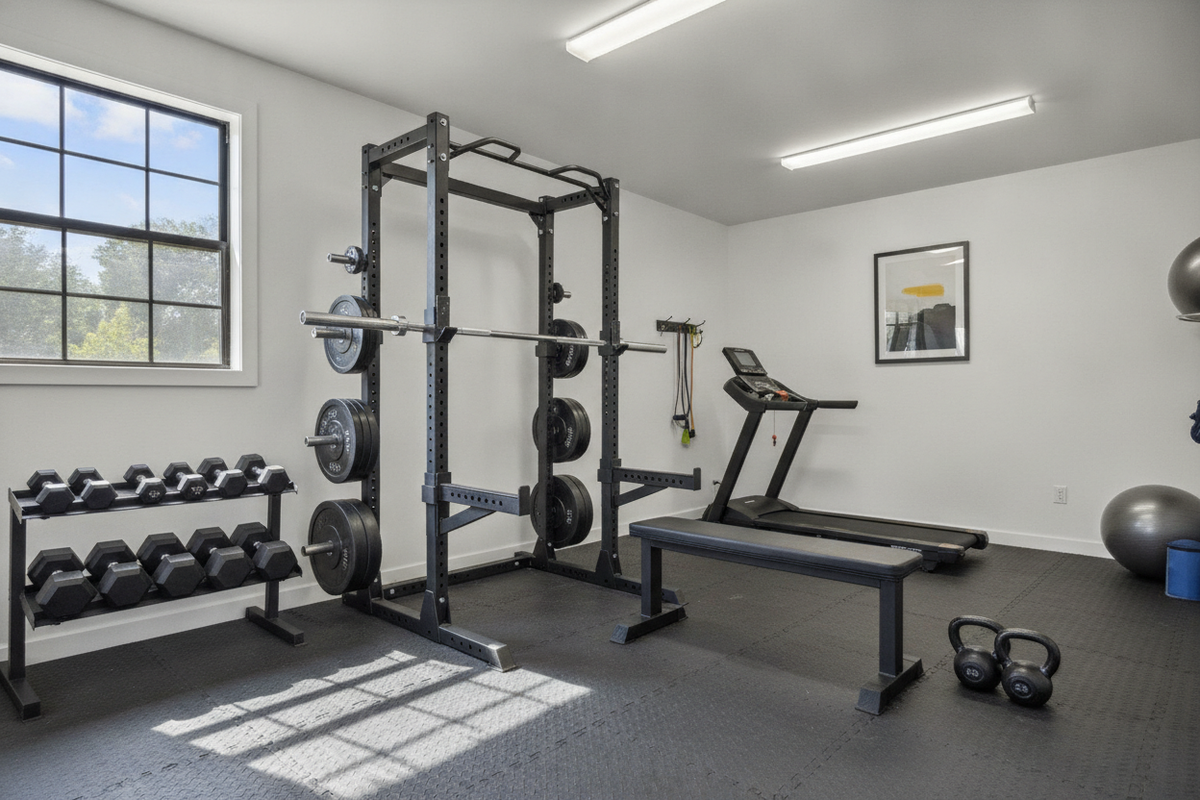
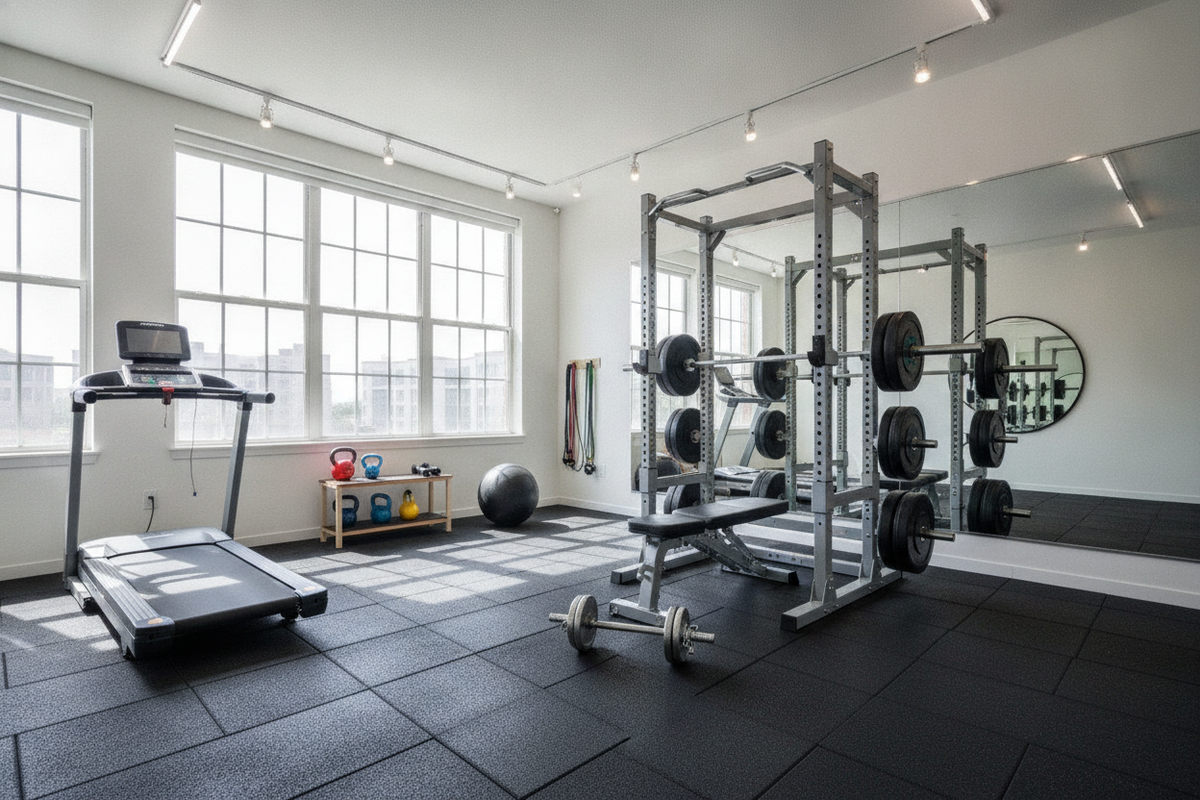
First, designate an active movement zone on your main gym flooring. This central area should remain completely clear of loose items so you can perform jump rope intervals, broad steps, and side lunges without hesitation. Position your free weights in an adjacent staging zone along the outer border of the mat. Placing dumbbells and kettlebells just beyond your active footwork zone ensures they remain easy to reach during work transitions without cluttering your footing.
If your room allows, laying out a secondary surface like a 6x10ft yoga and exercise mat creates a dedicated station for ground-level ab circuits, stretches, and mobility drills. Having a secondary station means you can transition immediately into supine or kneeling movements without needing to shift heavy weights off your primary cardio pad.
Caring for Flooring and Equipment After Sweaty Sessions
High-tempo intervals generate significant perspiration, making regular mat maintenance an essential part of your routine. Preserving both your flooring and your strength equipment requires simple, consistent habits after every session.
After completing your final rest interval, use a clean towel to remove standing moisture from rubber, vinyl, or dense foam mats. Non-porous mat materials benefit from periodic wiping with warm water and mild dish soap to clear residual skin oils and sweat resistance build-up. Allow the mat to air dry fully before rolling it up or placing heavy items back on top.
Equipment storage also plays a role in extending the life of your training surface. Avoid storing heavy dumbbells or kettlebells in the exact same spot on an exercise mat for long stretches, as continuous localized weight can create deep indents in dense foam. Returning weights to a dedicated rack or floor stand between workouts preserves both your grip surfaces and your training floor for years of consistent use.