HIIT Workout for Stamina: Interval Conditioning Blueprints, Movement Mechanics, and Home Floor Stability
Introduction: Rethinking High-Intensity Training for Long-Lasting Stamina
High-intensity intervals are frequently associated with all-out exhaustion, yet developing sustainable athletic stamina requires a more strategic methodology. When the objective is expanding work capacity, a hiit workout for stamina must balance elevated output with repeatable movement quality. Rather than pushing directly toward mechanical failure, athletes benefit from structuring intervals that tax the cardiovascular system while allowing sufficient recovery for sharp, coordinated footwork.
Building durable conditioning at home introduces distinct variables. In addition to selecting complementary exercises and managing work-to-rest intervals, athletes must account for the physical training environment. Sustaining explosive movement across repeated sets demands dependable traction, shock absorption, and sufficient surface area to support multi-directional changes of direction.
Core Frameworks: Structuring High-Intensity Interval Training for Endurance
Executing effective high intensity interval training for endurance requires careful pacing management. Traditional sprint intervals often rely on short bursts followed by extended rest, targeting peak anaerobic power. In contrast, hiit endurance training emphasizes sustained sub-maximal surges that keep the heart rate elevated across longer training blocks.
- Aerobic-Biased Intervals: Moderate work intervals paired with active recovery allow the cardiovascular system to clear metabolic byproducts while keeping the athlete moving continuously.
- Density Conditioning: Completing fixed movement volumes within structured time caps helps build pacing discipline and fatigue resistance.
- Ascending or Descending Ladders: Modulating work intervals across a session challenges mental focus and helps athletes gauge energy reserves under accumulated fatigue.
By treating hiit for endurance as a skill in energy distribution rather than pure exertion, home gym athletes can sustain higher movement velocity and cleaner mechanics throughout full conditioning sessions.
Movement Sequencing: Alternating Biomechanical Demands to Maximize Output
A frequent error in high intensity endurance workouts is clustering movements that exhaust the same primary muscle groups in rapid succession. When local muscular fatigue sets in prematurely, overall cardiovascular output drops before the conditioning objective is achieved.
To maintain elevated heart rates without technical breakdown, structure circuits by alternating primary biomechanical patterns:
- Lower-Body Explosive to Upper-Body Dynamic: Pairing exercises like jumping lunges or kettlebell swings with push-up variations or dynamic mountain climbers distributes muscular strain while sustaining systemic demand.
- Sagittal to Frontal Plane Transitions: Alternating forward-and-back motions with lateral skaters or side bounds challenges balance, hip stability, and lateral foot drive.
- Standing to Ground-Based Transitions: Moving quickly from upright footwork to floor-based core bracing engages the entire kinetic chain and elevates the overall cardiovascular stimulus of the hiit workout for endurance.
Floor Traction and Joint Cushioning: The Foundation of High-Impact Conditioning
Dynamic footwork, bounding, and rapid burpee transitions generate substantial ground reaction forces. Conducting high-impact conditioning on unyielding concrete or slick hardboard surfaces can quickly lead to joint irritation and compromised footing as sweat accumulates.
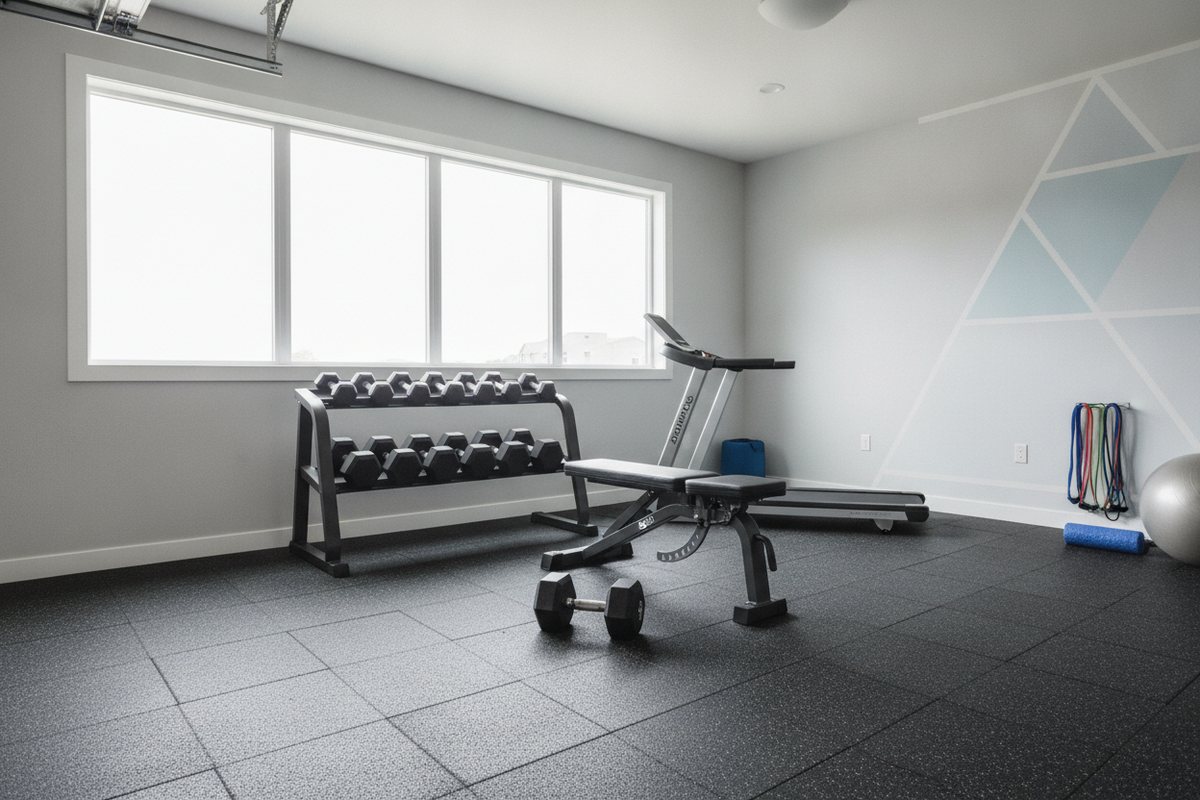
A dedicated, high-density workout product mat provides a supportive barrier that dampens impact shock across repeated landings. Furthermore, textured mat surfaces help prevent lateral slipping during sharp directional changes, giving athletes the confidence to plant firmly and drive through each interval.
Home Gym Staging: Equipment Placement, Spatial Clearance, and Surface Care
Sustaining continuous flow during hiit endurance sessions requires a thoughtfully organized perimeter. Unplanned pauses to move stray weights or readjust slipping floor pads interrupt interval pacing and diminish the intended cardiovascular training effect.
To maintain an efficient training layout, organize auxiliary gear using dedicated storage and staging items from a training collection. Keep dumbbells, resistance bands, and hydration tools positioned along the perimeter of your primary exercise area. Additionally, regularly wiping down mat surfaces between high-volume sessions removes dust and perspiration, ensuring the floor retains optimal grip for subsequent workouts.
Progressive Conditioning Routines: Sample Interval Templates and Progression Blueprints
Conditioning adaptations occur through structured progression rather than random variety. Below are two modular conditioning templates designed to build work capacity across different training modalities.
Template 1: Multi-Planar Bodyweight Conditioning
- Lateral Skater Bounds: Dynamic lateral drive focusing on soft landings and single-leg deceleration.
- Bear Crawl to Plank Taps: Controlled shoulder stability and anti-rotational core engagement.
- Split Squat Jumps: Explosive vertical drive alternating stance under moderate interval timing.
- Hollow Body Flutters: Sustained trunk tension and steady breathing control.
Template 2: Hybrid Strength and Impact Conditioning
Integrating light external loads with dynamic bodyweight drills creates a demanding hybrid stimulus. Following a structured workout high hiit guide that combines rhythmic striking drills with light resistance helps train rhythm, rotational power, and sustained cardiovascular stamina.
Progress these routines over time by gradually reducing recovery periods, adding one additional round per circuit, or increasing movement density while strictly preserving movement form and landing mechanics.