Health-Related Fitness Activity: Upgrading Rest Days
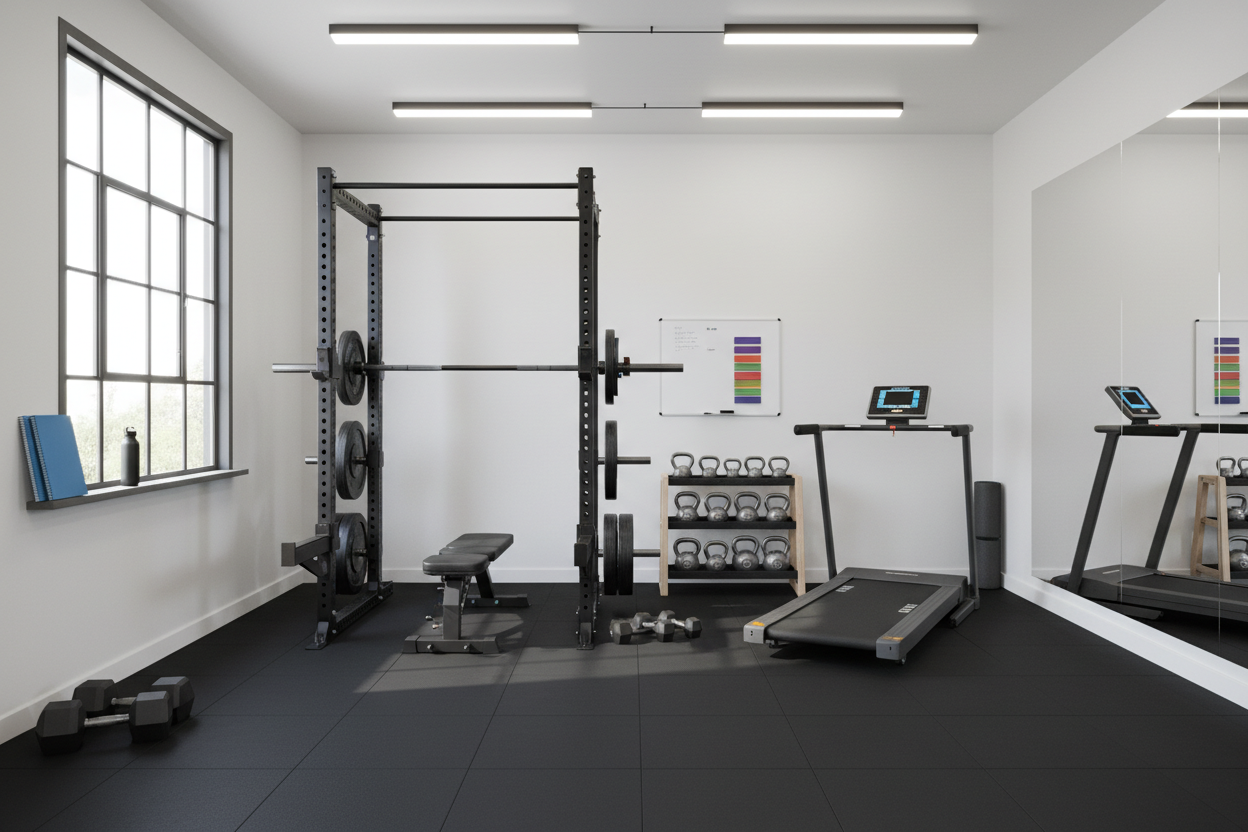
I remember my first apartment gym setup vividly. It was a cramped 10x10 spare bedroom where I barely managed to squeeze in a half-rack, a flat bench, and a set of 5-52.5 lb adjustable dumbbells. After a grueling session of heavy deadlifts and squats, my default reaction was to crash on the couch for the next 24 hours. I thought sitting completely still was the best way to heal. Instead, I would wake up the next morning feeling stiffer than a wooden plank. It took me years of training clients in their own garages and basements to realize that integrating a low-intensity health-related fitness activity on off days is the actual secret to faster recovery.
When you train at home, the boundary between your workout space and your relaxation space is non-existent. You can finish a heavy 5x5 lifting protocol and be sitting at your home office desk three minutes later. This lack of transition time often leads to extreme sedentary behavior on rest days. By swapping passive rest for intentional, light movement, you pump nutrient-rich blood into damaged muscle tissues without taxing your central nervous system.
Quick Takeaways
- Passive resting often increases muscle stiffness and delays the clearance of metabolic waste.
- Active recovery should keep your heart rate in Zone 2 (roughly 120-140 BPM) to avoid cutting into strength gains.
- You do not need expensive cardio machines; a backpack with 20 lbs of books or a simple jump rope works perfectly.
- Tracking morning resting heart rate (RHR) helps dictate how intense your recovery day should actually be.
The Problem with Passive Rest Days at Home
When you train in a garage or spare room, convenience is your biggest advantage, but it is also a trap. It is incredibly easy to hit a heavy pull day, walk ten feet to your kitchen, and then sit on the sofa for the remainder of the weekend. This completely sedentary approach to a rest day actually stalls your recovery timeline. Your central nervous system absolutely needs a break from heavy loads, but your muscles and joints desperately need blood flow to heal.
Passive rest leads to blood pooling and stiffness. When you perform heavy resistance training, you create micro-tears in the muscle fibers and build up metabolic byproducts. If you just sit still for 24 hours, your body relies solely on its baseline circulation to clear that waste. For home gym owners, this stiffness is often compounded by working from home. Sitting in an ergonomic chair for eight hours after doing heavy Romanian deadlifts is a recipe for locked-up hamstrings and a stiff lower back.
I have seen dozens of clients hit a plateau simply because their rest days were too passive. They would complain about lingering delayed onset muscle soreness (DOMS) that lasted three or four days, completely throwing off their programming. Once we replaced couch surfing with light, purposeful movement, their DOMS decreased significantly. They came back to their next heavy lifting session feeling lubricated and ready to produce force, rather than spending 30 minutes just trying to warm up their creaky joints.
What Defines a Health-Related Fitness Activity?
In the fitness industry, we generally divide training into two buckets: skill-related and health-related. Skill-related fitness focuses on performance metrics like power, speed, agility, and reaction time. Think of max-effort box jumps, heavy one-rep max snatches, or sprinting. These are highly demanding on your central nervous system and require significant recovery time. They have no place on a rest day.
On the flip side, foundational health related physical fitness activities focus on cardiovascular endurance, muscular endurance, flexibility, and body composition. For the home gym athlete, these are the low-barrier movements that keep your engine running efficiently without burning out the transmission. We are talking about activities that elevate your heart rate slightly, require very little mental psych-up, and can be done entirely within the footprint of your home or neighborhood.
The goal here is not to hit a new personal record. If you are breathing so hard that you cannot hold a conversation, you have crossed the line from recovery into a conditioning workout. A true restorative activity should leave you feeling better and more energized at the end of the session than you felt at the beginning. It is about building a robust aerobic base so your body can efficiently deliver oxygen to your muscles, which directly translates to better endurance during your heavy lifting sets.
Top Low-Impact Activities for the Home Gym
You do not need a massive commercial treadmill to get a good sweat on your off days. The best restorative activities require minimal setup, demand very little from your central nervous system, and can be executed right in your living room or driveway. Here are my top recommendations for home gym owners looking to upgrade their recovery.
Rucking and Weighted Carries
Rucking is simply walking with a loaded backpack. It is one of the most effective, low-impact ways to build cardiovascular endurance while simultaneously strengthening your core and postural muscles. I usually tell clients to toss a 20 to 30-pound dumbbell or a few heavy textbooks into a sturdy backpack. You do not need a specialized weighted vest to start. A brisk one-to-two-mile walk around your neighborhood with this light load elevates your heart rate just enough to flush out the legs without causing joint impact. If the weather is terrible, grab two moderate kettlebells and do farmer's carries in laps around your garage. It takes ten minutes and works wonders for your grip and trap recovery.
Mobility Flows and Yoga
Heavy lifting inherently tightens you up. Squats, bench presses, and deadlifts all contract muscles under heavy loads, which can limit your range of motion over time if not addressed. Using a 15 to 20-minute bodyweight flexibility routine is the perfect antidote. You do not need to learn complex yoga poses. Simple movements like the world's greatest stretch, cat-cow transitions, and deep goblet squats with a light 10-pound weight to pry the hips open are incredibly effective. Doing this on a basic yoga mat in the middle of your 6x6 foot lifting space counteracts the stiffness from heavy sessions and keeps your joints healthy for the long haul.
Zone 2 Steady-State Cardio
Zone 2 cardio is the holy grail of active recovery. You want to maintain a heart rate of roughly 120 to 140 BPM for 30 to 45 minutes. At this intensity, your body primarily burns fat for fuel and builds mitochondrial density, which speeds up your overall recovery capacity. You can achieve this easily at home. A basic jump rope routine, brisk walking, or a simple stationary bike works perfectly. The key is to keep the resistance low. If you are using a fan bike, do not push the pace; just keep the pedals turning at a conversational pace to flush the lactic acid out of your quads.
Programming Activities Without Overtraining
The biggest mistake I see home gym owners make is turning their active recovery day into another intense workout. When you have all your equipment staring at you from the garage, it takes discipline to do a light 20-minute session and then walk away. To avoid overtraining, you need to schedule these lighter activities strategically between your heavy lifting days.
If you run a standard four-day upper/lower split, you have three rest days to play with. I recommend making two of those days active recovery, and leaving one day as a complete, genuine rest day where you just do normal daily tasks. For example, if you squat heavy on Monday, Tuesday is the perfect day for a 30-minute Zone 2 stationary bike ride or a light ruck. Your legs will be sore, and the low-resistance movement will push blood into the quads and hamstrings to speed up the healing process.
The beauty of home training is progressing without new gear. You do not need to buy a $1,500 rowing machine to get better at active recovery. You can increase the intensity of your recovery days slightly by adding five minutes to your mobility flow, or throwing an extra five pounds into your rucking backpack. Micro-dosing this recovery ensures you are improving your cardiovascular health without dipping into the energy reserves you need for your next heavy deadlift session. Keep the volume low, keep the intensity conversational, and listen to your joints.
Tracking Your Health Metrics at Home
How do you know if your active recovery is actually working, or if you are just adding junk volume to your week? You have to track your metrics. You do not need a lab to monitor your recovery; a basic smartwatch or even a chest strap heart rate monitor gives you all the data you need. The two most important metrics for home gym owners to watch are Resting Heart Rate (RHR) and Heart Rate Variability (HRV).
Your RHR should ideally drop over time as your cardiovascular base improves. When I started incorporating strict Zone 2 work on my rest days, my morning RHR dropped from 65 BPM to 58 BPM over three months. If you wake up and your RHR is five to ten beats higher than normal, it is a clear sign your central nervous system is fatigued. That means your planned active recovery day should probably be downgraded to a simple 10-minute stretching routine.
Similarly, tracking basic mobility milestones is a great subjective measure. Can you touch your toes easier on Friday than you could on Monday? Do your shoulders ache less when you reach overhead? These subjective markers prove your routine is working. If you find your current routine is getting stale, you can always explore other activities for health related fitness to keep things engaging. The data does not lie. If your strength numbers are going up and your resting heart rate is going down, your rest day programming is dialed in perfectly.
Trainer's Notes: My Experience Testing Home Recovery Gear
Over the years, I have tested dozens of recovery tools in my own garage gym. A few years ago, I bought a cheap magnetic resistance folding bike off the internet, thinking it would be the ultimate space-saving active recovery tool. It folded up to the size of an ironing board and fit right next to my squat rack.
The reality? It was terrible. I weigh 210 lbs, and the bike wobbled dangerously anytime I pedaled over 15 mph. The seat was rock hard, leading to saddle soreness that actually ruined my leg drive for squats the next day. The resistance levels were erratic, making it impossible to hold a steady Zone 2 heart rate. The honest downside to cheap home cardio gear is that it often causes more mechanical frustration than actual physical benefit.
That experience is exactly why I heavily favor rucking and bodyweight mobility flows for home gym owners. A sturdy backpack and a pair of old dumbbells cost almost nothing and provide a much smoother, more reliable cardiovascular stimulus than a wobbly, budget cardio machine. Save your home gym budget for high-quality barbells and plates, and use your neighborhood for your aerobic base building.
Building Your Active Recovery Routine
Transitioning from passive couch rest to an active recovery routine does not require a massive schedule overhaul. Start by picking just one day this week to implement a 20-minute session. Choose an activity that has zero barrier to entry. If it is raining, pick a mobility flow in your living room. If it is sunny, load up a backpack and walk around the block.
Here is a simple template you can steal for your next off day: Start with five minutes of deep diaphragmatic breathing to lower your stress levels. Follow that with ten minutes of dynamic stretching, focusing on the hips and thoracic spine—the two areas that take the biggest beating during home garage workouts. Finish with 15 to 20 minutes of steady-state movement, like a brisk walk or light kettlebell carries. Keep your heart rate under 140 BPM.
By treating your rest days with the same intentionality as your heavy lifting days, you will notice a massive drop in joint stiffness and a sharp increase in your overall work capacity. Stop letting passive rest days steal your gains, and start moving.
Frequently Asked Questions
How long should an active recovery session last?
Keep it between 20 and 45 minutes. Anything shorter might not generate enough blood flow, and anything longer risks dipping into your energy reserves and becoming a full conditioning workout.
Can I lift light weights on a rest day?
Yes, but keep the intensity extremely low. Think 30-40% of your one-rep max for high reps (15-20). The goal is to pump blood into the muscle, not to reach muscular failure or stimulate hypertrophy.
Does walking count as active recovery?
Absolutely. Brisk walking is one of the best, most accessible forms of active recovery. It promotes circulation, aids in digestion, and requires zero recovery time, making it perfect for the day after heavy squats or deadlifts.