Gymnasium Wood Floor Explained: Is It Worth the Cost?
If you've ever played a pickup game on a dead, concrete-backed court, your knees and lower back already know why proper flooring matters. Whether you're building a dedicated basketball half-court in your backyard barn or outfitting a multi-use training facility, installing a true gymnasium wood floor completely changes the way your body responds to impact.
But residential and commercial buyers often underestimate what goes on beneath the surface. From subfloor mechanics to humidity control, choosing the right wood gym floor is a massive investment. In this guide, we'll break down everything you need to know to choose, install, and maintain a professional-grade athletic surface.
Key Takeaways
- Shock absorption is paramount: A true sports flooring system relies on the subfloor, not just the wood, to protect athletes' joints.
- Maple is king: Hard maple remains the industry standard for any hardwood gym floor due to its tight grain and splinter-resistance.
- Climate control is non-negotiable: Wood expands and contracts; proper HVAC planning is required before installation.
- Weightlifting requires protection: You must use home gym mats over hardwood in any heavy lifting zones to prevent catastrophic splintering.
The Anatomy of Athletic Flooring Systems
Why Hard Maple Dominates the Market
When you step onto a classic wood sports floor, you're almost certainly stepping on hard maple. Unlike oak or pine, maple has a remarkably dense, tight grain. This structural density means it resists splintering and provides a highly uniform bounce for basketballs. Whether you are looking at commercial athletic flooring systems or premium home gym hardwood flooring, maple offers the best balance of longevity and high-impact performance.
The Magic is in the Subfloor
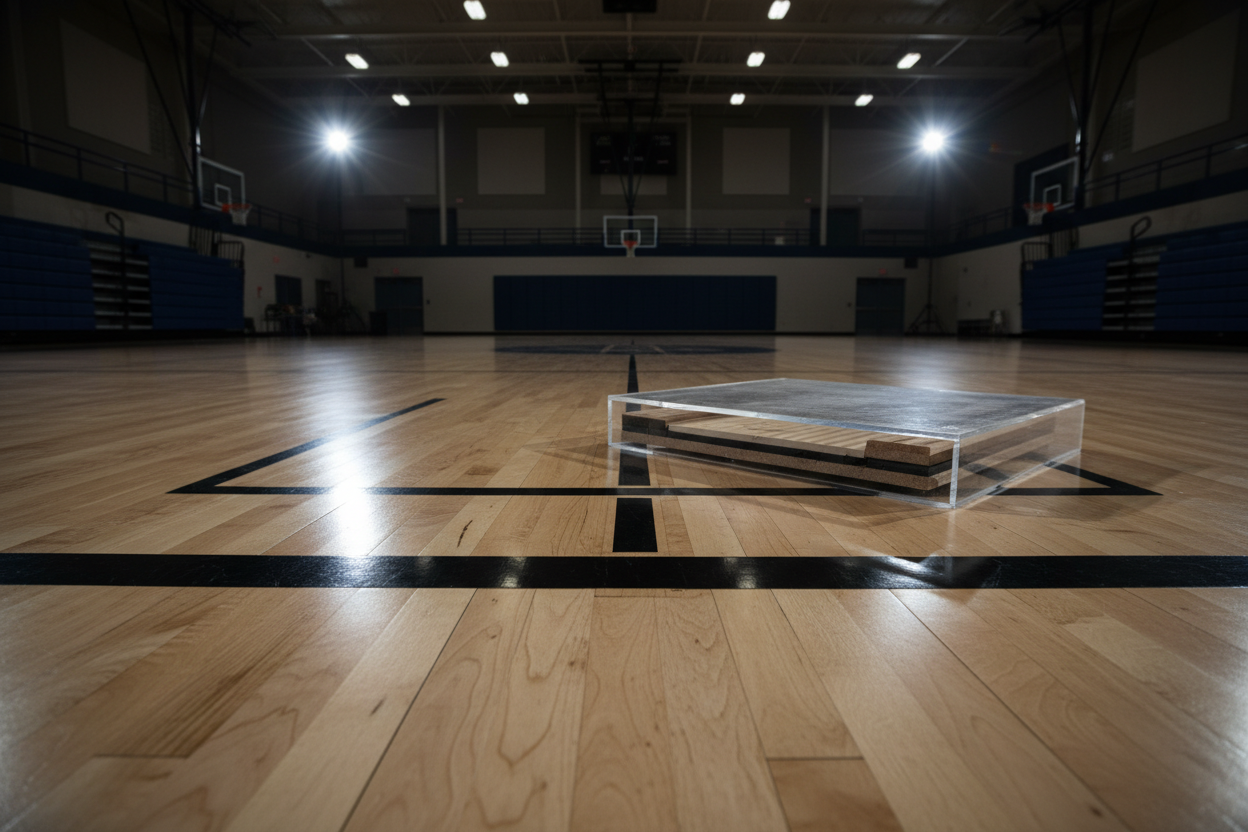
A beautiful hardwood gymnasium flooring setup is useless if it's laid directly over concrete. The 'give' you feel when landing a jump shot comes from the specialized subfloor. Modern gym wood flooring systems utilize complex layers of vapor barriers, resilient padding (often rubber or foam pads), and sleeper panels. This creates lateral foot-plate movement and vertical shock absorption, drastically reducing shin splints and joint fatigue for anyone training on sports wood.
Planning Your Space: Home Gym Wood Floor Installations
Garage and Basement Considerations
Bringing a wood floor for gym use into a residential space requires careful clearance planning. A full sports flooring system can add anywhere from 1.5 to 3 inches of height to your floor. If you're installing fitness wood flooring in a basement with 8-foot ceilings, that lost vertical space can impact overhead presses or jump rope clearance. Additionally, basements require aggressive moisture mitigation to prevent the wood athletic flooring from warping.
Creating Multi-Use Zones
Many homeowners want the aesthetic of gym floors wood but also want to move heavy iron. You cannot drop deadlifts directly on a wood gymnasium flooring surface. If you are creating a hybrid space, you must plan for heavy-duty rubber zones. Using home gym flooring over hardwood—specifically 3/4-inch vulcanized rubber mats—is the only way to protect the delicate polyurethane finish of your hardwood sports flooring from dropped dumbbells and sliding power racks.
From Our Gym: Honest Take
When we installed a 600-square-foot sports hall wooden flooring setup in our testing facility's warehouse, the difference in our plyometric training was night and day. The squeak of the sneakers and the energy return on box jumps felt incredible. However, I'll be completely honest: the maintenance is a strict discipline. During our first humid North American summer, we didn't run our mini-split AC overnight to save on electricity. Within two weeks, the wood flooring for gyms began to cup slightly at the seams. We had to invest in a commercial dehumidifier immediately. If you're putting a wood gym flooring setup in a non-climate-controlled garage, you are asking for an expensive disaster. Keep your HVAC running, and the floor will last generations.
Frequently Asked Questions
Is a wood gym floor suitable for heavy weightlifting?
No. While a hardwood gym flooring setup is incredibly durable for foot traffic and ball impacts, a dropped kettlebell or loaded barbell will dent the wood and shatter the finish. Always use dedicated drop pads or thick rubber mats over your wood flooring for gym lifting zones.
How long does a wood gymnasium flooring system last?
With proper care, a high-quality maple gymnasium floor can last 50 to 70 years. This longevity includes sanding and refinishing the surface every 10 to 15 years, and applying a fresh coat of polyurethane finish annually to maintain grip and shine.
Can I install a hardwood gymnasium floor myself?
While laying standard home flooring is a common DIY project, athletic wood floors are highly specialized. Getting the subfloor perfectly level and spacing the boards for proper expansion requires professional expertise. We highly recommend hiring certified installers for any serious gym flooring wood project.