Aerobic Exercise Stationary Bike: Is It Worth The Floor Space?
When the weather turns or your schedule tightens, getting your heart rate up can feel like a chore. If you are tired of running on concrete or dealing with bulky treadmills that dominate your basement, an aerobic exercise stationary bike offers a compact, low-impact solution. But with so many options flooding the market, how do you know which one will actually help you hit your fitness goals?
Whether you are building out a dedicated garage gym or just carving out a corner in your apartment, investing in a cardio stationary bike can transform your routine. In this guide, we break down everything you need to know about selecting, fitting, and training with the right bike for your home.
Key Takeaways
- An exercise bike for cardio provides a high-calorie burn with minimal joint impact, making it ideal for all fitness levels.
- Most standard models require a highly efficient footprint of just 4 feet by 2 feet.
- Magnetic resistance offers a quieter, smoother ride compared to traditional friction belts.
- Regular maintenance, like wiping down corrosive sweat and checking pedal threads, significantly extends the life of your equipment.
Finding the Right Fit for Your Home Gym
Space Planning and Clearance
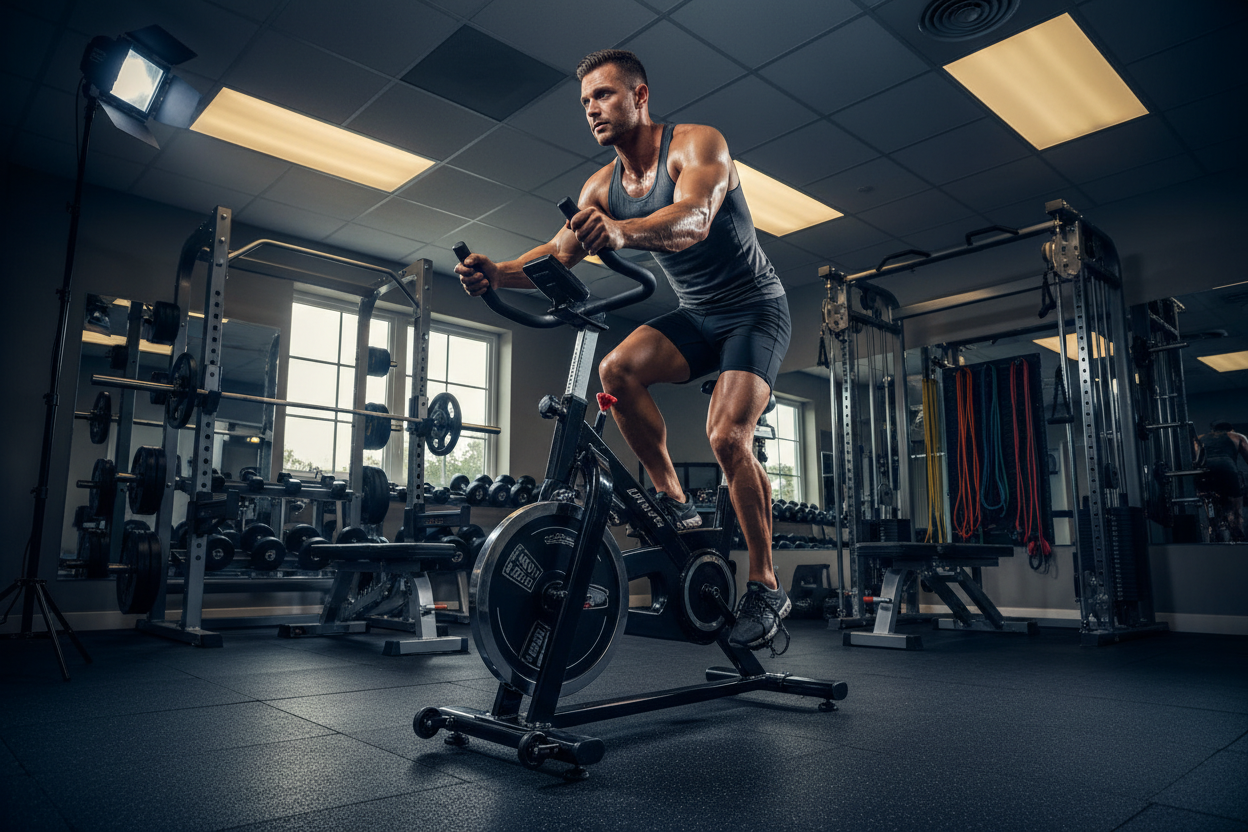
Unlike massive power racks or folding treadmills, a stationary bike for cardio is incredibly space-efficient. For a standard North American garage or apartment setup, you will need roughly 48 inches of length and 24 inches of width. However, always leave about two feet of clearance on either side so you can safely mount, dismount, and stretch around your bike machine cardio setup. If you are placing it on carpet, a high-density equipment mat is essential to prevent wobbling and protect your floors.
Resistance Types: Magnetic vs. Friction
When evaluating an exercise bike cardio setup, the resistance mechanism is everything. Friction resistance uses felt pads that physically clamp down on the flywheel. It is budget-friendly but requires routine maintenance and can be noisy. Magnetic resistance uses magnets that move closer to the flywheel without touching it. If you live in an apartment or want a silent cardio workout bike to use while watching TV, magnetic resistance is the clear winner.
Maximizing Your Cardio Sessions
Programming Your Rides
Owning a stationary bike for cardio workout sessions is not just about mindless pedaling. To break through plateaus, incorporate High-Intensity Interval Training (HIIT). Try 30 seconds of all-out effort followed by 90 seconds of active recovery. Because a cycling machine cardio routine is low-impact, you can safely perform these intense intervals multiple times a week without wrecking your knees. It is the perfect bicycle for cardio workout days sandwiched between heavy barbell lifting sessions.
From Our Gym: Honest Take
We have tested dozens of models over the years, and I have had a mid-tier magnetic resistance workout cycle sitting in my own garage gym for the past 14 months. The silent operation is an absolute game-changer—I can knock out a 5 AM sweat session without waking the kids in the bedroom right above the garage. The heavy 40-pound flywheel provides a smooth, road-like feel that cheaper, lighter models just cannot replicate.
However, I will be completely honest: the stock saddles on almost every bike for cardio workout are notoriously stiff. Even on commercial-grade models, the seat can be unforgiving. I highly recommend swapping the seat or buying a quality gel cover on day one if you plan on riding for more than 30 minutes at a time.
Frequently Asked Questions
Is an aerobic exercise stationary bike effective for weight loss?
Absolutely. When paired with a proper diet, consistent rides can burn significant calories. A vigorous 45-minute session can burn anywhere from 400 to 600 calories depending on your body weight and the resistance level applied.
Do I need special shoes for a gym bike cardio session?
It depends on the pedals. Most home models come with toe cages, allowing you to wear standard cross-training sneakers. If you upgrade to SPD-compatible pedals, you will need specialized cycling shoes that clip in for better power transfer and hamstring engagement.
How often should I do maintenance on my workout cycle?
Wipe down the frame, monitor, and handles after every single use—sweat is highly corrosive to metal parts. Once a month, take five minutes to check the crank arms, pedal threads, and seat adjustments to ensure everything remains tightly secured.