
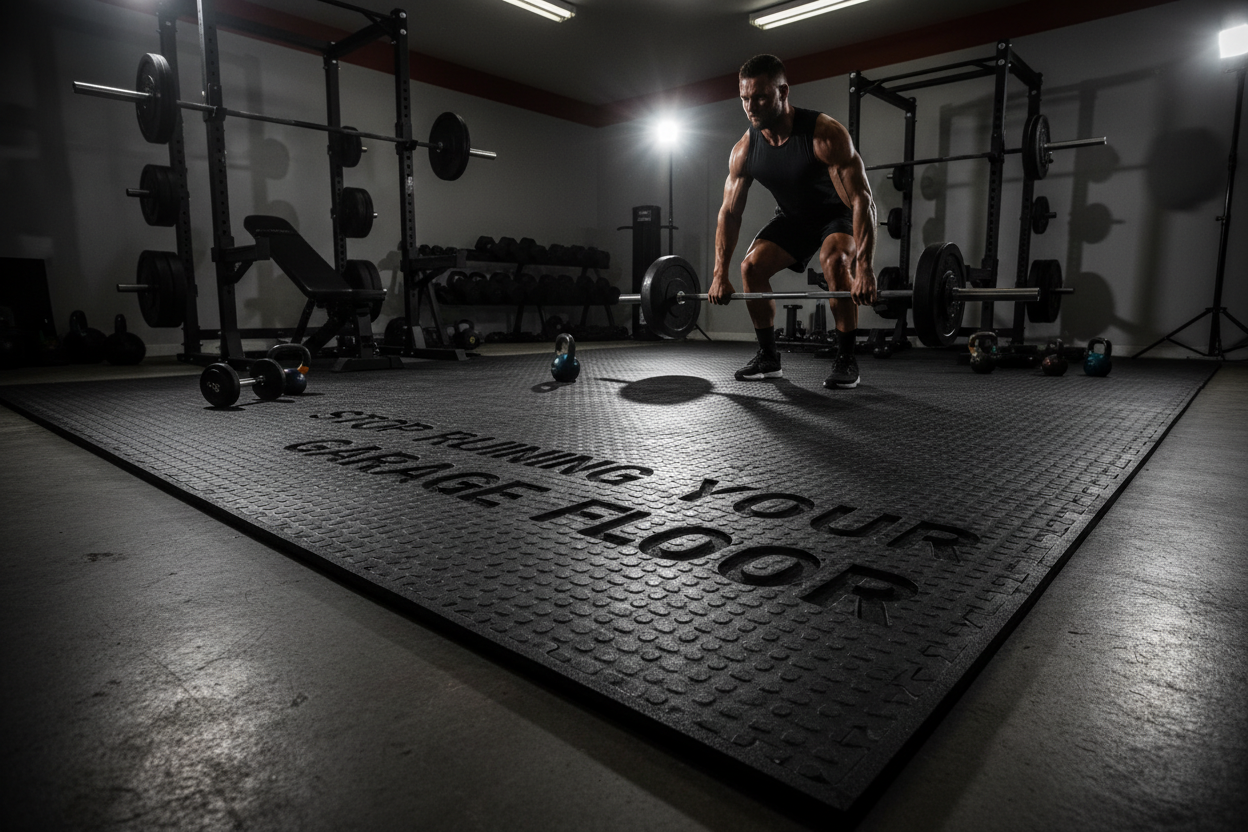
Gym Rubber Floor Mats: Stop Ruining Your Garage Floor
If you have ever winced at the sound of a loaded barbell crashing against bare concrete, you already know the stakes. Building a home gym isn't just about buying racks and plates; it is about protecting your foundation. That is where high-quality gym rubber floor mats come in.
Without proper flooring, you risk cracking your garage floor, damaging your expensive bumper plates, and creating enough noise to wake up the entire neighborhood. In this guide, we will break down exactly what you need to know to choose the perfect protective layer for your training space.
Key Takeaways
- Thickness matters: A 3/8-inch mat is fine for general fitness, but heavy deadlifters need at least 3/4-inch protection.
- Material impacts odor: Vulcanized rubber significantly reduces that harsh new tire smell in enclosed spaces.
- Weight equals stability: Heavy, high-density mats rarely need adhesives; their own weight keeps them anchored.
- Texture is crucial: Look for a smooth, non-porous top layer for easy cleaning and better grip.
Choosing the Right Thickness and Material
Not all gym rubber mats are created equal. The biggest mistake new home gym owners make is buying cheap, thin foam interlocking tiles and expecting them to survive a dropped kettlebell. You need dense, heavy-duty rubber.
3/8-Inch vs. 3/4-Inch Thickness
If your workouts consist mainly of dumbbell exercises, yoga, and machine work, a standard 3/8-inch thickness is plenty. However, if you are dropping heavy barbells or doing Olympic weightlifting, you absolutely need 3/4-inch thick rubber mats for gyms. This thickness absorbs the shock, dampens the noise, and prevents micro-fractures in your concrete subfloor.
Space Planning and Installation
Whether you are outfitting a two-car garage or a spare basement bedroom, planning your layout is critical. Standard mats usually come in 4x6 foot dimensions, weighing upwards of 100 pounds each. This weight is actually a massive benefit.
No Glue Required
When you use heavy-duty rubber matting gym solutions, you rarely need to glue them down. By tightly packing them wall-to-wall or framing them with a simple wooden border, they stay perfectly in place. For irregular corners, a sharp utility knife and a straight edge are all you need to customize the fit.
From Our Gym: Honest Take
We have tested dozens of gym flooring pads over the years, from cheap horse stall mats to premium commercial flooring. Here is my honest takeaway: stall mats are incredibly durable and budget-friendly, but the smell can be unbearable in a poorly ventilated basement.
When we upgraded our main testing facility to premium, vulcanized rubber flooring mats for gym use, the difference was night and day. The off-gassing odor was virtually non-existent within 48 hours, and the surface texture provided significantly better traction during heavy squats. The initial cost was higher, but avoiding the headache (literally) of low-quality rubber was worth every penny.
Frequently Asked Questions
Do I need to tape or glue my mats together?
If you are using heavy 3/4-inch mats (around 100 lbs each), no. Their weight keeps them grounded. Gorilla tape underneath the seams can help prevent shifting if you are doing intense lateral movements, but glue is generally overkill for home setups.
How do I clean my gym floor?
Keep it simple. Sweep or vacuum up chalk and dust regularly. For a deeper clean, use a damp mop with a pH-neutral cleaner or a simple mix of water and mild dish soap. Avoid harsh chemicals like bleach, which can break down the rubber over time.
Will rubber mats protect my concrete from a dropped deadlift?
Yes, provided they are thick enough. A 3/4-inch high-density rubber mat is designed to absorb the kinetic energy of dropped weights, protecting both your plates and the concrete floor beneath them.


